Ignacio Pinazo Camarlench: Vida e Legado
Primeiros Anos e Lutas
- Nascimento: Valência, Espanha, em 1849, numa família humilde.
- Pinazo enfrentou dificuldades precoces, sendo forçado a contribuir para o rendimento familiar desde muito jovem.
- Trabalhou como ourives, pintor de azulejos e decorador de leques antes de seguir uma formação artística formal.
- A morte da sua mãe devido ao cólera e o falecimento do seu pai levaram-no a viver com os seus avós.
- Em 1864, matriculou-se na Academia de Belas Artes de San Carlos, em Valência, enquanto continuava a trabalhar como chapeleiro para se sustentar.
Desenvolvimento Artístico e Influências
- A carreira artística de Pinazo começou por volta dos 21 anos, alcançando o sucesso inicial em Barcelona três anos depois.
- O seu trabalho inicial focava-se em temas históricos convencionais, mas mudou drasticamente após uma viagem crucial a Roma, em 1873.
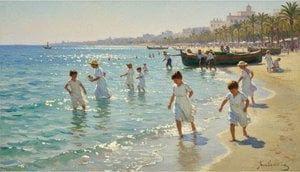
- Inspirado pelas suas viagens, abraçou a pintura de temas familiares, figuras nuas e cenas da vida quotidiana – antecipando o estilo de Joaquín Sorolla y Bastida e Francisco Domingo.
- Uma segunda estadia prolongada em Roma (1876-1881), financiada por uma bolsa, refinou ainda mais a sua abordagem impressionista.
- Desenvolveu um estilo caracterizado por cores escuras – pretos, castanhos e tons terrosos – juntamente com a paleta cintilante do Impressionismo, utilizando frequentemente pinceladas rápidas.
Principais Conquistas e Reconhecimento
- Pinazo recebeu encomendas da aristocracia valenciana, incluindo a Marquesa de Benicarló.
- Conquistou medalhas de prata em exposições de arte em 1881 e 1885, seguidas de medalhas de ouro em 1887 e 1899.
- Foi agraciado com uma medalha real pelas suas contribuições artísticas.
- Em 1912, a cidade de Valência homenageou-o dando o seu nome a uma rua.
- Obras Notáveis: Las hijas del Cid, Los últimos momentos del rey Don Jaime el Conquistador, El guardavía e Barca en la playa.
Vida Pessoal e Família
- Pinazo casou-se com Teresa Martinez Montfort, e tiveram dois filhos, Ignacio e Jose, que também se tornaram pintores.
- Mudou-se temporariamente para Bétera durante uma epidemia de cólera em Valência, em 1884, residindo na villa “Maria”, pertencente ao banqueiro Jose Jaumandreu.
Significância Histórica e Legado
- Pinazo é considerado um dos mais proeminentes artistas valencianos do final do século XIX, servindo de ponte entre os estilos tradicionais e as técnicas impressionistas emergentes.
- A sua obra oferece uma visão valiosa da sociedade espanhola e da vida quotidiana da sua época.
- A maior coleção das suas pinturas e desenhos encontra-se no Institut Valencià d'Art Modern (IVAM), embora nem sempre em exibição permanente. As suas obras também podem ser encontradas no Museu de Belles Arts de València e no Museo del Prado.
- Falecimento: Godella, Espanha, em 1916, aos 67 anos, deixando para trás um legado artístico significativo.
Perguntas e Respostas
Em quais movimentos Ignácio Pinazo Camarlench trabalhou?
As obras de Ignácio Pinazo Camarlench podem ser exploradas por movimento na página de Todos os Movimentos do artista.
Quantas obras de Ignácio Pinazo Camarlench estão disponíveis para visualização?
Você pode explorar 178 obras de arte obras de Ignácio Pinazo Camarlench na página Todas as Obras de Arte.
Onde estão as obras de Ignácio Pinazo Camarlench mapeadas por tema?
As obras de Ignácio Pinazo Camarlench podem ser exploradas por tema na página Atlas de Temas do artista.