O Legado Luminoso de Franz Bischoff
Franz Albert Bischoff posiciona-se como uma figura silenciosamente influente na história da arte americana, um pintor cujo pincel capturou a essência fugaz da luz e a alma serena da paisagem californiana. Nascido em 1864, em Steinschönau am Inn, Áustria, sua vida inicial foi imersa nas ricas tradições decorativas do Império Austro-Húngaro. Este treinamento fundamental em design aplicado, aquarela e decoração de cerâmica instilou nele uma atenção meticulosa aos detalhes e um profundo respeito pela harmonia das cores. Quando emigrou para os Estados Unidos aos quinze anos, ele trouxe consigo uma sensibilidade do Velho Mundo que eventualmente se fundiria com o otimismo florescente do Oeste Americano, criando um estilo que era, ao mesmo tempo, tecnicamente preciso e emocionalmente ressonante.
À medida que sua carreira se desenrolava pelas paisagens industriais de Nova York, Ohio e Michigan, Bischoff alcançou inicialmente um reconhecimento considerável através da delicada arte da pintura em porcelana (China painting). Esta disciplina exigia um domínio extraordinário da mistura de cores e do detalhamento fino, habilidades que mais tarde se tornariam a marca registrada de suas composições de paisagem. Sua capacidade de manipular glazes sutis e lavagens permitiu-lhe dar vida à porcelana, um precursor das qualidades etéreas encontradas em suas obras posteriores a óleo. Foi esta intersecção única entre precisão decorativa e sensibilidade atmosférica que definiu sua identidade artística ao transitar do mundo meticuloso da cerâmica para as vistas expansivas da fronteira americana.
O Impressionismo e a Luz da Califórnia
A verdadeira metamorfose da arte de Bischoff ocorreu com sua chegada à Califórnia, onde a topografia dramática e as condições atmosféricas únicas proporcionaram uma nova musa. Ao abraçar os preceitos do movimento Impressionista, ele buscou capturar os momentos efêmeros de luz que definem a região. Sua técnica tornou-se um diálogo sofisticado entre delicadas lavagens de aquarela e sutis veladuras a óleo, resultando em telas que parecem brilhar de dentro para fora. Ele possuía uma habilidade rara de destilar informações visuais complexas em composições harmoniosas, fosse retratando a majestade rústica das cadeias de montanhas ou as névoas costeiras suaves do Pacífico.
Sua obra serve como um registro vibrante do mundo natural durante uma era transformadora na história americana. Através de seus olhos, vivenciamos o seguinte:
- Cloud Shadows: Uma obra-prima de 1912 onde montanhas dramáticas e árvores vibrantes ganham vida através de uma lente impressionista, oferecendo um vislumbre sereno do poder da natureza.
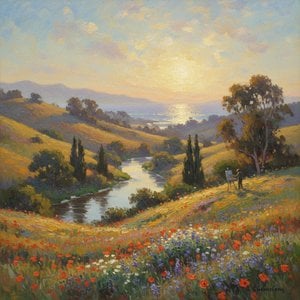
- Pasadena Foothills: Uma deslumbrante pintura a óleo de 1917 que captura a beleza quintessencial da paisagem americana, demonstrando sua habilidade em renderizar a luz sobre o terreno ondulado.
- Mist-Veiled Days, Monterey: Uma exploração evocativa da atmosfera costeira, onde a interação entre a névoa e o mar demonstra seu domínio da sutileza tonal.
Uma Impressão Duradoura na História da Arte
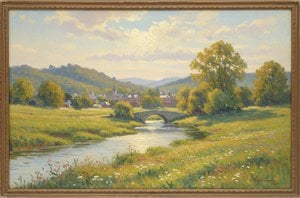
Além da mera representação de cenários, o trabalho de Bischoff incorpora um senso de nostalgia e reverência pela beleza intocada da paisagem. Suas pinturas, como a magistral Landscape at Saint Valery-sur-Somme, demonstram uma capacidade de unir suas raízes europeias com suas experiências americanas, mesclando a elegância estruturada de seu treinamento com a energia selvagem e espontânea da costa da Califórnia. Ele não pintava apenas o que via; ele pintava como a luz era sentida, imbuindo seus temas com uma sensação de paz e permanência.
A importância histórica de Franz Bischoff reside em seu papel como uma ponte entre as artes decorativas e a pintura de paisagem das belas artes. Ao trazer o meticulosismo da pintura em porcelana para a grande escala dos óleos impressionistas, ele criou um nicho que era unicamente seu. Hoje, suas obras permanecem estimadas por sua capacidade de transportar o espectador para uma era passada de descobertas e esplendor natural, lembrando-nos do poder duradouro de um toque delicado e de uma visão luminosa.
Perguntas e Respostas
Onde posso encontrar estatísticas sobre as obras de Franz A. Bischoff?
A página de Estatísticas de Franz A. Bischoff apresenta estatísticas calculadas a partir das obras do artista listadas em este site.
Existe uma cronologia da carreira de Franz A. Bischoff?
A Linha do tempo de Franz A. Bischoff é uma linha do tempo interativa que apresenta as obras do artista em ordem cronológica, organizadas em capítulos por períodos de sua carreira.
Como posso encontrar obras de Franz A. Bischoff sobre um tema específico?
Para encontrar obras de Franz A. Bischoff sobre um tema específico, utilize a página de Por palavras-chave do artista, que agrupa as obras por palavra-chave.