


 Visualizar em escala
 Enviar
 Compartilhar
 Ver detalhes

 Baixar
 Semelhantes
 Raio X
 Apresentação de slides
Shalimar Gardens. Cashmere.

 Ver mais
Reprodução em Óleo Feita à Mão
Óleo sobre tela pintado à mão no seu tamanho e moldura, feito sob encomenda pelos nossos artistas. ( Encomendar impressão Comprar imagem em alta resolução)




































Escolha entre os nossos tamanhos pré-definidos que respeitam as proporções originais da obra de arte.

Pode inserir as suas próprias dimensões para se adequar a uma moldura ou espaço específico. Se o tamanho selecionado não corresponder às proporções da imagem original, iremos cortar a obra de arte ou estender a pintura com elementos adicionais pintados à mão. Um esboço digital será enviado para sua aprovação antes do início da produção.
Tenha em atenção que a pré-visualização no ecrã não reflete o corte ou extensão real. Apenas o esboço mostrará com precisão a composição final.
Embora tamanhos personalizados estejam disponíveis, recomendamos selecionar uma dimensão da lista predefinida para preservar as proporções originais.
Após o pedido, a equipa ArtsDot.com enviará um e-mail ao cliente para solicitar instruções e fornecer uma prévia do esboço.
Entrega mundial () em 3 a 4 semanas, em vez das 5 semanas padrão. (18 Agosto). Sem comprometer a qualidade.

Envio Expresso Gratuito para todo o Mundo

Tela de Linho Premium

Seguro de transporte total

Garantia de Reembolso de Impostos Alfandegários

Garantia de Fidelidade de Cor

Política de Devolução de 60 Dias (Apenas para Defeitos)

Garantia de reembolso de 100%

Desconto para múltiplas unidades
 A opção de vidro está disponível apenas para tamanhos inferiores a 110 cm

Shalimar Gardens. Cashmere.
Técnica de Reprodução
Dimensões da Reprodução
-


Preço Total
$ 338
Obras Relacionadas


Biografia do Artista
A Life Etched in Conflict and Culture
William Simpson, a name inextricably linked to the brutal realities of the Crimean War—often whispered as “Crimean Simpson”—was far more than simply a war artist. He was a visual chronicler, an intrepid observer who meticulously documented a rapidly transforming 19th-century world, capturing not just battles but also the profound human cost and cultural nuances of his time. Born into the crushing poverty of Glasgow in 1823, his journey from hardship to recognition stands as a remarkable testament to both innate artistic talent and an unwavering spirit of tenacity. His early years were shadowed by a difficult family situation; burdened by an abusive and alcoholic father, he sought refuge with his grandmother in Perth at the tender age of ten—a move that, while offering stability, curtailed formal schooling but ignited within him a lifelong dedication to self-directed learning and artistic exploration. This pursuit of knowledge continued through apprenticeships at the Glasgow lithographic firm of Macfarlane, an experience he later described as profoundly formative, and evening studies at the Andersonian University and Mechanics’ Institute—institutions that fostered his intellectual curiosity and honed his observational skills. These early experiences laid a solid foundation for a career that would seamlessly blend artistic skill with an insatiable desire to understand and represent the world beyond Britain's shores.Witness to War: The Crimean Revelation
The outbreak of the Crimean War in 1853 irrevocably altered Simpson’s trajectory. Initially commissioned to create a lithograph based on secondhand accounts of the Battle of Alma, his exceptional talent quickly caught the attention of Colnaghi & Son, who swiftly dispatched him directly to Crimea in November 1854. This wasn't merely about illustrating battles; it was about *experiencing* them firsthand and translating that visceral experience onto paper with painstaking detail. Simpson didn’t shy away from depicting the grim realities of war—the pervasive mud, the agonizing suffering etched on the faces of exhausted soldiers, the sheer, overwhelming exhaustion that permeated every aspect of the conflict. His watercolors weren't romanticized visions; they were unflinching records of a brutal and chaotic reality. These images, rendered with remarkable sensitivity and precision, were then transformed into lithographs for publications like *The Illustrated London News*, bringing the horrors—and occasionally, the heroism—of the Crimean War directly into British homes, shaping public opinion and fostering a deeper understanding of the conflict far removed from the confines of official reports. He became known as “Crimean Simpson” not just for his presence on the peninsula, but for the authenticity and immediacy he brought to his depictions—a quality that distinguished his work from more detached or sanitized accounts. The Seat of War in the East, his seminal series of lithographs based on these sketches, remains a landmark achievement in war reporting and visual storytelling—a testament to his courage, artistic skill, and unwavering commitment to capturing truth on paper under immense pressure.Beyond Crimea: India, Exploration, and Artistic Ambition
Following his success in Crimea, Simpson’s career took him far beyond the battlefields of southern Russia. He was entrusted with a significant commission by Colnaghi & Son—to document the aftermath of the Sepoy Revolt of 1857 in India. This expedition wasn't simply about recording military events; it represented a profound immersion into Indian landscapes, culture, and daily life. Simpson’s approach was characterized by an extraordinary level of sensitivity and respect for the local population, a rarity for Western artists at the time. He captured bustling marketplaces teeming with activity, serene temples radiating spiritual energy, majestic palaces reflecting imperial grandeur, and portraits of ordinary Indians—all rendered with remarkable detail and nuance. His watercolors from India reveal not just a keen eye for visual beauty but also a deep understanding of the subcontinent’s complex social fabric and historical context. Despite facing numerous challenges – logistical difficulties, cultural barriers, and the ever-present realities of colonial rule – Simpson produced a body of work that stands as one of the most insightful and evocative depictions of India during this turbulent period. He envisioned a comprehensive illustrated volume on India—a monumental undertaking that unfortunately fell through due to financial constraints faced by Day & Son, his intended publisher. However, his Indian watercolors remain invaluable historical records, offering a rare glimpse into a pivotal moment in British colonial history and showcasing the richness and diversity of Indian culture.Technique and Style: A Master of Watercolor
Simpson’s artistic style was deeply rooted in the conventions of Victorian watercolor painting—a medium he mastered with exceptional skill. He favored loose, expressive brushstrokes, allowing for a sense of spontaneity and immediacy that perfectly complemented his observational approach. His use of color was particularly noteworthy—he employed a vibrant palette to capture the intensity of light and shadow, creating atmospheric effects that conveyed both beauty and drama. He meticulously rendered textures – from the rough bark of trees to the folds of clothing – demonstrating an impressive level of technical proficiency. Furthermore, Simpson’s work is distinguished by his ability to convey emotion—the weariness of soldiers, the solemnity of religious ceremonies, the vibrant energy of Indian markets—all through subtle shifts in tone and composition. His watercolors weren't simply representations of reality; they were imbued with a sense of empathy and understanding, reflecting his own deep engagement with the subjects he depicted.Legacy and Lasting Influence
William Simpson’s legacy extends far beyond his stunning visual documentation of 19th-century events. He played a crucial role in establishing the nascent field of “special art”—an approach to journalism that involved embedding artists directly within conflict zones, allowing them to provide firsthand visual reporting. His work profoundly influenced subsequent generations of war correspondents and documentary photographers. Simpson’s images continue to be studied by historians, art critics, and students alike, offering invaluable insights into a pivotal era in British history—a time of imperial expansion, social upheaval, and profound cultural change. He was elected an associate of the Institute of Painters in Water Colours in 1874 and became a full member five years later, solidifying his place as a respected figure within the British art establishment. His detailed watercolors and lithographs remain a testament to his artistic skill, journalistic integrity, and enduring legacy as one of the most important visual chroniclers of the Victorian era.
William Simpson (Crimean Simpson)
1823 - 1899 , Reino Unido
Informações Rápidas
- Artistic Movement Or Style: Arte Victoriana
- Artists Or Movements Influenced By This Artist:
- Fotoperiodismo
- Realismo
- Artists Who Influenced This Artist:
- David Roberts
- John Brett
- Date Of Birth: 1823
- Date Of Death: 1899
- Full Name: William Simpson
- Nationality: Britânico
- Notable Artworks:
- A Cadeira de Guerra
- Retirada de Sebastopol
- Mongólia perto da Grande Muralha
- Akalis no tanque sagrado
- Acampamento da Divisão Quarta
- Place Of Birth: Glasgow, Reino Unido
Artigos Relacionados

Aquarelas Imortais: 10 Obras-Primas que Revolucionaram a Arte | ArtsDot
Descubra as 10 obras-primas em aquarela que revolucionaram a arte! Explore a história de Turner, Cézanne e outros mestres. Encontre reproduções de alta qualidade para decorar sua casa com elegância. ArtsDot: arte atemporal ao seu alcance.

Ephemeral Visions: Exploring the Artistic Legacy & Contemporary Practice of Watercolor Painting
Explore the captivating world of watercolor painting! Discover its rich history, essential techniques, influential artists & collecting tips. A comprehensive guide for art enthusiasts from ArtsDot.

Ephemeral Visions: Exploring the History & Emotional Resonance of Watercolor Painting
Explore the captivating history of watercolor painting, from ancient techniques to modern masters like Kandinsky & Blake. Discover essential artists, collecting tips & the emotional power of this luminous medium. Expert insights for art enthusiasts.
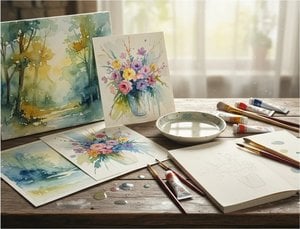
Ephemeral Visions: Exploring the Artistic Legacy & Nuances of Watercolor Painting
Explore the captivating world of watercolor painting! Discover its rich history, essential techniques, influential artists & collecting tips from art experts. A comprehensive guide for enthusiasts.

Aquarela Através dos Séculos: História, Técnicas e Prática Contemporânea
Explore a história da aquarela, domine técnicas essenciais e descubra artistas renomados. Guia completo para iniciantes e profissionais apaixonados por esta arte!

