


A imagem segue as suas escolhas: , .
Descrição do Item
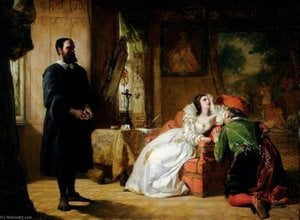
Discover 'The Sleeping Model' by William Powell Frith! A captivating Victorian scene of an orange seller napping during a painting session, showcasing social commentary and artistic skill.
 Ler mais
Biografia do Artista
William Powell Frith foi um renomado pintor inglês da Era Vitoriana, conhecido por cenas sociais detalhadas e narrativas panorâmicas como "The Derby Day". Seu estilo realista capturou a vida cotidiana de Londres com precisão e socialmente consciente.
Reprodução em Óleo Feita à Mão
Óleo sobre tela pintado à mão no tamanho e moldura de sua escolha, feito sob encomenda pelos nossos artistas. ( Alternar para Impressão Alternar para Imagem Digital)
Saiba mais sobre esta pintura
 Visualizar na parede
 Compartilhar
 Compartilhar
 Detalhes
 Guia
Guia

 Baixar imagem
 Semelhantes
 Raio X
 Ver diaporama
 Perguntas e Respostas
 Estatísticas
Encomende a sua pintura em quatro passos simples
Não tenha pressa. Você pode alterar qualquer resposta; o preço no seu carrinho de compras será atualizado conforme cada escolha.
1 Passo um de quatro
Qual tamanho você gostaria?
Estes tamanhos mantêm as proporções da pintura original. A ilustração mostra a sua escolha numa parede, acima de um sofá de dois metros.
Ou informe suas próprias medidas
Escolha entre os nossos tamanhos pré-definidos que respeitam as proporções originais da obra de arte.

Insira a largura e a altura desejadas para se ajustarem à sua moldura ou parede. Como esta obra é pintada à mão, para um tamanho com proporções diferentes, o artista poderá pintar um pouco mais ao redor da imagem ou reduzir ligeiramente a composição — você escolhe. Enviamos uma maquete digital para sua aprovação antes de iniciar a pintura. A imagem exibida nesta página não representa o resultado real — apenas a maquete mostra o resultado final.
2 Passo dois de quatro
Como deve ser preparado: enrolado, esticado ou emoldurado?
Os preços abaixo referem-se ao tamanho escolhido na primeira etapa.
Escolha as bordas da tela esticada
Escolha sua moldura

Branco €1

Bordas esfumaçadas €1

Bordas estendidas €1

P118B €10

P118H €10

P118W €10

P438Z €10

P508JH €12

P508YH €12

P805H €10

P805Z €10

P919BZ €10

P919G €10

P919XJ €10

P959ZH €10

P968JZ €12

W106C €8

W218G €10

W218JH €8

W218Y €10

W307PJ €10

W316G €10

W316PJ €8

W316Y €10

W398PJ €8

W4111J €10

W500HY €15

W500JH €15

W692G €12

W849H €8

W940BG €15

W953PJ €8

H24-GOLD €30

H24-SILVER €30

H36-GOLD €45

H36-SILVER €45
Com moldura
Moldura: . Dimensões totais com a moldura: .
3 Passo três de quatro
Gostaria de alterar algo na pintura?
A maioria das pessoas responde que não. Como cada pintura é feita à mão, nosso artista também pode adaptá-la para você.
Após o pedido, a equipe da ArtsDot.com enviará um e-mail ao cliente para instruções e fornecerá uma prévia da montagem
4 Passo quatro de quatro
Algumas opções de acabamento
Todos eles são opcionais. As respostas já selecionadas não têm custo adicional.
Quem o pintou?
Entrega mundial () em 3 a 4 semanas, em vez das 5 semanas padrão. (3 Novembro). Sem comprometer a qualidade.
Uma placa de identificação, como em um museu?
Detalhes da Placa de Bronze Gravada
This elegant plaque features the artist's name and the title of the artwork, finely engraved for a timeless presentation.
It is made from bronze with a refined, elegant finish. The text is precisely laser-engraved for a sharp and permanent result. Measuring 9x2 cm, the plaque is compact yet easy to read. It's built to be durable and scratch-resistant, offering a professional, museum-quality look. Mounting is simple thanks to the included adhesive backing.
Detalhes da Placa de Acrílico Transparente
The plaque includes essential engraved details such as the artist's name, the title of the artwork, the date it was created, the type of media used-like oil on canvas or watercolor-a brief description of the piece, and a QR code that links to the complete artwork information.
It is crafted from clear acrylic, offering a sleek, modern appearance. The text is UV-engraved in black to ensure strong visual contrast. With a size of 10x15 cm, it ensures optimal readability. It comes equipped with two metal hooks for secure wall mounting. The plaque is designed to be weather-resistant, making it suitable for various environments, and it includes interactive features that work seamlessly with smartphone scanning.
Detalhes da Placa de Acrílico Preto
This elegant plaque includes engraved information such as the artist's name, the title of the artwork, the date it was created, the type of media used (like oil on canvas or watercolor), a short description of the artwork, and a QR code for quick access to more information.
The plaque itself is made from refined black acrylic with a premium finish. The text is laser-engraved in white for high contrast and readability. Its size is 10x15 cm, designed to be easy to read. It comes with two metal hooks for professional mounting. The design is sleek and fits any interior style. It is also weather-resistant and durable, with built-in digital integration for mobile compatibility.
Um verniz protetor?
Para quando você precisa?
✓ Verifique e peça
A sua pintura, conforme encomendada

The Sleeping Model
Técnica de Reprodução
Tamanho da Reprodução
-

Artista Sênior de Elite
Mais detalhes, refinamento e tempo de produção adicional
-

Moldura para Reprodução
-
-
Para obras de arte ou reproduções com mais de 105 cm (aproximadamente 41 polegadas) em qualquer um dos lados, a moldura será enviada como um kit desmontado. Este método garante uma entrega segura e evita danos durante o transporte.
Montagem profissional necessária — este não é um produto DIY (faça você mesmo).
O kit deve ser montado e a tela esticada por um profissional de molduraria experiente, utilizando cola de madeira (não inclusa), um alicate de esticar tela e grampos para manter as travessas alinhadas enquanto a cola seca. A montagem incorreta ou a tensão desigual da tela podem danificar permanentemente a obra de arte e não estão cobertas pela nossa garantia.
 Para obras de arte ou reproduções com mais de 105 cm (aproximadamente 41 polegadas) em qualquer um dos lados, a moldura será enviada como um kit desmontado. Este método garante uma entrega segura e evita danos durante o transporte.
Todas as barras de madeira maciça estão incluídas, precisamente cortadas ao tamanho certo.
Montado com os parafusos fornecidos, além de cola para madeira para as junções dos cantos, que não está inclusa e deve ser providenciada pelo seu moldurista.
São necessárias ferramentas profissionais não incluídas: um alicate de estiramento de tela (esticador) e grampos para manter as ripas alinhadas enquanto a cola seca.
Importante:
As junções dos cantos requerem cola para madeira, as ripas devem ser mantidas com grampos até que a cola esteja completamente seca, e o estiramento da tela na moldura montada requer um alicate de esticar tela. Nenhum destes itens está incluído no kit. Por favor, certifique-se de contar com um profissional de molduraria experiente antes de encomendar este tamanho.

Etiqueta de identificação
-
-

Verniz de Proteção
Verniz brilhante (realça as cores e protege contra a luz e a umidade)
-

Personalizar minha obra
Exemplos de alterações possíveis: Substituir o rosto por uma foto do cliente; Adicionar um animal de estimação (ex.: substituir gato por cachorro); Incluir uma mensagem oculta no fundo; Alterar a paisagem ou os elementos do fundo.
-

Urgente
Entrega mundial () em 3 a 4 semanas, em vez das 5 semanas padrão. (3 Novembro). Sem comprometer a qualidade.
-
Envio Expresso
Entrega mundial para em 5 semanas. (10 Novembro).
Com envio incluído
Preço Total
€ 235
A opção de vidro está disponível apenas para tamanhos inferiores a 110 cm
Incluído em todos os pedidos
- Envio expresso gratuito para todo o mundo
- Tela de Linho de Alta Qualidade
- Seguro de transporte completo
- Garantia de Reembolso de Impostos Alfandegários
- Garantia de Fidelidade Cromática
- Política de Devolução em 100 Dias (Apenas para Defeitos)
- Garantia de reembolso de 100%
- Oferta de desconto por quantidade


A Moment Frozen in Victorian Tranquility
In the quiet corners of a nineteenth-century studio, where the scent of oil paint and turpentine lingers, William Powell Frith captures a scene of profound, unexpected stillness. The Sleeping Model is not merely a portrait of rest; it is a window into the delicate social fabric of the Victorian era. The painting presents a woman reclining gracefully in a chair, her head surrendered to sleep as it rests heavily upon her hand. This image, while seemingly peaceful, carries an underlying tension that speaks to the societal anxieties of the time. During this period, the presence of women in artistic spaces was often viewed through a lens of suspicion, and Frith masterfully navigates these complexities by presenting a moment of vulnerability that feels both intimate and deeply human.
The composition is a masterful study in chiaroscuro, where the dramatic interplay between light and shadow sculpts the woman’s form against the rich, deep tones of the room. Frith, heavily influenced by the domestic realism of Sir David Wilkie, employs a meticulous oil technique characterized by layered brushstrokes that lend a luminous quality to the skin and fabric. As the eye wanders through the studio, one notices the fine details that ground the scene in reality: the sturdy easel holding a canvas, the humble basket resting on the floor, and the subtle presence of other figures that suggest a larger, bustling world existing just beyond this momentary lapse into slumber. The red walls of the studio provide a warm, dramatic backdrop, pulling the viewer into the heart of the artist's sanctuary.
Symbolism and the Artist's Vision
Beyond its surface beauty, the painting serves as a poignant narrative about class and identity. The model herself—historically identified as an orange seller whom Frith encountered in the street—represents the intersection of different social strata within the artist's workspace. Her posture, caught between the exhaustion of labor and the grace of repose, acts as a quiet defiance of the rigid expectations placed upon women of her standing. There is a profound sense of contemplation embedded in her stillness; even in sleep, she commands the space, inviting the viewer to reflect on the unseen lives that move through the shadows of history.
For the discerning collector or interior designer, this piece offers more than just aesthetic elegance. It provides a focal point of intellectual and emotional depth. The painting’s ability to evoke a sense of nostalgic peace while maintaining a sophisticated, academic rigor makes it an ideal centerpiece for a curated collection. Whether placed in a sunlit gallery or a moody, classic study, The Sleeping Model brings with it the weight of history and the timeless allure of a story caught in mid-breath. It is a celebration of the fleeting moments that define our existence, rendered with the unparalleled skill of one of Britain's greatest chroniclers of social life.
Perguntas e Respostas
Qual era a idade de William Powell Frith quando "The Sleeping Model" foi criada?
William Powell Frith criou "The Sleeping Model" aos 34 anos. O artista nasceu em 1819 e a obra data de 1853.
Em que ano foi criado "The Sleeping Model", de William Powell Frith?
"The Sleeping Model" data de 1853. A data situa a obra na carreira de William Powell Frith e em sua época.
Onde posso comprar reproduções pintadas à mão de "The Sleeping Model", de William Powell Frith?
"The Sleeping Model" está disponível como uma reprodução a óleo pintada à mão sobre tela de linho. O pedido pode ser feito em sua página de Reprodução Pintada à Mão, com escolha de tamanhos.
Obras Relacionadas


William Powell Frith
1819 - 1909, Reino Unido
Biografia do Artista
Early Life and Artistic Beginnings
William Powell Frith’s journey into the world of art began in a surprisingly modest setting: Aldfield, a small village nestled near Ripon in North Yorkshire, England. Born on January 9, 1819, he was the son of an innkeeper, a profession that initially seemed far removed from the realm of artistic creation. However, his father recognized and nurtured a nascent talent within young William, recognizing a keen eye for detail and a natural inclination towards visual representation.
Unlike many artists who benefited from privileged backgrounds, Frith’s early education was somewhat rudimentary. He received instruction in basic literacy and arithmetic before transitioning to the teachings of a local church school. Yet, it was his father's astute observation that steered him toward a more formal artistic training. This pivotal decision marked a turning point, setting him on a path towards becoming one of Britain’s most celebrated genre painters.
Frith’s initial aspirations leaned towards the practical profession of an auctioneer, a common pursuit for young men in his era. However, his father, recognizing his son's artistic potential, gently encouraged him to pursue his passion. This guidance led Frith to enroll at Sass’s Academy in Charlotte Street, London – a prestigious institution renowned for its rigorous training and exposure to the latest artistic trends. There, he honed his skills under the tutelage of accomplished instructors, laying the foundation for his future success.
Influences and Artistic Style
Frith's artistic development was profoundly shaped by several key influences, most notably the work of Sir David Wilkie, a prominent painter known for his captivating depictions of domestic scenes. Wilkie’s ability to capture the nuances of everyday life with remarkable realism and detail served as a significant model for Frith. He particularly admired Wilkie's approach to portraying social interactions within public spaces – a theme that would become central to Frith’s own artistic vision.
Furthermore, Frith was deeply impacted by the literary works of Charles Dickens, whose vivid descriptions of London life provided him with rich source material. He frequently drew inspiration from Dickens' novels and short stories, translating their scenes and characters onto canvas with meticulous precision. This collaboration between literature and art is evident in many of his most celebrated paintings.
Frith’s artistic style was characterized by an extraordinary level of detail and a commitment to realism. He meticulously observed the world around him, capturing the appearance of clothing, architecture, and human expressions with remarkable accuracy. His compositions often featured numerous figures arranged within complex, crowded scenes – a hallmark of his distinctive approach. He skillfully employed photographic studies, particularly those created by Robert Howlett, to ensure that every element in his paintings was rendered with utmost precision.
Notable Works and Artistic Achievements
William Powell Frith’s career produced a remarkable body of work, each painting offering a unique glimpse into Victorian society. Among his most iconic creations are Ramsgate Sands (1854), a vibrant depiction of seaside life that captures the energy and excitement of a popular resort town; The Derby Day (1858), a sprawling panorama of the Epsom Downs Racecourse, teeming with elegantly dressed spectators and spirited horses; and The Railway Station (1862), a detailed portrayal of Paddington Station, showcasing the bustling activity of London’s transportation hub.
His painting *The Sleeping Model* (1853) holds particular significance as his Diploma work at the Royal Academy. This piece demonstrated his technical mastery and artistic vision, solidifying his position within the art world. Another notable work is *The Crossing Sweeper* (1858), a poignant scene that starkly contrasts the opulence of the wealthy with the poverty of the working class – a commentary on social inequality that resonated deeply with Victorian audiences.
Frith’s success was not merely artistic; it was also commercial. His paintings were immensely popular, attracting large crowds to exhibitions and generating significant revenue. He became one of the most commercially successful artists of his time, a testament to his talent and the appeal of his subject matter.
Later Years and Legacy
As he matured, Frith continued to produce works that reflected both his artistic skill and his social awareness. His later paintings often explored themes of wealth, poverty, and morality, offering critical observations on Victorian society. He wrote two autobiographies, *My Autobiography* (1887) and *Further Reminiscences* (1888), providing valuable insights into his life, artistic process, and the cultural context in which he worked.
Frith remained active as an artist until his death on November 2, 1909, at the age of 90. He continued to exhibit his work throughout his later years, maintaining a strong presence within the British art scene. His legacy endures as one of the most important genre painters of the Victorian era, celebrated for his meticulous realism, social commentary, and captivating depictions of everyday life.
His paintings continue to be exhibited in museums and galleries around the world, offering a valuable window into 19th-century England. Frith’s work serves as a reminder of the power of art to document history, explore social issues, and capture the essence of human experience.
Artigos Relacionados

William Salter: A Life Immersed in Colour – Victorian Botanical Art & Social Vision
Explore the life & art of William Salter (1804-1875), a Victorian master renowned for his botanical illustrations and striking portraits. Discover his social vision & legacy at ArtsDot.

R.A. Benjamin Williams: Victorian Genre Painting & Social Commentary
Explore the captivating world of Benjamin Williams Leader's Victorian genre paintings. Discover his mastery of naturalism, social commentary & lasting influence on British art. Expert insights at ArtsDot.

William Powell Frith: Narratives of Victorian Society & the Rise of Realist Painting
Explore the life & works of William Powell Frith, the 'greatest British painter of social scenes.' Discover his iconic Victorian genre paintings and learn about his lasting impact on realist art. Hand-painted reproductions available.