


 Visualizar em escala
 Enviar
 Compartilhar
 Ver detalhes
 Guia de Obras do Aluno

 Baixar imagem
 Semelhantes
 Raio X
 Apresentação de slides
 Estatísticas
Julia Reading


 Ver mais
Reprodução em Óleo Feita à Mão
Óleo sobre tela pintado à mão no tamanho e moldura de sua escolha, feito sob encomenda pelos nossos artistas. ( Alternar para Impressão Ver Imagem Digital)




P118B €10

P118H €10

P118W €10

P438Z €10

P508JH €12

P508YH €12

P805H €10

P805Z €10

P919BZ €10

P919G €10

P919XJ €10

P959ZH €10

P968JZ €12

W106C €8

W218G €10

W218JH €8

W218Y €10

W307PJ €10

W316G €10

W316PJ €8

W316Y €10

W398PJ €8

W4111J €10

W500HY €15

W500JH €15

W692G €12

W849H €8

W940BG €15

W953PJ €8




Escolha entre os nossos tamanhos pré-definidos que respeitam as proporções originais da obra de arte.

Digite a largura e a altura de que necessita, para se ajustar à sua moldura ou à sua parede. Esta obra é pintada à mão, por isso, para um tamanho com uma proporção diferente, o artista pode pintar um pouco mais ao redor da imagem ou cortar um pouco — você escolhe. Enviamos-lhe uma maquete digital para aprovação antes de a pintura começar. A imagem exibida nesta página não mostra o resultado real — apenas a maquete mostra.
Após o pedido, a equipa ArtsDot.com enviará um e-mail ao cliente para solicitar instruções e fornecer uma prévia do esboço.
Entrega mundial () em 3 a 4 semanas, em vez das 5 semanas padrão. (24 Outubro). Sem comprometer a qualidade.

Envio expresso gratuito para todo o mundo

Tela de Linho Premium

Seguro de transporte total

Garantia de Reembolso de Impostos Alfandegários

Garantia de Fidelidade de Cor

Política de Devolução em 100 Dias (Apenas para Defeitos)

Garantia de reembolso de 100%

Desconto para múltiplas unidades
 A opção de vidro está disponível apenas para tamanhos inferiores a 110 cm

Julia Reading
Técnica de Reprodução
Dimensões da Reprodução
-


Preço Total
€ 231
A Snapshot of Urban Life: Unveiling "Julia Reading"
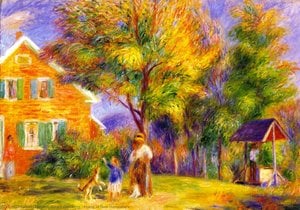
William James Glackens’ “Julia Reading,” painted in 1916, isn't merely a portrait; it’s a meticulously crafted window into the burgeoning dynamism and subtle social currents of early 20th-century New York City. Born during the height of the Ashcan School movement, Glackens rejected the idealized depictions favored by the National Academy of Design, instead choosing to capture the gritty reality of everyday life – the bustling streets, the casual interactions, and the quiet moments within a rapidly changing metropolis. “Julia Reading” exemplifies this approach, offering a glimpse into a specific scene that simultaneously feels intimate and profoundly connected to the larger urban narrative.
The painting immediately draws the eye to its central figure, a woman engrossed in a book. Her posture – slightly turned towards the viewer, her hand resting delicately on the page – conveys a sense of quiet contemplation amidst the implied activity around her. Glackens’ masterful use of light and shadow establishes a strong focal point, directing our gaze to Julia's face and highlighting the subtle details of her expression. The inclusion of two other individuals—a man standing behind her and another seated further back—adds layers of narrative complexity without disrupting the primary focus. These figures, though less defined, contribute to the sense of a shared space, a moment captured within the larger tapestry of urban life.
The Ashcan School: A Rejection of Tradition
Glackens was a key figure in the Ashcan School, a movement that challenged the established norms of American art. Rejecting the polished surfaces and grand narratives of academic painting, the Ashcan artists sought to depict the realities of urban life with honesty and immediacy. They favored working-class subjects, unvarnished scenes, and often employed a darker palette—a deliberate choice reflecting the sometimes bleak conditions of city living. “Julia Reading” embodies this spirit perfectly; it’s not a romanticized vision of New York, but rather a realistic portrayal of a woman finding solace in literature within its crowded streets.
The painting's style is characterized by loose brushstrokes and an emphasis on capturing the essence of the scene. Glackens employed a technique reminiscent of Impressionism, using broken color and subtle gradations to create a sense of movement and atmosphere. The composition itself—a slightly off-center arrangement with overlapping planes—adds to the painting’s dynamism and invites the viewer to become part of the scene.
Symbolism and Context: A Moment in Time
The book Julia is reading likely symbolizes escape, knowledge, or perhaps simply a moment of respite from the demands of city life. It's a small detail that speaks volumes about the human desire for intellectual stimulation amidst the chaos of urban existence. The setting itself—a public space filled with implied activity—suggests a sense of anonymity and connection within a large population. “Julia Reading” was painted during a period of rapid industrialization and urbanization in America, a time of significant social and economic change. The painting reflects this transformation, capturing the spirit of a city grappling with modernity while still retaining its inherent human qualities.
A Legacy of Realism: Glackens' Enduring Influence
William James Glackens’ work continues to resonate today because it offers a powerful and honest portrayal of American life. “Julia Reading” stands as a testament to his skill as an artist and his commitment to capturing the realities of the urban experience. His legacy extends beyond individual paintings; he helped pave the way for future generations of artists who sought to depict America with greater authenticity and social awareness. Reproductions of this evocative piece offer a valuable window into a bygone era, inviting viewers to contemplate the timeless themes of human connection, solitude, and the enduring power of art.
Perguntas e Respostas
A que fase da carreira de William James Glackens pertence "Julia Reading" (1916)?
"Julia Reading", criado em 1916, pertence ao Early Period da carreira de William James Glackens.
Como posso descobrir obras de arte semelhantes a "Julia Reading" de William James Glackens?
Obras de arte semelhantes a "Julia Reading" de William James Glackens estão reunidas na página Semelhantes da obra.
Qual técnica foi utilizada para "Julia Reading" de William James Glackens?
William James Glackens utilizou a técnica de Acrylic On Canvas para "Julia Reading". A técnica define a natureza material da obra original.
Obras Relacionadas


Biografia do Artista
A Pionheira da Escola Ashcan
William James Glackens (1870 – 1938) foi um pintor americano cuja obra capturou a essência da vida urbana em seus momentos mais cruéis e sinceros, marcando profundamente o cenário artístico norte-americano do início do século XX. Sua trajetória artística é uma história de paixão pela realidade e compromisso com uma nova estética que desafiou as convenções da época.Infância e Influências
Nascido em Filadélfia, Pensilvânia, Glackens demonstrava desde cedo um talento nato pela arte, o que o levou a estudar na Pennsylvania Academy of the Fine Arts, onde encontrou o mentor Thomas Anshutz, um renomado realista que moldou seu estilo e visão artística. Foi sob sua orientação que Glackens se tornou um dos fundadores da Escola Ashcan, movimento artístico que rejeitou os padrões de beleza tradicionais em favor de uma representação honesta e despojada da vida cotidiana nas cidades americanas. Essa escola buscava romper com o academicismo dominante, buscando inspiração na pintura holandesa do século XVII e na obra de artistas como Jacob Isaakszoon van Ruysdael.Carreira Artística
Glackens dedicou sua vida à pintura, criando obras que retratam cenas da vida urbana em Nova York e Paris com uma atenção meticulosa aos detalhes e uma paleta cromática sombria, porém vibrante. Sua habilidade em capturar a atmosfera das ruas e dos espaços públicos o consagrou como um dos principais representantes da Escola Ashcan. Entre suas obras mais significativas destacam-se “A Compradora” (New Realism), que hoje encontra-se na coleção do Chrysler Museum of Art, e uma série de pinturas que exploram temas como pobreza, trabalho e vida cotidiana. Além disso, Glackens trabalhou como ilustrador para jornais e revistas importantes em Filadélfia e Nova York, consolidando sua presença no mundo da comunicação visual e ampliando seu público artístico. Sua obra influenciou artistas posteriores e permanece relevante até hoje por sua força expressiva e autenticidade emocional.Contribuições Históricas
Glackens desempenhou um papel crucial na história da arte americana ao colaborar com Albert C. Barnes para adquirir pinturas europeias para a Fundação Barnes em Filadélfia, enriquecendo o patrimônio artístico norte-americano e promovendo o diálogo entre diferentes tradições artísticas. Sua obra é considerada um marco do Realismo americano e uma referência para artistas que buscavam romper com os padrões estéticos estabelecidos. Uma das obras mais emblemáticas de Glackens é “A Compradora”, considerada uma obra-prima da Escola Ashcan e um testemunho da capacidade artística de capturar a beleza nas coisas simples da vida cotidiana. Sua arte continua inspirando artistas e estudiosos até hoje, perpetuando seu legado como um dos grandes nomes da pintura americana do século XX.
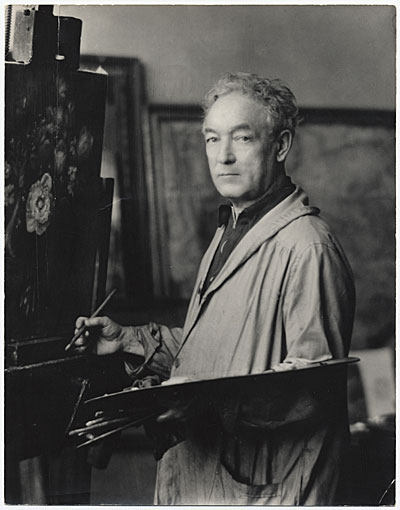
William James Glackens
1870 - 1938 , Estados Unidos da América
Informações Rápidas
- Artistic Movement Or Style: Ashcan School
- Artists Or Movements Influenced By This Artist: ['Pierre Auguste Renoir']
- Artists Who Influenced This Artist: ['Thomas Anshutz']
- Date Of Birth: Philadelphia, Estados Unidos (1870)
- Date Of Death: Westport, Connecticut (1938)
- Full Name: William James Glackens
- Nationality: Americano
- Notable Artworks:
- A Compradora
- Vista de Haarlem com campos de branqueamento
- Place Of Birth: Filadélfia, Pennsylvania
Artigos Relacionados

The Ashcan School: Realism, Urban Life & the Democratization of American Art
Explore the revolutionary Ashcan School! Discover how artists like Henri & Sloan challenged tradition with gritty realism, capturing urban life in early 20th-century America. Learn about their impact on American art history.

Realismo Americano: 10 Obras-Primas que Moldaram a Arte e Decoram o Lar
Descubra as 10 obras-primas do Realismo Americano! Explore a história de Hopper, Homer e Cassatt. Encontre reproduções de arte com qualidade museológica para decorar sua casa. Inspire-se em cores vibrantes e atmosferas únicas. Explore a coleção completa na ArtsDot.com.

Grant Wood & American Regionalism: Identity, Myth & the Rural Landscape
Explore the world of Grant Wood & American Regionalism with ArtsDot. Discover the symbolism behind 'American Gothic', recurring themes, and the movement's lasting impact on art history. High-quality reproductions available.

American Realism: Social Commentary & Artistic Representation in Early 20th-Century Painting
Explore the powerful social commentary & artistic representation of American Realism. Discover key artists like Bellows & Sloan, and understand the movement's lasting impact on 20th-century art history.
William Glackens: Capturing Modern American Life with Ashcan Realism
Explore the life & art of William Glackens, a pioneer of American Realism and founding member of the Ashcan School. Discover his vibrant depictions of early 20th-century New York & Paris. Learn about his influences & lasting legacy.

