


A imagem segue as suas escolhas: , .
Descrição do Item
A masterful display of psychological realism and chiaroscuro, William Hogarth's Hogarth's Servants captures the biting satire of the British Enlightenment through six expressive faces, inviting you to explore this era.
 Ler mais
Biografia do Artista
Explore o mundo satírico de William Hogarth (1697-1764), pintor e gravur inglês pioneiro. Descubra *A Harlot's Progress* e comentários sociais perspicazes.
Reprodução em Óleo Feita à Mão
Óleo sobre tela pintado à mão no tamanho e moldura de sua escolha, feito sob encomenda pelos nossos artistas. ( Alternar para Impressão Alternar para Imagem Digital)
Saiba mais sobre esta pintura
 Visualizar na parede
 Compartilhar
 Compartilhar
 Detalhes
 Guia
Guia

 Baixar imagem
 Semelhantes
 Raio X
 Ver diaporama
 Perguntas e Respostas
 Estatísticas
Encomende a sua pintura em quatro passos simples
Não tenha pressa. Você pode alterar qualquer resposta; o preço no seu carrinho de compras será atualizado conforme cada escolha.
1 Passo um de quatro
Qual tamanho você gostaria?
Estes tamanhos mantêm as proporções da pintura original. A ilustração mostra a sua escolha numa parede, acima de um sofá de dois metros.
Ou informe suas próprias medidas
Escolha entre os nossos tamanhos pré-definidos que respeitam as proporções originais da obra de arte.

Insira a largura e a altura desejadas para se ajustarem à sua moldura ou parede. Como esta obra é pintada à mão, para um tamanho com proporções diferentes, o artista poderá pintar um pouco mais ao redor da imagem ou reduzir ligeiramente a composição — você escolhe. Enviamos uma maquete digital para sua aprovação antes de iniciar a pintura. A imagem exibida nesta página não representa o resultado real — apenas a maquete mostra o resultado final.
2 Passo dois de quatro
Como deve ser preparado: enrolado, esticado ou emoldurado?
Os preços abaixo referem-se ao tamanho escolhido na primeira etapa.
Escolha as bordas da tela esticada
Escolha sua moldura

Branco €1

Bordas esfumaçadas €1

Bordas estendidas €1

P118B €10

P118H €10

P118W €10

P438Z €10

P508JH €12

P508YH €12

P805H €10

P805Z €10

P919BZ €10

P919G €10

P919XJ €10

P959ZH €10

P968JZ €12

W106C €8

W218G €10

W218JH €8

W218Y €10

W307PJ €10

W316G €10

W316PJ €8

W316Y €10

W398PJ €8

W4111J €10

W500HY €15

W500JH €15

W692G €12

W849H €8

W940BG €15

W953PJ €8

H24-GOLD €30

H24-SILVER €30

H36-GOLD €45

H36-SILVER €45
Com moldura
Moldura: . Dimensões totais com a moldura: .
3 Passo três de quatro
Gostaria de alterar algo na pintura?
A maioria das pessoas responde que não. Como cada pintura é feita à mão, nosso artista também pode adaptá-la para você.
Após o pedido, a equipe da ArtsDot.com enviará um e-mail ao cliente para instruções e fornecerá uma prévia da montagem
4 Passo quatro de quatro
Algumas opções de acabamento
Todos eles são opcionais. As respostas já selecionadas não têm custo adicional.
Quem o pintou?
Entrega mundial () em 3 a 4 semanas, em vez das 5 semanas padrão. (8 Novembro). Sem comprometer a qualidade.
Uma placa de identificação, como em um museu?
Detalhes da Placa de Bronze Gravada
This elegant plaque features the artist's name and the title of the artwork, finely engraved for a timeless presentation.
It is made from bronze with a refined, elegant finish. The text is precisely laser-engraved for a sharp and permanent result. Measuring 9x2 cm, the plaque is compact yet easy to read. It's built to be durable and scratch-resistant, offering a professional, museum-quality look. Mounting is simple thanks to the included adhesive backing.
Detalhes da Placa de Acrílico Transparente
The plaque includes essential engraved details such as the artist's name, the title of the artwork, the date it was created, the type of media used-like oil on canvas or watercolor-a brief description of the piece, and a QR code that links to the complete artwork information.
It is crafted from clear acrylic, offering a sleek, modern appearance. The text is UV-engraved in black to ensure strong visual contrast. With a size of 10x15 cm, it ensures optimal readability. It comes equipped with two metal hooks for secure wall mounting. The plaque is designed to be weather-resistant, making it suitable for various environments, and it includes interactive features that work seamlessly with smartphone scanning.
Detalhes da Placa de Acrílico Preto
This elegant plaque includes engraved information such as the artist's name, the title of the artwork, the date it was created, the type of media used (like oil on canvas or watercolor), a short description of the artwork, and a QR code for quick access to more information.
The plaque itself is made from refined black acrylic with a premium finish. The text is laser-engraved in white for high contrast and readability. Its size is 10x15 cm, designed to be easy to read. It comes with two metal hooks for professional mounting. The design is sleek and fits any interior style. It is also weather-resistant and durable, with built-in digital integration for mobile compatibility.
Um verniz protetor?
Para quando você precisa?
✓ Verifique e peça
A sua pintura, conforme encomendada

Hogarth's Servants
Técnica de Reprodução
Tamanho da Reprodução
-

Artista Sênior de Elite
Mais detalhes, refinamento e tempo de produção adicional
-

Moldura para Reprodução
-
-
Para obras de arte ou reproduções com mais de 105 cm (aproximadamente 41 polegadas) em qualquer um dos lados, a moldura será enviada como um kit desmontado. Este método garante uma entrega segura e evita danos durante o transporte.
Montagem profissional necessária — este não é um produto DIY (faça você mesmo).
O kit deve ser montado e a tela esticada por um profissional de molduraria experiente, utilizando cola de madeira (não inclusa), um alicate de esticar tela e grampos para manter as travessas alinhadas enquanto a cola seca. A montagem incorreta ou a tensão desigual da tela podem danificar permanentemente a obra de arte e não estão cobertas pela nossa garantia.
 Para obras de arte ou reproduções com mais de 105 cm (aproximadamente 41 polegadas) em qualquer um dos lados, a moldura será enviada como um kit desmontado. Este método garante uma entrega segura e evita danos durante o transporte.
Todas as barras de madeira maciça estão incluídas, precisamente cortadas ao tamanho certo.
Montado com os parafusos fornecidos, além de cola para madeira para as junções dos cantos, que não está inclusa e deve ser providenciada pelo seu moldurista.
São necessárias ferramentas profissionais não incluídas: um alicate de estiramento de tela (esticador) e grampos para manter as ripas alinhadas enquanto a cola seca.
Importante:
As junções dos cantos requerem cola para madeira, as ripas devem ser mantidas com grampos até que a cola esteja completamente seca, e o estiramento da tela na moldura montada requer um alicate de esticar tela. Nenhum destes itens está incluído no kit. Por favor, certifique-se de contar com um profissional de molduraria experiente antes de encomendar este tamanho.

Etiqueta de identificação
-
-

Verniz de Proteção
Verniz brilhante (realça as cores e protege contra a luz e a umidade)
-

Personalizar minha obra
Exemplos de alterações possíveis: Substituir o rosto por uma foto do cliente; Adicionar um animal de estimação (ex.: substituir gato por cachorro); Incluir uma mensagem oculta no fundo; Alterar a paisagem ou os elementos do fundo.
-

Urgente
Entrega mundial () em 3 a 4 semanas, em vez das 5 semanas padrão. (8 Novembro). Sem comprometer a qualidade.
-
Envio Expresso
Entrega mundial para em 5 semanas. (15 Novembro).
Com envio incluído
Preço Total
€ 235
A opção de vidro está disponível apenas para tamanhos inferiores a 110 cm
Incluído em todos os pedidos
- Envio expresso gratuito para todo o mundo
- Tela de Linho de Alta Qualidade
- Seguro de transporte completo
- Garantia de Reembolso de Impostos Alfandegários
- Garantia de Fidelidade Cromática
- Política de Devolução em 100 Dias (Apenas para Defeitos)
- Garantia de reembolso de 100%
- Oferta de desconto por quantidade


Hogarth's Servants: A Snapshot of Enlightenment Satire
William Hogarth’s “Hogarth’s Servants,” completed around 1750, isn’t merely a portrait; it’s a meticulously crafted distillation of the social anxieties and moral ambiguities that characterized the British Enlightenment. More than just capturing faces—though the six servants depicted are rendered with remarkable anatomical precision—the painting operates on multiple levels, delivering a potent critique of societal hypocrisy disguised within seemingly mundane domestic scenes. This artwork exemplifies Hogarth's signature style – a blend of realism and theatricality – skillfully employing oil paint on canvas to illuminate both the visual splendor and underlying moral failings of his era.- Subject Matter: The composition centers around six servants posed for an artist’s portrait, representing a microcosm of the burgeoning middle class in London. Their expressions convey boredom, discontent, and a subtle awareness of their precarious position within the hierarchy of wealth and status.
- Style & Technique: Hogarth's approach aligns perfectly with Rococo aesthetics, prioritizing elegance and detail while simultaneously injecting a dose of biting satire. The artist’s meticulous observation of human behavior is evident in every gesture and facial expression, mirroring the broader preoccupation with psychological realism prevalent during the period.
- Light & Shadow: Hogarth masterfully utilizes chiaroscuro—the dramatic interplay between light and shadow—to heighten the emotional impact of the scene. Light illuminates the faces of the servants, emphasizing their vulnerability and highlighting the artist’s gaze upon them, while darker areas create a sense of unease and underscore the moral decay hinted at beneath the surface.
Historical Context: The Enlightenment's Mirror
“Hogarth’s Servants” emerged during a pivotal moment in British history—the Enlightenment—a period marked by intellectual ferment, scientific advancements, and a burgeoning questioning of traditional authority. Hogarth’s work reflects the anxieties surrounding social mobility and moral responsibility that gripped the nation as it navigated its ascent to global prominence. The painting serves as a commentary on the perceived decline of virtue amidst material prosperity, mirroring broader debates about ethics and societal values.Symbolism & Narrative Depth
Beyond its visual beauty, “Hogarth’s Servants” is laden with symbolic significance. Each servant embodies different facets of human character—complacency, indolence, and moral indifference—reflecting Hogarth's belief that art should serve as a vehicle for social critique. The artist’s gaze directs the viewer’s attention to these figures, prompting contemplation on their roles within society and challenging viewers to confront uncomfortable truths about human behavior.Reproductions & Preservation
ArtsDot.com recognizes the enduring fascination with Hogarth's masterpiece and offers exceptional reproductions crafted by skilled artisans who painstakingly recreate every nuance of the original painting. These reproductions ensure that the artwork’s beauty and emotional resonance are faithfully preserved for generations to come, allowing art enthusiasts worldwide to experience the power of Hogarth’s vision firsthand. For a deeper understanding of Hogarth’s artistic legacy and its connection to the Musée des Beaux-Arts et d'Archéologie de Besançon, explore ArtsDot.com’s comprehensive documentation—a testament to the enduring relevance of this seminal work.Perguntas e Respostas
"Hogarth's Servants" é típico do que William Hogarth costumava criar?
Entre os temas recorrentes de William Hogarth — rococo aesthetics, enlightenment satire, social hierarchy critique, mastery of portraiture, human behavior observation — "Hogarth's Servants" traz seu próprio foco em people, men, women, colonial clothing, ties, portrait.
Como "Hogarth's Servants" se insere na trajetória artística de William Hogarth?
"Hogarth's Servants" compartilha com as outras obras de William Hogarth o seu estilo Rococo e os temas recorrentes: rococo aesthetics, enlightenment satire, social hierarchy critique, mastery of portraiture, human behavior observation.
Qual origem nacional fundamenta o Rococo de "Hogarth's Servants"?
A obra do Rococo "Hogarth's Servants" foi criada por um artista nascido em Reino Unido.
Obras Relacionadas


William Hogarth
1697 - 1764, Reino Unido
Biografia do Artista
A London Life in Ink and Paint: The World of William Hogarth
William Hogarth, born into the bustling heart of 18th-century London in 1697, was more than just an artist; he was a visual historian, a keen observer of human nature, and a satirical commentator on the societal currents of his age. His life story is inextricably linked to the very fabric of England during a period of significant transformation – its burgeoning ambitions, underlying anxieties, and pervasive hypocrisies all finding potent expression in his remarkably detailed and often biting works. The son of a struggling Latin schoolmaster, Hogarth’s early experiences instilled within him both a love for learning and a sharp awareness of social inequalities, a foundation that would prove crucial to shaping his artistic vision. Initially apprenticed to an engraver, he quickly demonstrated a talent extending beyond mere technical skill; he possessed an innate ability to observe the nuances of human behavior and translate them into compelling visual narratives. However, he chafed against the constraints of traditional engraving, seeking a more expressive outlet for his burgeoning creativity. This led him to studies at both St Martin’s Lane Academy and under Sir James Thornhill, where he honed his skills in painting and composition, absorbing influences that would later inform his unique style.The Birth of Modern Moral Subjects
Hogarth's true innovation lay not simply *what* he painted, but *how*. He pioneered what he termed “modern moral subjects” – a series of pictures designed to tell a story, often imbued with a strong satirical edge. These weren’t isolated portraits or landscapes; they were visual novels unfolding before the viewer’s eyes, offering pointed commentary on contemporary society. A Harlot's Progress, created in 1742, stands as perhaps his most famous example. This series of six paintings meticulously follows the tragic downfall of Mary, a young woman arriving in London full of hope but quickly succumbing to the temptations and dangers of city life. Each scene is rendered with painstaking detail, filled with symbolic elements that reveal the moral decay surrounding her. The progression from hopeful innocence to desperate poverty and ultimately, despair, is depicted with unflinching honesty, forcing viewers to confront uncomfortable truths about social mobility and the consequences of unchecked desire. Similarly, A Rake's Progress, begun in 1733, charts the reckless decline of Tom Rakewell, a man who squanders his inheritance on gambling, debauchery, and ultimately, madness. These weren’t merely cautionary tales; they were unflinching portraits of a society grappling with issues of class, morality, and social mobility. Hogarth's genius resided in his ability to elevate everyday scenes – the bustling streets of London, the opulent interiors of the wealthy, the squalid lives of the poor – into works of art that resonated deeply with his audience. He didn’t shy away from depicting the harsh realities of life, presenting them with a blend of humor and pathos that forced viewers to confront uncomfortable truths about themselves and their society.Technique and Influences: A Synthesis of Styles
Hogarth's artistic style was a unique amalgamation of diverse influences. He greatly admired the realism and narrative detail found in the works of Dutch genre painters like Pieter de Hooch, evident in his meticulous depictions of interiors and everyday life. The satirical prints produced in France also played a role in shaping his approach to social commentary. However, Hogarth wasn’t simply imitating these sources; he was synthesizing them into something entirely new and distinctly his own. His technique was characterized by a masterful use of line and shading, particularly evident in his engravings. He employed a distinctive cross-hatching technique that created depth and texture, bringing his scenes to life with remarkable clarity. He also possessed an exceptional eye for composition, arranging figures and objects within the frame to create dynamic and engaging narratives. Beyond visual art, Hogarth was influenced by literary works, particularly those of Jonathan Swift and Henry Fielding, whose satirical wit informed his own social observations. He believed that art should not merely be beautiful but should also serve a moral purpose, challenging viewers to confront uncomfortable truths about themselves and their society. He sought to hold a mirror up to nature, reflecting both its beauty and its ugliness with unflinching honesty.The Foundling Hospital and the Rise of Public Art
Hogarth’s commitment to social reform extended beyond his paintings. He became a staunch supporter of the Foundling Hospital, established by Thomas Coram to care for abandoned children. Recognizing the importance of public engagement with art, he spearheaded efforts to display his works – and those of other artists – at the hospital, creating what is considered one of Britain’s first public art galleries. This initiative not only provided a platform for artistic expression but also fostered a sense of civic pride and social responsibility. His involvement in this project demonstrated his belief that art could be a powerful tool for promoting positive change within society. He was deeply moved by the plight of orphaned children, and his support for the hospital reflected his desire to alleviate suffering and improve the lives of those most vulnerable.Legacy and Lasting Impact
The impact of William Hogarth extends far beyond the realm of 18th-century art. His work gained immense popularity thanks to the mass production of prints based on his paintings, making his satirical commentary accessible to a wider audience than ever before. He is widely considered a precursor to political cartooning and comic strips, laying the groundwork for visual storytelling in popular culture. Artists like James Gillray and George Cruikshank were directly influenced by his style, carrying forward his tradition of social satire. Even Charles Lamb, the celebrated essayist, recognized the narrative power of Hogarth’s images, famously remarking that they were “like books to be read rather than merely looked at.”- Hogarth established a distinctly British artistic identity.
- His work provides invaluable insights into 18th-century English society.
- He influenced generations of artists and satirists.


Artigos Relacionados

The Rococo Aesthetic: Opulence, Rebellion & the Pursuit of Pleasure in 18th-Century Art
Explore the opulent world of Rococo art! Discover its origins, key artists like Watteau & Boucher, and lasting influence on design. Expert insights for collectors & enthusiasts.

Illuminating the Enlightenment: Artistic Expression in 18th-Century Europe
Explore the artistic brilliance of the Enlightenment era! Discover Rococo's elegance & Neoclassicism’s virtue with expert insights into 18th-century masterpieces. Learn about David, Kauffmann & more.
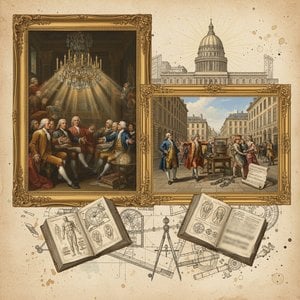
Illuminating the Enlightenment: Art & Sociopolitical Context of the 18th Century
Explore the art of the Enlightenment! Discover Rococo's elegance, Neoclassicism’s virtue, & David’s revolutionary masterpieces. Uncover the sociopolitical context shaping 18th-century European painting.