

- 92.0 x 121.0 cm


A imagem segue as suas escolhas: , .
Descrição do Item
Experience the shifting patterns of Central Australia with Sidney Nolan's evocative 1949 landscape; discover this masterpiece capturing the vast Australian spirit.
 Ler mais
Biografia do Artista
Descubra Sir Sidney Nolan (1917-1992), o mestre australiano do modernismo! Explore obras icônicas como a série Ned Kelly, paisagens vibrantes e sua visão única da história australiana. Veja trabalhos em ArtsDot.
Reprodução em Óleo Feita à Mão
Óleo sobre tela pintado à mão no tamanho e moldura de sua escolha, feito sob encomenda pelos nossos artistas. ( Alternar para Impressão Alternar para Imagem Digital)
Esta obra está protegida por direitos autorais
A obra de arte exibida nesta página é protegida por leis de direitos autorais, o que significa que não podemos criar ou vender legalmente uma reprodução idêntica. Esta proteção é aplicada por meio de acordos internacionais, tais como a Convenção de Berna e pelas leis nacionais, incluindo as estabelecidas por Lei de Direitos Autorais dos EUA - Título 17.
Como uma alternativa respeitosa e legal, oferecemos obras de arte personalizadas e pintadas à mão, inspiradas na obra original. Nossos artistas profissionais e experientes estudam cuidadosamente o estilo, a atmosfera e a essência artística da obra original para criar uma peça nova e única que evoque a mesma sensação — permanecendo como uma criação original por direito próprio.
Este método cumpre plenamente as regulamentações de direitos autorais, pois não envolve a cópia ou duplicação da obra protegida. Em vez disso, trata-se de uma reinterpretação criativa — uma nova pintura que é influenciada pela original, mas não idêntica a ela.
Saiba mais sobre esta pintura
 Visualizar na parede
 Compartilhar
 Compartilhar
 Detalhes
 Guia
Guia

 Baixar imagem
 Semelhantes
 Raio X
 Ver diaporama
 Perguntas e Respostas
 Estatísticas
Encomende a sua pintura em quatro passos simples
Não tenha pressa. Você pode alterar qualquer resposta; o preço no seu carrinho de compras será atualizado conforme cada escolha.
1 Passo um de quatro
Qual tamanho você gostaria?
Estes tamanhos mantêm as proporções da pintura original. A ilustração mostra a sua escolha numa parede, acima de um sofá de dois metros.
Ou informe suas próprias medidas
Escolha entre os nossos tamanhos pré-definidos que respeitam as proporções originais da obra de arte.

Insira a largura e a altura desejadas para se ajustarem à sua moldura ou parede. Como esta obra é pintada à mão, para um tamanho com proporções diferentes, o artista poderá pintar um pouco mais ao redor da imagem ou reduzir ligeiramente a composição — você escolhe. Enviamos uma maquete digital para sua aprovação antes de iniciar a pintura. A imagem exibida nesta página não representa o resultado real — apenas a maquete mostra o resultado final.
2 Passo dois de quatro
Como deve ser preparado: enrolado, esticado ou emoldurado?
Os preços abaixo referem-se ao tamanho escolhido na primeira etapa.
Escolha as bordas da tela esticada
Escolha sua moldura

Branco €1

Bordas esfumaçadas €1

Bordas estendidas €1

P118B €10

P118H €10

P118W €10

P438Z €10

P508JH €12

P508YH €12

P805H €10

P805Z €10

P919BZ €10

P919G €10

P919XJ €10

P959ZH €10

P968JZ €12

W106C €8

W218G €10

W218JH €8

W218Y €10

W307PJ €10

W316G €10

W316PJ €8

W316Y €10

W398PJ €8

W4111J €10

W500HY €15

W500JH €15

W692G €12

W849H €8

W940BG €15

W953PJ €8

H24-GOLD €30

H24-SILVER €30

H36-GOLD €45

H36-SILVER €45
Com moldura
Moldura: . Dimensões totais com a moldura: .
3 Passo três de quatro
Gostaria de alterar algo na pintura?
A maioria das pessoas responde que não. Como cada pintura é feita à mão, nosso artista também pode adaptá-la para você.
Após o pedido, a equipe da ArtsDot.com enviará um e-mail ao cliente para instruções e fornecerá uma prévia da montagem
4 Passo quatro de quatro
Algumas opções de acabamento
Todos eles são opcionais. As respostas já selecionadas não têm custo adicional.
Quem o pintou?
Entrega mundial () em 3 a 4 semanas, em vez das 5 semanas padrão. (3 Novembro). Sem comprometer a qualidade.
Uma placa de identificação, como em um museu?
Detalhes da Placa de Bronze Gravada
This elegant plaque features the artist's name and the title of the artwork, finely engraved for a timeless presentation.
It is made from bronze with a refined, elegant finish. The text is precisely laser-engraved for a sharp and permanent result. Measuring 9x2 cm, the plaque is compact yet easy to read. It's built to be durable and scratch-resistant, offering a professional, museum-quality look. Mounting is simple thanks to the included adhesive backing.
Detalhes da Placa de Acrílico Transparente
The plaque includes essential engraved details such as the artist's name, the title of the artwork, the date it was created, the type of media used-like oil on canvas or watercolor-a brief description of the piece, and a QR code that links to the complete artwork information.
It is crafted from clear acrylic, offering a sleek, modern appearance. The text is UV-engraved in black to ensure strong visual contrast. With a size of 10x15 cm, it ensures optimal readability. It comes equipped with two metal hooks for secure wall mounting. The plaque is designed to be weather-resistant, making it suitable for various environments, and it includes interactive features that work seamlessly with smartphone scanning.
Detalhes da Placa de Acrílico Preto
This elegant plaque includes engraved information such as the artist's name, the title of the artwork, the date it was created, the type of media used (like oil on canvas or watercolor), a short description of the artwork, and a QR code for quick access to more information.
The plaque itself is made from refined black acrylic with a premium finish. The text is laser-engraved in white for high contrast and readability. Its size is 10x15 cm, designed to be easy to read. It comes with two metal hooks for professional mounting. The design is sleek and fits any interior style. It is also weather-resistant and durable, with built-in digital integration for mobile compatibility.
Um verniz protetor?
Para quando você precisa?
✓ Verifique e peça
A sua pintura, conforme encomendada

Central Australia
Técnica de Reprodução
Tamanho da Reprodução
-

Artista Sênior de Elite
Mais detalhes, refinamento e tempo de produção adicional
-

Moldura para Reprodução
-
-
Para obras de arte ou reproduções com mais de 105 cm (aproximadamente 41 polegadas) em qualquer um dos lados, a moldura será enviada como um kit desmontado. Este método garante uma entrega segura e evita danos durante o transporte.
Montagem profissional necessária — este não é um produto DIY (faça você mesmo).
O kit deve ser montado e a tela esticada por um profissional de molduraria experiente, utilizando cola de madeira (não inclusa), um alicate de esticar tela e grampos para manter as travessas alinhadas enquanto a cola seca. A montagem incorreta ou a tensão desigual da tela podem danificar permanentemente a obra de arte e não estão cobertas pela nossa garantia.
 Para obras de arte ou reproduções com mais de 105 cm (aproximadamente 41 polegadas) em qualquer um dos lados, a moldura será enviada como um kit desmontado. Este método garante uma entrega segura e evita danos durante o transporte.
Todas as barras de madeira maciça estão incluídas, precisamente cortadas ao tamanho certo.
Montado com os parafusos fornecidos, além de cola para madeira para as junções dos cantos, que não está inclusa e deve ser providenciada pelo seu moldurista.
São necessárias ferramentas profissionais não incluídas: um alicate de estiramento de tela (esticador) e grampos para manter as ripas alinhadas enquanto a cola seca.
Importante:
As junções dos cantos requerem cola para madeira, as ripas devem ser mantidas com grampos até que a cola esteja completamente seca, e o estiramento da tela na moldura montada requer um alicate de esticar tela. Nenhum destes itens está incluído no kit. Por favor, certifique-se de contar com um profissional de molduraria experiente antes de encomendar este tamanho.

Etiqueta de identificação
-
-

Verniz de Proteção
Verniz brilhante (realça as cores e protege contra a luz e a umidade)
-

Personalizar minha obra
Exemplos de alterações possíveis: Substituir o rosto por uma foto do cliente; Adicionar um animal de estimação (ex.: substituir gato por cachorro); Incluir uma mensagem oculta no fundo; Alterar a paisagem ou os elementos do fundo.
-

Urgente
Entrega mundial () em 3 a 4 semanas, em vez das 5 semanas padrão. (3 Novembro). Sem comprometer a qualidade.
-
Envio Expresso
Entrega mundial para em 5 semanas. (10 Novembro).
Com envio incluído
Preço Total
€ 235
A opção de vidro está disponível apenas para tamanhos inferiores a 110 cm
Incluído em todos os pedidos
- Envio expresso gratuito para todo o mundo
- Tela de Linho de Alta Qualidade
- Seguro de transporte completo
- Garantia de Reembolso de Impostos Alfandegários
- Garantia de Fidelidade Cromática
- Política de Devolução em 100 Dias (Apenas para Defeitos)
- Garantia de reembolso de 100%
- Oferta de desconto por quantidade


A Vision of the Red Centre: The Abstracted Majesty of Central Australia
In the vast, sun-drenched expanse of the Australian interior, where the horizon blurs between earth and sky, Sir Sidney Robert Nolan captured a reality that transcends mere topography. Central Australia is not simply a landscape painting; it is a profound meditation on pattern, perception, and the mythic quality of the outback. Created in 1949, this masterpiece invites the viewer to experience the desert not as a static scene, but as a living, breathing entity. Nolan, a titan of 20th-century Australian art, possessed a singular ability to distill the raw, often harsh essence of the continent into a visual language that feels both ancient and avant-garde. Through his eyes, the rugged mountain ranges and undulating hills become part of a rhythmic dance, where geological forms appear to emerge from and dissolve back into the earth.
The painting’s power lies in its unique stylistic synthesis, reminiscent of Cubist collage and the spontaneous abstractions of Paul Klee. Nolan famously drew inspiration from the perspective of an aerial view, imagining the landscape from an altitude of 10,000 feet. This elevated vantage point allowed him to strip away the clutter of the foreground and focus on the mesmerizing, random patterns etched upon the earth’s surface. The result is a composition that feels remarkably modern—a tapestry of shifting shapes where the distinction between solid rock and ephemeral shadow is intentionally blurred. For the discerning collector or interior designer, this work offers a sophisticated focal point that brings a sense of structured movement and intellectual depth to any curated space.
Technique and the Texture of Drought
To touch the surface of this work—even through a high-quality reproduction—is to encounter the ruggedness of the Australian spirit. Nolan utilized a specialized drybrush technique, applying thin, deliberate layers of oil paint onto hardboard. This method was essential for capturing the parched, textured reality of the desert. By manipulating the pigment to create a sense of friction and grit, he successfully evoked the heat of the sun and the desiccated nature of the terrain. The color palette is a masterful study in contrast: deep, earthy ochres and burnt siennas collide with sudden bursts of brilliant orange and cool, atmospheric blues. These hues do more than represent color; they communicate the intense thermal shifts of the desert, where the warmth of the day gives way to the biting chill of the nocturnal air.
This technical mastery serves a deeper symbolic purpose. The painting was conceived during a period when Nolan was documenting the devastating effects of drought in the rural interior. Every stroke carries the weight of this environmental struggle, imbuing the landscape with a sense of vulnerability and resilience. The mountains, appearing like ghostly silhouettes against an incandescent sky, act as monuments to endurance. For those seeking to decorate a space with art that possesses true emotional gravity, Central Australia provides a window into a world where nature is both beautiful and formidable, offering a timeless connection to the primal elements of our planet.
An Invitation to Wonder
Beyond its historical significance and technical brilliance, Central Australia serves as an emotional gateway. It evokes a sense of profound wonder, pulling the viewer into a space of quiet contemplation. There is a rhythmic, almost musical quality to the way the hills rise and fall, a visual cadence that can soothe the mind while stimulating the imagination. Whether placed in a contemporary gallery setting or a warm, residential study, this painting acts as an anchor of authenticity and mythic storytelling.
Owning a reproduction of such a seminal work allows one to inhabit Nolan’s dreamscape daily. It is an opportunity to surround oneself with the legacy of the Angry Penguins movement and the enduring mystery of the Australian outback. As a piece of fine art, it transcends decoration; it becomes a conversation starter, a piece of history, and a permanent tribute to the breathtaking complexity of the natural world.
Perguntas e Respostas
As cores de "Central Australia", de Sir Sidney Robert Nolan são vibrantes ou suaves?
"Central Australia", de Sir Sidney Robert Nolan apresenta uma saturação Balanced Soft e uma intensidade Balanced.
Em que ano foi criado "Central Australia"?
"Central Australia" data de 1949. A data situa a obra na carreira de Sir Sidney Robert Nolan e em sua época.
Quem é o autor e qual é a data de "Central Australia"?
A obra "Central Australia" é de autoria de Sir Sidney Robert Nolan e data de 1949.
Obras Relacionadas


Sir Sidney Robert Nolan
1917 - 1992, Austrália
Biografia do Artista
A Life Painted in Myth and Landscape
Sir Sidney Robert Nolan, born in Melbourne in 1917, stands as a monumental figure in 20th-century Australian art. His journey was not one of conventional artistic training but rather an explosive emergence from the working-class streets of St Kilda into a world of vibrant imagination and relentless experimentation. Nolan wasn’t simply a painter; he was a visual storyteller, a mythmaker who wrestled with Australia's history, its landscapes, and its very identity. From his early days as a runner for an illegal betting ring to his eventual acclaim on the international stage, Nolan’s life was marked by a restless energy and a refusal to be confined by artistic norms. He absorbed influences from diverse sources – the poetry of Rimbaud, the spatial innovations of Cézanne, the raw emotion of Danila Vassilieff – yet forged a style uniquely his own, one that resonated with a distinctly Australian sensibility. His early exposure to the harsh realities of Melbourne life and the allure of its underbelly would profoundly shape his artistic vision, imbuing his work with a sense of both defiance and vulnerability.The Shaping of an Iconoclast
Nolan’s formative years were steeped in intellectual ferment. The Heide Circle, centered around patrons John and Sunday Reed, proved pivotal. This haven for artists and writers fostered a spirit of radical experimentation and provided Nolan with crucial support during his developing phase. It was at Heide that he encountered kindred spirits – Albert Tucker, Joy Hester, Arthur Boyd – all grappling with the challenge of creating a distinctly Australian modernism. The influence of modernist literature, particularly the Symbolist poets, cannot be overstated. Rimbaud’s call for a “systematic derangement of the senses” became a guiding principle for Nolan, liberating him from representational constraints and encouraging him to explore the emotional power of color, form, and symbolism. His early works demonstrate this influence, often featuring fragmented figures and dreamlike landscapes that hint at deeper psychological truths. He wasn’t interested in merely depicting reality; he sought to capture its essence, its underlying emotions, and its hidden narratives. This period also saw Nolan experimenting with various media, from stage design for the Ballet Russes to commercial art, each experience contributing to his growing technical prowess and artistic vocabulary.Early Influences and Artistic Development
Nolan’s artistic education began informally, fueled by a voracious appetite for literature and visual art. He devoured books on Pablo Picasso, Paul Klee, Henri Matisse and the surrealists—artists who championed spontaneity and intuition as antidotes to rationalism. Particularly compelling was Klee's approach, which deliberately undermined accepted boundaries of art through experimentation and a range of techniques, media and juxtaposition of subject matter. Klee’s belief that art should be childlike – embracing simplicity and uninhibited emotion – resonated deeply with Nolan’s artistic sensibilities. He recognized the importance of rejecting conventional stylistic conventions and pursuing personal vision—a conviction that would permeate his entire oeuvre. His early paintings reflected these influences, characterized by bold colors, simplified forms, and a deliberate disregard for photographic realism. This initial exploration established a foundation for Nolan's subsequent stylistic innovations and cemented his commitment to artistic freedom.The Iconic Ned Kelly Series
Nolan’s breakthrough came with the commencement of his monumental Ned Kelly series in 1946-47. Inspired by Arthur Rimbaud’s poetic vision—specifically, *“Il faut être absolument modern”—*he embarked on a project that would redefine Australian art and solidify his reputation as one of Australia's foremost modernist artists. Rejecting traditional portraiture or landscape painting, Nolan adopted a radically innovative technique: he painted the Kelly Gang figures in black armor against starkly rendered Australian landscapes—a visual metaphor for confronting history with unflinching honesty. This series wasn’t merely an artistic endeavor; it was a profound engagement with Australia's cultural heritage and a bold assertion of national identity. The flattened planes of color, the deliberate awkwardness of brushwork, and the symbolic use of black armor created a powerful aesthetic statement that challenged conventional notions of heroism and celebrated defiance. Nolan’s meticulous attention to detail—particularly in capturing the textures of the landscape and the expressions of his subjects—demonstrated his mastery of artistic craft and cemented his place as a visionary artist.A Legacy of Visionary Art
Sir Sidney Robert Nolan's legacy extends far beyond his iconic Ned Kelly series. He established himself as one of Australia’s most influential modernist artists, shaping the trajectory of Australian art for decades to come. His unwavering commitment to experimentation, coupled with his profound engagement with Australian mythology and landscape—a preoccupation that would continue throughout his career—established him as a singular voice in 20th-century art history. From Antarctica to Burke and Wills, Nolan consistently pursued artistic innovation while simultaneously confronting complex themes of identity, loss, and the relationship between humanity and nature. His paintings remain celebrated for their emotional intensity, stylistic boldness, and enduring relevance—a testament to Nolan’s extraordinary talent and his unwavering belief in the transformative power of art. Platforms like ArtsDot continue to showcase reproductions of his masterpieces, ensuring that Nolan's visionary aesthetic inspires audiences worldwide.

Artigos Relacionados

Os 10 Quadros Icônicos que Definem a Arte dos Anos 40 | ArtsDot
Reviva a arte marcante dos anos 40! Explore os 10 quadros icônicos de Pollock, Kahlo e Hopper. Descubra histórias, estilos e cores que definiram uma era. Reproduções de museu na ArtsDot.com.

Fernand Léger: As 25 Obras-Primas que Definem um Ícone da Arte Moderna | ArtsDot
Descubra as 25 obras-primas de Fernand Léger, pioneiro do tubismo e da arte moderna. Explore a história, cores vibrantes e técnicas inovadoras por trás de seus quadros icônicos. Encontre reproduções de alta qualidade para decorar sua casa com estilo em ArtsDot.com.
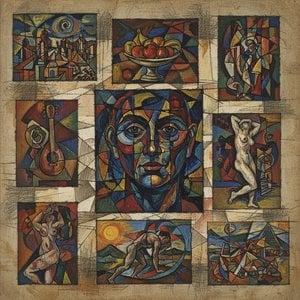
Cubismo Expressionista: 10 Obras-Primas que Moldaram a Arte Moderna | ArtsDot
Descubra as 10 obras-primas do Cubismo Expressionista que revolucionaram a arte moderna! Explore Picasso, Braque e outros mestres. Reproduções de alta qualidade para decorar sua casa com estilo. Explore a coleção completa em ArtsDot.com