


The picture follows your choices: , .
Descrição do Item
Estátua neoclássica de Cupido esculpida em mármore por Louis-Simon Boizot (1772). Uma obra-prima da arte barroca e clássica, símbolo do amor e beleza.
 Ler mais
Biografia do Artista
Descubra Louis-Simon Boizot e suas esculturas em porcelana! Mestre da elegância neoclássica e do charme rococó, explorou obras importantes como São Roque Pedindo à Virgem Maria e grupos emblemáticos que celebram a humanidade e o espírito artístico do século XVIII.
Reprodução em Óleo Feita à Mão
Óleo sobre tela pintado à mão no tamanho e moldura de sua escolha, feito sob encomenda pelos nossos artistas. ( Alternar para Impressão Alternar para Imagem Digital)
More about this painting
 Visualizar na parede
 Compartilhar
 Compartilhar
 Detalhes
 Guia
Guia

 Baixar imagem
 Semelhantes
 Raio X
 Ver diaporama
 Q&A
Q&A Estatísticas
Order your painting in four simple steps
Take your time. You can change any answer; the price in your order card follows each choice.
1 Step one of four
Which size would you like?
These sizes keep the proportions of the original painting. The drawing shows your choice on a wall, above a two-metre sofa.
Or give your own measurements
Escolha entre os nossos tamanhos pré-definidos que respeitam as proporções originais da obra de arte.

Insira a largura e a altura desejadas para se ajustarem à sua moldura ou parede. Como esta obra é pintada à mão, para um tamanho com proporções diferentes, o artista poderá pintar um pouco mais ao redor da imagem ou reduzir ligeiramente a composição — você escolhe. Enviamos uma maquete digital para sua aprovação antes de iniciar a pintura. A imagem exibida nesta página não representa o resultado real — apenas a maquete mostra o resultado final.
2 Step two of four
How should it be prepared: rolled, stretched or framed?
The prices below are for the size you chose in step one.
Choose the edges of the stretched canvas
Choose your frame

White €1

Blurside €1

Extended €1

P118B €10

P118H €10

P118W €10

P438Z €10

P508JH €12

P508YH €12

P805H €10

P805Z €10

P919BZ €10

P919G €10

P919XJ €10

P959ZH €10

P968JZ €12

W106C €8

W218G €10

W218JH €8

W218Y €10

W307PJ €10

W316G €10

W316PJ €8

W316Y €10

W398PJ €8

W4111J €10

W500HY €15

W500JH €15

W692G €12

W849H €8

W940BG €15

W953PJ €8

H24-GOLD €30

H24-SILVER €30

H36-GOLD €45

H36-SILVER €45
Com moldura
Moulding: . Overall size with the frame: .
3 Step three of four
Would you like anything changed in the painting?
Most people answer no. Because each painting is made by hand, our artist can also adapt it for you.
After order, ArtsDot.com team will email client for instructions and provide a mockup preview
4 Step four of four
A few finishing options
All of them are optional. The answers already selected cost nothing extra.
Who paints it?
Entrega mundial () em 3 a 4 semanas, em vez das 5 semanas padrão. (30 Outubro). Sem comprometer a qualidade.
A nameplate, as in a museum?
Detalhes da Placa de Bronze Gravada
This elegant plaque features the artist's name and the title of the artwork, finely engraved for a timeless presentation.
It is made from bronze with a refined, elegant finish. The text is precisely laser-engraved for a sharp and permanent result. Measuring 9x2 cm, the plaque is compact yet easy to read. It's built to be durable and scratch-resistant, offering a professional, museum-quality look. Mounting is simple thanks to the included adhesive backing.
Detalhes da Placa de Acrílico Transparente
The plaque includes essential engraved details such as the artist's name, the title of the artwork, the date it was created, the type of media used-like oil on canvas or watercolor-a brief description of the piece, and a QR code that links to the complete artwork information.
It is crafted from clear acrylic, offering a sleek, modern appearance. The text is UV-engraved in black to ensure strong visual contrast. With a size of 10x15 cm, it ensures optimal readability. It comes equipped with two metal hooks for secure wall mounting. The plaque is designed to be weather-resistant, making it suitable for various environments, and it includes interactive features that work seamlessly with smartphone scanning.
Detalhes da Placa de Acrílico Preto
This elegant plaque includes engraved information such as the artist's name, the title of the artwork, the date it was created, the type of media used (like oil on canvas or watercolor), a short description of the artwork, and a QR code for quick access to more information.
The plaque itself is made from refined black acrylic with a premium finish. The text is laser-engraved in white for high contrast and readability. Its size is 10x15 cm, designed to be easy to read. It comes with two metal hooks for professional mounting. The design is sleek and fits any interior style. It is also weather-resistant and durable, with built-in digital integration for mobile compatibility.
A protective varnish?
When do you need it?
✓ Check and order
Your painting, as you ordered it

Cupido
Técnica de Reprodução
Tamanho da Reprodução
-

Artista Sênior de Elite
Mais detalhes, refinamento e tempo de produção adicional
-

Moldura para Reprodução
-
-
Para obras de arte ou reproduções com mais de 105 cm (aproximadamente 41 polegadas) em qualquer um dos lados, a moldura será enviada como um kit desmontado. Este método garante uma entrega segura e evita danos durante o transporte.
Montagem profissional necessária — este não é um produto DIY (faça você mesmo).
O kit deve ser montado e a tela esticada por um profissional de molduraria experiente, utilizando cola de madeira (não inclusa), um alicate de esticar tela e grampos para manter as travessas alinhadas enquanto a cola seca. A montagem incorreta ou a tensão desigual da tela podem danificar permanentemente a obra de arte e não estão cobertas pela nossa garantia.
 Para obras de arte ou reproduções com mais de 105 cm (aproximadamente 41 polegadas) em qualquer um dos lados, a moldura será enviada como um kit desmontado. Este método garante uma entrega segura e evita danos durante o transporte.
Todas as barras de madeira maciça estão incluídas, precisamente cortadas ao tamanho certo.
Montado com os parafusos fornecidos, além de cola para madeira para as junções dos cantos, que não está inclusa e deve ser providenciada pelo seu moldurista.
São necessárias ferramentas profissionais não incluídas: um alicate de estiramento de tela (esticador) e grampos para manter as ripas alinhadas enquanto a cola seca.
Importante:
As junções dos cantos requerem cola para madeira, as ripas devem ser mantidas com grampos até que a cola esteja completamente seca, e o estiramento da tela na moldura montada requer um alicate de esticar tela. Nenhum destes itens está incluído no kit. Por favor, certifique-se de contar com um profissional de molduraria experiente antes de encomendar este tamanho.

Etiqueta de identificação
-
-

Verniz de Proteção
Verniz brilhante (realça as cores e protege contra a luz e a umidade)
-

Personalizar minha obra
Exemplos de alterações possíveis: Substituir o rosto por uma foto do cliente; Adicionar um animal de estimação (ex.: substituir gato por cachorro); Incluir uma mensagem oculta no fundo; Alterar a paisagem ou os elementos do fundo.
-

Urgente
Entrega mundial () em 3 a 4 semanas, em vez das 5 semanas padrão. (30 Outubro). Sem comprometer a qualidade.
-
Envio Expresso
Entrega mundial para em 5 semanas. (6 Novembro).
Com envio incluído
Preço Total
€ 232
A opção de vidro está disponível apenas para tamanhos inferiores a 110 cm
Included with every order
- Envio expresso gratuito para todo o mundo
- Tela de Linho de Alta Qualidade
- Seguro de transporte completo
- Garantia de Reembolso de Impostos Alfandegários
- Garantia de Fidelidade Cromática
- Política de Devolução em 100 Dias (Apenas para Defeitos)
- Garantia de reembolso de 100%
- Oferta de desconto por quantidade


Uma Elegância Neoclássica em Biscuit: A Estatueta de Cupido de Louis-Simon Boizot
A estatueta de Cupido, obra do escultor francês Louis-Simon Boizot (1743 – 1809), representa um marco na história da arte decorativa francesa do século XVIII. Criada para a renomada fábrica de porcelana Sèvres, esta peça exemplifica uma fascinante combinação entre o espírito neoclássico e os últimos vestígios da ornamentação rococó, consolidando Boizot como um dos artistas mais importantes de seu tempo. Embora sua produção escultórica seja relativamente limitada em comparação com suas atividades na cerâmica – onde ele alcançou verdadeiro reconhecimento –, o legado artístico deste escultor permanece significativo, garantindo-lhe um lugar entre os maiores nomes da escultura francesa do período iluminista. Boizot nasceu em uma família artística tradicional, filho de Antoine Boizot, designer responsável pela decoração das Tapearias Gobelins. Desde cedo, foi exposto à beleza e à precisão do trabalho artesanal, influenciado pelo pai e pelo próprio ambiente acadêmico onde estudou sob a direção de René-Michel Slodtz, outro escultor influente que compartilhava sua visão estética. Sua formação na Academia Real de Pintura e Escultura proporcionou acesso às técnicas mais avançadas da época, permitindo que ele desenvolvesse um estilo único caracterizado pela busca por formas ideaisizadas e pela atenção meticulosa aos detalhes anatômicos. A estatueta de Cupido é uma obra emblemática do neoclassicismo francês, movimento artístico que buscava reviver os valores da antiguidade clássica após o período barroco exuberante. Inspirado pelas esculturas de Bernini e Bouchardon – artistas que estabeleceram padrões elevados de beleza e equilíbrio –, Boizot empregou técnicas inovadoras para criar uma obra que transcendesse a mera reprodução estética, incorporando elementos simbólicos profundos e expressivos. O uso do biscuit porcelana, uma técnica de cozimento em alta temperatura que garante uma superfície lisa e brilhante, demonstra o domínio técnico do escultor e sua capacidade de adaptar os princípios clássicos à produção artística contemporânea. A composição da estatueta é cuidadosamente planejada para transmitir uma sensação de movimento elegante e naturalismo. Cupido está posicionado em uma postura contrapposto – equilíbrio entre peso e apoio –, que confere à figura uma leveza e graça características do neoclassicismo. Sua expressão facial transmite serenidade e contemplação, convidando o espectador a refletir sobre temas como amor, beleza e harmonia estética. Além disso, o escultor utilizou sombras marcantes para criar profundidade e volume na estatueta, destacando a textura suave da porcelana e enfatizando os detalhes anatômicos da figura humana. A estatueta de Cupido não apenas demonstra o talento artístico de Boizot como escultor, mas também reflete as preocupações culturais e filosóficas do século XVIII. O simbolismo presente na obra – Cupido, deus romano do amor, carregando um arco e flechas – remete às ideias da razão iluminista e à crença na importância da beleza como instrumento de educação moral e estética. Esta estatueta permanece uma fonte de inspiração para artistas e designers contemporâneos que buscam criar obras que celebrem a elegância neoclássica e transmitam emoções profundas ao público.Perguntas e Respostas
Onde posso comprar uma reprodução pintada à mão de "Cupido", de Louis-Simon Boizot?
Você pode encomendar uma reprodução pintada à mão de "Cupido", de Louis-Simon Boizot diretamente em sua página de Reprodução Pintada à Mão: uma reprodução a óleo pintada à mão sobre tela de linho, feita sob encomenda.
Em que ano foi criado "Cupido"?
"Cupido", de Louis-Simon Boizot foi criado em 1772.
Qual é a cor predominante em "Cupido"?
"Cupido" inclina-se para um tom Espectro do verde ao violeta.
Obras Relacionadas


Louis-Simon Boizot
1743 - 1809, França
Biografia do Artista
Louis-Simon Boizot: Sculptor of Porcelain Elegance and Rococo Sentiment
Louis-Simon Boizot (1743 – 1809) stands as a pivotal figure in the decorative arts of the late Enlightenment, primarily recognized for his contributions to Sèvres porcelain production—a realm where neoclassical restraint intertwined with the lingering allure of Rococo ornamentation. While his sculptural output remains comparatively modest compared to his ceramic endeavors, Boizot’s impact on artistic taste and technique is undeniable, securing him a place among the most celebrated sculptors of his era. Born into a family steeped in artistic tradition—his father, Antoine Boizot, was a designer at the Gobelins Manufactory of Tapestries—Boizot's early exposure to craftsmanship instilled within him a profound appreciation for meticulous detail and formal beauty. At sixteen, he enrolled at the Académie Royale de peinture et de sculpture under the tutelage of René-Michel Slodtz, another influential sculptor who championed Houdon’s style, establishing a formative connection with the dominant aesthetic sensibilities of Parisian art circles. This apprenticeship solidified Boizot's understanding of sculptural principles and prepared him for his subsequent pursuit of artistic excellence. The prestigious Prix de Rome in 1762 propelled Boizot onto an international stage, granting him access to the French Academy in Rome—a crucible of artistic innovation during the neoclassical revival. During his five-year residency, he absorbed the lessons of antiquity and engaged with the burgeoning humanist ideals that characterized Roman art, profoundly shaping his artistic vision. Upon returning to Paris, he married Marguerite Virginie Guibert, daughter of sculptor Honoré Guibert, fostering a familial environment conducive to artistic pursuits. He was admitted to the Académie Royale de peinture et de sculpture in 1778 and continued to exhibit at the annual salons until 1800, diligently documenting his work and engaging with the broader artistic discourse of the time. Boizot’s portrait busts of Louis XVI and Joseph II exemplify his mastery of neoclassical technique—characterized by idealized forms and serene expressions—demonstrating a commitment to conveying regal dignity and intellectual prowess. Executed during the Emperor's visit to Marie Antoinette, these sculptures represent a pinnacle of Boizot’s sculptural achievements and were subsequently reproduced in biscuit porcelain at Sèvres, ensuring their enduring legacy as emblems of royal grandeur. Furthermore, his involvement with the Comédie Française underscored his role as a cultural patron—collaborating with fellow artists like Jean-Baptiste D'Huez and Jean-Joseph Foucou to enrich Parisian artistic life. Perhaps Boizot’s most remarkable accomplishment lies in his leadership of the sculpture workshop at Manufacture Nationale de Sèvres, where he spearheaded the creation of an unprecedented series of white unglazed biscuit figures—a revolutionary innovation that irrevocably altered the landscape of decorative arts. Departing from traditional marble sculpture, Boizot championed a technique mimicking marble's appearance but utilizing porcelain clay—resulting in exquisitely detailed reliefs imbued with both neoclassical elegance and Rococo charm. Notable amongst these creations is the poignant group depicting Charity—a woman assisting a crouching woman with two children—now housed at the Getty Museum—which embodies Boizot’s humanist sensibilities and reflects the prevailing moralizing tendencies of the period. This pioneering approach cemented Boizot's reputation as a visionary sculptor who elevated porcelain artistry to new heights, leaving an indelible mark on artistic history.- Notable Works: Saint Louis, Cupid
- Influences: René Michel Slodtz (Houdon’s Style)
- Achievements: Leadership of the Sèvres Porcelain Workshop; Creation of Biscuit Porcelain Reliefs
- Places of Birth: France
Artigos Relacionados

As 10 Obras em Bronze Mais Icônicas que Transformaram a História da Arte | ArtsDot
Descubra as 10 esculturas em bronze mais influentes da história! Explore a arte de Rodin, Michelangelo e outros mestres. Reproduções de alta qualidade para decorar sua casa com elegância. ArtsDot.

The Enduring Form: Sculpture Across History, Technique & Emotional Resonance
Explore the rich history of sculpture with ArtsDot. Discover key techniques, influential artists & investment potential for discerning collectors. Expert insights into valuing and collecting timeless masterpieces.
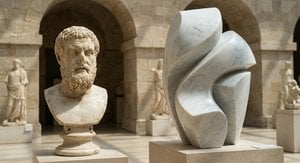
The Enduring Allure of Marble in Art History: From Classical Sculpture to Modern Abstraction
Explore the captivating history of marble sculpture from ancient Greece to modern art. Discover renowned artists like Canova & Michelangelo, carving techniques, and investment insights at ArtsDot.