


 Visualizar em escala
 Enviar
 Compartilhar
 Ver detalhes

 Baixar
 Semelhantes
 Raio X
 Apresentação de slides
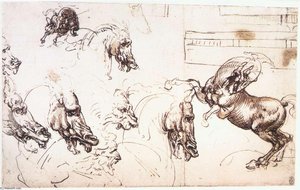
A rams's head
 Ver mais
Reprodução em Óleo Feita à Mão
Óleo sobre tela pintado à mão no seu tamanho e moldura, feito sob encomenda pelos nossos artistas. ( Encomendar impressão Comprar imagem em alta resolução)




































Escolha entre os nossos tamanhos pré-definidos que respeitam as proporções originais da obra de arte.

Pode inserir as suas próprias dimensões para se adequar a uma moldura ou espaço específico. Se o tamanho selecionado não corresponder às proporções da imagem original, iremos cortar a obra de arte ou estender a pintura com elementos adicionais pintados à mão. Um esboço digital será enviado para sua aprovação antes do início da produção.
Tenha em atenção que a pré-visualização no ecrã não reflete o corte ou extensão real. Apenas o esboço mostrará com precisão a composição final.
Embora tamanhos personalizados estejam disponíveis, recomendamos selecionar uma dimensão da lista predefinida para preservar as proporções originais.
Após o pedido, a equipa ArtsDot.com enviará um e-mail ao cliente para solicitar instruções e fornecer uma prévia do esboço.
Entrega mundial () em 3 a 4 semanas, em vez das 5 semanas padrão. (18 Agosto). Sem comprometer a qualidade.

Envio Expresso Gratuito para todo o Mundo

Tela de Linho Premium

Seguro de transporte total

Garantia de Reembolso de Impostos Alfandegários

Garantia de Fidelidade de Cor

Política de Devolução de 60 Dias (Apenas para Defeitos)

Garantia de reembolso de 100%

Desconto para múltiplas unidades
 A opção de vidro está disponível apenas para tamanhos inferiores a 110 cm

A rams's head
Técnica de Reprodução
Dimensões da Reprodução
-


Preço Total
$ 338
Obras Relacionadas



Biografia do Artista
The Soul of the Pastoral: The Life and Legacy of Robert Hills
In the quiet, rhythmic pulse of the English countryside, there exists a profound beauty that often escapes the gaze of those preoccupied with the grandiosity of myth or the drama of history. It was this very essence—the unadorned, breathing reality of rural life—that Robert Hills sought to immortalize. Born in Islington in 1769, Hills emerged as a pioneer of British animal studies, a master who looked past the idealized landscapes of his contemporaries to find the profound dignity in a grazing sheep or the sturdy grace of a working ox. His journey was one of meticulous observation, rooted in an era where the boundaries between art and scientific inquiry were beautifully blurred by the light of the Enlightenment.
Hills’ artistic foundation was built upon rigorous discipline and a deep-seated reverence for natural truth. After initial studies under John Alexander Gresse, he entered the prestigious Royal Academy of Arts in 1788, an environment that would refine his technical prowess. His education at Eton College had already instilled in him an appreciation for classical precision, but it was his immersion in the burgeoning field of zoology and anatomical study that truly defined his vision. He did not merely paint animals; he understood them. Every curve of a ram's horn and every ripple of muscle beneath a cow's hide was rendered with a dedication to anatomical accuracy that spoke of a lifetime spent studying the skeletal and muscular structures of his subjects.
A Master of Realism and Texture
The brilliance of Hills’ technique lies in his ability to marry the clinical precision of an illustrator with the emotive warmth of a Romantic painter. Utilizing smooth brushstrokes and subtle tonal gradations, he achieved a level of realism that allowed his subjects to leap from the canvas. His work often features a soft, atmospheric quality—a hallmark of British Academic painting—that lends a sense of atmosphere and time to his rural scenes. Whether working in oil or through the delicate medium of etching and aquatint, Hills possessed an uncanny ability to capture the tactile nature of his subjects: the coarseness of wool, the dampness of a field after rain, and the heavy, rhythmic breathing of livestock.
His contributions extended beyond the solitary canvas into the realm of published works, most notably in his 1816 publication, Sketches in Flanders and Holland. In this collection, he showcased his mastery of aquatint, bringing a sense of depth and light to his travels through Europe. This period of his career demonstrated that his eye for detail was not limited to the English pastoral but was part of a broader, more expansive curiosity about the natural world across borders. His ability to integrate himself into the works of other notable artists, such as George Barret, Jr., further underscores his reputation as a versatile and highly respected craftsman within the London art scene.
The Enduring Resonance of the Pastoral
While many artists of the Regency period sought the sublime in ruins or the epic in mythology, Robert Hills found it in the everyday. His historical significance lies in his role as a precursor to the widespread acceptance of animal portraiture as a serious and emotionally resonant genre. He elevated the "lowly" subjects of the farmyard to the status of fine art, imbuing them with a psychological depth that forced the viewer to confront the vitality of the natural world. His paintings serve as poignant windows into a bygone era of British agriculture, capturing a sense of community and abundance that feels both nostalgic and timeless.
Today, the legacy of Robert Hills lives on through the collections of institutions such as the British Museum and the Tate, where his studies of cows, sheep, and horses continue to inspire awe. His work remains a testament to the power of looking closely—to finding the extraordinary within the ordinary. Through his lens, the simple act of a herd moving across a landscape becomes a profound meditation on life, structure, and the enduring beauty of the earth.

robert hills
1769 - 1844 , United Kingdom
Informações Rápidas
- Artistic Movement Or Style: Romanticism
- Date Of Birth: London, United Kingdom (1769)
- Date Of Death: 1844
- Full Name: Robert Hills
- Nationality: British
- Notable Artworks:
- Harvest Field
- Cattle Studies
- Place Of Birth: London

