

- 137.0 x 71.0 cm


A imagem segue as suas escolhas: , .
Descrição do Item
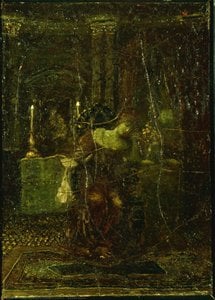
This evocative painting captures Franconia Notch’s dramatic White Mountains scenery with masterful use of light and texture, reflecting Blakelock's distinctive tonalist approach.
 Ler mais
Biografia do Artista
Ralph Albert Blakelock (1847-1919): Explore os paisagens sombrias e obras maestras tonalistas deste pintor americano. Descubra sua vida trágica, viagens pelo Oeste e reconhecimento tardio após anos de obscuridade.
Reprodução em Óleo Feita à Mão
Óleo sobre tela pintado à mão no tamanho e moldura de sua escolha, feito sob encomenda pelos nossos artistas. ( Alternar para Impressão Alternar para Imagem Digital)
Saiba mais sobre esta pintura
 Visualizar na parede
 Compartilhar
 Compartilhar
 Detalhes
 Guia
Guia

 Baixar imagem
 Semelhantes
 Raio X
 Ver diaporama
 Perguntas e Respostas
 Estatísticas
Encomende a sua pintura em quatro passos simples
Não tenha pressa. Você pode alterar qualquer resposta; o preço no seu carrinho de compras será atualizado conforme cada escolha.
1 Passo um de quatro
Qual tamanho você gostaria?
Estes tamanhos mantêm as proporções da pintura original. A ilustração mostra a sua escolha numa parede, acima de um sofá de dois metros.
Ou informe suas próprias medidas
Escolha entre os nossos tamanhos pré-definidos que respeitam as proporções originais da obra de arte.

Insira a largura e a altura desejadas para se ajustarem à sua moldura ou parede. Como esta obra é pintada à mão, para um tamanho com proporções diferentes, o artista poderá pintar um pouco mais ao redor da imagem ou reduzir ligeiramente a composição — você escolhe. Enviamos uma maquete digital para sua aprovação antes de iniciar a pintura. A imagem exibida nesta página não representa o resultado real — apenas a maquete mostra o resultado final.
2 Passo dois de quatro
Como deve ser preparado: enrolado, esticado ou emoldurado?
Os preços abaixo referem-se ao tamanho escolhido na primeira etapa.
Escolha as bordas da tela esticada
Escolha sua moldura

Branco €1

Bordas esfumaçadas €1

Bordas estendidas €1

P118B €10

P118H €10

P118W €10

P438Z €10

P508JH €12

P508YH €12

P805H €10

P805Z €10

P919BZ €10

P919G €10

P919XJ €10

P959ZH €10

P968JZ €12

W106C €8

W218G €10

W218JH €8

W218Y €10

W307PJ €10

W316G €10

W316PJ €8

W316Y €10

W398PJ €8

W4111J €10

W500HY €15

W500JH €15

W692G €12

W849H €8

W940BG €15

W953PJ €8

H24-GOLD €30

H24-SILVER €30

H36-GOLD €45

H36-SILVER €45
Com moldura
Moldura: . Dimensões totais com a moldura: .
3 Passo três de quatro
Gostaria de alterar algo na pintura?
A maioria das pessoas responde que não. Como cada pintura é feita à mão, nosso artista também pode adaptá-la para você.
Após o pedido, a equipe da ArtsDot.com enviará um e-mail ao cliente para instruções e fornecerá uma prévia da montagem
4 Passo quatro de quatro
Algumas opções de acabamento
Todos eles são opcionais. As respostas já selecionadas não têm custo adicional.
Quem o pintou?
Entrega mundial () em 3 a 4 semanas, em vez das 5 semanas padrão. (4 Novembro). Sem comprometer a qualidade.
Uma placa de identificação, como em um museu?
Detalhes da Placa de Bronze Gravada
This elegant plaque features the artist's name and the title of the artwork, finely engraved for a timeless presentation.
It is made from bronze with a refined, elegant finish. The text is precisely laser-engraved for a sharp and permanent result. Measuring 9x2 cm, the plaque is compact yet easy to read. It's built to be durable and scratch-resistant, offering a professional, museum-quality look. Mounting is simple thanks to the included adhesive backing.
Detalhes da Placa de Acrílico Transparente
The plaque includes essential engraved details such as the artist's name, the title of the artwork, the date it was created, the type of media used-like oil on canvas or watercolor-a brief description of the piece, and a QR code that links to the complete artwork information.
It is crafted from clear acrylic, offering a sleek, modern appearance. The text is UV-engraved in black to ensure strong visual contrast. With a size of 10x15 cm, it ensures optimal readability. It comes equipped with two metal hooks for secure wall mounting. The plaque is designed to be weather-resistant, making it suitable for various environments, and it includes interactive features that work seamlessly with smartphone scanning.
Detalhes da Placa de Acrílico Preto
This elegant plaque includes engraved information such as the artist's name, the title of the artwork, the date it was created, the type of media used (like oil on canvas or watercolor), a short description of the artwork, and a QR code for quick access to more information.
The plaque itself is made from refined black acrylic with a premium finish. The text is laser-engraved in white for high contrast and readability. Its size is 10x15 cm, designed to be easy to read. It comes with two metal hooks for professional mounting. The design is sleek and fits any interior style. It is also weather-resistant and durable, with built-in digital integration for mobile compatibility.
Um verniz protetor?
Para quando você precisa?
✓ Verifique e peça
A sua pintura, conforme encomendada

The Boulder and the Flume
Técnica de Reprodução
Tamanho da Reprodução
-

Artista Sênior de Elite
Mais detalhes, refinamento e tempo de produção adicional
-

Moldura para Reprodução
-
-
Para obras de arte ou reproduções com mais de 105 cm (aproximadamente 41 polegadas) em qualquer um dos lados, a moldura será enviada como um kit desmontado. Este método garante uma entrega segura e evita danos durante o transporte.
Montagem profissional necessária — este não é um produto DIY (faça você mesmo).
O kit deve ser montado e a tela esticada por um profissional de molduraria experiente, utilizando cola de madeira (não inclusa), um alicate de esticar tela e grampos para manter as travessas alinhadas enquanto a cola seca. A montagem incorreta ou a tensão desigual da tela podem danificar permanentemente a obra de arte e não estão cobertas pela nossa garantia.
 Para obras de arte ou reproduções com mais de 105 cm (aproximadamente 41 polegadas) em qualquer um dos lados, a moldura será enviada como um kit desmontado. Este método garante uma entrega segura e evita danos durante o transporte.
Todas as barras de madeira maciça estão incluídas, precisamente cortadas ao tamanho certo.
Montado com os parafusos fornecidos, além de cola para madeira para as junções dos cantos, que não está inclusa e deve ser providenciada pelo seu moldurista.
São necessárias ferramentas profissionais não incluídas: um alicate de estiramento de tela (esticador) e grampos para manter as ripas alinhadas enquanto a cola seca.
Importante:
As junções dos cantos requerem cola para madeira, as ripas devem ser mantidas com grampos até que a cola esteja completamente seca, e o estiramento da tela na moldura montada requer um alicate de esticar tela. Nenhum destes itens está incluído no kit. Por favor, certifique-se de contar com um profissional de molduraria experiente antes de encomendar este tamanho.

Etiqueta de identificação
-
-

Verniz de Proteção
Verniz brilhante (realça as cores e protege contra a luz e a umidade)
-

Personalizar minha obra
Exemplos de alterações possíveis: Substituir o rosto por uma foto do cliente; Adicionar um animal de estimação (ex.: substituir gato por cachorro); Incluir uma mensagem oculta no fundo; Alterar a paisagem ou os elementos do fundo.
-

Urgente
Entrega mundial () em 3 a 4 semanas, em vez das 5 semanas padrão. (4 Novembro). Sem comprometer a qualidade.
-
Envio Expresso
Entrega mundial para em 5 semanas. (11 Novembro).
Com envio incluído
Preço Total
€ 234
A opção de vidro está disponível apenas para tamanhos inferiores a 110 cm
Incluído em todos os pedidos
- Envio expresso gratuito para todo o mundo
- Tela de Linho de Alta Qualidade
- Seguro de transporte completo
- Garantia de Reembolso de Impostos Alfandegários
- Garantia de Fidelidade Cromática
- Política de Devolução em 100 Dias (Apenas para Defeitos)
- Garantia de reembolso de 100%
- Oferta de desconto por quantidade


A Symphony of Shadow and Stone
In the quiet, evocative realm of American Tonalism, few works capture the profound intersection of geological power and atmospheric stillness as masterfully as Ralph Albert Blakelock’s 1878 masterpiece, The Boulder and the Flume. This painting is far more than a mere topographical record of Franconia Notch; it is an immersive sensory experience that invites the viewer into a world where the boundaries between earth, water, and air seem to dissolve. Blakelock, a painter whose life was as textured and complex as his canvases, utilizes a muted, sophisticated palette to evoke the damp, heavy air of the White Mountains. The scene presents a dramatic cleft in the granite bedrock, where a colossal boulder sits poised with a sense of precarious majesty above a rushing stream. There is an inherent tension in this composition—a silent dialogue between the immovable weight of the stone and the kinetic energy of the flowing water.
To gaze upon this work is to witness the artist’s profound ability to translate emotion into landscape. Unlike the Impressionists, who sought to capture the fleeting sparkle of sunlight, Blakelock was a poet of the twilight and the mist. He prioritized the sublime—that specific Romantic feeling of awe mixed with a touch of trepidation when faced with the untamed forces of nature. Through subtle gradations of brown, gray, and ochre, he simulates a diffused, ethereal light that suggests a sun struggling to pierce through a dense mountain canopy. For the collector or interior designer, this piece offers a sense of grounded tranquility; it possesses a rhythmic, meditative quality that can anchor a room, providing a focal point that encourages deep contemplation and a connection to the primordial beauty of the natural world.
Mastery of Texture and Tonalist Technique
The technical brilliance of The Boulder and the Flume lies in Blakelock’s virtuosic use of impasto. He did not merely paint a landscape; he sculpted it upon the canvas. By applying thick, deliberate layers of oil paint, Blakelock created a palpable surface that mirrors the rugged, weathered texture of the granite and the mossy crevices of the forest floor. These visible, rhythmic brushstrokes serve a dual purpose: they provide a physical dimension to the artwork and enhance the illusion of luminosity, as the raised paint catches the light in a way that mimics the natural glisten of wet stone and spray. This tactile approach ensures that the painting remains dynamic, even in its most somber moments.
Beyond the surface, the historical significance of this work resides in its role as a cornerstone of the Tonalist movement. Blakelock’s ability to weave together his personal experiences—including the memories of his travels through the American West and the rugged landscapes of New Hampshire—into a unified aesthetic vision is unparalleled. The painting serves as a bridge between the literal landscape and the internal psychological state. For those seeking to adorn a space with art that possesses both historical weight and contemporary elegance, this reproduction offers an exquisite opportunity to bring the soulful, atmospheric essence of 19th-century American Romanticism into a modern setting.
Perguntas e Respostas
Quão harmoniosas são as cores de "The Boulder and the Flume" entre si?
As cores de "The Boulder and the Flume", de Ralph Albert Blakelock apresentam uma harmonia Strong Color Unity. A harmonia descreve como as cores se relacionam entre si.
"The Boulder and the Flume", de Ralph Albert Blakelock é uma pintura, um desenho ou uma gravura?
"The Boulder and the Flume", de Ralph Albert Blakelock é classificado como WallArt. A categoria descreve o tipo de obra de arte que a peça original representa.
Qual é a luminância de "The Boulder and the Flume", de Ralph Albert Blakelock?
"The Boulder and the Flume", de Ralph Albert Blakelock possui uma luminância Dark. A luminância descreve quanta luz as cores parecem refletir.
Obras Relacionadas




Ralph Albert Blakelock
1847 - 1919, Estados Unidos
Biografia do Artista
Ralph Albert Blakelock (1847–1919): A Life Shrouded in Mystery
Ralph Albert Blakelock, born in New York City in 1847, remains one of the most enigmatic and tragically compelling figures in American art. His life was a poignant blend of artistic vision and personal turmoil, a narrative often overshadowed by obscurity until late in his career. The son of a successful English physician, young Ralph initially followed a path toward medicine, enrolling at the Free Academy of the City of New York – now City College – in 1864. However, the allure of art and music proved too strong to resist, leading him to abandon medical studies after only three terms and dedicate himself fully to creative pursuits. Largely self-taught, Blakelock’s artistic development was a deeply personal journey, shaped by observation, introspection, and an innate sensitivity to the natural world rather than formal academic constraints. This independence would become a defining characteristic of his unique style.Early Influences and Artistic Beginnings
Blakelock's formative years were marked by exposure to both classical music and visual arts—a combination that profoundly shaped his aesthetic sensibilities. While attending City College, he excelled in drawing classes, demonstrating an exceptional talent for capturing the subtleties of light and shadow. Yet, despite this academic success, Blakelock felt a profound disconnect from traditional artistic conventions, perceiving them as restrictive and incapable of conveying the emotional depth he sought to express. Recognizing that his true passion lay in painting, he decisively abandoned medical studies in 1866, embarking on an independent artistic exploration that would define his entire career. This decision stemmed not merely from intellectual curiosity but from a visceral yearning for creative fulfillment—a desire to translate his inner world onto canvas with uncompromising honesty and originality.Western Wanderings and the Birth of a Vision
A pivotal period in Blakelock’s life was his extensive journey through the American West from 1869 to 1872. He ventured far beyond established settlements, immersing himself in the landscapes and cultures of the frontier. This wasn't merely a geographical exploration; it was a spiritual quest that profoundly impacted his artistic vision. Spending time among Native American communities provided him with invaluable subject matter and inspiration, fueling his imagination with scenes of wilderness and indigenous life. He meticulously documented his experiences in notebooks filled with sketches and observations, which served as crucial references for his later works. These early landscapes and depictions of Indian encampments weren’t simply representations of what he saw; they were imbued with a romanticized, almost mystical quality, establishing the foundation for his distinctive artistic voice. The vastness and solitude of the West seemed to seep into his very being, influencing the mood and atmosphere that would become hallmarks of his paintings. He sought to capture not just the visual appearance of these places but also their intangible essence—the feeling of awe, wonder, and connection to something larger than oneself.Embracing Tonalism: A Symphony in Shadow and Mood
Ralph Albert Blakelock is now recognized as a key figure within the Tonalist movement, an artistic current that emerged in the late 19th century as a reaction against the more detailed and dramatic styles of earlier landscape painting. His canvases are characterized by muted color palettes – often dominated by grays, browns, and greens – atmospheric effects achieved through subtle gradations of tone, and a profound emphasis on mood and emotion over precise representation. He frequently depicted nocturnal scenes and shadowy forests, creating an evocative sense of mystery and introspection. Blakelock’s technique was particularly unique; he famously incorporated coal tar into his pigments to deepen the darkness and achieve a velvety texture. The influence of Albert Pinkham Ryder is evident in this approach – Ryder's dreamlike landscapes resonated deeply with Blakelock’s own artistic sensibilities, inspiring him to explore similar themes of solitude, spirituality, and the sublime power of nature. He wasn’t interested in simply *depicting* a landscape; he sought to capture its essence, its emotional resonance, and its ability to stir the soul.Later Years and Legacy
Despite his undeniable talent, Blakelock struggled with financial hardship throughout much of his life. Supporting a large family – nine children – proved an immense burden, leading him to sell paintings at drastically undervalued prices in moments of desperation. This economic strain contributed to a series of mental breakdowns, the first occurring in 1891 and another more severe episode in 1899 that resulted in nearly two decades spent institutionalized. Ironically, it was during this period of personal suffering that Blakelock’s work began to gain recognition, though often through the unfortunate proliferation of forgeries sold at inflated prices. A turning point arrived in 1916 when one of his landscapes achieved a record-breaking sale price of $20,000, bringing him unexpected public attention and leading to his election as an academician of the National Academy of Design. Though he experienced brief periods of lucidity and continued painting within the confines of the asylum, Blakelock remained largely confined until his death on August 9, 1919, at the age of 71. His enduring legacy lies in his pioneering exploration of tonalism—a style that continues to inspire artists today—and in his unwavering commitment to capturing the sublime beauty and emotional depth of the natural world.Artigos Relacionados

Katsushika Hokusai: As 25 Obras-Primas que Definem um Mestre da Arte Japonesa
Descubra as 25 obras-primas de Katsushika Hokusai, o mestre do ukiyo-e! Explore a história por trás de 'A Grande Onda' e outras gravuras japonesas icônicas. Encontre reproduções de arte exclusivas para decorar sua casa com elegância em ArtsDot.com.

Os 10 Mestres da Paisagem Romântica: Arte para Inspirar a Sua Casa
Descubra os 10 quadros mais emblemáticos da Paisagem Romântica! Explore a história de Turner, Friedrich e outros mestres. Encontre reproduções de arte exclusivas para inspirar sua decoração em ArtsDot.com.

John Constable: As 25 Obras-Primas que Definem o Mestre da Paisagem Inglesa | ArtsDot
Descubra as 25 obras-primas de John Constable, o mestre da paisagem inglesa! Explore a arte romântica, cores vibrantes e histórias fascinantes por trás de 'Hay Wain' e outras pinturas icônicas. Encontre reproduções de alta qualidade para decorar sua casa com ArtsDot.com.