

 Visualizar na parede
 Compartilhar
 Compartilhar
 Detalhes
 Guia
Guia

 Baixar imagem
 Semelhantes
 Raio X
 Ver diaporama
 Perguntas e Respostas
 Estatísticas
Sonne


 Ler mais
Obtenha um arquivo pronto para impressão que vai muito além da visualização na web. Cada imagem digital que vendemos provém de um arquivo mestre de alta resolução em nosso banco de dados — geralmente entre 5.000 e 15.000 pixels de largura — para que você possa imprimir em grandes formatos, realizar cortes precisos ou reproduzir detalhes minuciosos com total confiança.
Nenhum arquivo sai do nosso estúdio sem passar por um cuidadoso processo de revisão. Um especialista digital verifica as cores em relação à pintura original e as corrige se necessário, aumentando então a clareza e o detalhe com ferramentas profissionais de retoque — sempre mantendo a fidelidade às pinceladas e ao estilo do artista. O resultado é uma imagem que se assemelha à pintura, e não a um scan com filtros.
Aprovação antes da finalização: nosso especialista enviará a imagem por e-mail em até 72 horas para sua revisão. Não ficou satisfeito? Solicite melhorias ou correções, ou peça o reembolso caso a qualidade não atenda às suas expectativas.
Esta é a qualidade em que confiam editoras, estúdios de design, galerias e gráficas.
Imagem Digital
Baixe um arquivo de alta resolução para exibição pessoal, impressão e projetos criativos. ( Alternar para Impressão Comprar pintura feita à mão)
Incluído em cada compra de imagem digital
Entrega Digital Especializada e Garantida
Ao escolher o ArtsDot.com, você não está apenas adquirindo uma imagem — você está recebendo uma obra de arte digital profissionalmente aprimorada, elaborada com precisão e com garantia de satisfação. Aqui está tudo o que acompanha seu pedido, automaticamente:

Entrega rápida por e-mail
O seu arquivo de imagem digital em alta resolução será enviado por e-mail em até 72 horas após o pedido — pronto para uso imediato.

Arquivo Digital com IA Otimizado
Sua obra de arte é otimizada profissionalmente por meio de ferramentas avançadas de IA e edição manual, garantindo o máximo de detalhes, clareza e precisão de cores.

Reenvio gratuito vitalício
Apagou ou perdeu o seu ficheiro acidentalmente? Não se preocupe – nós reenviamos para si a qualquer momento, gratuitamente.

Sem Taxas de Importação - Sempre
Desfrute da sua obra de arte instantaneamente, sem taxas alfandegárias, impostos ou custos de entrega — downloads digitais são sempre isentos de taxas.

Garantia de Fidelidade de Cores
Garantimos que sua imagem digital reflita as cores originais com a maior fidelidade possível, utilizando ferramentas profissionais e gerenciamento de cores.

Garantia de satisfação de 100 dias
Se não estiver satisfeito com a sua imagem digital, nós a revisaremos ou reembolsaremos 100% dentro de 100 dias — sem perguntas.

Garantia de Reembolso 100%
Não está satisfeito? Receba o reembolso total em até 100 dias após o recebimento do seu arquivo digital — sem perguntas.

Descontos para pedidos em lote
Compre 3 imagens, economize 10% - Compre 5, economize 15% - Compre 10+, economize 20%. Ideal para projetos criativos, galerias e agências.
Obras Relacionadas


Biografia do Artista
A Life Illuminated: The Visionary World of Otto Piene
Otto Piene, born in Bad Laasphe, Germany, in 1928 and passing away in Berlin in 2014, was more than just an artist; he was a pioneer who relentlessly blurred the boundaries between painting, sculpture, performance, and technology. His life story is inextricably linked to the aftermath of World War II, a period that profoundly shaped his artistic philosophy. Witnessing the devastation firsthand as a young man—drafted into service as an anti-aircraft gunner—Piene sought to dismantle traditional artistic conventions and forge a new visual language rooted in objectivity, chance, and the elemental forces of nature. This quest led him to Munich and Düsseldorf for formal training, where he studied painting and art education alongside philosophy at the University of Cologne, laying the intellectual groundwork for his groundbreaking explorations.The Genesis of Zero and Early Explorations
Piene’s artistic trajectory took a pivotal turn with the co-founding of Group Zero in 1957, alongside Heinz Mack. This collective wasn't merely an aesthetic movement; it was a declaration—a rejection of the past and a commitment to rebuilding art from its foundations. The artists of Zero sought to strip away subjective expression, embracing seriality, mechanical processes, and the inherent beauty of materials themselves. Early works like the “Raster Pictures” (rasterbild) exemplify this approach. These weren’t paintings in the traditional sense but meticulously crafted grids created using half-tone screens, stenciled with single colors—often yellow, silver, white, or gold—onto canvas. They were investigations into pattern, energy, and the very nature of perception. These initial explorations quickly expanded beyond static surfaces. Piene began to animate his grids, projecting light through them in what he termed “Lichtballette” (“Light Ballet”), transforming space itself into a dynamic medium. Simultaneously, he embarked on the creation of "Rauchbilder" ("Smoke Pictures"), an alchemical process where fire and pigment converged. By burning solvents on paper, Piene coaxed forth organic forms from the resulting soot, harnessing the unpredictable beauty of natural energies—a direct response to his wartime experiences with light and destruction.Expanding Horizons: Sky Art and Technological Innovation
By the late 1960s, Piene’s ambition had grown exponentially. He coined the term “sky art” to describe large-scale installations that utilized landscapes and cities as canvases. This wasn't about imposing art *onto* the environment but rather collaborating with it, revealing its hidden potential. The most iconic example of this vision is undoubtedly the "Olympic Rainbow" created for the closing ceremony of the 1972 Summer Olympics in Munich—five helium-filled tubes, each an astounding 600 meters long, stretching across the sky as a symbol of peace and unity. Piene’s fascination with technology extended to television, where he collaborated with Aldo Tambellini on “Black Gate Cologne” (1968), considered one of the first experimental art programs broadcast on television. This pioneering spirit led him to MIT's Center for Advanced Visual Studies (CAVS) in 1968, where he served as a fellow, professor, and eventually director until 1993. At CAVS, Piene fostered an environment of interdisciplinary collaboration between artists, scientists, and engineers, exemplified by projects like the "Centerbeam Project"—a kinetic sculpture performance featuring laser projections, steam screens, holograms, and water prisms—first exhibited in Kassel and later on the National Mall in Washington D.C.. Even his design work for Timo Sarpaneva’s Suomi tableware for Rosenthal porcelain demonstrates a commitment to integrating art into everyday life.A Lasting Legacy: Kinetic Art and Beyond
Otto Piene's influence resonates deeply within the history of contemporary art. He was a true pioneer of kinetic and technology-based art, demonstrating how these mediums could be used not merely for spectacle but for profound artistic expression. His exploration of light as a primary medium paved the way for generations of artists working with illumination, projection, and spatial dynamics. As a founding member of Group Zero, he played a crucial role in reshaping post-war European art, advocating for objectivity, seriality, and a rejection of traditional conventions. His work challenged viewers to reconsider their relationship with art and the world around them. Piene’s international acclaim—particularly in Japan, America, and Europe—solidified his position as a leading figure in contemporary art. The founding of The International Zero Foundation in 2008 further cemented his commitment to preserving the legacy of Group Zero and its enduring impact on artistic thought. Otto Piene didn’t just create art; he created experiences—immersive, transformative encounters that continue to inspire and provoke.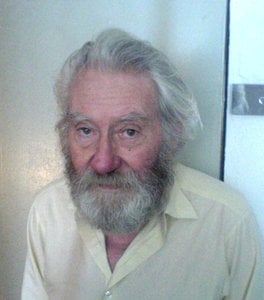
Otto Piene
1928 - 2014 , Poland
Breve Biografia
- Full Name: Otto Piene
- Nationality: German-American
- Date Of Birth: 1928
- Date Of Death: 2014
- Place Of Birth: Bad Laaspherode, Poland
- Notable Artworks:
- Rauchbild
- Olympic Rainbow
- Manned Helium Sculpture
- Artistic Movement Or Style: Kinetic art, ZERO group
- Artists Who Influenced This Artist:
- László Moholy-Nagy
- Fernand Léger
- Artists Or Movements Influenced By This Artist:
- Light art
- Kinetic artists