

- 130.0 x 160.0 cm


A imagem segue as suas escolhas: , .
Descrição do Item
Experience the enchanting Art Nouveau style of Nicholas Roerich’s ‘Towns,’ a captivating cityscape painted in 1914 with tempera on wood. Admire the intricate details and atmospheric moonlit scene – discover or own this stunning reproduction.
 Ler mais
Biografia do Artista
Mestre do Simbolismo conhecido por suas paisagens do Himalaia. Descubra hoje a beleza espiritual de sua arte visionária.
Reprodução em Óleo Feita à Mão
Óleo sobre tela pintado à mão no tamanho e moldura de sua escolha, feito sob encomenda pelos nossos artistas. ( Alternar para Impressão Alternar para Imagem Digital)
Saiba mais sobre esta pintura
 Visualizar na parede
 Compartilhar
 Compartilhar
 Detalhes
 Guia
Guia

 Baixar imagem
 Semelhantes
 Raio X
 Ver diaporama
 Perguntas e Respostas
 Estatísticas
Encomende a sua pintura em quatro passos simples
Não tenha pressa. Você pode alterar qualquer resposta; o preço no seu carrinho de compras será atualizado conforme cada escolha.
1 Passo um de quatro
Qual tamanho você gostaria?
Estes tamanhos mantêm as proporções da pintura original. A ilustração mostra a sua escolha numa parede, acima de um sofá de dois metros.
Ou informe suas próprias medidas
Escolha entre os nossos tamanhos pré-definidos que respeitam as proporções originais da obra de arte.

Insira a largura e a altura desejadas para se ajustarem à sua moldura ou parede. Como esta obra é pintada à mão, para um tamanho com proporções diferentes, o artista poderá pintar um pouco mais ao redor da imagem ou reduzir ligeiramente a composição — você escolhe. Enviamos uma maquete digital para sua aprovação antes de iniciar a pintura. A imagem exibida nesta página não representa o resultado real — apenas a maquete mostra o resultado final.
2 Passo dois de quatro
Como deve ser preparado: enrolado, esticado ou emoldurado?
Os preços abaixo referem-se ao tamanho escolhido na primeira etapa.
Escolha as bordas da tela esticada
Escolha sua moldura

Branco €1

Bordas esfumaçadas €1

Bordas estendidas €1

P118B €10

P118H €10

P118W €10

P438Z €10

P508JH €12

P508YH €12

P805H €10

P805Z €10

P919BZ €10

P919G €10

P919XJ €10

P959ZH €10

P968JZ €12

W106C €8

W218G €10

W218JH €8

W218Y €10

W307PJ €10

W316G €10

W316PJ €8

W316Y €10

W398PJ €8

W4111J €10

W500HY €15

W500JH €15

W692G €12

W849H €8

W940BG €15

W953PJ €8

H24-GOLD €30

H24-SILVER €30

H36-GOLD €45

H36-SILVER €45
Com moldura
Moldura: . Dimensões totais com a moldura: .
3 Passo três de quatro
Gostaria de alterar algo na pintura?
A maioria das pessoas responde que não. Como cada pintura é feita à mão, nosso artista também pode adaptá-la para você.
Após o pedido, a equipe da ArtsDot.com enviará um e-mail ao cliente para instruções e fornecerá uma prévia da montagem
4 Passo quatro de quatro
Algumas opções de acabamento
Todos eles são opcionais. As respostas já selecionadas não têm custo adicional.
Quem o pintou?
Entrega mundial () em 3 a 4 semanas, em vez das 5 semanas padrão. (11 Novembro). Sem comprometer a qualidade.
Uma placa de identificação, como em um museu?
Detalhes da Placa de Bronze Gravada
This elegant plaque features the artist's name and the title of the artwork, finely engraved for a timeless presentation.
It is made from bronze with a refined, elegant finish. The text is precisely laser-engraved for a sharp and permanent result. Measuring 9x2 cm, the plaque is compact yet easy to read. It's built to be durable and scratch-resistant, offering a professional, museum-quality look. Mounting is simple thanks to the included adhesive backing.
Detalhes da Placa de Acrílico Transparente
The plaque includes essential engraved details such as the artist's name, the title of the artwork, the date it was created, the type of media used-like oil on canvas or watercolor-a brief description of the piece, and a QR code that links to the complete artwork information.
It is crafted from clear acrylic, offering a sleek, modern appearance. The text is UV-engraved in black to ensure strong visual contrast. With a size of 10x15 cm, it ensures optimal readability. It comes equipped with two metal hooks for secure wall mounting. The plaque is designed to be weather-resistant, making it suitable for various environments, and it includes interactive features that work seamlessly with smartphone scanning.
Detalhes da Placa de Acrílico Preto
This elegant plaque includes engraved information such as the artist's name, the title of the artwork, the date it was created, the type of media used (like oil on canvas or watercolor), a short description of the artwork, and a QR code for quick access to more information.
The plaque itself is made from refined black acrylic with a premium finish. The text is laser-engraved in white for high contrast and readability. Its size is 10x15 cm, designed to be easy to read. It comes with two metal hooks for professional mounting. The design is sleek and fits any interior style. It is also weather-resistant and durable, with built-in digital integration for mobile compatibility.
Um verniz protetor?
Para quando você precisa?
✓ Verifique e peça
A sua pintura, conforme encomendada

Towns
Técnica de Reprodução
Tamanho da Reprodução
-

Artista Sênior de Elite
Mais detalhes, refinamento e tempo de produção adicional
-

Moldura para Reprodução
-
-
Para obras de arte ou reproduções com mais de 105 cm (aproximadamente 41 polegadas) em qualquer um dos lados, a moldura será enviada como um kit desmontado. Este método garante uma entrega segura e evita danos durante o transporte.
Montagem profissional necessária — este não é um produto DIY (faça você mesmo).
O kit deve ser montado e a tela esticada por um profissional de molduraria experiente, utilizando cola de madeira (não inclusa), um alicate de esticar tela e grampos para manter as travessas alinhadas enquanto a cola seca. A montagem incorreta ou a tensão desigual da tela podem danificar permanentemente a obra de arte e não estão cobertas pela nossa garantia.
 Para obras de arte ou reproduções com mais de 105 cm (aproximadamente 41 polegadas) em qualquer um dos lados, a moldura será enviada como um kit desmontado. Este método garante uma entrega segura e evita danos durante o transporte.
Todas as barras de madeira maciça estão incluídas, precisamente cortadas ao tamanho certo.
Montado com os parafusos fornecidos, além de cola para madeira para as junções dos cantos, que não está inclusa e deve ser providenciada pelo seu moldurista.
São necessárias ferramentas profissionais não incluídas: um alicate de estiramento de tela (esticador) e grampos para manter as ripas alinhadas enquanto a cola seca.
Importante:
As junções dos cantos requerem cola para madeira, as ripas devem ser mantidas com grampos até que a cola esteja completamente seca, e o estiramento da tela na moldura montada requer um alicate de esticar tela. Nenhum destes itens está incluído no kit. Por favor, certifique-se de contar com um profissional de molduraria experiente antes de encomendar este tamanho.

Etiqueta de identificação
-
-

Verniz de Proteção
Verniz brilhante (realça as cores e protege contra a luz e a umidade)
-

Personalizar minha obra
Exemplos de alterações possíveis: Substituir o rosto por uma foto do cliente; Adicionar um animal de estimação (ex.: substituir gato por cachorro); Incluir uma mensagem oculta no fundo; Alterar a paisagem ou os elementos do fundo.
-

Urgente
Entrega mundial () em 3 a 4 semanas, em vez das 5 semanas padrão. (11 Novembro). Sem comprometer a qualidade.
-
Envio Expresso
Entrega mundial para em 5 semanas. (18 Novembro).
Com envio incluído
Preço Total
€ 235
A opção de vidro está disponível apenas para tamanhos inferiores a 110 cm
Incluído em todos os pedidos
- Envio expresso gratuito para todo o mundo
- Tela de Linho de Alta Qualidade
- Seguro de transporte completo
- Garantia de Reembolso de Impostos Alfandegários
- Garantia de Fidelidade Cromática
- Política de Devolução em 100 Dias (Apenas para Defeitos)
- Garantia de reembolso de 100%
- Oferta de desconto por quantidade


A Nocturne of Dreams: Nicholas Roerich’s “Towns”
Nicholas Roerich's "Towns," painted in 1914, is more than just a cityscape; it’s an immersion into the evocative spirit of Art Nouveau and a poignant reflection on the human condition. Measuring 130 x 160 cm and executed with tempera on a wooden panel, this artwork immediately captivates with its nocturnal drama – a moonlit panorama of buildings rendered in swirling lines and luminous hues. The painting’s power resides not just in its technical mastery but also in the profound sense of mystery and quiet contemplation it evokes.
- Art Nouveau's Fluid Embrace: “Towns” is a quintessential example of Art Nouveau, a movement that sought to capture the beauty of nature through flowing lines, organic forms, and an emphasis on decorative detail. Roerich’s masterful use of curves and sinuous shapes—evident in the buildings’ facades and the subtle rendering of light—perfectly embodies this aesthetic philosophy.
- A Castle's Silent Watch: The prominent castle-like structure dominating the upper right corner isn’t merely a building; it suggests guardianship, history, and perhaps even a yearning for timelessness. This architectural element adds a layer of symbolic depth to the scene, inviting viewers to ponder the passage of time and the enduring nature of civilization.
- The Figure in Shadow: The solitary figure glimpsed in the lower left corner introduces an element of human presence—a silent observer amidst the grandeur of the city. This detail subtly raises questions about our place within a larger, perhaps unknowable, world.
Technique and Materials – A Master’s Touch
The choice of tempera on a wooden panel is crucial to understanding “Towns.” Tempera, known for its luminous quality and archival stability, lends the painting a remarkable depth and richness. The technique employed by Roerich—carefully layering thin washes of color—creates subtle gradations of light and shadow, enhancing the atmospheric effect and imbuing the cityscape with a palpable sense of realism despite its stylized presentation. The texture created by the tempera adds an almost tactile quality to the artwork, inviting closer inspection.
Historical Context – A Moment in Artistic Transition
Painted in 1914, “Towns” exists at a pivotal moment in artistic history—the cusp of modernism. While firmly rooted in the decorative sensibilities of Art Nouveau, it also foreshadows some of the key concerns that would characterize later movements. Roerich’s work reflects a broader European fascination with urban landscapes and the impact of industrialization on traditional ways of life. The painting's creation coincided with a period of intense intellectual and artistic ferment, marked by experimentation and a desire to break free from established conventions.
Symbolism and Emotional Resonance
Beyond its formal qualities, “Towns” resonates with deeper symbolic meanings. The moonlit setting suggests introspection and the realm of dreams. The city itself can be interpreted as a microcosm of human society—a place of both beauty and complexity, order and chaos. Roerich’s work invites viewers to contemplate their own relationship to the world around them, prompting questions about identity, purpose, and the search for meaning. This piece is a testament to Roerich's ability to translate profound philosophical ideas into visually arresting art.
Perguntas e Respostas
Qual técnica e estilo caracterizam "Towns", de Nicolás Roerich?
Em "Towns", a técnica de Oil On Panel encontra o movimento Art Nouveau.
A que período da carreira de Nicolás Roerich pertence "Towns"?
Dentro da trajetória de Nicolás Roerich, "Towns" pertence ao período Early Period. Esta fase permite compará-la com outras obras do artista.
A que fase da carreira de Nicolás Roerich corresponde a data de 1914 de "Towns"?
"Towns", criado em 1914, pertence ao Early Period da carreira de Nicolás Roerich.
Obras Relacionadas


Nicolás Roerich
1874 - 1947, Rússia
Biografia do Artista
Primeiros Anos, Família e Formação
Nicolás Roerich nasceu em 9 de outubro de 1874, em São Petersburgo, na Rússia. Sua linhagem unia um pai de origem germano-báltica a uma mãe russa, um contexto que proporcionou uma estrutura intelectual e cultural muito específica para suas buscas futuras. Essa herança dual não o conduziu a um foco único; pelo contrário, alimentou uma carreira multifacetada que abrangeu o direito, a arqueologia e a filosofia, caminhando lado a lado com sua produção visual. Desde o início, ele se revelou um homem de disciplina estruturada.
Sua educação formal foi marcada pela busca simultânea de disciplinas distintas. Em 1893, ele se matriculou tanto na Universidade de São Petersburgo quanto na Academia Imperial de Artes. Esse caminho duplo permitiu que ele desenvolvesse um pensamento jurídico em paralelo a uma mente artística. Ele obteve sua designação de artista em 1897 e concluiu sua graduação em direito no ano seguinte. Essa combinação de formação jurídica e estudo artístico forneceu a base para seus papéis posteriores, mais complexos, como figura pública e defensor da preservação cultural.
Patronos, Oficina e Comissões
A influência de Nicolás Roerich no cenário teatral do início do século XX consolidou-se através de seu envolvimento com a sociedade "Mundo da Arte". Ele não foi apenas um participante deste círculo; ele o liderou, servindo como presidente da sociedade de 1910 a 1916. Este cargo de liderança o colocou no centro de uma rede de inovadores que estavam desmantelando ativamente as estruturas artísticas tradicionais da Rússia. Seu trabalho durante este período transcendeu a tela da pintura e adentrou o espaço físico do teatro, onde ele traduziu temas históricos e mitológicos complexos em ambientes visuais imersivos.
Suas contribuições mais significativas para o palco surgiram por meio de colaborações de alto perfil que redefiniram o design teatral. Ele foi o responsável pelos cenários e figurinos da estreia em 1913 do balé modernista de Igor Stravinsky, A Sagração da Primavera. Esta produção representou uma ruptura radical em relação às normas da época. Seus designs para Príncipe Igor, de Alexander Borodin, tanto na versão de 1909 quanto em produções subsequentes, permanecem como seus feitos teatrais mais reconhecidos. Tais comissões exigiam uma mistura precisa de pesquisa histórica e construção imaginativa para sustentar a música e o movimento dos intérpretes.
Técnica e Estilo
A linguagem visual de Nicolás Roerich fundamenta-se em uma tensão constante entre o detalhe intrincado e uma simplificação deliberada da forma. Sua obra frequentemente evoca uma qualidade ilustrativa, utilizando planos de cor chapados em vez da modelagem realista tradicional. Essa abordagem cria uma estética gráfica onde as linhas funcionam primordialmente para definir contornos. Ele evita as sombras densas do realismo clássico, optando, em vez disso, por um estilo que enfatiza a essência estrutural de seus temas. Tal clareza torna suas composições diretas e legíveis, mesmo quando mergulha em temas espirituais de profunda complexidade.
O uso da cor é o elemento central de seu impacto emocional. Nicolás Roerich utilizava paletas vibrantes para definir suas paisagens e figuras, criando, muitas vezes, um contraste nítido entre o sujeito e o ambiente que o rodeia. Em obras como Agni Yoga, criada por volta de 1929, ele utilizou a têmpera sobre painel para alcançar texturas e matizes específicos. Este meio permitia uma aplicação controlada do pigmento, sustentando sua preferência por tons luminosos e estratificados. Sua habilidade em equilibrar essas cores intensas com formas simplificadas, quase geométricas, impede que as composições se tornem sobrecarregadas, mantendo sempre um sentido de ordem e propósito espiritual.
- Agni Yoga (c. 1929)
Obras-Primas
A produção de Nicolás Roerich é definida por uma transição profunda, que parte do rigor histórico em direção ao domínio do metafísico. Sua pintura de 1929, Agni Yoga, permanece como um exemplo primordial dessa metamorfose, fundindo a espiritualidade oriental com o esclarecimento ocidental. A composição concentra-se em uma figura feminina solitária, posicionada sobre um afloramento rochoso, que contempla uma vasta paisagem de montanhas e águas — uma cena que evoca a contemplação espiritual profunda. O céu acima é iridescente, utilizando matizes de azul e amarelo para criar uma sensação de escala cósmica, enquanto, ao longe, surgem figuras que sugerem a presença de forças invisíveis ou guias espirituais.
Em seu período inicial, o foco recaiu intensamente sobre a identidade arquitetônica e histórica da Rússia. Tais obras frequentemente utilizavam pesquisas meticulosas para retratar fortalezas e mosteiros, demonstrando um interesse pelos remanescentes físicos do passado que serviu como base necessária para suas explorações posteriores, mais abstratas, do reino espiritual. Seus cenários para os Ballets Russes, especificamente para A Sagração da Primavera (1913) e Príncipe Igor (1909), também demonstram sua habilidade magistral de utilizar ambientes visuais para amplificar o peso emocional de uma performance teatral.
- A Sagração da Primavera (1913)
- Príncipe Igor (1909)
- Agni Yoga (1929)
Legado e Influência
O impacto de Nicolás Roerich estende-se muito além da tela, enraizado em seus esforços práticos para proteger a criatividade humana da devastação da guerra. Em 1935, ele liderou a criação do Pacto Roerich, um tratado internacional concebido para salvaguardar objetos culturais. Para apoiar esta missão, ele propôs o Banner da Paz, um emblema universal destinado a sinalizar locais culturais protegidos. Seu foco humanitário na preservação da história e da arte rendeu-lhe múltiplas indicações ao Prêmio Nobel da Paz. Estas ações transportaram sua influência do reino da estética para a esfera do direito internacional e da diplomacia.
Sua conexão com o Oriente resultou em um reconhecimento significativo por parte do governo indiano, que o nomeou um Navaratna. Esta designação o identifica como um dos nove grandes artistas da Índia. Sua obra permanece como um ponto de estudo para aqueles interessados na intersecção entre a filosofia espiritual e a representação visual. Seu legado é definido por esta identidade dual: tanto como um criador de imagens quanto como um defensor das instituições que as abrigam.
Onde Contemplar suas Obras Hoje
Para encontrar a realidade física da visão de Nicolás Roerich, é necessário recorrer a coleções institucionais específicas que preservam sua vasta produção. Nos Estados Unidos, o Nicholas Roerich Museum, em Nova York, permanece como um destino primordial. Acomodado em um edifício de estilo brownstone no Upper West Side de Manhattan, o museu mantém a atmosfera singular de seus anos tardios. Este espaço guarda uma parte significativa de sua obra, incluindo muitas de suas paisagens do Himalaia e os arquivos de Agni Yoga.
O alcance de seu legado estende-se de volta à Rússia e penetra na Ásia Central. O Museu Estatal Russo, em São Petersburgo, abriga peças que refletem sua formação inicial e seu desenvolvimento artístico. Além disso, a Astrakhan State Picture Gallery preserva obras que contribuem para a compreensão de sua diversificada temática. Essas coleções garantem que sua transição do Simbolismo Russo para suas posteriores paisagens místicas permaneça documentada em seus contextos culturais originais.
- Agni Yoga (1929)
- And we continue fishing (1922)
- Sacred Himalayas (1934)


Artigos Relacionados

The Enduring Legacy of Fine Art Prints: Technique, History & Aesthetic Impact
Explore the rich history & techniques of fine art prints. Discover investment potential, assess authenticity, and learn how to preserve your collection with expert guidance. Trusted insights for discerning collectors.

Giclée Prints: Archival Quality & Aesthetic Nuances for the Discerning Collector
Explore the world of giclée prints with ArtsDot. Learn about archival quality, aesthetic nuances & investment potential. Expert guidance for discerning art collectors seeking museum-quality reproductions and lasting value.
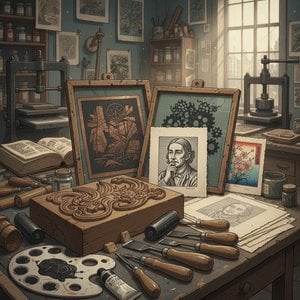
The Enduring Legacy of Printmaking: Techniques, Themes & Artistic Innovation Across Centuries
Explore the rich history of printmaking with ArtsDot. Discover techniques from intaglio to lithography, learn about collecting valuable prints & find museum-quality reproductions. Expert insights for art enthusiasts and collectors.