


The picture follows your choices: , .
Descrição do Item
Experience Nicholas Roerich’s stunning 1928 ‘Sharugon Monastery,’ a breathtaking snowy mountain landscape featuring a castle-like structure and figures amidst a captivating scene, perfect for art lovers seeking timeless beauty.
 Ler mais
Biografia do Artista
Explore a vida e obra de Nicholas Roerich: simbolismo, paisagens himalaias, design de ballets Russes e um defensor da preservação cultural. Uma jornada artística e espiritual única.
Reprodução em Óleo Feita à Mão
Óleo sobre tela pintado à mão no tamanho e moldura de sua escolha, feito sob encomenda pelos nossos artistas. ( Alternar para Impressão Alternar para Imagem Digital)
More about this painting
 Visualizar na parede
 Compartilhar
 Compartilhar
 Detalhes
 Guia
Guia

 Baixar imagem
 Semelhantes
 Raio X
 Ver diaporama
 Q&A
Q&A Estatísticas
Order your painting in four simple steps
Take your time. You can change any answer; the price in your order card follows each choice.
1 Step one of four
Which size would you like?
These sizes keep the proportions of the original painting. The drawing shows your choice on a wall, above a two-metre sofa.
Or give your own measurements
Escolha entre os nossos tamanhos pré-definidos que respeitam as proporções originais da obra de arte.

Insira a largura e a altura desejadas para se ajustarem à sua moldura ou parede. Como esta obra é pintada à mão, para um tamanho com proporções diferentes, o artista poderá pintar um pouco mais ao redor da imagem ou reduzir ligeiramente a composição — você escolhe. Enviamos uma maquete digital para sua aprovação antes de iniciar a pintura. A imagem exibida nesta página não representa o resultado real — apenas a maquete mostra o resultado final.
2 Step two of four
How should it be prepared: rolled, stretched or framed?
The prices below are for the size you chose in step one.
Choose the edges of the stretched canvas
Choose your frame

White €1

Blurside €1

Extended €1

P118B €10

P118H €10

P118W €10

P438Z €10

P508JH €12

P508YH €12

P805H €10

P805Z €10

P919BZ €10

P919G €10

P919XJ €10

P959ZH €10

P968JZ €12

W106C €8

W218G €10

W218JH €8

W218Y €10

W307PJ €10

W316G €10

W316PJ €8

W316Y €10

W398PJ €8

W4111J €10

W500HY €15

W500JH €15

W692G €12

W849H €8

W940BG €15

W953PJ €8

H24-GOLD €30

H24-SILVER €30

H36-GOLD €45

H36-SILVER €45
Com moldura
Moulding: . Overall size with the frame: .
3 Step three of four
Would you like anything changed in the painting?
Most people answer no. Because each painting is made by hand, our artist can also adapt it for you.
After order, ArtsDot.com team will email client for instructions and provide a mockup preview
4 Step four of four
A few finishing options
All of them are optional. The answers already selected cost nothing extra.
Who paints it?
Entrega mundial () em 3 a 4 semanas, em vez das 5 semanas padrão. (29 Outubro). Sem comprometer a qualidade.
A nameplate, as in a museum?
Detalhes da Placa de Bronze Gravada
This elegant plaque features the artist's name and the title of the artwork, finely engraved for a timeless presentation.
It is made from bronze with a refined, elegant finish. The text is precisely laser-engraved for a sharp and permanent result. Measuring 9x2 cm, the plaque is compact yet easy to read. It's built to be durable and scratch-resistant, offering a professional, museum-quality look. Mounting is simple thanks to the included adhesive backing.
Detalhes da Placa de Acrílico Transparente
The plaque includes essential engraved details such as the artist's name, the title of the artwork, the date it was created, the type of media used-like oil on canvas or watercolor-a brief description of the piece, and a QR code that links to the complete artwork information.
It is crafted from clear acrylic, offering a sleek, modern appearance. The text is UV-engraved in black to ensure strong visual contrast. With a size of 10x15 cm, it ensures optimal readability. It comes equipped with two metal hooks for secure wall mounting. The plaque is designed to be weather-resistant, making it suitable for various environments, and it includes interactive features that work seamlessly with smartphone scanning.
Detalhes da Placa de Acrílico Preto
This elegant plaque includes engraved information such as the artist's name, the title of the artwork, the date it was created, the type of media used (like oil on canvas or watercolor), a short description of the artwork, and a QR code for quick access to more information.
The plaque itself is made from refined black acrylic with a premium finish. The text is laser-engraved in white for high contrast and readability. Its size is 10x15 cm, designed to be easy to read. It comes with two metal hooks for professional mounting. The design is sleek and fits any interior style. It is also weather-resistant and durable, with built-in digital integration for mobile compatibility.
A protective varnish?
When do you need it?
✓ Check and order
Your painting, as you ordered it

Sharugon Monastery
Técnica de Reprodução
Tamanho da Reprodução
-

Artista Sênior de Elite
Mais detalhes, refinamento e tempo de produção adicional
-

Moldura para Reprodução
-
-
Para obras de arte ou reproduções com mais de 105 cm (aproximadamente 41 polegadas) em qualquer um dos lados, a moldura será enviada como um kit desmontado. Este método garante uma entrega segura e evita danos durante o transporte.
Montagem profissional necessária — este não é um produto DIY (faça você mesmo).
O kit deve ser montado e a tela esticada por um profissional de molduraria experiente, utilizando cola de madeira (não inclusa), um alicate de esticar tela e grampos para manter as travessas alinhadas enquanto a cola seca. A montagem incorreta ou a tensão desigual da tela podem danificar permanentemente a obra de arte e não estão cobertas pela nossa garantia.
 Para obras de arte ou reproduções com mais de 105 cm (aproximadamente 41 polegadas) em qualquer um dos lados, a moldura será enviada como um kit desmontado. Este método garante uma entrega segura e evita danos durante o transporte.
Todas as barras de madeira maciça estão incluídas, precisamente cortadas ao tamanho certo.
Montado com os parafusos fornecidos, além de cola para madeira para as junções dos cantos, que não está inclusa e deve ser providenciada pelo seu moldurista.
São necessárias ferramentas profissionais não incluídas: um alicate de estiramento de tela (esticador) e grampos para manter as ripas alinhadas enquanto a cola seca.
Importante:
As junções dos cantos requerem cola para madeira, as ripas devem ser mantidas com grampos até que a cola esteja completamente seca, e o estiramento da tela na moldura montada requer um alicate de esticar tela. Nenhum destes itens está incluído no kit. Por favor, certifique-se de contar com um profissional de molduraria experiente antes de encomendar este tamanho.

Etiqueta de identificação
-
-

Verniz de Proteção
Verniz brilhante (realça as cores e protege contra a luz e a umidade)
-

Personalizar minha obra
Exemplos de alterações possíveis: Substituir o rosto por uma foto do cliente; Adicionar um animal de estimação (ex.: substituir gato por cachorro); Incluir uma mensagem oculta no fundo; Alterar a paisagem ou os elementos do fundo.
-

Urgente
Entrega mundial () em 3 a 4 semanas, em vez das 5 semanas padrão. (29 Outubro). Sem comprometer a qualidade.
-
Envio Expresso
Entrega mundial para em 5 semanas. (5 Novembro).
Com envio incluído
Preço Total
€ 232
A opção de vidro está disponível apenas para tamanhos inferiores a 110 cm
Included with every order
- Envio expresso gratuito para todo o mundo
- Tela de Linho de Alta Qualidade
- Seguro de transporte completo
- Garantia de Reembolso de Impostos Alfandegários
- Garantia de Fidelidade Cromática
- Política de Devolução em 100 Dias (Apenas para Defeitos)
- Garantia de reembolso de 100%
- Oferta de desconto por quantidade


Nicholas Roerich’s “Sharugon Monastery”: A Frozen Chronicle of Spirit and Place
Nicholas Roemerich's "Sharugon Monastery," painted in 1928, is more than just a depiction of a snowy mountain landscape; it’s a profound meditation on the intersection of human endeavor, spiritual aspiration, and the raw beauty of the Russian wilderness. The painting immediately draws the eye to the imposing structure dominating the foreground – a castle-like building that evokes both ancient fortifications and the aspirations of a monastic order seeking refuge in the remote Sharugon region. This architectural element isn't merely decorative; it represents a tangible link to centuries of tradition, faith, and intellectual pursuit, a theme central to Roerich’s artistic vision.
- Subject Matter: The scene unfolds within a dramatically rendered mountain landscape, emphasizing the scale and power of nature.
- Composition: The strategic placement of figures – individuals scattered throughout the scene – adds a crucial element of human presence, grounding the monumental architecture in a relatable reality.
A Masterclass in Roerich’s Technique and Style
Roerich's style is instantly recognizable—a potent blend of realism and Symbolism, deeply rooted in his belief that art should serve as a vehicle for spiritual understanding. “Sharugon Monastery” exemplifies this approach through its meticulous attention to detail, particularly evident in the rendering of the snow-covered peaks and the textures of the building’s stonework. His brushwork is characterized by broad, confident strokes, creating a sense of movement and dynamism within the frozen landscape. The use of color is equally significant; muted blues, grays, and whites dominate, conveying the coldness and vastness of the mountains while simultaneously highlighting the luminosity of the snow. This careful manipulation of light and shadow creates an almost ethereal quality, elevating the scene beyond a simple topographical representation.
Historical Context: Roerich’s Vision in the Interwar Period
Painted in 1928, “Sharugon Monastery” reflects the broader context of Nicholas Roerich's artistic and philosophical development during the interwar period. Following his early work influenced by Russian Symbolism, Roerich increasingly focused on themes of cultural preservation, spiritual exploration, and the interconnectedness of humanity and nature. His travels throughout Central Asia and Tibet profoundly shaped his worldview, leading him to develop a unique system of philosophy known as “Roerich Philosophy,” which emphasized the importance of art in promoting peace and understanding. This painting can be seen as an embodiment of these ideas – a testament to the enduring power of faith and tradition amidst the uncertainties of the modern world.
Symbolism and Emotional Impact
Beyond its technical brilliance, “Sharugon Monastery” resonates with profound symbolic meaning. The monastery itself represents sanctuary, contemplation, and the pursuit of higher knowledge. The vastness of the landscape evokes a sense of humility and awe in the face of nature’s grandeur. The presence of human figures suggests the ongoing struggle between earthly desires and spiritual aspirations. Roerich's work consistently aimed to evoke a feeling of deep emotional resonance within the viewer, prompting reflection on fundamental questions about existence and purpose. This reproduction offers an opportunity to experience this powerful artistic vision firsthand, bringing a touch of Roerich’s contemplative spirit into your space.
Perguntas e Respostas
Qual é o formato de "Sharugon Monastery"?
"Sharugon Monastery", de Nicolás Roerich possui um formato Landscape. O formato descreve as proporções da composição.
Qual é a saturação e a intensidade de "Sharugon Monastery", de Nicolás Roerich?
As cores de "Sharugon Monastery", de Nicolás Roerich apresentam uma saturação Subtle Color com uma intensidade Balanced.
Quão clara é a obra "Sharugon Monastery" no geral?
No geral, "Sharugon Monastery" é registrado como brilliant. A luminosidade percebida descreve o quão clara ou escura a obra parece ser.
Obras Relacionadas


Nicolás Roerich
1874 - 1947, Rússia
Biografia do Artista
A Life Immersed in Art and Spirit
Nicholas Roerich, born October 9, 1874, in the vibrant cultural heart of Saint Petersburg, Russia, was a figure whose life transcended the boundaries of artistic expression. He wasn’t merely a painter; he was an archaeologist, a writer, a philosopher, and a tireless advocate for peace and cultural preservation. His upbringing, steeped in both intellectual rigor – his father was a notary public – and artistic appreciation thanks to his mother, laid the foundation for a remarkably multifaceted career. Roerich simultaneously pursued studies in law and art at St. Petersburg University and the Imperial Academy of Arts beginning in 1893, demonstrating an early commitment to a broad understanding of the world. This dual path wasn’t contradictory for him; rather, it reflected a belief that artistic vision needed grounding in historical context and intellectual discipline. He received his artist designation in 1897 and completed his law degree the following year, setting the stage for a life dedicated to both creative exploration and reasoned action.The Allure of Symbolism and Theatrical Innovation
Roerich’s artistic development was profoundly shaped by the currents of Russian Symbolism, a movement that sought to evoke emotional and spiritual depths through evocative imagery and suggestive forms. He quickly became involved with Sergei Diaghilev's influential “World of Art” society, eventually assuming its presidency from 1910 to 1916. This association proved pivotal, exposing him to a network of innovative artists, composers, and thinkers who were redefining the landscape of Russian art. His early work revealed a fascination with archaeology and stage design, leading to groundbreaking collaborations with Diaghilev’s Ballets Russes. Roerich's designs for productions like Alexander Borodin's *Prince Igor* (1909) and, most famously, Igor Stravinsky’s revolutionary *The Rite of Spring* (1913), were not simply backdrops; they were integral components of the theatrical experience. He blended meticulous historical research with a bold imaginative vision, creating visually stunning environments that amplified the emotional power of the music and choreography. These designs weren't merely decorative; they were attempts to evoke primordial forces and ancient rituals, reflecting the Symbolist interest in myth and spirituality. His work was also influenced by apocrypha and medieval sectarian writings like the Dove Book, adding layers of esoteric meaning to his artistic creations.A Journey Towards Mysticism and Himalayan Visions
As Roerich’s career progressed, his paintings underwent a significant transformation, increasingly embracing mystical and spiritual themes. This shift was fueled by his growing interest in Theosophy and Eastern religions, philosophies that emphasized the interconnectedness of all things and the pursuit of inner wisdom. His *Architectural Studies* series (1904–1905) showcased not only his architectural skill but also a deep commitment to preserving cultural heritage, foreshadowing his later advocacy for protecting art during times of conflict. Recurring motifs began to emerge in his work: majestic landscapes, ancient cities shrouded in mystery, and figures imbued with spiritual significance like St. Panteleimon and Kuan Yin. He embarked on extensive travels throughout Central Asia, conducting archaeological research and documenting ancient cultures, experiences that deeply informed his artistic vision and reinforced his belief in the importance of cultural understanding. The Himalayas became a central subject in his paintings, representing not just a geographical location but a realm of profound spiritual power and enlightenment – a place he considered to be the source of all creative energy.Key Works & Continuing Relevance
- Saint Nicholas: A detailed monochrome mural showcasing medieval art and heraldic symbolism.
- City: Evocative depictions of ancient urban landscapes, reflecting his archaeological interests.
- Lake of the Nagas: A tempera painting blending symbolism and nature, exemplifying his unique artistic vision.
A Pioneer in Cultural Preservation
Beyond his artistic achievements, Nicholas Roerich was a passionate advocate for the protection of cultural treasures. Recognizing the devastating impact of war on art and architecture, he dedicated much of his life to raising awareness about this threat and promoting international cooperation to safeguard these invaluable legacies. His tireless efforts culminated in the creation of the Roerich Pact in 1935 – an unprecedented agreement among nations aimed at preventing the destruction of cultural property during armed conflicts. This initiative demonstrated his profound commitment to humanity and earned him multiple nominations for the Nobel Peace Prize, solidifying his place as a true humanitarian figure. His work serves as a powerful reminder that art is not merely aesthetic pleasure but also a vital link to our past and a crucial element in building a more peaceful future.


Artigos Relacionados

Evocations of Place: A Historical Journey Through Landscape Art
Explore the rich history of landscape art with ArtsDot. Discover renowned artists, movements like Impressionism & Romanticism, and expert guidance for collecting timeless pieces. Find your perfect serene escape today!
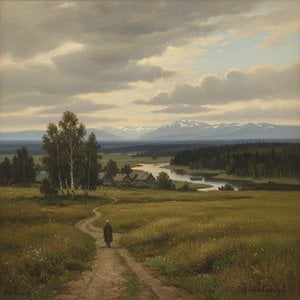
Fyodor Vasilyev: A Poetic Vision of Russian Landscape – Life, Legacy, and the Transience of Nature
Explore the captivating world of Fyodor Vasilyev, a pioneering Russian landscape painter. Discover his lyrical style, influential works like 'Clouds' & lasting legacy. Learn about his life, artistic journey & impact on Russian art history.

Vasily Polenov: A Pioneer of Landscape Impressionism & Russian National Identity
Explore the captivating landscapes of Vasily Polenov, a pivotal figure in Russian art history. Discover his lyrical realism, biblical series & influence on Impressionism. Learn about the 'Knight of Beauty' and his enduring legacy.