

 Visualizar na parede
 Compartilhar
 Compartilhar
 Detalhes
 Guia
Guia

 Baixar imagem
 Semelhantes
 Raio X
 Ver diaporama
 Perguntas e Respostas
 Estatísticas
Everest

- 30.0 x 46.0 cm


 Ler mais
Giclée / Impressão de Arte
Impressão giclée ou em tela de qualidade de museu, com produção rápida e opções flexíveis de acabamento. ( Comprar pintura feita à mão Alternar para Imagem Digital)




P118B €10

P118H €10

P118W €10

P438Z €10

P508JH €12

P508YH €12

P805H €10

P805Z €10

P919BZ €10

P919G €10

P919XJ €10

P959ZH €10

P968JZ €12

W106C €8

W218G €10

W218JH €8

W218Y €10

W307PJ €10

W316G €10

W316PJ €8

W316Y €10

W398PJ €8

W4111J €10

W500HY €15

W500JH €15

W692G €12

W849H €8

W940BG €15

W953PJ €8




Escolha entre os nossos tamanhos pré-definidos que respeitam as proporções originais da obra de arte.

Insira a largura e a altura desejadas para se ajustarem à sua moldura ou parede. Uma impressão pode ser apenas cortada, nunca ampliada além da imagem original; portanto, um tamanho com proporções diferentes resultará na perda de parte da imagem. Enviamos uma maquete digital para sua aprovação antes de realizarmos a impressão. A imagem exibida nesta página não mostra o corte real — apenas a maquete o faz.
Entrega mundial () em 2 semanas, em vez das 4/5 semanas padrão. (11 Novembro)

Envio expresso gratuito para todo o mundo

Tela de Linho de Alta Qualidade

Seguro de transporte completo

Garantia de Reembolso de Impostos Alfandegários

Garantia de Fidelidade Cromática

Política de Devolução em 100 Dias (Apenas para Defeitos)

Garantia de reembolso de 100%

Oferta de desconto por quantidade
 A opção de vidro está disponível apenas para tamanhos inferiores a 110 cm

Everest
Giclée / Impressão de Arte
Tamanho da Reprodução
-


Preço Total
€ 56
A Symphony in Blue and Crimson: Exploring Nicholas Roerich’s Everest
Nicholas Roerich's 'Everest,' completed in 1931, stands as a poignant emblem of Russian Symbolism—a movement that sought to transcend literal representation and delve into the realm of spiritual experience. Measuring 30 x 46 cm, this tempera on panel artwork isn’t simply a depiction of the Himalayan mountain range; it's an invitation to contemplate its grandeur and imbue it with profound meaning. The painting captures a breathtaking vista of snow-capped peaks bathed in hues of azure and scarlet—colors deliberately chosen to evoke feelings of serenity and majesty, mirroring Roerich’s unwavering belief in the interconnectedness of humanity and nature.Technique and Medium: Tempera's Enduring Legacy
Roerich skillfully employed tempera paint—a technique favored by artists throughout history—known for its luminosity and durability. Unlike oil paints which require solvents and can darken over time, tempera adheres to the surface without cracking or peeling, ensuring that ‘Everest’ retains its vibrancy and beauty for generations to come. This meticulous approach reflects Roerich's dedication to preserving his artistic vision and honoring the traditions of Russian art. The layering of thin glazes contributes to the painting’s ethereal quality, capturing the subtle nuances of light and shadow on the mountain slopes—a testament to Roerich’s mastery of color and texture.Symbolism Rooted in Eastern Philosophy
The composition itself is laden with symbolic resonance. Positioned near a body of water – likely representing the subconscious mind – the mountain range embodies resilience, aspiration, and the pursuit of spiritual enlightenment. Roerich drew heavily from Hindu and Buddhist cosmology, incorporating motifs reminiscent of sacred mountains and celestial realms into his artwork. The dominant blues symbolize tranquility, wisdom, and the boundless expanse of consciousness, while reds convey passion, vitality, and the transformative power of inner transformation. These colors aren’t merely decorative; they are conduits for conveying profound spiritual concepts.Historical Context: Roerich's Vision Amidst Artistic Movements
‘Everest’ emerged during a period of significant artistic experimentation in Russia—the Symbolist movement—which reacted against realism and championed subjective experience as paramount. Artists like Roerich sought to express inner truths rather than outward appearances, utilizing evocative imagery and symbolic language to communicate spiritual ideas. Alongside Zarathustra and Bhagavan, ‘Everest’ exemplifies Roerich's broader artistic philosophy: a harmonious blend of observation and intuition aimed at fostering understanding and reverence for the natural world. Its presence in the State Museum of Oriental Art underscores its importance as a cornerstone of Russian Symbolism and continues to inspire admiration for its beauty and depth.Emotional Resonance: A Window into Roerich’s Soul
Ultimately, ‘Everest’ transcends mere visual representation; it speaks to the viewer's emotions—inspiring contemplation on themes of perseverance, faith, and the sublime grandeur of existence. Like many of Roerich’s works, this painting invites us to reconnect with our inner selves and appreciate the profound beauty inherent in the natural world. It serves as a reminder that art can illuminate not only what we see but also what we feel—a legacy that resonates powerfully even today.Perguntas e Respostas
A que fase da carreira de Nicolás Roerich pertence "Everest" (1931)?
Dada a sua data de 1931, "Everest" insere-se no período Mature Period de Nicolás Roerich.
De qual país é a obra do Russian Symbolism "Everest"?
"Everest" foi criada por Nicolás Roerich, nascido em Rússia, dentro do movimento Russian Symbolism. A origem do artista vincula a obra ao Russian Symbolism, tal como praticado por artistas de Rússia.
Onde posso comprar uma impressão de "Everest", de Nicolás Roerich?
Uma impressão de "Everest", de Nicolás Roerich pode ser encomendada diretamente na sua página de Impressão Fine Art: uma impressão fine art em tela de algodão ou papel canvas de arquivo.
Obras Relacionadas


Biografia do Artista
Primeiros Anos, Família e Formação
Nicolás Roerich nasceu em 9 de outubro de 1874, em São Petersburgo, na Rússia. Sua linhagem unia um pai de origem germano-báltica a uma mãe russa, um contexto que proporcionou uma estrutura intelectual e cultural muito específica para suas buscas futuras. Essa herança dual não o conduziu a um foco único; pelo contrário, alimentou uma carreira multifacetada que abrangeu o direito, a arqueologia e a filosofia, caminhando lado a lado com sua produção visual. Desde o início, ele se revelou um homem de disciplina estruturada.
Sua educação formal foi marcada pela busca simultânea de disciplinas distintas. Em 1893, ele se matriculou tanto na Universidade de São Petersburgo quanto na Academia Imperial de Artes. Esse caminho duplo permitiu que ele desenvolvesse um pensamento jurídico em paralelo a uma mente artística. Ele obteve sua designação de artista em 1897 e concluiu sua graduação em direito no ano seguinte. Essa combinação de formação jurídica e estudo artístico forneceu a base para seus papéis posteriores, mais complexos, como figura pública e defensor da preservação cultural.
Patronos, Oficina e Comissões
A influência de Nicolás Roerich no cenário teatral do início do século XX consolidou-se através de seu envolvimento com a sociedade "Mundo da Arte". Ele não foi apenas um participante deste círculo; ele o liderou, servindo como presidente da sociedade de 1910 a 1916. Este cargo de liderança o colocou no centro de uma rede de inovadores que estavam desmantelando ativamente as estruturas artísticas tradicionais da Rússia. Seu trabalho durante este período transcendeu a tela da pintura e adentrou o espaço físico do teatro, onde ele traduziu temas históricos e mitológicos complexos em ambientes visuais imersivos.
Suas contribuições mais significativas para o palco surgiram por meio de colaborações de alto perfil que redefiniram o design teatral. Ele foi o responsável pelos cenários e figurinos da estreia em 1913 do balé modernista de Igor Stravinsky, A Sagração da Primavera. Esta produção representou uma ruptura radical em relação às normas da época. Seus designs para Príncipe Igor, de Alexander Borodin, tanto na versão de 1909 quanto em produções subsequentes, permanecem como seus feitos teatrais mais reconhecidos. Tais comissões exigiam uma mistura precisa de pesquisa histórica e construção imaginativa para sustentar a música e o movimento dos intérpretes.
Técnica e Estilo
A linguagem visual de Nicolás Roerich fundamenta-se em uma tensão constante entre o detalhe intrincado e uma simplificação deliberada da forma. Sua obra frequentemente evoca uma qualidade ilustrativa, utilizando planos de cor chapados em vez da modelagem realista tradicional. Essa abordagem cria uma estética gráfica onde as linhas funcionam primordialmente para definir contornos. Ele evita as sombras densas do realismo clássico, optando, em vez disso, por um estilo que enfatiza a essência estrutural de seus temas. Tal clareza torna suas composições diretas e legíveis, mesmo quando mergulha em temas espirituais de profunda complexidade.
O uso da cor é o elemento central de seu impacto emocional. Nicolás Roerich utilizava paletas vibrantes para definir suas paisagens e figuras, criando, muitas vezes, um contraste nítido entre o sujeito e o ambiente que o rodeia. Em obras como Agni Yoga, criada por volta de 1929, ele utilizou a têmpera sobre painel para alcançar texturas e matizes específicos. Este meio permitia uma aplicação controlada do pigmento, sustentando sua preferência por tons luminosos e estratificados. Sua habilidade em equilibrar essas cores intensas com formas simplificadas, quase geométricas, impede que as composições se tornem sobrecarregadas, mantendo sempre um sentido de ordem e propósito espiritual.
- Agni Yoga (c. 1929)
Obras-Primas
A produção de Nicolás Roerich é definida por uma transição profunda, que parte do rigor histórico em direção ao domínio do metafísico. Sua pintura de 1929, Agni Yoga, permanece como um exemplo primordial dessa metamorfose, fundindo a espiritualidade oriental com o esclarecimento ocidental. A composição concentra-se em uma figura feminina solitária, posicionada sobre um afloramento rochoso, que contempla uma vasta paisagem de montanhas e águas — uma cena que evoca a contemplação espiritual profunda. O céu acima é iridescente, utilizando matizes de azul e amarelo para criar uma sensação de escala cósmica, enquanto, ao longe, surgem figuras que sugerem a presença de forças invisíveis ou guias espirituais.
Em seu período inicial, o foco recaiu intensamente sobre a identidade arquitetônica e histórica da Rússia. Tais obras frequentemente utilizavam pesquisas meticulosas para retratar fortalezas e mosteiros, demonstrando um interesse pelos remanescentes físicos do passado que serviu como base necessária para suas explorações posteriores, mais abstratas, do reino espiritual. Seus cenários para os Ballets Russes, especificamente para A Sagração da Primavera (1913) e Príncipe Igor (1909), também demonstram sua habilidade magistral de utilizar ambientes visuais para amplificar o peso emocional de uma performance teatral.
- A Sagração da Primavera (1913)
- Príncipe Igor (1909)
- Agni Yoga (1929)
Legado e Influência
O impacto de Nicolás Roerich estende-se muito além da tela, enraizado em seus esforços práticos para proteger a criatividade humana da devastação da guerra. Em 1935, ele liderou a criação do Pacto Roerich, um tratado internacional concebido para salvaguardar objetos culturais. Para apoiar esta missão, ele propôs o Banner da Paz, um emblema universal destinado a sinalizar locais culturais protegidos. Seu foco humanitário na preservação da história e da arte rendeu-lhe múltiplas indicações ao Prêmio Nobel da Paz. Estas ações transportaram sua influência do reino da estética para a esfera do direito internacional e da diplomacia.
Sua conexão com o Oriente resultou em um reconhecimento significativo por parte do governo indiano, que o nomeou um Navaratna. Esta designação o identifica como um dos nove grandes artistas da Índia. Sua obra permanece como um ponto de estudo para aqueles interessados na intersecção entre a filosofia espiritual e a representação visual. Seu legado é definido por esta identidade dual: tanto como um criador de imagens quanto como um defensor das instituições que as abrigam.
Onde Contemplar suas Obras Hoje
Para encontrar a realidade física da visão de Nicolás Roerich, é necessário recorrer a coleções institucionais específicas que preservam sua vasta produção. Nos Estados Unidos, o Nicholas Roerich Museum, em Nova York, permanece como um destino primordial. Acomodado em um edifício de estilo brownstone no Upper West Side de Manhattan, o museu mantém a atmosfera singular de seus anos tardios. Este espaço guarda uma parte significativa de sua obra, incluindo muitas de suas paisagens do Himalaia e os arquivos de Agni Yoga.
O alcance de seu legado estende-se de volta à Rússia e penetra na Ásia Central. O Museu Estatal Russo, em São Petersburgo, abriga peças que refletem sua formação inicial e seu desenvolvimento artístico. Além disso, a Astrakhan State Picture Gallery preserva obras que contribuem para a compreensão de sua diversificada temática. Essas coleções garantem que sua transição do Simbolismo Russo para suas posteriores paisagens místicas permaneça documentada em seus contextos culturais originais.
- Agni Yoga (1929)
- And we continue fishing (1922)
- Sacred Himalayas (1934)

Nicolás Roerich
1874 - 1947 , Rússia
Dados Rápidos
- Artistic Movement Or Style: Simbolismo, Modernismo
- Date Of Birth: 1874
- Date Of Death: 1947
- Full Name: Nikolai Konstantinovich Rerikh
- Nationality: Russo
- Notable Artworks:
- Visitantes do além-mar
- Rostov, o Grande
- Caminho Varangiano
- Vernáculo
- Mansão de Gegstad
- Ninho Bom
- O Último Anjo
- A Cidade Mais Bela
- Vaydelots
- Santa Olga de Kiev
- Senhor da Noite
- Mártir Mercúrio de Smolensk
- Linnasaari, Lago Ladoga
- E continuamos pescando
- E trazemos a luz
- Livro da Sabedoria
- Flor de Fogo
- Cálice de Cristo
- Grande Cavaleiro. Rigden Jyepo
- Agni Yoga
- Bhagavan
- São Francisco
- Santa Sofia, a Sabedoria Onipotente
- Ashram
- A Descida à Mansão dos Mortos
- A Luz Conquista a Escuridão
- Himalaias Sagradas
- Armagedom
- Kuluta
- Mãe do Mundo
- Canção de Shambhala
- Mensageiro
- Place Of Birth: São Petersburgo, Rússia
Artigos Relacionados

25 Masterpieces by Nicholas Roerich: A Journey Through Spirit and Symbolism
Embark on a spiritual journey through the 25 most iconic Nicholas Roerich paintings. From Russian Symbolism to mystical Himalayan landscapes, explore the stories behind these timeless masterpieces and find museum-quality art reproductions. Discover all masterpieces on ArtsDot.com.

Kuzma Petrov-Vodkin: A Pioneer of Russian Spiritual Symbolism & the Avant-Garde
Explore the captivating world of Kuzma Petrov-Vodkin, a pivotal figure in Russian avant-garde and spiritual symbolism. Discover his iconic works, unique style & lasting influence on 20th-century art.

Transcendent Visions: Exploring Spirituality Through Art History & Contemporary Practice
Explore the rich history of spirituality in art! Discover iconic masterpieces, symbolism & contemporary artists evoking transcendence. Expert insights for collectors seeking emotional resonance and lasting value.
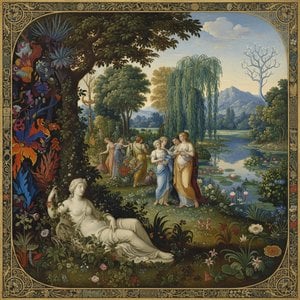
Evoking Eden: Nature's Enduring Legacy in Fine Art Across Historical Movements
Explore the rich history of landscape painting with ArtsDot.com! Discover Impressionism, Realism & Naturalism's impact on nature art. Find serene masterpieces and expert guidance for building your perfect collection.

Nicholas Roerich: Mysticism, Mountains & the Search for Ageless Wisdom in Art
Explore the captivating art of Nicholas Roerich – a visionary painter whose Himalayan landscapes blend spiritual mysticism with cultural preservation. Discover his legacy & symbolism.


