
 Visualizar na parede
 Compartilhar
 Compartilhar
 Detalhes
 Guia
Guia

 Baixar imagem
 Semelhantes
 Raio X
 Ver diaporama
 Perguntas e Respostas
 Estatísticas
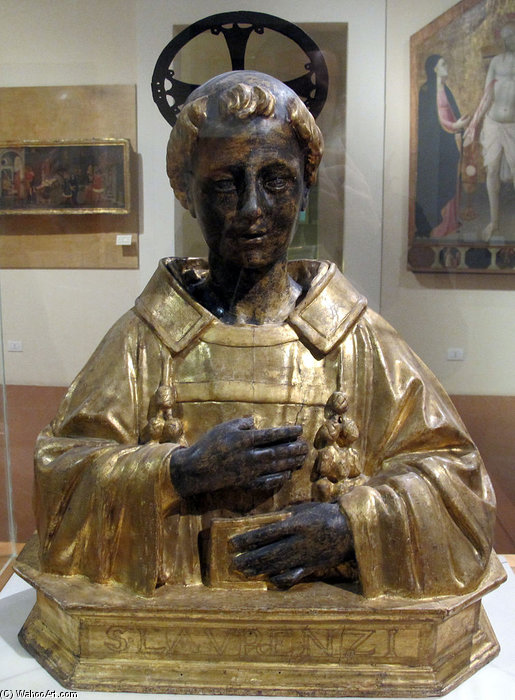
San Lorenzo
 Ler mais
Giclée / Impressão de Arte
Impressão giclée ou em tela de qualidade de museu, com produção rápida e opções flexíveis de acabamento. ( Comprar pintura feita à mão Alternar para Imagem Digital)




































Escolha entre os nossos tamanhos pré-definidos que respeitam as proporções originais da obra de arte.

Insira a largura e a altura desejadas para se ajustarem à sua moldura ou parede. Uma impressão pode ser apenas cortada, nunca ampliada além da imagem original; portanto, um tamanho com proporções diferentes resultará na perda de parte da imagem. Enviamos uma maquete digital para sua aprovação antes de realizarmos a impressão. A imagem exibida nesta página não mostra o corte real — apenas a maquete o faz.
Entrega mundial () em 2 semanas, em vez das 4/5 semanas padrão. (10 Novembro)

Envio expresso gratuito para todo o mundo

Tela de Linho de Alta Qualidade

Seguro de transporte completo

Garantia de Reembolso de Impostos Alfandegários

Garantia de Fidelidade Cromática

Política de Devolução em 100 Dias (Apenas para Defeitos)

Garantia de reembolso de 100%

Oferta de desconto por quantidade
 A opção de vidro está disponível apenas para tamanhos inferiores a 110 cm

San Lorenzo
Giclée / Impressão de Arte
Tamanho da Reprodução
-


Preço Total
€ 56
Obras Relacionadas


Biografia do Artista
The Redheaded Master of the Early Renaissance
In the vibrant, competitive atmosphere of the early 15th-century Italian Renaissance, few figures possess a legacy as intriguing yet enigmatic as Nanni di Bartolo. Known to art historians by the evocative moniker "il Rosso"—a tribute to his distinctive auberm hair—this Florentine sculptor navigated the shifting tides of artistic innovation with remarkable grace. While his precise birthdate remains shrouded in the mists of history, scholarly consensus places his emergence around 1419. He was a man of profound connections, born as the son of a Friar Bartolo, and his early years were shaped by the rigorous traditions of sculpture that were then transforming the landscape of Tuscany.
The artistry of Nanni di Bartolo cannot be understood without acknowledging the shadow of the great Donatello. As a younger contemporary of the maestro, Nanni’s early career was deeply intertwined with the revolutionary currents flowing through Florence. He honed his skills under the tutelage of Giovanni di Pietro Sculorso, a sculptor who had himself been shaped by Donatello's pioneering spirit. This lineage is palpable in Nanni’s work, particularly in his collaborative endeavors for the Duomo Campanile. Working alongside Donatello on these monumental figures of prophets and saints, Nanni embraced a new language of anatomical precision and expressive dynamism, helping to bridge the gap between the lingering elegance of the International Gothic style and the burgeoning humanism of the Renaissance.
A Journey Through Florence and Venice
Despite his deep roots in the Florentine tradition, Nanni’s career was marked by a significant geographical and stylistic evolution. Historical records suggest that around 1424, perhaps driven by the pressures of debt or a desire to seek new horizons beyond the intense competition of Florence, he departed the city. This period of wandering led him into the Venetian territories and northern Italy, where his role became that of a cultural emissary. In these regions, Nanni performed a delicate balancing act: he spread the sophisticated Florentine style while simultaneously adapting his technique to satisfy the local preference for the graceful, decorative elements of the Gothic tradition.
This synthesis of styles allowed him to leave a lasting imprint on the sculptural landscape of Northern Italy. His output during these years was characterized by a mastery of diverse materials, most notably terracotta and plaster. These mediums allowed for an intimacy and detail that stone often precluded, enabling him to create emotive reliefs and busts of the Virgin Mary and various saints. His ability to breathe life into clay—capturing the soft folds of drapery and the subtle nuances of facial expression—ensured that his work resonated with both the spiritual devotion and the aesthetic sensibilities of a wide audience.
Legacy and Artistic Significance
The historical significance of Nanni di Bartolo lies in his role as a vital link in the chain of Renaissance development. While he may not have reached the singular, world-altering heights of Donatello, his contributions were essential to the dissemination of Florentine innovation across the Italian peninsula. His work serves as a testament to the era's transition, embodying the tension between the old and the new.
Reflecting on his body of work, several key elements define his artistic identity:
- Stylistic Versatility: The ability to merge the structural rigor of Florentine sculpture with the lyrical beauty of the International Gothic.
- Material Mastery: An exceptional command over terracotta and plaster, which allowed for a more accessible and expressive form of religious narrative.
- Cultural Diffusion: Acting as a bridge between the artistic epicenters of Florence and the burgeoning markets of Venice and Northern Italy.
- Humanist Influence: A commitment to the emerging Renaissance ideals of anatomical accuracy and emotional depth in sacred subjects.
Though his life ended in 1451, leaving behind a fragmented biographical record, the echoes of "il Rosso" remain etched in the very fabric of Italian art history. Through his sculptures, we glimpse a world in transition—a period where the divine was being reimagined through the lens of human experience and classical revival.

Nanni Di Bartolo
1419 - 1451
Dados Rápidos
- Full Name: Nanni di Bartolo
- Nationality: Italian
- Date Of Birth: 1419
- Date Of Death: 1451
- Place Of Birth: Florence
- Notable Artworks:
- Judgment of Solomon
- Madonna Ghibertiana
- Sacrifice of Isaac
- Brenzoni Monument
- Annunciation fresco
- Artistic Movement Or Style: Early Renaissance
- Artists Who Influenced This Artist:
- Donatello
- Lorenzo Ghiberti
- Artists Or Movements Influenced By This Artist:
- International Gothic
- Venetian Art
Artigos Relacionados

Lorenzo Lotto: Unveiling the Enigma of a Venetian Master's Portraits
Explore the captivating world of Lorenzo Lotto, a Venetian Renaissance master renowned for his psychologically insightful portraits & enigmatic symbolism. Discover his life, style, and rediscovered legacy with ArtsDot.

Antonio da Correggio: Innovation, Illusionism & the Poetics of Grace in Renaissance Painting
Explore the revolutionary art of Antonio da Correggio, a master of Renaissance illusionism and chiaroscuro. Discover his frescoes, mythological paintings & lasting influence on Baroque art. Expert analysis & key works featured.

Francesco Guardi: Venetian Light, Atmospheric Perspective & the Rococo to Neoclassical Transition
Explore the captivating world of Francesco Guardi, master of Venetian light and atmosphere. Discover his transition from Rococo to Neoclassicism, influence on Impressionism & investment potential with ArtsDot.

Paolo Uccello: Pioneering Perspective & the Renaissance Pursuit of Visual Truth
Explore the revolutionary art of Paolo Uccello, a Florentine Renaissance master who pioneered perspective. Discover his iconic paintings like 'St. George & The Dragon' and learn about his lasting influence on art history.