


 Visualizar na parede
 Compartilhar
 Compartilhar
 Detalhes
 Guia
Guia

 Baixar imagem
 Semelhantes
 Raio X
 Ver diaporama
 Estatísticas
Night Harbor
 Acrylic On Canvas
- WallArt
- Abstract Expressionism
 1957
1957- Modern
 111.0 x 144.0 cm
 Chrysler Museum of Art
 Ler mais
A obra de arte exibida nesta página é protegida por leis de direitos autorais, o que significa que não podemos criar ou vender legalmente uma reprodução idêntica. Esta proteção é aplicada por meio de acordos internacionais, tais como a Convenção de Berna e pelas leis nacionais, incluindo as estabelecidas por Lei de Direitos Autorais dos EUA - Título 17.
Como uma alternativa respeitosa e legal, oferecemos obras de arte personalizadas e pintadas à mão, inspiradas na obra original. Nossos artistas profissionais e experientes estudam cuidadosamente o estilo, a atmosfera e a essência artística da obra original para criar uma peça nova e única que evoque a mesma sensação — permanecendo como uma criação original por direito próprio.
Este método cumpre plenamente as regulamentações de direitos autorais, pois não envolve a cópia ou duplicação da obra protegida. Em vez disso, trata-se de uma reinterpretação criativa — uma nova pintura que é influenciada pela original, mas não idêntica a ela.
Reprodução em Óleo Feita à Mão
Óleo sobre tela pintado à mão no tamanho e moldura de sua escolha, feito sob encomenda pelos nossos artistas. ( Alternar para Impressão Alternar para Imagem Digital)




P118B €10

P118H €10

P118W €10

P438Z €10

P508JH €12

P508YH €12

P805H €10

P805Z €10

P919BZ €10

P919G €10

P919XJ €10

P959ZH €10

P968JZ €12

W106C €8

W218G €10

W218JH €8

W218Y €10

W307PJ €10

W316G €10

W316PJ €8

W316Y €10

W398PJ €8

W4111J €10

W500HY €15

W500JH €15

W692G €12

W849H €8

W940BG €15

W953PJ €8




Escolha entre os nossos tamanhos pré-definidos que respeitam as proporções originais da obra de arte.

Insira a largura e a altura desejadas para se ajustarem à sua moldura ou parede. Como esta obra é pintada à mão, para um tamanho com proporções diferentes, o artista poderá pintar um pouco mais ao redor da imagem ou reduzir ligeiramente a composição — você escolhe. Enviamos uma maquete digital para sua aprovação antes de iniciar a pintura. A imagem exibida nesta página não representa o resultado real — apenas a maquete mostra o resultado final.
Após o pedido, a equipa ArtsDot.com enviará um e-mail ao cliente para solicitar instruções e fornecer uma prévia do esboço.
Entrega mundial () em 3 a 4 semanas, em vez das 5 semanas padrão. (26 Outubro). Sem comprometer a qualidade.

Envio expresso gratuito para todo o mundo

Tela de Linho de Alta Qualidade

Seguro de transporte completo

Garantia de Reembolso de Impostos Alfandegários

Garantia de Fidelidade Cromática

Política de Devolução em 100 Dias (Apenas para Defeitos)

Garantia de reembolso de 100%

Oferta de desconto por quantidade
 A opção de vidro está disponível apenas para tamanhos inferiores a 110 cm

Night Harbor
Técnica de Reprodução
Tamanho da Reprodução
-


Preço Total
€ 231
Night Harbor: A Quiet Revelation by Milton Avery
Milton Avery’s “Night Harbor,” painted in 1957 during a pivotal summer spent with Mark Rothko in Provincetown, Massachusetts, represents more than just a seascape; it embodies a profound shift in the artist's approach to abstraction. This work, created near the end of his career, stands as the most radically abstract piece in Avery’s oeuvre, a testament to his willingness to push boundaries while retaining a core connection to recognizable subject matter. The painting captures the essence of the ocean viewed from the shores of Provincetown, a location that profoundly influenced Avery's artistic trajectory during this period.
- Subject Matter: A serene depiction of the Atlantic Ocean, rendered with an almost dreamlike quality.
- Composition: The arrangement is strikingly simple – a dominant blue expanse punctuated by the subtle presence of boats and the defining line of a setting or rising sun.
- Color Palette: Avery’s signature use of flattened, layered color is immediately apparent, creating a luminous effect that elevates the scene beyond mere representation.
Technique and Style – Embracing Abstraction
“Night Harbor” showcases Avery's masterful manipulation of color and texture. The frenzied brushstrokes, particularly in the sky, suggest the atmospheric effects characteristic of summer evenings—the hazy light, the shifting colors, and the sense of vastness. This technique departs significantly from his earlier work, which often featured more defined forms and recognizable figures. Here, Avery prioritizes the emotional impact of color over precise depiction, a move that foreshadowed the development of Abstract Expressionism. The thin yellow line acts as a focal point, drawing the eye across the canvas and symbolizing the sun’s dramatic arc.
Historical Context and Influences
Painted in 1957, “Night Harbor” reflects a broader artistic landscape undergoing significant transformation. Avery was deeply influenced by the work of Kandinsky and other pioneers of abstraction, yet he maintained his own distinct voice. His time with Rothko during this summer was particularly formative, exposing him to the power of non-representational color fields. This period marked a crucial turning point in Avery’s career, solidifying his commitment to exploring the expressive potential of color as its primary subject.
Symbolism and Emotional Impact
The painting evokes a sense of tranquility and contemplation. The blue tones suggest both the vastness of the ocean and the quiet solitude of the scene. The boats, though indistinct, represent human presence within this immense natural world. “Night Harbor” is not merely a representation of a coastal view; it’s an exploration of mood, atmosphere, and the relationship between humanity and nature. It invites viewers to lose themselves in its serene beauty and contemplate the mysteries of the sea.
Perguntas e Respostas
"Night Harbor", de Milton Avery está em domínio público?
"Night Harbor", de Milton Avery está em ainda protegido por direitos autorais. Este status determina como a imagem da obra pode ser reproduzida.
Quais cores predominam em "Night Harbor", de Milton Avery?
"Night Harbor", de Milton Avery utiliza uma paleta Dark, com Cobalt Violet (#6b76a2) como cor dominante.
Qual tamanho de impressão devo escolher para "Night Harbor" no meu quarto?
Para um(a) Living Room, o tamanho de impressão recomendado para "Night Harbor", de Milton Avery é Large.
Obras Relacionadas


Biografia do Artista
A Quiet Revolution in Color: The Life and Art of Milton Avery
Milton Clark Avery, born March 7, 1885, in the small hamlet of Altmar, New York, wasn’t a painter who stormed the art world with manifestos or radical pronouncements. Instead, his revolution unfolded quietly, through a subtle yet profound exploration of color and form that would deeply influence generations of American artists. His early life was steeped in practicality; as the son of a tanner, Avery began working at sixteen to support his family after his father’s untimely death, taking on various blue-collar jobs while nurturing a burgeoning passion for art. This period instilled in him a grounded sensibility, a connection to everyday life that would permeate his work.
Early Life and Artistic Beginnings
Raised in rural New York State amidst the hardships of working-class existence, Avery’s formative years shaped his artistic vision profoundly. The death of his brother-in-law in 1915 left him responsible for caring for nine female relatives—a circumstance that instilled a deep sense of responsibility and fostered an unwavering dedication to providing for his family. Recognizing his innate talent for visual representation, he pursued formal training at the Connecticut League of Art Students and later at the Art Students League of New York, honing his skills through disciplined observation and experimentation.
Influences from European Modernism
Avery’s artistic journey wasn't defined by immediate acclaim but rather by a gradual assimilation of influential movements. He absorbed the bold color palettes of French Fauvism—artists like Henri Matisse served as pivotal mentors—and the expressive distortions characteristic of German Expressionism, particularly the work of Ernst Ludwig Kirchner. However, Avery skillfully synthesized these lessons into something uniquely his own; he didn’t merely imitate stylistic conventions but rather interrogated their underlying principles, seeking to distill essence and convey emotion.
The Rise of Color Field Painting & Recognition by Roy Neuberger
Avery's breakthrough came in the 1930s with the patronage of Roy Neuberger, a New York art dealer who recognized the exceptional quality and originality of his paintings. Neuberger’s astute judgment propelled Avery into the spotlight, initiating an ambitious campaign to disseminate his work internationally—a pivotal moment that secured his place as a cornerstone of American Modernism. Among Neuberger's most notable acquisitions was *Gaspé Landscape*, which became emblematic of Avery’s distinctive style: luminous color fields juxtaposed with simplified geometric forms.
A Legacy of Serenity and Influence
Milton Avery’s enduring legacy resides in his unwavering commitment to exploring the expressive potential of color—a pursuit that profoundly impacted subsequent generations of artists. Artists like Mark Rothko and Adolph Gottlieb acknowledged Avery's influence, recognizing his pioneering role in establishing Color Field painting as a dominant aesthetic trend. His paintings continue to captivate audiences today with their serene beauty, understated elegance, and profound emotional resonance—a testament to an artist who dared to redefine the boundaries of artistic expression.

Milton Avery
1885 - 1965 , Estados Unidos da América
Dados Rápidos
- Artistic Movement Or Style: Modernismo, Fauvismo
- Artists Or Movements Influenced By This Artist:
- Expressionismo
- Abstracionismo
- Artists Who Influenced This Artist:
- Matisse
- Kirchner
- Date Of Birth: 7 de março de 1885
- Date Of Death: 3 de janeiro de 1965
- Full Name: Milton Clark Avery
- Nationality: Americano
- Notable Artworks:
- Gaspé Landscape
- Central Park
- Flight of Birds
- Place Of Birth: Altmar, EUA
Artigos Relacionados

Abstração Geométrica: 10 Obras-Primas que Moldaram a Arte Moderna | ArtsDot.com
Descubra as 10 obras-primas da Abstração Geométrica que revolucionaram a arte moderna! Explore Kandinsky, Mondrian e outros artistas icônicos. Encontre reproduções de alta qualidade para decorar sua casa com ArtsDot.com.
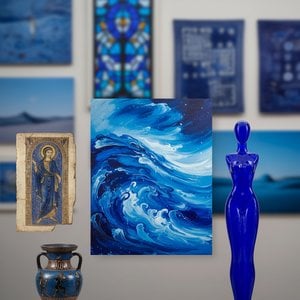
The Allure of Azure: Exploring the Symbolic & Aesthetic Depths of Blue in Art History
Explore the rich history of blue in art! Discover its symbolism, from ancient pigments to modern masterpieces by Kandinsky & Seurat. Uncover the psychological impact and cultural meanings behind this captivating hue.

As 10 Obras Mais Famosas em Tons de Azul Ardósia | ArtsDot.com
Descubra as 10 pinturas mais emblemáticas em tons de azul ardósia! Explore a história, artistas como Monet e Van Gogh, e o significado da cor na arte. Encontre reproduções de alta qualidade para decorar sua casa com ArtsDot.com.

Kandinsky: As 25 Obras-Primas que Definem o Abstracionismo | ArtsDot
Descubra as 25 obras-primas de Wassily Kandinsky, pioneiro da arte abstrata! Explore a história, cores e significado por trás de cada pintura. Encontre reproduções de alta qualidade e inspire sua decoração em ArtsDot.com.

Top 10 Obras-Primas do Expressionismo Abstrato: Arte para Decorar e Inspirar | ArtsDot.com
Descubra as 10 obras-primas do Expressionismo Abstrato com Jackson Pollock, Mark Rothko e mais! Explore a história, técnica e emoção por trás de cada pintura. Encontre reproduções de arte exclusivas para decorar sua casa em ArtsDot.com.