

 Visualizar na parede
 Compartilhar
 Compartilhar
 Detalhes
 Guia
Guia

 Baixar imagem
 Semelhantes
 Raio X
 Ver diaporama
 Perguntas e Respostas
 Estatísticas
The wavering woman - -

- 131.0 x 98.0 cm


 Ler mais
A obra de arte exibida nesta página é protegida por leis de direitos autorais, o que significa que não podemos criar ou vender legalmente uma reprodução idêntica. Esta proteção é aplicada por meio de acordos internacionais, tais como a Convenção de Berna e pelas leis nacionais, incluindo as estabelecidas por Lei de Direitos Autorais dos EUA - Título 17.
Este método cumpre plenamente as regulamentações de direitos autorais, pois não envolve a cópia ou duplicação da obra protegida. Em vez disso, trata-se de uma reinterpretação criativa — uma nova pintura que é influenciada pela original, mas não idêntica a ela.
Giclée / Impressão de Arte
Impressão giclée ou em tela de qualidade de museu, com produção rápida e opções flexíveis de acabamento. ( Comprar pintura feita à mão Alternar para Imagem Digital)




P118B €10

P118H €10

P118W €10

P438Z €10

P508JH €12

P508YH €12

P805H €10

P805Z €10

P919BZ €10

P919G €10

P919XJ €10

P959ZH €10

P968JZ €12

W106C €8

W218G €10

W218JH €8

W218Y €10

W307PJ €10

W316G €10

W316PJ €8

W316Y €10

W398PJ €8

W4111J €10

W500HY €15

W500JH €15

W692G €12

W849H €8

W940BG €15

W953PJ €8




Escolha entre os nossos tamanhos pré-definidos que respeitam as proporções originais da obra de arte.

Insira a largura e a altura desejadas para se ajustarem à sua moldura ou parede. Uma impressão pode ser apenas cortada, nunca ampliada além da imagem original; portanto, um tamanho com proporções diferentes resultará na perda de parte da imagem. Enviamos uma maquete digital para sua aprovação antes de realizarmos a impressão. A imagem exibida nesta página não mostra o corte real — apenas a maquete o faz.
Entrega mundial () em 2 semanas, em vez das 4/5 semanas padrão. (5 Novembro)

Envio expresso gratuito para todo o mundo

Tela de Linho de Alta Qualidade

Seguro de transporte completo

Garantia de Reembolso de Impostos Alfandegários

Garantia de Fidelidade Cromática

Política de Devolução em 100 Dias (Apenas para Defeitos)

Garantia de reembolso de 100%

Oferta de desconto por quantidade
 A opção de vidro está disponível apenas para tamanhos inferiores a 110 cm

The wavering woman - -
Giclée / Impressão de Arte
Tamanho da Reprodução
-


Preço Total
€ 56
A Glimpse into the Psyche – The Wavering Woman by Max Ernst
Max Ernst’s “The Wavering Woman” isn't merely a painting; it’s an invitation to step through a looking glass and confront the unsettling beauty of the subconscious. Completed in 1923 during his pivotal years within the Surrealist movement, this oil on canvas transports us to a realm where logic dissolves and dream logic reigns supreme. The image depicts a solitary figure – a woman poised precariously on what appears to be a crumbling staircase or ladder, her arms outstretched as if caught in an eternal fall. This isn’t a scene of physical danger, but rather one steeped in psychological tension, a visual representation of vulnerability and the precariousness of existence.
Ernst, a restless innovator who rejected traditional artistic constraints, was deeply influenced by Freudian psychology during this period. He sought to unlock the hidden depths of his own mind, translating anxieties, desires, and memories into arresting imagery. “The Wavering Woman” embodies this exploration – it’s a visual poem about the fragility of identity and the struggle to maintain balance in a world that often feels unstable. The painting's power lies not just in its striking composition but also in the palpable sense of unease it evokes, prompting viewers to question their own perceptions of reality.
Deconstructing Reality: Surrealist Techniques at Play
The painting’s surreal effect is meticulously crafted through a combination of innovative techniques. Ernst masterfully employs distortion – the woman's proportions are subtly skewed, her features exaggerated, creating an immediate sense of disorientation. This deliberate manipulation of reality is characteristic of Surrealism, which aimed to liberate art from the constraints of representation and tap into the realm of dreams and the unconscious. Notice how the background seems to recede infinitely, drawing the viewer into a vortex of uncertainty. The use of muted earth tones – browns, greys, and ochres – further contributes to the painting’s unsettling atmosphere, creating a sense of isolation and timelessness.
Beyond distortion, Ernst utilized collage techniques—a hallmark of his practice—incorporating elements that seem incongruous yet strangely harmonious. The presence of a chair, seemingly out of place on the precipice, adds to the painting’s unsettling quality, disrupting our expectations and forcing us to reconsider the scene's meaning. The clock hanging above the woman is another key element, symbolizing time’s relentless passage and perhaps hinting at the inevitability of the fall.
Symbolism and Interpretation: A Journey into the Unconscious
“The Wavering Woman” is rich in symbolic potential. The ladder or staircase itself can be interpreted as a metaphor for life's journey, fraught with challenges and uncertainties. The woman’s outstretched arms represent a desperate attempt to grasp stability, to find purchase in a world that feels increasingly unstable. Some art historians suggest the figure embodies a representation of the modern woman, struggling against societal expectations and the pressures of a rapidly changing world. The bird-like quality of her silhouette hints at a connection to the avian realm – often associated with freedom, transformation, and the subconscious.
Furthermore, the painting’s setting—a desolate landscape dominated by a looming clock—suggests themes of mortality and the passage of time. The presence of the horse, a recurring motif in Ernst's work, can be seen as representing both the artist himself and the human condition – a creature caught between instinct and reason, freedom and constraint. The painting’s overall mood is one of melancholy and introspection, inviting viewers to contemplate their own vulnerabilities and anxieties.
A Legacy of Surrealism: Reproductions and Artistic Inspiration
“The Wavering Woman” remains a profoundly influential work within the Surrealist canon, continuing to captivate audiences with its haunting beauty and psychological depth. Today, high-quality oil painting reproductions are available through platforms like ArtsDot.com, allowing art lovers to bring this iconic image into their homes. These meticulously crafted reproductions capture the essence of Ernst’s original vision, preserving the painting's intricate details and evocative atmosphere. Whether displayed in a contemporary living room or a classic study, “The Wavering Woman” serves as a powerful reminder of the enduring power of art to explore the complexities of the human psyche.
Perguntas e Respostas
"The wavering woman - -", de Max Ernst utiliza contrastes fortes ou harmonias suaves?
A composição cromática de "The wavering woman - -", de Max Ernst combina um contraste Statement com uma harmonia Strong Color Unity.
Quais temas aparecem em "The wavering woman - -", de Max Ernst?
Os temas de "The wavering woman - -" são woman, staircase, surrealism, dreamlike, distortion, ladder, anxiety.
Por quais outros nomes Max Ernst é conhecido(a)?
Outros nomes registrados para Max Ernst, criador de "The wavering woman - -", incluem Maximilian Maria Ernst.
Obras Relacionadas


Biografia do Artista
A Vida Imersa no Surreal
Max Ernst, nascido Maximilian Maria Ernst em 1º de abril de 1891, em Brühl, Alemanha, foi um espírito inquieto destinado a se tornar uma das figuras mais cruciais do século XX na arte. Sua jornada não foi de treinamento artístico convencional; ao invés disso, foi uma exploração autoguiada, impulsionada por questionamentos filosóficos, fascínio psicológico e uma profunda desilusão com as normas sociais. Seu pai, professor surdo e pintor amador, lhe transmitiu tanto sensibilidade para o mundo quanto uma rebeldia contra a autoridade estabelecida. Essa dualidade precoce se tornaria uma característica definidora de sua visão artística.
Os estudos acadêmicos de Ernst na Universidade de Bonn – abrangendo filosofia, história da arte, literatura, psicologia e psiquiatria – não foram meras distrações, mas elementos fundamentais que informaram profundamente seu trabalho posterior. Ele não estava simplesmente interessado em *como* pintar; ele estava se questionando *por que*. Essa curiosidade intelectual o levou a encontrar as obras inovadoras de Picasso, Van Gogh e Gauguin na exposição Sonderbund em Colónia em 1912, um momento que alterou irreversivelmente sua trajetória artística. As sementes do modernismo haviam sido plantadas.
A Disrupção Dadaísta e o Nascimento das Visões Surrealistas
A catástrofe da Primeira Guerra Mundial se mostrou um ponto de inflexão para Ernst. Suas experiências como soldado em ambos os fronts, oriental e ocidental, o deixaram profundamente abalado, fomentando um ceticismo profundo em relação à ordem estabelecida e uma ânsia por novas formas de expressão. Essa desilusão encontrou terreno fértil no movimento Dada, que ele abraçou com entusiasmo após retornar a Colónia em 1918. Ao lado de Hans Arp – um amigo e colaborador de longa data –, Ernst se tornou uma figura central no grupo Dada de Colónia, rejeitando as convenções artísticas tradicionais e abraçando o absurdo, o acaso e a anti-racionalidade.
No entanto, Dada foi apenas um trampolim. Nos primeiros anos dos anos 1920, Ernst migrou para Paris e juntou-se ao Círculo Surrealista, liderado por André Breton. Isso marcou uma mudança em direção à exploração do reino dos sonhos, da mente inconsciente e do irracional. Influenciado pelas teorias psicanalíticas de Sigmund Freud, Ernst buscou desbloquear as profundezas ocultas da experiência humana através de sua arte. Ele não estava interessado em representar a realidade como ela aparecia, mas sim em revelar as forças psicológicas subjacentes que a moldavam.
Técnicas Pioneiras: Frottage, Grattage e Colagem
A inovação artística de Ernst se estendeu além do assunto; ele era um experimentador incansável com técnicas. Ele não simplesmente adotou métodos existentes—ele inventou novos. Talvez sua contribuição mais famosa seja o frottage, um processo de esfregar lápis ou carvão sobre superfícies texturizadas para criar imagens inesperadas e evocativas. Essa técnica, nascida de um momento de tédio ao observar a textura da madeira, permitiu que Ernst acessasse o inconsciente e gerasse formas que desafiavam o controle consciente. Relacionada intimamente estava o grattage, onde a tinta é raspada sobre a tela, revelando camadas subjacentes.
Ele também empregou magistralmente a colagem, montando elementos díspares – imagens de revistas, ilustrações científicas, fotografias – em composições surreais que desafiaram as noções convencionais de representação. Essas técnicas não eram meras escolhas estilísticas; elas eram integrais à sua exploração do inconsciente e ao seu desejo de perturbar os limites artísticos tradicionais. Suas pinturas frequentemente apresentam imagens simbólicas recorrentes: pássaros (particularmente seu alter ego Loplop), paisagens desoladas, combinações perturbadoras e uma sensação persistente de mistério.
Um Legado de Inovação e Influência
O início da Segunda Guerra Mundial forçou Ernst a fugir da Europa, encontrando refúgio nos Estados Unidos. Ele continuou a pintar e experimentar novas técnicas ao longo de seu exílio, eventualmente retornando à França após a guerra onde permaneceu ativo até sua morte em 1º de abril de 1976, em Paris. Sua influência nas gerações posteriores de artistas é imensurável.
As contribuições de Ernst para o Dada e o Surrealismo foram nada menos que inovadoras. Ele desafiou as normas artísticas, mergulhou nas profundezas da mente inconsciente e inventou técnicas que continuam a inspirar artistas hoje. Ele não era apenas um pintor; ele era um explorador, um provocador e um visionário que expandiu os limites da arte em si.
- Obras Notáveis: The Entire City, Euclides, Ofrenda funerária, The Angel of the Hearth
- Influências: Pablo Picasso, Vincent van Gogh, Paul Gauguin, Sigmund Freud, Giorgio de Chirico
- Movimentos: Dada, Surrealismo

Max Ernst
1891 - 1976 , Alemanha
Dados Rápidos
- Artistic Movement Or Style: Dada e Surrealismo
- Artists Or Movements Influenced By This Artist:
- Surrealismo
- Dada
- Artists Who Influenced This Artist:
- Picasso
- Van Gogh
- Gauguin
- Date Of Birth: 1 de abril de 1891
- Date Of Death: 1 de abril de 1976
- Full Name: Max Ernst
- Nationality: Alemão-Americano, Francês
- Notable Artworks:
- Cidade Inteira
- Euclides
- Dove e Floresta
- Place Of Birth: Brühl, Alemanha
Artigos Relacionados

Surrealismo: 10 Obras-Primas que Moldaram um Movimento Artístico Inesquecível
Descubra as 10 obras-primas que revolucionaram o Surrealismo! Explore a história de Dalí, Magritte e Miró. Encontre reproduções de arte exclusivas para decorar sua casa com estilo em ArtsDot.com.

Surrealismo: 10 Obras-Primas que Definiram um Movimento Artístico Inovador | ArtsDot.com
Mergulhe no universo onírico do Surrealismo! Explore 10 obras-primas de Dalí, Magritte e outros artistas icônicos. Descubra a história, técnica e emoção por trás dessas pinturas revolucionárias. Encontre reproduções de arte exclusivas em ArtsDot.com.

Dreamscapes & Disrupted Realities: Exploring Surrealism's Enduring Influence
Explore the fascinating world of Surrealism! Discover its origins, key artists like Dalí & Magritte, and enduring influence on art & culture. Expert insights & high-quality reproductions at ArtsDot.
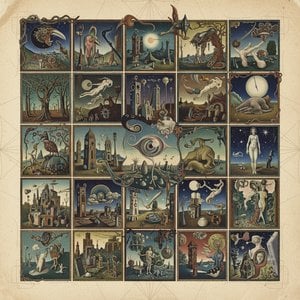
Max Ernst: As 25 Obras-Primas do Surrealismo para Decorar com Arte e História
Descubra as 25 obras-primas de Max Ernst, o mestre do surrealismo! Explore a história por trás da arte inovadora, frottage e paisagens oníricas. Encontre reproduções de alta qualidade para decorar com estilo em ArtsDot.com.

Beyond Reality's Grasp: Exploring the Philosophical Foundations of Surrealism
Explore the philosophical roots & artistic innovations of Surrealism with ArtsDot. Discover Dalí, Ernst, Delvaux & Freud's influence on this revolutionary movement. High-quality art reproductions available.


