


 Visualizar em escala
 Enviar
 Compartilhar
 Ver detalhes
 Guia de Obras do Aluno

 Baixar imagem
 Semelhantes
 Raio X
 Apresentação de slides
 Estatísticas
Laundry Barge
 Oil On Canvas
- WallArt
- Fauvism
 1910
1910- Modern
 65.0 x 74.0 cm
 Ver mais
A obra de arte exibida nesta página é protegida por leis de direitos autorais, o que significa que não podemos criar ou vender legalmente uma reprodução idêntica. Esta proteção é aplicada por meio de acordos internacionais, tais como a Convenção de Berna e pelas leis nacionais, incluindo as estabelecidas por Lei de Direitos Autorais dos EUA - Título 17.
Este método cumpre plenamente as regulamentações de direitos autorais, pois não envolve a cópia ou duplicação da obra protegida. Em vez disso, trata-se de uma reinterpretação criativa — uma nova pintura que é influenciada pela original, mas não idêntica a ela.
Giclée / Impressão de Arte
Impressão giclée ou em tela de qualidade de museu, com produção rápida e opções flexíveis de acabamento. ( Encomendar reprodução pintada à mão Ver Imagem Digital)




P118B €10

P118H €10

P118W €10

P438Z €10

P508JH €12

P508YH €12

P805H €10

P805Z €10

P919BZ €10

P919G €10

P919XJ €10

P959ZH €10

P968JZ €12

W106C €8

W218G €10

W218JH €8

W218Y €10

W307PJ €10

W316G €10

W316PJ €8

W316Y €10

W398PJ €8

W4111J €10

W500HY €15

W500JH €15

W692G €12

W849H €8

W940BG €15

W953PJ €8




Escolha entre os nossos tamanhos pré-definidos que respeitam as proporções originais da obra de arte.

Digite a largura e a altura de que necessita, para se ajustar à sua moldura ou à sua parede. Uma impressão só pode ser cortada, nunca ampliada além da imagem original, pelo que um tamanho com uma proporção diferente perderá parte da imagem. Enviamos-lhe uma maquete digital para aprovação antes de imprimirmos qualquer coisa. A imagem apresentada nesta página não mostra o corte real — apenas a maquete o faz.
Entrega mundial () em 2 semanas, em vez das 4/5 semanas padrão. (25 Outubro)

Envio expresso gratuito para todo o mundo

Tela de Linho Premium

Seguro de transporte total

Garantia de Reembolso de Impostos Alfandegários

Garantia de Fidelidade de Cor

Política de Devolução em 100 Dias (Apenas para Defeitos)

Garantia de reembolso de 100%

Desconto para múltiplas unidades
 A opção de vidro está disponível apenas para tamanhos inferiores a 110 cm

Laundry Barge
Giclée / Impressão de Arte
Dimensões da Reprodução
-


Preço Total
€ 54
A Glimpse into Modernity: Decoding Duchamp’s *Laundry Barge*
Marcel Duchamp's *Laundry Barge*, painted in 1910, is far more than a simple depiction of domestic life on the water. It represents a pivotal moment in the artist’s development and a fascinating intersection of artistic movements at the dawn of modernism. This captivating scene – a barge transformed into a floating home amidst a verdant landscape – offers a compelling blend of Fauvist vibrancy and nascent Cubist sensibilities, signaling Duchamp's departure from traditional representation. The painting invites us to consider the beauty found in everyday scenes and the potential for artistic innovation within seemingly mundane subjects.Fauvism’s Embrace & Proto-Cubist Hints
The most immediately striking aspect of *Laundry Barge* is its bold use of color, a hallmark of Fauvism. The intensely saturated red roof of the house on the barge leaps out against the lush greens and blues of the surrounding foliage and water. This isn’t naturalistic color; it's emotive color, used to convey feeling and create visual energy. However, Duchamp doesn’t fully commit to the unrestrained emotionalism of pure Fauvism. Look closely, and you’ll detect a subtle fracturing of form – particularly in the depiction of the trees and the barge itself. These geometric simplifications hint at the Proto-Cubist explorations that would soon dominate his work. The painting exists beautifully *between* styles, showcasing Duchamp's experimental spirit as he absorbed and reinterpreted contemporary artistic trends. It’s a transitional piece, brimming with potential.Symbolism & Emotional Resonance
The subject matter itself is intriguing. A laundry barge – a vessel dedicated to the practical task of washing clothes – becomes an idyllic home. This juxtaposition suggests themes of transience, adaptation, and finding beauty in unexpected places. Is Duchamp commenting on the changing nature of modern life? Perhaps he’s highlighting the resourcefulness and resilience of those living on the margins. The painting evokes a sense of peacefulness and quiet contemplation, despite its bold colors. There's an intimacy to the scene; we feel like observers peering into a private world. The barge isn't grand or imposing; it's humble and human-scaled, fostering a connection with the viewer.A Lasting Legacy
*Laundry Barge* is not merely a beautiful painting; it’s a crucial stepping stone in Duchamp’s extraordinary artistic journey. It demonstrates his willingness to challenge conventions, experiment with form and color, and ultimately redefine what art could be. While he would later become renowned for his conceptual works and “readymades,” this early canvas reveals the foundations of his innovative thinking. For collectors and interior designers, a reproduction of *Laundry Barge* offers a touch of sophisticated modernity – a vibrant splash of color and a subtle nod to the revolutionary spirit of 20th-century art.- Size: 65 x 74 cm
- Date: 1910
- Style: Fauvism, Proto-Cubism
Perguntas e Respostas
Quão clara é a obra "Laundry Barge" no geral?
No geral, "Laundry Barge" é registrado como brilliant. A luminosidade percebida descreve o quão clara ou escura a obra parece ser.
Qual é a saturação de cor de "Laundry Barge" de Marcel Duchamp?
As cores de "Laundry Barge" de Marcel Duchamp possuem uma saturação Balanced Soft. A saturação descreve o quão vívidas ou suaves são as cores.
Em que ano foi criado "Laundry Barge" de Marcel Duchamp?
"Laundry Barge" data de 1910. A data situa a obra na carreira de Marcel Duchamp e em sua época.
Obras Relacionadas


Biografia do Artista
Um Espírito Revolucionário: A Vida e a Arte de Marcel Duchamp
Marcel Duchamp, nascido Henri-Robert-Marcel Duchamp em 1887, em Blainville-Crevon, Normandia, foi muito mais do que um artista; ele foi um provocador filosófico que alterou fundamentalmente o curso da arte moderna. Sua vida inicial, embora aparentemente convencional – nutrida no seio de uma família que apreciava a expressão artística, com ambos os irmãos seguindo carreiras bem-sucedidas como artistas – prenunciava o iconoclasmo que estava por vir. Duchamp buscou inicialmente uma formação formal, dominando técnicas tradicionais e experimentando estilos pós-impressionistas. No entanto, essa base acadêmica não serviu como um fim em si mesma, mas como um trampolim para questionar a própria natureza da arte, seu propósito e sua definição. Ele não se contentava apenas em retratar o mundo; ele buscava desafiar a forma como o percebemos e o que constitui o valor artístico. Essa curiosidade intelectual inquieta tornaria-se a característica definidora de sua carreira prolífica.Do Cubismo ao Dadaísmo: Uma Rejeição à Convenção
A jornada artística de Duchamp foi marcada por uma evolução constante, um desprendimento deliberado das normas estabelecidas. Seu envolvimento inicial com o Cubismo, evidente em obras como Retrato de Jogadores de Xadrez (1911), demonstrou um interesse por formas fragmentadas e múltiplas perspectivas – um afastamento da representação tradicional. Contudo, ele rapidamente foi além das preocupações puramente estéticas, reconhecendo que simplesmente reorganizar elementos visuais não era suficiente para abordar as questões mais profundas que o inquietavam. Os horrores da Primeira Guerra Mundial alimentaram esse descontentamento, levando Duchamp a abraçar o Dadaísmo, um movimento nascido do desilusão e de uma rejeição à lógica, à razão e aos valores artísticos tradicionais. Foi dentro da estrutura dadaísta que Duchamp verdadeiramente começou a desmantelar as noções convencionais de arte. Ele não estava interessado em criar objetos belos; ele queria provocar o pensamento, desafiar suposições e expor a arbitrariedade do julgamento estético. Este período testemunhou o nascimento de sua inovação mais radical: o "readymade".Os Readymades e a Subversão da Arte
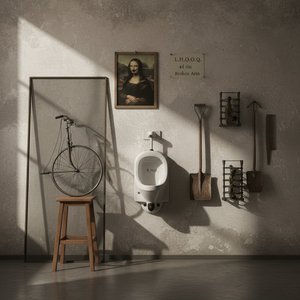
A introdução dos readymades – objetos manufaturados comuns, selecionados e apresentados como arte – foi a contribuição mais significativa de Duchamp para o século XX. Estes não eram simplesmente objetos encontrados; eram atos deliberados de subversão artística. Ao pegar um item cotidiano, como um urinol (Fonte, 1917), assiná-lo como “R. Mutt” e submetê-lo a uma exposição de arte, Duchamp desafiou a própria definição de habilidade e autoria artística. Seria a mão do artista que criava a obra, ou seria a ideia do artista? Esta questão tornou-se central em sua prática e lançou as bases para a Arte Conceitual. Outros readymades notáveis, como L.H.O.O.Q. (1919), uma reprodução em cartão-postal da Mona Lisa desfigurada com um bigode e cavanhaque, foram críticas lúdicas, porém incisivas, da história da arte e dos ícones culturais estabelecidos. Estas obras não tinham o intuito de serem admiradas por suas qualidades estéticas; elas pretendiam provocar debates e forçar os espectadores a reconsiderarem suas noções preconcebidas sobre o que constitui a arte. Duchamp acreditava que a arte deveria residir na mente, e não meramente no olhar.Legado e Influência Duradoura
O impacto de Marcel Duchamp nas gerações subsequentes de artistas é imensurável. Ele alterou fundamentalmente nossa compreensão da arte, abrindo caminho para movimentos como a Arte Conceitual, o Minimalismo, a Pop Art e tantos outros. Sua ênfase na ideia do artista – o conceito por trás da obra – sobre suas qualidades estéticas continua a inspirar artistas hoje.- Cubismo: Exploração inicial de formas fraturadas e representação espacial.
- Dadaísmo: Rejeição da lógica, da razão e dos valores artísticos tradicionais em resposta à Primeira Guerra Mundial.
- Arte Conceitual: Ênfase na ideia por trás da obra de arte em vez de suas qualidades estéticas.

Marcel Duchamp
1887 - 1968 , França
Informações Rápidas
- Artistic Movement Or Style:
- Cubismo
- Dadaísmo
- Artists Or Movements Influenced By This Artist: ['Minimalismo']
- Date Of Birth: 28 Jul 1887 Blainville
- Date Of Death: 2 Oct 1968
- Full Name: Marcel Duchamp Henri-Robert-Marcel
- Nationality: Francês-Americano
- Notable Artworks:
- Fonte
- L.H.O.O.Q.
- Grande Cristal
- Place Of Birth: Normandia França
Artigos Relacionados

Kandinsky: As 25 Obras-Primas que Definem o Abstracionismo | ArtsDot
Descubra as 25 obras-primas de Wassily Kandinsky, pioneiro da arte abstrata! Explore a história, cores e significado por trás de cada pintura. Encontre reproduções de alta qualidade e inspire sua decoração em ArtsDot.com.

Top 10 Obras-Primas do Expressionismo Abstrato: Arte para Decorar e Inspirar | ArtsDot.com
Descubra as 10 obras-primas do Expressionismo Abstrato com Jackson Pollock, Mark Rothko e mais! Explore a história, técnica e emoção por trás de cada pintura. Encontre reproduções de arte exclusivas para decorar sua casa em ArtsDot.com.

Abstração Geométrica: 10 Obras-Primas que Moldaram a Arte Moderna | ArtsDot.com
Descubra as 10 obras-primas da Abstração Geométrica que revolucionaram a arte moderna! Explore Kandinsky, Mondrian e outros artistas icônicos. Encontre reproduções de alta qualidade para decorar sua casa com ArtsDot.com.

Beyond Form & Color: Geometric Abstraction's Evolution in 20th/21st Century Art
Explore the evolution of geometric abstraction from Cubism to contemporary art. Discover key artists like Malevich & Mondrian, investment insights, and expert collecting advice at ArtsDot.
Marcel Duchamp: Challenging Conventions & Redefining Art in the 20th Century
Explore the revolutionary art of Marcel Duchamp! Discover how his Dadaist readymades challenged artistic conventions & redefined modern art. A deep dive into 'Fountain', conceptual shifts, and his lasting impact.


