


 Visualizar na parede
 Compartilhar
 Compartilhar
 Detalhes

 Baixar imagem
 Semelhantes
 Raio X
 Slideshow
L.H.O.O.Q., Mona Lisa com bigode
 Acrílico sobre tela
- Arte de Parede
- Dadaism
 1919
1919- Modernismo
 19.0 x 12.0 cm
 Ler mais
Giclée / Impressão de Arte
Impressão giclée ou em tela de qualidade de museu, com produção rápida e opções flexíveis de acabamento. ( Comprar pintura feita à mão Comprar imagem)




P118B $10

P118H $10

P118W $10

P438Z $10

P508JH $12

P508YH $12

P805H $10

P805Z $10

P919BZ $10

P919G $10

P919XJ $10

P959ZH $10

P968JZ $12

W106C $8

W218G $10

W218JH $8

W218Y $10

W307PJ $10

W316G $10

W316PJ $8

W316Y $10

W398PJ $8

W4111J $10

W500HY $15

W500JH $15

W692G $12

W849H $8

W940BG $15

W953PJ $8




Escolha entre os nossos tamanhos pré-definidos que respeitam as proporções originais da obra de arte.

Você pode inserir suas próprias dimensões para se ajustar a uma moldura ou espaço específico. Se o tamanho selecionado não corresponder às proporções da imagem original, iremos recortar a obra de arte ou estender a imagem com uma borda espelhada ou preenchimento sólido. Um mockup digital será enviado para sua aprovação antes do início da produção.
Por favor, observe que a visualização na tela não reflete o recorte ou a extensão real. Apenas o mockup mostrará com precisão a composição final.
Embora tamanhos personalizados estejam disponíveis, recomendamos selecionar uma dimensão da lista predefinida para preservar as proporções originais.
Entrega mundial () em 2 semanas, em vez das 4/5 semanas padrão. (28 Agosto)

Envio expresso gratuito para todo o mundo

Tela de Linho de Alta Qualidade

Seguro de transporte completo

Garantia de Reembolso de Impostos Alfandegários

Garantia de Fidelidade Cromática

Política de Devolução em 60 Dias (Apenas para Defeitos)

Garantia de reembolso de 100%

Oferta de desconto por quantidade
 A opção de vidro está disponível apenas para tamanhos inferiores a 110 cm

L.H.O.O.Q., Mona Lisa com bigode
Giclée / Impressão de Arte
Tamanho da Reprodução
-


Preço Total
$ 62
A Provocação Silenciosa de Duchamp: Desvendando o Mistério da Mona Lisa com Barba
Marcel Duchamp, um dos artistas mais enigmáticos e influentes do século XX, não se contentou em simplesmente representar o mundo. Ele desafiou a própria essência do que entendemos por arte, questionando suas fronteiras e propondo uma nova forma de interação entre o artista, a obra e o espectador. Em 1919, ele nos presenteou com *L.H.O.O.Q.*, uma alteração aparentemente inocente da icônica *Mona Lisa* de Leonardo da Vinci – um simples traço de barba e bigode que desencadeou um terremoto na história da arte. Mais do que uma brincadeira, essa obra é um manifesto, um convite à reflexão sobre a natureza da beleza, a função da representação e o papel do artista na sociedade.
A gênese de *L.H.O.O.Q.* reside no contexto turbulento do Dadaísmo, um movimento artístico e literário que surgiu como reação ao horror da Primeira Guerra Mundial e à crença cega na razão. Os dadaístas buscavam destruir as convenções estabelecidas, desmantelar a lógica e o bom senso, e expressar o absurdo e a irracionalidade do mundo. Duchamp, um dos principais expoentes do movimento, abraçou essa filosofia com entusiasmo, utilizando-a como ferramenta para subverter as expectativas e desafiar os valores tradicionais da arte. *L.H.O.O.Q.* é, portanto, uma expressão máxima dessa postura rebelde e provocadora.
A Linguagem Enigmática: Decifrando o Código de "LHOOQ"
O título da obra, *L.H.O.O.Q.*, é um exemplo perfeito do espírito dadaísta. Uma brincadeira com a língua francesa, que soa como “Ela tem um traseiro em chamas” quando pronunciada em voz alta, o que, por si só, já carrega uma carga de sensualidade e erotismo. Duchamp, conhecido por sua astúcia verbal, utilizou essa frase para subverter a imagem da *Mona Lisa*, tradicionalmente associada à beleza idealizada e à serenidade. A escolha do título não foi aleatória; era um ato deliberado de transgressão, uma forma de desafiar as normas sociais e estéticas da época.
A própria alteração visual – a barba e o bigode desenhados no rosto da *Mona Lisa* – é carregada de simbolismo. A barba representa a masculinidade, a força e a agressividade, elementos que contrastam fortemente com a feminilidade e a delicadeza associadas à figura original. Essa inversão de papéis questiona as convenções de gênero e expõe a construção social da identidade. Duchamp não apenas modificou uma imagem; ele desconstruiu um ícone cultural e o recontextualizou em um novo cenário, convidando o espectador a repensar suas próprias percepções.
A Arte como Desafiadora: Uma Herança Duradoura
*L.H.O.O.Q.* transcende sua natureza provocativa para se tornar uma obra fundamental na história da arte moderna. Duchamp, ao introduzir o conceito de “ready-made” – objetos ou imagens escolhidos por sua própria existência e apresentados como arte – revolucionou a forma como pensamos sobre a criação artística. Ele demonstrou que a importância de uma obra não reside em suas técnicas ou materiais, mas sim na intenção do artista e no impacto conceitual que ela provoca.
A influência de *L.H.O.O.Q.* é inegável. Artistas de diversas gerações se inspiraram nessa obra para questionar as convenções, desafiar os valores e explorar novas formas de expressão. A obra continua a ser objeto de estudo e debate, gerando interpretações variadas e estimulando a reflexão sobre o papel da arte na sociedade contemporânea. Hoje, ArtsDot oferece reproduções meticulosas em óleo desta obra icônica, permitindo que você experimente a beleza provocadora de Duchamp em sua própria casa.
Reprodução Exquisita: Uma Oportunidade para Celebrar um Legado
Nossas reproduções em óleo de *L.H.O.O.Q.* são criadas por artistas especializados, que capturam com precisão a essência da obra original, utilizando técnicas e materiais de alta qualidade. Cada detalhe – desde o traço delicado da barba até a atmosfera enigmática do sorriso da *Mona Lisa* – é cuidadosamente reproduzido, garantindo uma experiência visual autêntica e imersiva. Seja para decorar sua sala de estar, seu escritório ou sua galeria particular, esta reprodução é um tributo à genialidade de Marcel Duchamp e um convite a apreciar a beleza da provocação.
Explore nossa coleção hoje mesmo e descubra como *L.H.O.O.Q.* pode enriquecer seu espaço e despertar sua imaginação. Clique aqui para adquirir a sua!
- Marcel Duchamp: L.H.O.O.Q, Mona Lisa with moustache
- L.H.O.O.Q. on Wikipedia
- Marcel Duchamp: Paris Air
- Mona Lisa replicas and reinterpretations on Wikipedia
For a deeper understanding of the Michael C. Carlos Museum of Emory University in Atlanta, United States, visit: Exploring the Michael C. Carlos Museum of Emory University in Atlanta Photo Description: The image is a painting of a woman with a mustache, which appears to be a parody or satire of the famous Mona Lisa painting. The woman in the painting has a moustache drawn on her upper lip, giving her a humorous and unconventional appearance. She is wearing a black veil, adding an element of mystery to the scene. The background features a mountainous landscape, which further emphasizes the contrast between the seriousness typically associated with the Mona Lisa painting and the lighthearted nature of this parody. The overall effect is one of playfulness and creativity, as the artist has chosen to subvert the traditional image of the Mona Lisa in order to create a new and unique piece of art. Size: 19 x 12 cm Date: 1919 ARTIST INFORMATION: ================== Artist: Marcel Duchamp Birth Year: 1887 Death Year: 1968 Birth City: Blainville-sur-Mer Birth Country: France Biography:
A Revolutionary Spirit: The Life and Art of Marcel Duchamp
Marcel Duchamp, born Henri-Robert-Marcel Duchamp in 1887 in Blainville-Crevon, Normandy, was more than an artist; he was a philosophical provocateur who fundamentally altered the course of modern art. His early life, though seemingly conventional – nurtured within a family that appreciated artistic expression with both brothers pursuing successful careers as artists – hinted at the iconoclasm to come. Duchamp initially pursued formal training, mastering traditional techniques and experimenting with post-impressionist styles. However, this academic foundation served not as an end in itself, but as a springboard for questioning the very nature of art, its purpose, and its definition. He wasn’t content merely to depict the world; he sought to challenge how we perceive it, and what constitutes artistic value. This restless intellectual curiosity would become the defining characteristic of his prolific career.Obras Relacionadas


Biografia do Artista
Marcel Duchamp, A Revolutionary Spirit: The Life and Art of Marcel Duchamp
Marcel Duchamp, born Henri-Robert-Marcel Duchamp in 1887 in Blainville-Crevon, Normandy, was more than an artist; he was a philosophical provocateur who fundamentally altered the course of modern art. His early life, though seemingly conventional – nurtured within a family that appreciated artistic expression with both brothers pursuing successful careers as artists – hinted at the iconoclasm to come. Duchamp initially pursued formal training, mastering traditional techniques and experimenting with post-impressionist styles. However, this academic foundation served not as an end in itself, but as a springboard for questioning the very nature of art, its purpose, and its definition. He wasn’t content merely to depict the world; he sought to challenge how we perceive it, and what constitutes artistic value. This restless intellectual curiosity would become the defining characteristic of his prolific career.Early Artistic Explorations: Cubism and Impressionism
Duchamp's initial foray into art began with a grounding in traditional techniques—primarily painting—influenced by Impressionism and Post-Impressionism. He honed his skills studying under Gustave Moreau at École Supérieure des Beaux-Arts in Paris, absorbing the stylistic innovations of artists like Cézanne and Picasso. His early canvases demonstrate an aptitude for capturing light and color, reflecting a sensitivity to visual aesthetics. However, Duchamp quickly recognized that mere imitation wasn’t sufficient to express his profound ideas about art and its role in society. The devastating impact of World War I profoundly affected him, fueling disillusionment with the prevailing artistic conventions of the time. This experience spurred him toward a radical rethinking of artistic practice—a rejection of established norms and a determination to disrupt accepted notions of beauty.The Dadaist Rebellion: Challenging Artistic Conventions
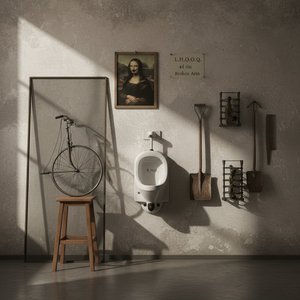
Duchamp’s engagement with Dadaism marked a decisive turning point in his artistic trajectory. Emerging from the disillusionment following World War I, Dada rejected logic, reason, and traditional artistic values—a defiant stance against the perceived hypocrisy of bourgeois society. Artists like Tristan Tzara, Hugo Ball, and Hans Arp embraced absurdity and chance as creative tools, producing performances and collages that deliberately undermined conventional aesthetic standards. Duchamp’s contribution to Dada was particularly significant: he championed the concept of “readymade”—ordinary manufactured objects presented as art—a provocative gesture designed to dismantle hierarchies within the art world. His most famous readymade, *Fountain* (1917), consisted of a porcelain urinal signed "R. Mutt," submitted anonymously to Marcel Duchamp’s own exhibition in New York City. This audacious act challenged the very definition of artistic skill and authorship—was it the artist's hand that created the work, or was it merely the artist’s conceptual intervention?The Readymades: Conceptual Art Takes Root
Duchamp’s exploration of readymades solidified his position as a pioneer of Conceptual Art. He argued that the essence of art resided not in its visual appearance but in its underlying idea—a notion that fundamentally shifted the focus from craftsmanship to intellectual inquiry. Other notable readymades included *L.H.O.O.Q.* (1919), a reproduction of Leonardo da Vinci’s Mona Lisa overlaid with a mustache and goatee, and *The Large Glass* (1915–1923), an ambitious multi-faceted artwork incorporating glass panels, mirrors, and intricate engravings—a testament to Duchamp's meticulous attention to detail and his unwavering commitment to challenging artistic conventions. These works weren’t intended to elicit admiration for their aesthetic qualities; they were designed to provoke contemplation and confront viewers with uncomfortable questions about art history and cultural values.Legacy and Enduring Influence
Marcel Duchamp’s influence on subsequent generations of artists is undeniable. He irrevocably transformed our understanding of art, establishing Conceptual Art as a dominant force in the latter half of the 20th century. His insistence that the artist's concept superseded visual form continues to inspire creativity today—artists grapple with questions of authorship, originality, and the role of intention in artistic creation. Duchamp’s unwavering belief in intellectual rigor and his willingness to disrupt established norms cemented his place as one of the most important figures in modern art history. His legacy persists, urging artists to question assumptions and embrace radical experimentation—a challenge that resonates powerfully within contemporary artistic discourse. He remains a symbol of artistic freedom and intellectual provocation, demonstrating that true innovation lies not merely in mastering technique but in confronting fundamental questions about what constitutes art itself.
Marcel Duchamp
1887 - 1968 , França
Dados Rápidos
- Artistic Movement Or Style:
- Cubismo
- Dadaísmo
- Artists Or Movements Influenced By This Artist: ['Minimalismo']
- Date Of Birth: 28 Jul 1887 Blainville
- Date Of Death: 2 Oct 1968
- Full Name: Marcel Duchamp Henri-Robert-Marcel
- Nationality: Francês-Americano
- Notable Artworks:
- Fonte
- L.H.O.O.Q.
- Grande Cristal
- Place Of Birth: Normandia França
Artigos Relacionados
Marcel Duchamp: Challenging Conventions & Redefining Art in the 20th Century
Explore the revolutionary art of Marcel Duchamp! Discover how his Dadaist readymades challenged artistic conventions & redefined modern art. A deep dive into 'Fountain', conceptual shifts, and his lasting impact.

Dadaism: A Rebellion Against Reason – Exploring the Origins, Characteristics, and Enduring Legacy of an Anti-Art Movement
Explore the revolutionary Dada art movement! Discover its origins in WWI, key artists like Duchamp & Höch, core principles, and lasting impact on modern and contemporary art. A comprehensive guide for enthusiasts.

Leonardo da Vinci: As 25 Obras-Primas que Definem um Gênio | ArtsDot
Descubra as 25 obras-primas de Leonardo da Vinci! Explore a história, técnica e beleza atemporal de ícones como Mona Lisa e A Última Ceia. Encontre reproduções de arte renascentista de alta qualidade para decorar sua casa com ArtsDot.com.

As 10 Pinturas Mais Famosas para uma Sala de Estar Elegante | ArtsDot
Descubra as 10 pinturas mais famosas para transformar sua sala de estar! Explore a história de Van Gogh, Da Vinci e outras obras-primas. Reproduções de arte exclusivas e inspiração decor em ArtsDot.com.

Édouard Cortès: Capturing Parisian Life – A Comprehensive Study of the 'Painter of Paris'
Explore the captivating world of Édouard Cortès, 'The Painter of Paris'. Discover his iconic street scenes, unique style & lasting legacy. Expert insights for collectors and art enthusiasts.



