


 Visualizar em escala
 Enviar
 Compartilhar
 Ver detalhes

 Baixar
 Semelhantes
 Raio X
 Apresentação de slides
Bare Stripped Bride


 Ver mais
Giclée / Impressão de Arte
Impressão giclée ou em tela de qualidade de museu, com produção rápida e opções flexíveis de acabamento. ( Alternar para pintura feita à mão Baixar imagem em alta resolução)




P118B $10

P118H $10

P118W $10

P438Z $10

P508JH $12

P508YH $12

P805H $10

P805Z $10

P919BZ $10

P919G $10

P919XJ $10

P959ZH $10

P968JZ $12

W106C $8

W218G $10

W218JH $8

W218Y $10

W307PJ $10

W316G $10

W316PJ $8

W316Y $10

W398PJ $8

W4111J $10

W500HY $15

W500JH $15

W692G $12

W849H $8

W940BG $15

W953PJ $8




Escolha entre os nossos tamanhos pré-definidos que respeitam as proporções originais da obra de arte.

Você pode inserir suas próprias dimensões para se ajustar a uma moldura ou espaço específico. Se o tamanho selecionado não corresponder às proporções da imagem original, iremos recortar a obra de arte ou estender a imagem com uma borda espelhada ou preenchimento sólido. Um mockup digital será enviado para sua aprovação antes do início da produção.
Por favor, observe que a visualização na tela não reflete o recorte ou a extensão real. Apenas o mockup mostrará com precisão a composição final.
Embora tamanhos personalizados estejam disponíveis, recomendamos selecionar uma dimensão da lista predefinida para preservar as proporções originais.
Entrega mundial () em 2 semanas, em vez das 4/5 semanas padrão. (7 Agosto)

Envio Expresso Gratuito para todo o Mundo

Tela de Linho Premium

Seguro de transporte total

Garantia de Reembolso de Impostos Alfandegários

Garantia de Fidelidade de Cor

Política de Devolução de 60 Dias (Apenas para Defeitos)

Garantia de reembolso de 100%

Desconto para múltiplas unidades
 A opção de vidro está disponível apenas para tamanhos inferiores a 110 cm

Bare Stripped Bride
Giclée / Impressão de Arte
Dimensões da Reprodução
-


Preço Total
$ 62
Descrição do Item
A Monumental Questioning: Marcel Duchamp’s “The Bride Stripped Bare by Her Bachelors, Even”
Marcel Duchamp's "The Bride Stripped Bare by Her Bachelors, Even," or “The Large Glass,” stands as arguably the most ambitious and perplexing artwork of the Dada movement—and indeed, a cornerstone of 20th-century art history. Completed between 1915 and 1923 in New York City during Duchamp’s formative years abroad, this colossal assemblage defies easy categorization, rejecting traditional notions of artistic representation altogether. It's not merely a painting; it’s a complex architectural illusion—a double glass panel measuring nearly six feet wide and nine feet tall—that embodies Duchamp’s radical rethinking of art’s role in confronting existential anxieties.The Genesis of Doubt: Conceptual Art Before Its Time
Duchamp’s intellectual journey began with a fascination for Cubism, where he wrestled with fracturing perspective and exploring multiple viewpoints simultaneously. However, disillusioned by the perceived limitations of depicting reality faithfully, he embraced Dada—a movement born from outrage against the horrors of World War I—as an antidote to artistic complacency. Dada artists deliberately undermined established conventions, embracing chance operations and challenging accepted aesthetic standards. Duchamp’s “The Large Glass” exemplifies this spirit perfectly; it's a deliberate provocation designed to destabilize viewers’ expectations about what constitutes art. As Beth Harris eloquently describes in Smarthistory, "Love, sex, science, broken glass, a coffee grinder, a bride from another dimension—this one really has it all." This seemingly disparate collection of objects isn’t intended to convey a narrative but rather to force contemplation on the viewer's mind.A Symphony of Materials and Processes: Technique and Craftsmanship
The execution of “The Large Glass” is as remarkable as its conceptual ambition. Duchamp painstakingly crafted two panes of glass, meticulously applying lead foil and fuse wire to create a grid-like structure—a deliberate antithesis to the smooth surfaces favored by Impressionists and Post-Impressionists. Beneath this framework lie hundreds of miniature drawings and studies, executed with graphite and ink, charting precise mathematical calculations designed to achieve perfect perspective. Furthermore, Duchamp incorporated seemingly incongruous elements: a coffee grinder, a porcelain figurine representing a bride (a reference to Freud’s Oedipal complex), and fragments of glass—each chosen deliberately to disrupt visual harmony. This laborious process underscores Duchamp's commitment to traditional craftsmanship alongside his revolutionary ideas.Symbolism Beyond Representation: Exploring Psychological Depth
The artwork’s symbolism is multilayered and profoundly unsettling. The grid itself represents rationality and order, juxtaposed against the chaotic imagery of the miniature drawings—a deliberate confrontation between intellect and emotion. Freud’s bride figurine speaks to themes of desire, repression, and unconscious anxieties – mirroring Duchamp's own preoccupation with psychoanalysis. The broken glass symbolizes fragmentation and loss, reflecting the disillusionment felt by artists grappling with the trauma of war. As Steven Zucker points out in Smarthistory, “It’s a deliberate provocation designed to destabilize viewers’ expectations about what constitutes art.” Ultimately, "The Large Glass" invites us to question our assumptions about beauty, meaning, and the very nature of artistic expression.A Legacy of Influence: Shaping Contemporary Art
“The Bride Stripped Bare by Her Bachelors, Even” irrevocably altered the trajectory of modern art, establishing Conceptual Art as a distinct genre. Artists like Joseph Kosuth and Andy Warhol subsequently adopted Duchamp’s approach—challenging traditional visual conventions by focusing on ideas rather than images—solidifying his position as one of the most influential figures in artistic history. Its enduring power lies not just in its aesthetic complexity but also in its profound philosophical interrogation, prompting ongoing debate about art's role in confronting existential dilemmas and reshaping our understanding of creativity itself.Obras Relacionadas


Biografia do Artista
Marcel Duchamp, A Revolutionary Spirit: The Life and Art of Marcel Duchamp
Marcel Duchamp, born Henri-Robert-Marcel Duchamp in 1887 in Blainville-Crevon, Normandy, was more than an artist; he was a philosophical provocateur who fundamentally altered the course of modern art. His early life, though seemingly conventional – nurtured within a family that appreciated artistic expression with both brothers pursuing successful careers as artists – hinted at the iconoclasm to come. Duchamp initially pursued formal training, mastering traditional techniques and experimenting with post-impressionist styles. However, this academic foundation served not as an end in itself, but as a springboard for questioning the very nature of art, its purpose, and its definition. He wasn’t content merely to depict the world; he sought to challenge how we perceive it, and what constitutes artistic value. This restless intellectual curiosity would become the defining characteristic of his prolific career.Early Artistic Explorations: Cubism and Impressionism
Duchamp's initial foray into art began with a grounding in traditional techniques—primarily painting—influenced by Impressionism and Post-Impressionism. He honed his skills studying under Gustave Moreau at École Supérieure des Beaux-Arts in Paris, absorbing the stylistic innovations of artists like Cézanne and Picasso. His early canvases demonstrate an aptitude for capturing light and color, reflecting a sensitivity to visual aesthetics. However, Duchamp quickly recognized that mere imitation wasn’t sufficient to express his profound ideas about art and its role in society. The devastating impact of World War I profoundly affected him, fueling disillusionment with the prevailing artistic conventions of the time. This experience spurred him toward a radical rethinking of artistic practice—a rejection of established norms and a determination to disrupt accepted notions of beauty.The Dadaist Rebellion: Challenging Artistic Conventions
Duchamp’s engagement with Dadaism marked a decisive turning point in his artistic trajectory. Emerging from the disillusionment following World War I, Dada rejected logic, reason, and traditional artistic values—a defiant stance against the perceived hypocrisy of bourgeois society. Artists like Tristan Tzara, Hugo Ball, and Hans Arp embraced absurdity and chance as creative tools, producing performances and collages that deliberately undermined conventional aesthetic standards. Duchamp’s contribution to Dada was particularly significant: he championed the concept of “readymade”—ordinary manufactured objects presented as art—a provocative gesture designed to dismantle hierarchies within the art world. His most famous readymade, *Fountain* (1917), consisted of a porcelain urinal signed "R. Mutt," submitted anonymously to Marcel Duchamp’s own exhibition in New York City. This audacious act challenged the very definition of artistic skill and authorship—was it the artist's hand that created the work, or was it merely the artist’s conceptual intervention?The Readymades: Conceptual Art Takes Root
Duchamp’s exploration of readymades solidified his position as a pioneer of Conceptual Art. He argued that the essence of art resided not in its visual appearance but in its underlying idea—a notion that fundamentally shifted the focus from craftsmanship to intellectual inquiry. Other notable readymades included *L.H.O.O.Q.* (1919), a reproduction of Leonardo da Vinci’s Mona Lisa overlaid with a mustache and goatee, and *The Large Glass* (1915–1923), an ambitious multi-faceted artwork incorporating glass panels, mirrors, and intricate engravings—a testament to Duchamp's meticulous attention to detail and his unwavering commitment to challenging artistic conventions. These works weren’t intended to elicit admiration for their aesthetic qualities; they were designed to provoke contemplation and confront viewers with uncomfortable questions about art history and cultural values.Legacy and Enduring Influence
Marcel Duchamp’s influence on subsequent generations of artists is undeniable. He irrevocably transformed our understanding of art, establishing Conceptual Art as a dominant force in the latter half of the 20th century. His insistence that the artist's concept superseded visual form continues to inspire creativity today—artists grapple with questions of authorship, originality, and the role of intention in artistic creation. Duchamp’s unwavering belief in intellectual rigor and his willingness to disrupt established norms cemented his place as one of the most important figures in modern art history. His legacy persists, urging artists to question assumptions and embrace radical experimentation—a challenge that resonates powerfully within contemporary artistic discourse. He remains a symbol of artistic freedom and intellectual provocation, demonstrating that true innovation lies not merely in mastering technique but in confronting fundamental questions about what constitutes art itself.
Marcel Duchamp
1887 - 1968 , França
Informações Rápidas
- Artistic Movement Or Style:
- Cubismo
- Dadaísmo
- Artists Or Movements Influenced By This Artist: ['Minimalismo']
- Date Of Birth: 28 Jul 1887 Blainville
- Date Of Death: 2 Oct 1968
- Full Name: Marcel Duchamp Henri-Robert-Marcel
- Nationality: Francês-Americano
- Notable Artworks:
- Fonte
- L.H.O.O.Q.
- Grande Cristal
- Place Of Birth: Normandia França
Artigos Relacionados
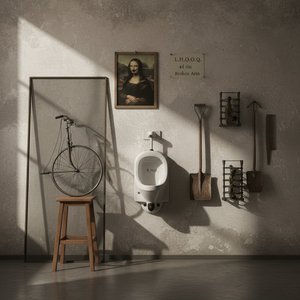
Marcel Duchamp: Challenging Conventions & Redefining Art in the 20th Century
Explore the revolutionary art of Marcel Duchamp! Discover how his Dadaist readymades challenged artistic conventions & redefined modern art. A deep dive into 'Fountain', conceptual shifts, and his lasting impact.

F.A.Q.: Montando Seu Kit de Moldura em Grande Formato – Um Guia para Colecionadores Exigentes
Guia exclusivo da para colecionadores exigentes montarem seus kits de moldura em grande formato com perfeição. Dicas profissionais, qualidade superior e resultados impecáveis.

Marcel Dyf: A Study in Belgian Surrealist Landscape and the Poetics of Memory
Explore the captivating landscapes of Marcel Dyf (1899-1985). Discover his Impressionist roots, subtle Surrealism, and enduring legacy. Learn about his life, art, and value with ArtsDot.

Dada: A Revolution of Anti-Art & the Rejection of Reason in Early 20th Century Aesthetics
Explore the revolutionary Dada art movement! Discover its origins, key artists like Duchamp & Arp, and lasting impact on modern art. A deep dive into anti-art & challenging conventions.

Pavlo Makov: Deconstructing Soviet Legacy Through Conceptual Photography & Installation Art
Explore the compelling work of Ukrainian artist Pavlo Makov, renowned for his conceptual photography deconstructing Soviet legacy. Discover his unique artistic process and investment potential.



