

- 63.0 x 48.0 cm


A imagem segue as suas escolhas: , .
Descrição do Item
Lot's Daughters (Genesis XIX, 31-35) depicts two women, one seated atop the other who lies prone, with a bottle held over her head—a poignant symbol of despair and vulnerability amidst a landscape rich in folklore and dreamlike imagery. Chagall’s masterful use of color captures the essence of Vitebsk's cultural heritage.
 Ler mais
Biografia do Artista
Marc Chagall foi um mestre do simbolismo onírico, famoso por Eu e a Aldeia. Descubra hoje seu mundo vibrante e poético de cores.
Reprodução em Óleo Feita à Mão
Óleo sobre tela pintado à mão no tamanho e moldura de sua escolha, feito sob encomenda pelos nossos artistas. ( Alternar para Impressão Alternar para Imagem Digital)
Esta obra está protegida por direitos autorais
A obra de arte exibida nesta página é protegida por leis de direitos autorais, o que significa que não podemos criar ou vender legalmente uma reprodução idêntica. Esta proteção é aplicada por meio de acordos internacionais, tais como a Convenção de Berna e pelas leis nacionais, incluindo as estabelecidas por Lei de Direitos Autorais dos EUA - Título 17.
Como uma alternativa respeitosa e legal, oferecemos obras de arte personalizadas e pintadas à mão, inspiradas na obra original. Nossos artistas profissionais e experientes estudam cuidadosamente o estilo, a atmosfera e a essência artística da obra original para criar uma peça nova e única que evoque a mesma sensação — permanecendo como uma criação original por direito próprio.
Este método cumpre plenamente as regulamentações de direitos autorais, pois não envolve a cópia ou duplicação da obra protegida. Em vez disso, trata-se de uma reinterpretação criativa — uma nova pintura que é influenciada pela original, mas não idêntica a ela.
Saiba mais sobre esta pintura
 Visualizar na parede
 Compartilhar
 Compartilhar
 Detalhes
 Guia
Guia

 Baixar imagem
 Semelhantes
 Raio X
 Ver diaporama
 Perguntas e Respostas
 Estatísticas
Encomende a sua pintura em quatro passos simples
Não tenha pressa. Você pode alterar qualquer resposta; o preço no seu carrinho de compras será atualizado conforme cada escolha.
1 Passo um de quatro
Qual tamanho você gostaria?
Estes tamanhos mantêm as proporções da pintura original. A ilustração mostra a sua escolha numa parede, acima de um sofá de dois metros.
Ou informe suas próprias medidas
Escolha entre os nossos tamanhos pré-definidos que respeitam as proporções originais da obra de arte.

Insira a largura e a altura desejadas para se ajustarem à sua moldura ou parede. Como esta obra é pintada à mão, para um tamanho com proporções diferentes, o artista poderá pintar um pouco mais ao redor da imagem ou reduzir ligeiramente a composição — você escolhe. Enviamos uma maquete digital para sua aprovação antes de iniciar a pintura. A imagem exibida nesta página não representa o resultado real — apenas a maquete mostra o resultado final.
2 Passo dois de quatro
Como deve ser preparado: enrolado, esticado ou emoldurado?
Os preços abaixo referem-se ao tamanho escolhido na primeira etapa.
Escolha as bordas da tela esticada
Escolha sua moldura

Branco €1

Bordas esfumaçadas €1

Bordas estendidas €1

P118B €10

P118H €10

P118W €10

P438Z €10

P508JH €12

P508YH €12

P805H €10

P805Z €10

P919BZ €10

P919G €10

P919XJ €10

P959ZH €10

P968JZ €12

W106C €8

W218G €10

W218JH €8

W218Y €10

W307PJ €10

W316G €10

W316PJ €8

W316Y €10

W398PJ €8

W4111J €10

W500HY €15

W500JH €15

W692G €12

W849H €8

W940BG €15

W953PJ €8

H24-GOLD €30

H24-SILVER €30

H36-GOLD €45

H36-SILVER €45
Com moldura
Moldura: . Dimensões totais com a moldura: .
3 Passo três de quatro
Gostaria de alterar algo na pintura?
A maioria das pessoas responde que não. Como cada pintura é feita à mão, nosso artista também pode adaptá-la para você.
Após o pedido, a equipe da ArtsDot.com enviará um e-mail ao cliente para instruções e fornecerá uma prévia da montagem
4 Passo quatro de quatro
Algumas opções de acabamento
Todos eles são opcionais. As respostas já selecionadas não têm custo adicional.
Quem o pintou?
Entrega mundial () em 3 a 4 semanas, em vez das 5 semanas padrão. (11 Novembro). Sem comprometer a qualidade.
Uma placa de identificação, como em um museu?
Detalhes da Placa de Bronze Gravada
This elegant plaque features the artist's name and the title of the artwork, finely engraved for a timeless presentation.
It is made from bronze with a refined, elegant finish. The text is precisely laser-engraved for a sharp and permanent result. Measuring 9x2 cm, the plaque is compact yet easy to read. It's built to be durable and scratch-resistant, offering a professional, museum-quality look. Mounting is simple thanks to the included adhesive backing.
Detalhes da Placa de Acrílico Transparente
The plaque includes essential engraved details such as the artist's name, the title of the artwork, the date it was created, the type of media used-like oil on canvas or watercolor-a brief description of the piece, and a QR code that links to the complete artwork information.
It is crafted from clear acrylic, offering a sleek, modern appearance. The text is UV-engraved in black to ensure strong visual contrast. With a size of 10x15 cm, it ensures optimal readability. It comes equipped with two metal hooks for secure wall mounting. The plaque is designed to be weather-resistant, making it suitable for various environments, and it includes interactive features that work seamlessly with smartphone scanning.
Detalhes da Placa de Acrílico Preto
This elegant plaque includes engraved information such as the artist's name, the title of the artwork, the date it was created, the type of media used (like oil on canvas or watercolor), a short description of the artwork, and a QR code for quick access to more information.
The plaque itself is made from refined black acrylic with a premium finish. The text is laser-engraved in white for high contrast and readability. Its size is 10x15 cm, designed to be easy to read. It comes with two metal hooks for professional mounting. The design is sleek and fits any interior style. It is also weather-resistant and durable, with built-in digital integration for mobile compatibility.
Um verniz protetor?
Para quando você precisa?
✓ Verifique e peça
A sua pintura, conforme encomendada

Lot's Daughters
Técnica de Reprodução
Tamanho da Reprodução
-

Artista Sênior de Elite
Mais detalhes, refinamento e tempo de produção adicional
-

Moldura para Reprodução
-
-
Para obras de arte ou reproduções com mais de 105 cm (aproximadamente 41 polegadas) em qualquer um dos lados, a moldura será enviada como um kit desmontado. Este método garante uma entrega segura e evita danos durante o transporte.
Montagem profissional necessária — este não é um produto DIY (faça você mesmo).
O kit deve ser montado e a tela esticada por um profissional de molduraria experiente, utilizando cola de madeira (não inclusa), um alicate de esticar tela e grampos para manter as travessas alinhadas enquanto a cola seca. A montagem incorreta ou a tensão desigual da tela podem danificar permanentemente a obra de arte e não estão cobertas pela nossa garantia.
 Para obras de arte ou reproduções com mais de 105 cm (aproximadamente 41 polegadas) em qualquer um dos lados, a moldura será enviada como um kit desmontado. Este método garante uma entrega segura e evita danos durante o transporte.
Todas as barras de madeira maciça estão incluídas, precisamente cortadas ao tamanho certo.
Montado com os parafusos fornecidos, além de cola para madeira para as junções dos cantos, que não está inclusa e deve ser providenciada pelo seu moldurista.
São necessárias ferramentas profissionais não incluídas: um alicate de estiramento de tela (esticador) e grampos para manter as ripas alinhadas enquanto a cola seca.
Importante:
As junções dos cantos requerem cola para madeira, as ripas devem ser mantidas com grampos até que a cola esteja completamente seca, e o estiramento da tela na moldura montada requer um alicate de esticar tela. Nenhum destes itens está incluído no kit. Por favor, certifique-se de contar com um profissional de molduraria experiente antes de encomendar este tamanho.

Etiqueta de identificação
-
-

Verniz de Proteção
Verniz brilhante (realça as cores e protege contra a luz e a umidade)
-

Personalizar minha obra
Exemplos de alterações possíveis: Substituir o rosto por uma foto do cliente; Adicionar um animal de estimação (ex.: substituir gato por cachorro); Incluir uma mensagem oculta no fundo; Alterar a paisagem ou os elementos do fundo.
-

Urgente
Entrega mundial () em 3 a 4 semanas, em vez das 5 semanas padrão. (11 Novembro). Sem comprometer a qualidade.
-
Envio Expresso
Entrega mundial para em 5 semanas. (18 Novembro).
Com envio incluído
Preço Total
€ 235
A opção de vidro está disponível apenas para tamanhos inferiores a 110 cm
Incluído em todos os pedidos
- Envio expresso gratuito para todo o mundo
- Tela de Linho de Alta Qualidade
- Seguro de transporte completo
- Garantia de Reembolso de Impostos Alfandegários
- Garantia de Fidelidade Cromática
- Política de Devolução em 100 Dias (Apenas para Defeitos)
- Garantia de reembolso de 100%
- Oferta de desconto por quantidade


A Tapestry of Loss and Resilience
In the evocative masterpiece “Lot's Daughters,” painted in 1931, Marc Chagall invites us into a dreamlike realm where biblical narrative meets the profound anxieties of the early twentieth century. This work is far more than a mere illustration of Genesis; it is a visceral exploration of displacement and the tenacious spirit of survival. As we gaze upon the canvas, we are met with a composition that feels both intimately personal and cosmically significant. Chagall utilizes his signature visual language—a blend of Naïve Art and surrealist dreamscapes—to capture a moment frozen in time, where the weight of ancestral sorrow meets the vibrant pulse of life.
The painting centers on two women, Lot’s daughters, whose presence dominates the frame. Their bodies are intertwined in an embrace that speaks eloquently of familial bonds forged in the crucible of unimaginable hardship. Chagall masterfully employs a flattened perspective, reminiscent of Byzantine iconography, which strips away the distractions of realism to focus our attention on the spiritual and emotional essence of the figures. As they appear to float against a backdrop of swirling blues and luminous yellows, the boundary between the physical world and the metaphysical realm begins to dissolve, leaving the viewer suspended in a state of poetic contemplation.
Technique and the Language of Color
To behold this artwork is to witness Chagall’s unparalleled command over color and texture. The artist employs a technique known as “masking,” applying layers of paint in opaque, bold blocks before revealing the underlying hues. This method imbues the canvas with a unique luminosity, making the colors appear to glow from within. His brushstrokes possess an almost childlike spontaneity, yet every movement is imbued with deep artistic intention. The vibrant palette—a dance of celestial blues and sun-drenched yellows—mirrors the turbulent emotional landscape of the scene, oscillating between the darkness of despair and the light of hope.
The dynamic composition is further enriched by secondary figures and symbolic elements that populate the periphery. A cup rests in the lower corner, and various figures drift through the background, contributing to a sense of movement and narrative complexity. This layering of imagery creates a rich, textured experience for the eye, making each viewing an opportunity for new discovery. For the collector or interior designer, this piece offers a profound visual depth that can serve as a captivating focal point in any sophisticated space, providing both a conversation starter and a window into a soulful, imaginative world.
Historical Echoes and Emotional Resonance
Beyond its aesthetic brilliance, “Lot's Daughters” is deeply rooted in the historical zeitgeist of the 1930s. Created during a period of escalating political instability and rising antisemitism within the European Jewish community, the painting reflects the collective anxieties of the Weimar Republic era. The themes of exile and the struggle for continuity are palpable in the way Chagall renders his subjects. He transforms a story of biblical tragedy into a universal symbol of resilience, reminding us that even amidst the most profound loss, the human spirit seeks to rebuild and endure.
For those seeking to bring a piece of art history into their homes, this reproduction offers an opportunity to possess a fragment of Chagall’s enduring legacy. It is a work that does not merely decorate a wall; it transforms an environment. The emotional impact of the painting—its ability to evoke empathy, reflection, and awe—makes it an invaluable acquisition for anyone who appreciates art that speaks to the very core of the human condition. Whether placed in a quiet study or a grand gallery, “Lot's Daughters” remains a timeless testament to the power of memory and the beauty of the dreaming soul.
Perguntas e Respostas
Onde posso comprar reproduções pintadas à mão de "Lot's Daughters", de Marc Chagall?
Você pode encomendar uma reprodução pintada à mão de "Lot's Daughters", de Marc Chagall diretamente em sua página de Reprodução Pintada à Mão: uma reprodução a óleo pintada à mão sobre tela de linho, feita sob encomenda.
Qual técnica foi utilizada para "Lot's Daughters" e quando a obra foi criada?
A técnica de "Lot's Daughters", de Marc Chagall é Oil, e a obra data de 1931.
Qual é a intensidade das cores em "Lot's Daughters", de Marc Chagall?
A intensidade de cor de "Lot's Daughters" é Balanced. A intensidade descreve o quão vibrantes as cores parecem ser.
Obras Relacionadas


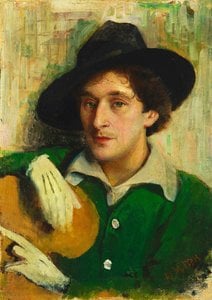
Marc Chagall
1887 - 1985, Belarus
Biografia do Artista
Vida Inicial, Família e Formação
Marc Chagall chega ao mundo em 7 de julho de 1887, em Vitebsk, no Império Russo, nascido como Moishe Segal. Ele é o primeiro de nove filhos de uma modesta família judaica. Sua vida é definida pelos ritmos do trabalho e do pequeno comércio; seu pai, Khatskel Segal, trabalha como conservador de arenque em um armazém, enquanto sua mãe, Feïga-Ita Tchernina, administra uma pequena mercearia. Estes primeiros anos estão enraizados nas texturas específicas de uma cidade provincial, onde os limites de seu mundo são moldados pelas necessidades de um numeroso lar e pelas tradições de sua comunidade.
A educação começa entre as paredes do heder, uma escola primária judaica tradicional. Aqui, o foco permanece na instrução religiosa e nos textos fundamentais de sua criação. Aos treze anos, o escopo de seu aprendizado desloca-se para o secular. Ele ingressa na escola secundária oficial de Vitebsk para seguir uma educação russa, um movimento que marca um afastamento da esfera estritamente religiosa de sua infância. Esta existência dual — entre as tradições sagradas do heder e as exigências seculares da escola estatal — cria uma tensão que define o seu desenvolvimento inicial.
O impulso artístico encontra sua primeira expressão formal em Vitebsk. Marc Chagall recebe seu treinamento inicial em uma escola de arte local dirigida por Iouri Pen. É aqui que o instinto bruto para a expressão visual começa a coalescer em uma prática disciplinada. Ele transita das lições estruturadas da sala de aula para um envolvimento mais profundo com o ato de ver, preparando o terreno para uma vida dedicada a traduzir a memória em forma.
Os Anos Formativos em São Petersburgo
A transição da quietude provincial de Vitebsk para a escala imperial de São Petersburgo é marcada pela luta. Entre 1907 e 1909, a capital oferece pouco em termos de conforto. A pobreza é uma companheira constante; há momentos de fome tão severos que o colapso físico se torna uma realidade. Para sobreviver, ele ocupa as ruas, ganhando o sustento de forma modesta ao desenhar letreiros de lojas. Essas tarefas comerciais fornecem os rublos necessários para sustentar sua presença na cidade, enquanto ele navega pelas complexidades de ser um estudante judeu em um império vasto e em constante mutação.
A busca acadêmica é implacável. Ele se matricula em diversas academias, buscando uma estrutura formal para sua linguagem visual emergente. A atmosfera da capital é densa com a influência da vanguarda, uma tensão que o afasta do treinamento clássico. Ele se vê no estúdio de Léon Bakst, um designer para os Ballets Russes, onde a teatralidade do cenário começa a infiltrar-se em sua percepção de espaço e forma. Este período é uma colisão de necessidade e ambição, um tempo de esboços pela sobrevivência enquanto, simultaneamente, absorve as mudanças radicais que ocorrem na cena artística russa.
Os Anos de Paris e a Influência da Vanguarda
Paris surge entre 1910 e 1911, um deslocamento súbito das restrições provincianas do Império Russo. A cidade oferece um choque sensorial absoluto. Em suas ruas, especialmente em Montparnasse, ele encontra luz, cor e liberdade. Este já não é o mundo do comerciante de arenque ou da tradicional escola heder; é um horizonte de possibilidades radicais. Ele se estabelece na La Ruche, a famosa residência de artistas, onde o ar é denso com a presença da nova vanguarda. Ele compartilha esse espaço com Amedeo Modigliani e Fernand Léger, figuras que estão redefinindo os limites da expressão moderna. A influência da era é inescapável, mas ele permanece como um elemento singular, absorvendo as descobertas do Fauvismo e do Cubismo sem jamais renunciar à sua própria lógica interna.
A obra produzida durante este período começa a refletir um distanciamento da representação literal. Marc Chagall move-se em direção a um estilo que prioriza associações emocionais e poéticas em detrimento das regras estritas da lógica pictórica. As cores ganham brilho, impulsionadas pela exposição à cena parisiense. Ele navega pela tensão entre a formação formal de seu passado e a liberdade experimental do presente. Este período de intensa fricção criativa perdura até que as convulsões políticas da guerra o puxem de volta para o Leste. Somente em 1923 ele retorna a Paris com sua família, restabelecendo sua presença na cidade que, pela primeira vez, libertou sua linguagem visual.
- The Betrothed and Eiffel Tower (1913)
- Hommage à Apollinaire (1912-1913)
Os Anos Russos e a Revolução
A revolução arrasta Marc Chagall de volta a Vitebsk. Ele não se limita a observar o tumulto; ele tenta moldar a sua paisagem cultural. Assume o papel de Comissário de Belas Artes de Vitebsk e assume a direção de uma escola local de Belas Artes. Sua visão é pautada pela comunidade e pela educação, mas o clima político oscila sob seus pés. A ascensão do Suprematismo cria uma fratura profunda. Figuras como Malevitch e Lissitzky impulsionam uma abstração radical e não objetiva, que colide frontalmente com a abordagem mais lírica e figurativa de Marc Chagall. A tensão torna-se insustentável. Ele é forçado a deixar seus cargos, vendo seu sonho de um renascimento artístico local colidir com as exigências rígidas do novo regime.
Por volta de 1920, o foco se desloca para Moscou. Ele trabalha na decoração do teatro judaico, um projeto que captura a intersecção entre sua identidade pessoal e o palco público. Suas linhas são confiantes, suas cores alternam entre o vigor e a palidez, mesmo enquanto o mundo ao seu redor se fragmenta. Ele navega por um período de intensa produção criativa e profunda luta material, movendo-se entre a memória do shtetl e as demandas de um Estado em constante transformação. A era é definida por esse atrito: a tentativa de construir um lar cultural enquanto os próprios alicerces de seu mundo estão sendo reescritos.
- Over the Town (1914–1918)
- Apparition (c. 1917-18)
Vida nos Estados Unidos
O estopim da Segunda Guerra Mundial forçou uma súbita mudança geográfica na trajetória do artista. Em 1941, Marc Chagall e sua família buscaram refúgio nos Estados Unidos, fugindo da instabilidade da França ocupada. Ele estabeleceu-se na cidade de Nova York e em seus arredores, um período de residência que se estendeu até 1948. A metrópole ofereceu um cenário de profundo turbilhão emocional; em meio às ansiedades dos anos de guerra, seu pincel capturou a tensão de um mundo em constante mutação. Sua obra reflete a incerteza daquela era, traduzindo o inquietamento pessoal e global em uma linguagem visual de sofrimento e esperança.
Durante esses sete anos, o artista encontrou uma maneira de se envolver com projetos institucionais de grande escala. Ele assumiu encomendas de grande importância para a sede das Nações Unidas, traduzindo sua visão poética para o tecido arquitetônico de uma instituição global. Este período na América marca um capítulo significativo de experimentação e sobrevivência, unindo suas raízes europeias a uma nova e intensa realidade. Marc Chagall permaneceu como um homem entre mundos, com o coração ainda voltado para a França, mesmo enquanto navegava pelas complexidades de seu exílio americano.
- White Crucifixion (1938)
Técnica e Estilo Artístico
A lógica cede lugar à emoção. Marc Chagall rejeita as regras rígidas da lógica pictórica, optando, em vez disso, por compor imagens através da associação poética. Suas telas operam sob a mecânica de um sonho. Figuras flutuam pelo ar, desafiando a gravidade, enquanto as cores pulsam com uma intensidade não naturalista. Essa abordagem permite-lhe capturar a essência do sentimento, em vez da aparência literal do mundo. Ele transcende a mera imitação, utilizando uma paleta audaciosa para traduzir a memória em uma linguagem visual.
Sua estética é uma colisão de influências. Ele absorve as estruturas fragmentadas do Cubismo e a cor intensa do Fauvismo, mas filtra esses movimentos de vanguarda através de uma lente profundamente pessoal. O resultado é um estilo que faz a ponte entre o Expressionismo e a abstração. Ele entrelaça o sagrado e o mundano, povoando suas cenas com imagens simbólicas e surreais. Contos folclóricos judaicos e os detalhes silenciosos e cotidianos da vida no shtetl tornam-se os blocos de construção de uma mitologia privada. O familiar torna-se fantástico.
A iconografia frequentemente se concentra em motivos recorrentes: amantes voadores, violinistas e buquês massivos. Esses elementos não são meras decorações, mas símbolos de uma paisagem espiritual e emocional. Em obras como Os Amantes (1929), a sensação de leveza e o uso de cores intensas criam um espaço onde as leis físicas do mundo já não se aplicam. Sua obra permanece uma negociação constante entre a realidade tangível de sua criação e as possibilidades ilimitadas da imaginação.
- Eu e a Aldeia (1911)
- O Violinista Verde (1924)
- Crucificação Branca (1938)
Patronos, Ateliê e Encomendas
Em meados da década de 1920, Marc Chagall encontrava-se em Paris, navegando pelos influentes círculos do mercado de arte. Ele entra na órbita de Ambroise Vollard, um marchand cuja influência moldou a trajetória de muitos artistas de vanguarda. Vollard encomenda a Chagall uma série de gravuras, confiando-lhe a tarefa de ilustrar as obras de Nikolay Gogol, especificamente Almas Mortas. Este período marca uma transição em direção à precisão da gravura, afastando-se da espontaneidade fluida de suas telas anteriores.
Em 1931, o foco se desloca para o Oriente Médio. O prefeito de Tel Aviv estende um convite a Chagall para viajar à Palestina. O objetivo é ambicioso: a fundação de um Museu de Arte Judaica. Este período aprofunda seu envolvimento com o simbolismo religioso e cultural, um tema que persistiria em suas obras arquitetônicas de grande escala em anos posteriores. Sua capacidade de traduzir a memória pessoal e comunitária em espaço físico torna-se um aspecto definidor de sua produção profissional.
À medida que sua reputação cresce, a escala de seu trabalho expande-se da página íntima para o monumental. Ele adentra o reino da luz e da arquitetura, projetando vitrais para a Catedral de Metz e para o edifício das Nações Unidas, em Nova York. Essas obras exigem um domínio absoluto de como a cor interage com a luz solar. Em 1964, ele atinge o ápice do reconhecimento público com uma encomenda para o teto da Ópera de Paris, um empreendimento massivo que transporta sua imaginação onírica para um dos espaços culturais mais significativos da Europa.
Onde Ver as Obras Hoje
O legado de sua visão permanece ancorado em diversas instituições fundamentais ao redor do globo. Em Nice, na França, o Musée National Marc Chagall abriga uma extensa coleção de suas obras, preservando a essência de sua produção criativa. Este museu oferece um olhar concentrado sobre a iconografia que definiu sua longa carreira. Enquanto isso, o Museu Estatal Russo, em São Petersburgo, na Rússia, mantém uma presença significativa de sua arte, detendo peças que nos conectam aos seus primeiros anos e ao seu tempo no Império Russo.
O alcance de seu trabalho estende-se através do Atlântico até os Estados Unidos. O Museu de Arte Moderna, em Nova York, possui obras que refletem sua complexa relação com a metrópole durante seus anos de exílio. No Meio-Oeste americano, o Art Institute of Chicago apresenta sua arte, garantindo sua presença em grandes coleções internacionais. Esses locais constituem os principais pontos de contato físico para aqueles que buscam encontrar seu uso específico de cor e forma.
- I and the Village (1911)
- The Wedding (1944)
- White Crucifixion (1938)
- The Lovers (1929)
- The Circus (1964)


Artigos Relacionados

Os 10 Mestres do Impressionismo e a Paisagem que Mudou a Arte | ArtsDot
Descubra os 10 quadros impressionistas que revolucionaram a arte! Explore Monet, Renoir e outros mestres da paisagem francesa. Encontre reproduções de alta qualidade para decorar sua casa com beleza e história em ArtsDot.com.

Os 10 Mestres da Paisagem Romântica: Arte para Inspirar a Sua Casa
Descubra os 10 quadros mais emblemáticos da Paisagem Romântica! Explore a história de Turner, Friedrich e outros mestres. Encontre reproduções de arte exclusivas para inspirar sua decoração em ArtsDot.com.

John Constable: As 25 Obras-Primas que Definem o Mestre da Paisagem Inglesa | ArtsDot
Descubra as 25 obras-primas de John Constable, o mestre da paisagem inglesa! Explore a arte romântica, cores vibrantes e histórias fascinantes por trás de 'Hay Wain' e outras pinturas icônicas. Encontre reproduções de alta qualidade para decorar sua casa com ArtsDot.com.