

 Visualizar na parede
 Compartilhar
 Compartilhar
 Detalhes
 Guia
Guia

 Baixar imagem
 Semelhantes
 Raio X
 Ver diaporama
 Perguntas e Respostas
 Estatísticas
 Top 100
Eu e a Vila

- 191.0 x 150.0 cm


 Ler mais
A obra de arte exibida nesta página é protegida por leis de direitos autorais, o que significa que não podemos criar ou vender legalmente uma reprodução idêntica. Esta proteção é aplicada por meio de acordos internacionais, tais como a Convenção de Berna e pelas leis nacionais, incluindo as estabelecidas por Lei de Direitos Autorais dos EUA - Título 17.
Este método cumpre plenamente as regulamentações de direitos autorais, pois não envolve a cópia ou duplicação da obra protegida. Em vez disso, trata-se de uma reinterpretação criativa — uma nova pintura que é influenciada pela original, mas não idêntica a ela.
Giclée / Impressão de Arte
Impressão giclée ou em tela de qualidade de museu, com produção rápida e opções flexíveis de acabamento. ( Comprar pintura feita à mão Alternar para Imagem Digital)




P118B €10

P118H €10

P118W €10

P438Z €10

P508JH €12

P508YH €12

P805H €10

P805Z €10

P919BZ €10

P919G €10

P919XJ €10

P959ZH €10

P968JZ €12

W106C €8

W218G €10

W218JH €8

W218Y €10

W307PJ €10

W316G €10

W316PJ €8

W316Y €10

W398PJ €8

W4111J €10

W500HY €15

W500JH €15

W692G €12

W849H €8

W940BG €15

W953PJ €8




Escolha entre os nossos tamanhos pré-definidos que respeitam as proporções originais da obra de arte.

Insira a largura e a altura desejadas para se ajustarem à sua moldura ou parede. Uma impressão pode ser apenas cortada, nunca ampliada além da imagem original; portanto, um tamanho com proporções diferentes resultará na perda de parte da imagem. Enviamos uma maquete digital para sua aprovação antes de realizarmos a impressão. A imagem exibida nesta página não mostra o corte real — apenas a maquete o faz.
Entrega mundial () em 2 semanas, em vez das 4/5 semanas padrão. (20 Novembro)

Envio expresso gratuito para todo o mundo

Tela de Linho de Alta Qualidade

Seguro de transporte completo

Garantia de Reembolso de Impostos Alfandegários

Garantia de Fidelidade Cromática

Política de Devolução em 100 Dias (Apenas para Defeitos)

Garantia de reembolso de 100%

Oferta de desconto por quantidade
 A opção de vidro está disponível apenas para tamanhos inferiores a 110 cm

Eu e a Vila
Giclée / Impressão de Arte
Tamanho da Reprodução
-


Preço Total
€ 56
Uma Janela para a Memória: Explorando a Obra-Prima de Chagall de 1911
Criada em 1911, esta cativante tela a óleo sobre tela é uma pedra angular do início da obra de Marc Chagall e um trabalho fundamental no desenvolvimento da arte moderna. Com dimensões de 191 x 150 cm, é uma peça substancial que chama a atenção, atraindo os espectadores para um mundo imerso em memória pessoal e simbolismo universal.
A obra é uma tapeçaria complexa tecida a partir das recordações da infância de Chagall em Vitebsk, Bielorrússia. Não se trata de uma representação literal, mas sim de uma reconstrução emocional – um sonho povoado por figuras fragmentadas e cenas. Dominando a composição estão dois rostos marcantes em perfil, renderizados em tons contrastantes de azul-acinzentado e verde. Dentro e ao redor desses visages desdobram-se vinhetas da vida aldeã: um homem conduzindo um cavalo, uma figura com uma vaca, edifícios coroados por uma torre de igreja e colinas ondulantes. Esses elementos não estão simplesmente presentes; eles estão interligados, sugerindo a fluidez da memória e a interconexão da experiência.
Estilo e Influências Artísticas
Esta pintura exemplifica a síntese única de movimentos artísticos realizada por Chagall. Embora exiba princípios estruturais cubistas – particularmente em suas formas fragmentadas e perspectiva achatada – transcende a categorização estrita. Elementos do fauvismo são evidentes na paleta de cores ousada e expressiva, enquanto uma sensibilidade distintamente simbolista imbuí a obra com camadas de significado além do puramente representacional. É um testemunho da capacidade de Chagall de absorver influências e forjar sua própria linguagem artística profundamente pessoal.
Técnica e Materialidade
Chagall emprega magistralmente a tinta a óleo, sobrepondo lavagens de cor sobre uma subpintura esboçada. A textura é variada – lisa em algumas áreas, com aspecto impasto em outras – criando uma qualidade tátil que realça a riqueza visual. Seu pincel fluido e o uso mínimo de contornos nítidos contribuem para a atmosfera onírica, permitindo que as formas se misturem e se fundam perfeitamente. O efeito luminoso alcançado por meio da aplicação de cores confere à pintura um brilho etéreo.
Simbolismo e Interpretação
O simbolismo dentro desta obra é rico e aberto à interpretação. O cavalo frequentemente representa o próprio artista ou incorpora vitalidade e liberdade. A vaca evoca a vida rural, o sustento e o conforto maternal. Os rostos são talvez retratos de entes queridos, arquétipos ou facetas da própria identidade de Chagall. O olho proeminente dentro do rosto azul sugere observação, consciência e uma janela para a alma. A composição geral fala sobre temas de pertencimento, deslocamento e o poder duradouro da memória.
Ressonância Emocional e Contexto Histórico
Mais do que apenas uma experiência visual, esta pintura evoca uma poderosa resposta emocional. É imbuída de um senso de nostalgia, saudade e talvez um toque de melancolia, apesar de sua paleta vibrante. Criada no limiar de grandes convulsões históricas, reflete um momento de transição – um anseio por um mundo em desaparecimento. Representa uma expressão pungente da história pessoal de Chagall e uma exploração universal da identidade, memória e pertencimento.
Perguntas e Respostas
Que humor e emoção se unem em "Eu e a Vila"?
"Eu e a Vila", de Marc Chagall transmite um sentimento Nostálgico em uma atmosfera geral Nostalgia vintage.
"Eu e a Vila", de Marc Chagall é uma boa opção de presente? E para quem?
"Eu e a Vila", de Marc Chagall é uma excelente recomendação de presente para Aniversário de compromisso, especialmente para Conversação. Uma reprodução desta obra pode ser oferecida como um presente especial.
O que "Eu e a Vila", de Marc Chagall retrata e qual é a sua atmosfera?
"Eu e a Vila", de Marc Chagall retrata memory, village life, folklore, cubism, dreams, surrealism, belarus, chagall, em uma atmosfera Nostalgia vintage. O tema e a ambientação descrevem, juntos, a obra.
Obras Relacionadas


Biografia do Artista
Vida Inicial, Família e Formação
Marc Chagall chega ao mundo em 7 de julho de 1887, em Vitebsk, no Império Russo, nascido como Moishe Segal. Ele é o primeiro de nove filhos de uma modesta família judaica. Sua vida é definida pelos ritmos do trabalho e do pequeno comércio; seu pai, Khatskel Segal, trabalha como conservador de arenque em um armazém, enquanto sua mãe, Feïga-Ita Tchernina, administra uma pequena mercearia. Estes primeiros anos estão enraizados nas texturas específicas de uma cidade provincial, onde os limites de seu mundo são moldados pelas necessidades de um numeroso lar e pelas tradições de sua comunidade.
A educação começa entre as paredes do heder, uma escola primária judaica tradicional. Aqui, o foco permanece na instrução religiosa e nos textos fundamentais de sua criação. Aos treze anos, o escopo de seu aprendizado desloca-se para o secular. Ele ingressa na escola secundária oficial de Vitebsk para seguir uma educação russa, um movimento que marca um afastamento da esfera estritamente religiosa de sua infância. Esta existência dual — entre as tradições sagradas do heder e as exigências seculares da escola estatal — cria uma tensão que define o seu desenvolvimento inicial.
O impulso artístico encontra sua primeira expressão formal em Vitebsk. Marc Chagall recebe seu treinamento inicial em uma escola de arte local dirigida por Iouri Pen. É aqui que o instinto bruto para a expressão visual começa a coalescer em uma prática disciplinada. Ele transita das lições estruturadas da sala de aula para um envolvimento mais profundo com o ato de ver, preparando o terreno para uma vida dedicada a traduzir a memória em forma.
Os Anos Formativos em São Petersburgo
A transição da quietude provincial de Vitebsk para a escala imperial de São Petersburgo é marcada pela luta. Entre 1907 e 1909, a capital oferece pouco em termos de conforto. A pobreza é uma companheira constante; há momentos de fome tão severos que o colapso físico se torna uma realidade. Para sobreviver, ele ocupa as ruas, ganhando o sustento de forma modesta ao desenhar letreiros de lojas. Essas tarefas comerciais fornecem os rublos necessários para sustentar sua presença na cidade, enquanto ele navega pelas complexidades de ser um estudante judeu em um império vasto e em constante mutação.
A busca acadêmica é implacável. Ele se matricula em diversas academias, buscando uma estrutura formal para sua linguagem visual emergente. A atmosfera da capital é densa com a influência da vanguarda, uma tensão que o afasta do treinamento clássico. Ele se vê no estúdio de Léon Bakst, um designer para os Ballets Russes, onde a teatralidade do cenário começa a infiltrar-se em sua percepção de espaço e forma. Este período é uma colisão de necessidade e ambição, um tempo de esboços pela sobrevivência enquanto, simultaneamente, absorve as mudanças radicais que ocorrem na cena artística russa.
Os Anos de Paris e a Influência da Vanguarda
Paris surge entre 1910 e 1911, um deslocamento súbito das restrições provincianas do Império Russo. A cidade oferece um choque sensorial absoluto. Em suas ruas, especialmente em Montparnasse, ele encontra luz, cor e liberdade. Este já não é o mundo do comerciante de arenque ou da tradicional escola heder; é um horizonte de possibilidades radicais. Ele se estabelece na La Ruche, a famosa residência de artistas, onde o ar é denso com a presença da nova vanguarda. Ele compartilha esse espaço com Amedeo Modigliani e Fernand Léger, figuras que estão redefinindo os limites da expressão moderna. A influência da era é inescapável, mas ele permanece como um elemento singular, absorvendo as descobertas do Fauvismo e do Cubismo sem jamais renunciar à sua própria lógica interna.
A obra produzida durante este período começa a refletir um distanciamento da representação literal. Marc Chagall move-se em direção a um estilo que prioriza associações emocionais e poéticas em detrimento das regras estritas da lógica pictórica. As cores ganham brilho, impulsionadas pela exposição à cena parisiense. Ele navega pela tensão entre a formação formal de seu passado e a liberdade experimental do presente. Este período de intensa fricção criativa perdura até que as convulsões políticas da guerra o puxem de volta para o Leste. Somente em 1923 ele retorna a Paris com sua família, restabelecendo sua presença na cidade que, pela primeira vez, libertou sua linguagem visual.
- The Betrothed and Eiffel Tower (1913)
- Hommage à Apollinaire (1912-1913)
Os Anos Russos e a Revolução
A revolução arrasta Marc Chagall de volta a Vitebsk. Ele não se limita a observar o tumulto; ele tenta moldar a sua paisagem cultural. Assume o papel de Comissário de Belas Artes de Vitebsk e assume a direção de uma escola local de Belas Artes. Sua visão é pautada pela comunidade e pela educação, mas o clima político oscila sob seus pés. A ascensão do Suprematismo cria uma fratura profunda. Figuras como Malevitch e Lissitzky impulsionam uma abstração radical e não objetiva, que colide frontalmente com a abordagem mais lírica e figurativa de Marc Chagall. A tensão torna-se insustentável. Ele é forçado a deixar seus cargos, vendo seu sonho de um renascimento artístico local colidir com as exigências rígidas do novo regime.
Por volta de 1920, o foco se desloca para Moscou. Ele trabalha na decoração do teatro judaico, um projeto que captura a intersecção entre sua identidade pessoal e o palco público. Suas linhas são confiantes, suas cores alternam entre o vigor e a palidez, mesmo enquanto o mundo ao seu redor se fragmenta. Ele navega por um período de intensa produção criativa e profunda luta material, movendo-se entre a memória do shtetl e as demandas de um Estado em constante transformação. A era é definida por esse atrito: a tentativa de construir um lar cultural enquanto os próprios alicerces de seu mundo estão sendo reescritos.
- Over the Town (1914–1918)
- Apparition (c. 1917-18)
Vida nos Estados Unidos
O estopim da Segunda Guerra Mundial forçou uma súbita mudança geográfica na trajetória do artista. Em 1941, Marc Chagall e sua família buscaram refúgio nos Estados Unidos, fugindo da instabilidade da França ocupada. Ele estabeleceu-se na cidade de Nova York e em seus arredores, um período de residência que se estendeu até 1948. A metrópole ofereceu um cenário de profundo turbilhão emocional; em meio às ansiedades dos anos de guerra, seu pincel capturou a tensão de um mundo em constante mutação. Sua obra reflete a incerteza daquela era, traduzindo o inquietamento pessoal e global em uma linguagem visual de sofrimento e esperança.
Durante esses sete anos, o artista encontrou uma maneira de se envolver com projetos institucionais de grande escala. Ele assumiu encomendas de grande importância para a sede das Nações Unidas, traduzindo sua visão poética para o tecido arquitetônico de uma instituição global. Este período na América marca um capítulo significativo de experimentação e sobrevivência, unindo suas raízes europeias a uma nova e intensa realidade. Marc Chagall permaneceu como um homem entre mundos, com o coração ainda voltado para a França, mesmo enquanto navegava pelas complexidades de seu exílio americano.
- White Crucifixion (1938)
Técnica e Estilo Artístico
A lógica cede lugar à emoção. Marc Chagall rejeita as regras rígidas da lógica pictórica, optando, em vez disso, por compor imagens através da associação poética. Suas telas operam sob a mecânica de um sonho. Figuras flutuam pelo ar, desafiando a gravidade, enquanto as cores pulsam com uma intensidade não naturalista. Essa abordagem permite-lhe capturar a essência do sentimento, em vez da aparência literal do mundo. Ele transcende a mera imitação, utilizando uma paleta audaciosa para traduzir a memória em uma linguagem visual.
Sua estética é uma colisão de influências. Ele absorve as estruturas fragmentadas do Cubismo e a cor intensa do Fauvismo, mas filtra esses movimentos de vanguarda através de uma lente profundamente pessoal. O resultado é um estilo que faz a ponte entre o Expressionismo e a abstração. Ele entrelaça o sagrado e o mundano, povoando suas cenas com imagens simbólicas e surreais. Contos folclóricos judaicos e os detalhes silenciosos e cotidianos da vida no shtetl tornam-se os blocos de construção de uma mitologia privada. O familiar torna-se fantástico.
A iconografia frequentemente se concentra em motivos recorrentes: amantes voadores, violinistas e buquês massivos. Esses elementos não são meras decorações, mas símbolos de uma paisagem espiritual e emocional. Em obras como Os Amantes (1929), a sensação de leveza e o uso de cores intensas criam um espaço onde as leis físicas do mundo já não se aplicam. Sua obra permanece uma negociação constante entre a realidade tangível de sua criação e as possibilidades ilimitadas da imaginação.
- Eu e a Aldeia (1911)
- O Violinista Verde (1924)
- Crucificação Branca (1938)
Patronos, Ateliê e Encomendas
Em meados da década de 1920, Marc Chagall encontrava-se em Paris, navegando pelos influentes círculos do mercado de arte. Ele entra na órbita de Ambroise Vollard, um marchand cuja influência moldou a trajetória de muitos artistas de vanguarda. Vollard encomenda a Chagall uma série de gravuras, confiando-lhe a tarefa de ilustrar as obras de Nikolay Gogol, especificamente Almas Mortas. Este período marca uma transição em direção à precisão da gravura, afastando-se da espontaneidade fluida de suas telas anteriores.
Em 1931, o foco se desloca para o Oriente Médio. O prefeito de Tel Aviv estende um convite a Chagall para viajar à Palestina. O objetivo é ambicioso: a fundação de um Museu de Arte Judaica. Este período aprofunda seu envolvimento com o simbolismo religioso e cultural, um tema que persistiria em suas obras arquitetônicas de grande escala em anos posteriores. Sua capacidade de traduzir a memória pessoal e comunitária em espaço físico torna-se um aspecto definidor de sua produção profissional.
À medida que sua reputação cresce, a escala de seu trabalho expande-se da página íntima para o monumental. Ele adentra o reino da luz e da arquitetura, projetando vitrais para a Catedral de Metz e para o edifício das Nações Unidas, em Nova York. Essas obras exigem um domínio absoluto de como a cor interage com a luz solar. Em 1964, ele atinge o ápice do reconhecimento público com uma encomenda para o teto da Ópera de Paris, um empreendimento massivo que transporta sua imaginação onírica para um dos espaços culturais mais significativos da Europa.
Onde Ver as Obras Hoje
O legado de sua visão permanece ancorado em diversas instituições fundamentais ao redor do globo. Em Nice, na França, o Musée National Marc Chagall abriga uma extensa coleção de suas obras, preservando a essência de sua produção criativa. Este museu oferece um olhar concentrado sobre a iconografia que definiu sua longa carreira. Enquanto isso, o Museu Estatal Russo, em São Petersburgo, na Rússia, mantém uma presença significativa de sua arte, detendo peças que nos conectam aos seus primeiros anos e ao seu tempo no Império Russo.
O alcance de seu trabalho estende-se através do Atlântico até os Estados Unidos. O Museu de Arte Moderna, em Nova York, possui obras que refletem sua complexa relação com a metrópole durante seus anos de exílio. No Meio-Oeste americano, o Art Institute of Chicago apresenta sua arte, garantindo sua presença em grandes coleções internacionais. Esses locais constituem os principais pontos de contato físico para aqueles que buscam encontrar seu uso específico de cor e forma.
- I and the Village (1911)
- The Wedding (1944)
- White Crucifixion (1938)
- The Lovers (1929)
- The Circus (1964)
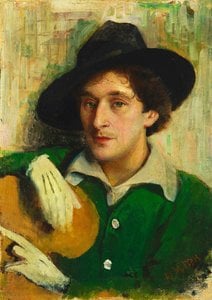
Marc Chagall
1887 - 1985 , Bielorrússia
Dados Rápidos
- Artistic Movement Or Style: Expressionismo, Cubismo, Fauvismo, Surrealismo
- Artists Or Movements Influenced By This Artist: ['Surrealistas']
- Artists Who Influenced This Artist: ['Léon Bakst']
- Date Of Birth: 1887
- Date Of Death: 1985
- Full Name: Moishe Shagal
- Nationality: Russo-francês
- Notable Artworks:
- Eu e a Aldeia
- O Aniversário
- O Casamento
- Crucificação Branca
- Sobre Vitebsk
- Place Of Birth: Liovana, Belarus
Artigos Relacionados

Kuzma Petrov-Vodkin: A Pioneer of Russian Spiritual Symbolism & the Avant-Garde
Explore the captivating world of Kuzma Petrov-Vodkin, a pivotal figure in Russian avant-garde and spiritual symbolism. Discover his iconic works, unique style & lasting influence on 20th-century art.

Dreaming in Color: The 25 Most Iconic Masterpieces by Marc Chagall
Explore 25 iconic Marc Chagall masterpieces through color and dream. Discover the full collection online at ArtsDot.com.

John Constable: Nature, Light & the Romantic Vision of Rural England
Explore the life & art of John Constable, the Romantic painter who revolutionized landscape with emotive scenes of rural England. Discover his techniques, legacy, and key works – perfect for collectors & enthusiasts.

Oil on Canvas: A Historical & Technical Exploration of a Timeless Artistic Medium
Explore the rich history & enduring techniques of oil painting on canvas. Discover the science behind its longevity, conservation practices, and contemporary relevance. Expert insights for art enthusiasts.

Franz Marc: Expressionism, Spirituality & the Animal Symbolism of a Modern Master
Explore the profound world of Franz Marc's Expressionist paintings. Discover his spiritual connection to animals, innovative use of color, and lasting impact on modern art history. Learn more at ArtsDot.


