

 Visualizar na parede
 Compartilhar
 Compartilhar
 Detalhes
 Guia
Guia

 Baixar imagem
 Semelhantes
 Raio X
 Ver diaporama
 Perguntas e Respostas
 Estatísticas
Square


 Ler mais
A obra de arte exibida nesta página é protegida por leis de direitos autorais, o que significa que não podemos criar ou vender legalmente uma reprodução idêntica. Esta proteção é aplicada por meio de acordos internacionais, tais como a Convenção de Berna e pelas leis nacionais, incluindo as estabelecidas por Lei de Direitos Autorais dos EUA - Título 17.
Este método cumpre plenamente as regulamentações de direitos autorais, pois não envolve a cópia ou duplicação da obra protegida. Em vez disso, trata-se de uma reinterpretação criativa — uma nova pintura que é influenciada pela original, mas não idêntica a ela.
Giclée / Impressão de Arte
Impressão giclée ou em tela de qualidade de museu, com produção rápida e opções flexíveis de acabamento. ( Comprar pintura feita à mão Alternar para Imagem Digital)




P118B €10

P118H €10

P118W €10

P438Z €10

P508JH €12

P508YH €12

P805H €10

P805Z €10

P919BZ €10

P919G €10

P919XJ €10

P959ZH €10

P968JZ €12

W106C €8

W218G €10

W218JH €8

W218Y €10

W307PJ €10

W316G €10

W316PJ €8

W316Y €10

W398PJ €8

W4111J €10

W500HY €15

W500JH €15

W692G €12

W849H €8

W940BG €15

W953PJ €8




Escolha entre os nossos tamanhos pré-definidos que respeitam as proporções originais da obra de arte.

Insira a largura e a altura desejadas para se ajustarem à sua moldura ou parede. Uma impressão pode ser apenas cortada, nunca ampliada além da imagem original; portanto, um tamanho com proporções diferentes resultará na perda de parte da imagem. Enviamos uma maquete digital para sua aprovação antes de realizarmos a impressão. A imagem exibida nesta página não mostra o corte real — apenas a maquete o faz.
Entrega mundial () em 2 semanas, em vez das 4/5 semanas padrão. (17 Novembro)

Envio expresso gratuito para todo o mundo

Tela de Linho de Alta Qualidade

Seguro de transporte completo

Garantia de Reembolso de Impostos Alfandegários

Garantia de Fidelidade Cromática

Política de Devolução em 100 Dias (Apenas para Defeitos)

Garantia de reembolso de 100%

Oferta de desconto por quantidade
 A opção de vidro está disponível apenas para tamanhos inferiores a 110 cm

Square
Giclée / Impressão de Arte
Tamanho da Reprodução
-


Preço Total
€ 56
The Enigma of the Spiral
In the quiet intensity of Man Ray’s Square, one is immediately drawn into a rhythmic, swirling dance of typography and form. Created during the mid-1940s, this work transcends mere geometric abstraction to become a profound meditation on the nature of sight itself. A singular, commanding “S” anchors the composition, acting as a gravitational center around which a constellation of smaller letters spirals outward in an almost hypnotic motion. This arrangement does more than decorate the canvas; it disrupts our established visual hierarchies, forcing the eye to wander through a labyrinth of characters that seem to emerge from and recede into the very fabric of the piece. It is a visual journey that challenges the viewer to look beyond the surface and contemplate the mechanics of perception.
Technique Born of Light and Shadow
Man Ray’s transition from the experimental realm of photography—specifically his pioneering work with camera-less photograms—into the medium of painting brought a unique, luminous sensibility to his canvas. In Square, he utilized casein paint, applying it in delicate, translucent layers to achieve an ethereal glow that mimics the soft, dreamlike quality of his famous rayographs. This meticulous technique creates a subtly textured surface that catches the light, lending the work a sense of depth and vitality that feels almost tactile. The choice of a square format further reinforces the piece's structural integrity, mirroring the precision of his photographic eye while embracing the fluid, organic energy of the Surrealist movement. For those seeking to bring a touch of avant-garde sophistication to a modern interior, the interplay of light and form in this piece offers an unparalleled elegance.
A Legacy of Subconscious Exploration
To understand Square is to understand the radical spirit of the Dada and Surrealist movements that defined Man Ray’s era. Influenced heavily by the conceptual provocations of Marcel Duchamp, the artist sought to dismantle the boundaries between the rational and the irrational. The central “S” serves as a potent symbol, perhaps representing his own initials, but more deeply embodying the core of Surrealism: the rejection of logic in favor of the subconscious. This painting is an invitation to abandon the need for literal interpretation and instead embrace the mystery of the unexplained. It is a masterpiece of intellectual depth, making it a commanding focal point for collectors and designers who wish to infuse their spaces with a sense of historical significance and timeless, contemplative beauty.
Perguntas e Respostas
Por quais outros nomes ou pseudônimos Man Ray é conhecido?
Man Ray também é conhecido pelos nomes Emmanuel Radnitzky.
Como "Square", de Man Ray pode ser utilizado na decoração de interiores?
"Square" é sugerida para Accent, e o espaço recomendado é um(a) Living Room.
Qual é o lugar de "Square", de Man Ray na história da arte?
A classificação histórico-artística de "Square", de Man Ray é Surrealist, do período Modern.
Obras Relacionadas


Biografia do Artista
A Life Illuminated by Shadows
Emmanuel Radnitzky, a name that would eventually transform into Man Ray, was born in Philadelphia in 1890 to Russian Jewish immigrant parents, Melach “Max” Radnitzky and Manya “Minnie” Radnitsky (née Lourie or Luria). His early life, steeped in the vibrant energy of New York City, proved formative, exposing him to a burgeoning artistic landscape and instilling within him a lifelong fascination with experimentation. He wasn’t destined for a conventional path; his family's background, marked by both financial struggles and a strong sense of social justice – evident through their involvement with anarchist ideals – fostered an environment where questioning established norms was not just tolerated but actively encouraged. His father, a tailor, and his mother, a seamstress, instilled in him a deep appreciation for craftsmanship and the transformative power of creative labor. He completed his high school education, initially intending to pursue architecture, yet ultimately choosing the path of an artist, a decision fueled by a desire to break free from the constraints of societal expectations and explore the boundless possibilities of self-expression.Early Influences and the Rise of “Man Ray”
Ray’s artistic journey began with a deep immersion in European modernism, largely through the lens of Alfred Stieglitz's 291 gallery in New York City. This exposure to Cubism, Futurism, and other avant-garde movements ignited within him a burning desire to challenge traditional modes of representation. Simultaneously, he found himself drawn to the gritty realism of the Ashcan School, a movement that documented the lives of ordinary people in urban America with unflinching honesty. This confluence of influences—the intellectual stimulation of European modernism and the social commentary of American realism—shaped his early artistic vision, creating a unique synthesis that would inform his subsequent work. The shift from “Manny” Radnitzky to the enigmatic “Man Ray” itself was a deliberate act of self-invention, a symbolic rejection of familial constraints and an assertion of individual identity. It represented a conscious decision to forge a new persona—a creative force unbound by convention.Dadaism and the Birth of a New Aesthetic
The arrival of Marcel Duchamp in New York around 1915 proved to be a pivotal moment in Man Ray’s artistic trajectory. Their shared fascination with challenging established notions of art led them to become central figures in the burgeoning Dada movement, an anti-art protest born from the disillusionment following World War I. Dada artists sought to dismantle traditional values and embrace absurdity, chance, and spontaneity as a means of critiquing societal norms. Man Ray’s involvement with Dada extended beyond mere participation; he actively contributed to its development in New York, co-founding the Society of Independent Artists alongside Duchamp and Katherine Dreier. The group's publication of *New York Dada* in 1921, though short-lived, marked a significant attempt to establish Dada as a viable artistic force within American culture. This period was characterized by experimentation with “ready-mades”—ordinary manufactured objects elevated to the status of art—a radical concept that challenged the very definition of what constituted art.Rayographs and the Alchemy of Light
It was during this time, in 1922, that Man Ray stumbled upon a revolutionary technique: the rayograph. While experimenting with photography, he discovered that by placing objects directly onto light-sensitive paper and exposing them to light, he could create ethereal, ghostly images—a process he termed “rayographs.” This wasn’t simply an alternative method of image-making; it was a profound philosophical statement about the nature of photography itself. By eliminating the camera lens, Ray stripped away the illusion of objectivity, revealing the inherent subjectivity of the medium. These weren't representations *of* things, but rather direct imprints *from* them, imbued with a sense of mystery and otherworldliness. He continued to refine his technique throughout the 1920s and 30s, experimenting with solarization—a process that created dramatic reversals of tone—and multiple exposures, pushing the boundaries of photographic expression. His rayographs became increasingly abstract, exploring the interplay of light, shadow, and form in a way that defied conventional representation.Surrealism, Film, and a Lasting Legacy
Man Ray’s artistic explorations extended beyond still photography into the realm of filmmaking. His experimental films, such as *Le Retour à la Raison* (1923) and *L'Étoile de Mer* (1928), were characterized by their surreal imagery, unconventional editing techniques, and rejection of narrative conventions. These weren’t stories told in a traditional sense; they were visual poems, explorations of form, rhythm, and the subconscious. He employed innovative techniques like stop-motion animation and superimposition to create disorienting and dreamlike effects. He became a key figure within the Surrealist movement, collaborating with artists like Salvador Dalí and contributing significantly to the journal *Surréalisme*. His work during this period is marked by a fascination with dreams, the irrational, and the hidden depths of the human psyche. Man Ray died in Paris in 1976, leaving behind a remarkable body of work that continues to inspire artists and audiences worldwide. His legacy lies not only in his technical innovations but also in his unwavering commitment to artistic freedom and his relentless pursuit of the impossible—a true pioneer who forever altered our perception of art and reality.- Photography: Man Ray’s techniques, particularly rayography and solarization, continue to be explored by contemporary photographers.
- Surrealism: His contributions solidified the movement's visual language and inspired countless artists across disciplines.
- Experimental Film: His pioneering work in film laid the groundwork for future generations of avant-garde filmmakers.
- Fashion Photography: Ray’s innovative approach to portraiture and composition influenced the development of modern fashion photography.

Man Ray
1890 - 1976 , Estados Unidos da América
Dados Rápidos
- Artistic Movement Or Style: Dada, Surrealismo
- Artists Or Movements Influenced By This Artist: ['Surrealismo']
- Artists Who Influenced This Artist: ['Marcel Duchamp']
- Date Of Birth: 27 de agosto de 1890
- Date Of Death: 18 de novembro de 1976
- Full Name: Emmanuel Radnitzky
- Nationality: Americano
- Notable Artworks:
- Rayografias
- L'Étoile de Mer
- Le Retour à la Raison
- Place Of Birth: Filadélfia, EUA
Artigos Relacionados

The Radical Legacy of Marcel Duchamp: What Was He Known For?
Explore the radical legacy of Marcel Duchamp from his iconic readymades to his portable museum and find ways to bring his vision into your home

Decoding the Subconscious: Symbolism and Psychological Tension in Surrealist Dream Imagery
Explore the profound symbolism and psychological depth of Surrealist dreamscapes. Decode the secrets of Dali and more today.
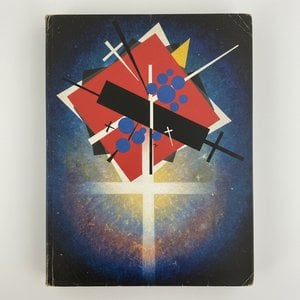
Beyond Representation: Exploring the Radical Geometry of Suprematism & Its Spiritual Foundations
Explore the revolutionary world of Suprematism with our expert guide. Discover Kazimir Malevich's groundbreaking art, its spiritual foundations & lasting influence on modern design. Learn about collecting this iconic movement.

Top 10 Obras de Arte com Vibração Industrial | ArtsDot.com
Descubra 10 obras de arte icônicas que capturam a atmosfera industrial! Explore Monet, Manet e outros mestres do Impressionismo e Realismo. Encontre reproduções de alta qualidade para transformar sua decoração em ArtsDot.com.

The Art of the Portrait: Capturing Human Emotion Through Masterful Detail and Psychological Depth
Discover the profound beauty of portraiture. Explore how master artists capture emotion through meticulous detail, from Renaissance realism to contemporary oil paintings. Learn to curate timeless, soulful art for your home with expert guidance from ArtsDot.com.
