


 Visualizar em escala
 Enviar
 Compartilhar
 Ver detalhes
 Guia
Guia

 Baixar imagem
 Semelhantes
 Raio X
 Apresentação de slides
 Estatísticas
Horace John Abbot
 Academic Realism
 51.0 x 38.0 cm
 Ver mais
Giclée / Impressão de Arte
Impressão giclée ou em tela de qualidade de museu, com produção rápida e opções flexíveis de acabamento. ( Encomendar reprodução pintada à mão Ver Imagem Digital)




































Escolha entre os nossos tamanhos pré-definidos que respeitam as proporções originais da obra de arte.

Você pode inserir suas próprias dimensões para se ajustar a uma moldura ou espaço específico. Se o tamanho selecionado não corresponder às proporções da imagem original, iremos recortar a obra de arte ou estender a imagem com uma borda espelhada ou preenchimento sólido. Um mockup digital será enviado para sua aprovação antes do início da produção.
Por favor, observe que a visualização na tela não reflete o recorte ou a extensão real. Apenas o mockup mostrará com precisão a composição final.
Embora tamanhos personalizados estejam disponíveis, recomendamos selecionar uma dimensão da lista predefinida para preservar as proporções originais.
Entrega mundial () em 2 semanas, em vez das 4/5 semanas padrão. (23 Setembro)

Envio expresso gratuito para todo o mundo

Tela de Linho Premium

Seguro de transporte total

Garantia de Reembolso de Impostos Alfandegários

Garantia de Fidelidade de Cor

Política de Devolução em 100 Dias (Apenas para Defeitos)

Garantia de reembolso de 100%

Desconto para múltiplas unidades
 A opção de vidro está disponível apenas para tamanhos inferiores a 110 cm

Horace John Abbot
Giclée / Impressão de Arte
Dimensões da Reprodução
-


Preço Total
$ 62
Obras Relacionadas


Biografia do Artista
Louis Fabron: Bridging Neoclassicism and Romantic Emotion
Louis Fabron (1855 – 1907) stands as a remarkable figure in late nineteenth-century American art, skillfully blending the stylistic rigor of Neoclassicism with the expressive fervor characteristic of Romanticism. Born in Paris, France, Fabron’s artistic journey began amidst the intellectual currents shaping European culture—a period marked by debates over artistic idealism versus realism and fueled by burgeoning interest in psychological portraiture. His formative years were spent absorbing the lessons of established masters like Jean-Auguste Dominique Ingres and Alexandre Cabanel, whose meticulous attention to detail and idealized representations profoundly impacted Fabron’s approach to painting. Fabron's early works demonstrate a dedication to classical principles—precise lines, balanced compositions, and muted palettes—reflecting the prevailing aesthetic sensibilities of his time. However, he swiftly moved beyond mere imitation, injecting emotional depth into his canvases that distinguished him from many of his contemporaries. This stylistic duality is particularly evident in portraits like “Francis Chardon’s Father” (1893), where Fabron captures not just physical likeness but also the subtle nuances of character and paternal affection. The painting utilizes a masterful blend of academic realism—characterized by meticulous rendering of textures and anatomical accuracy—with an expressive tonal range that conveys warmth and dignity. His collaboration with Horace John Abbot, another prominent portraitist of the era, resulted in several celebrated commissions showcasing Fabron’s ability to convey psychological complexity within a formal framework. Abbot's portraits often explored themes of introspection and moral contemplation, mirroring Fabron’s own artistic vision. Fabron skillfully employed rich browns and golds—a hallmark of Abbot’s technique—to imbue his canvases with an aura of sophistication and gravitas. Fabron’s influence extended beyond individual portraits; he championed the pursuit of “emotional truth” within academic painting—a controversial stance that challenged prevailing dogma. He argued passionately for artists to strive not merely for accurate representation but also for conveying genuine feeling, asserting that beauty resided in capturing the inner life of their subjects. This conviction solidified Fabron’s legacy as a pioneer of psychological portraiture and contributed significantly to the evolution of American art during the Gilded Age. Fabron's enduring contribution lies in his ability to synthesize disparate artistic traditions—classical precision and Romantic emotion—creating images that resonate with both intellectual rigor and profound human empathy. His paintings continue to captivate viewers today, serving as a testament to his artistic genius and his unwavering commitment to exploring the complexities of human experience. He remains an important artist for understanding the transition from Neoclassicism to Impressionism in America.
louis fabron
1855 - 1907
Informações Rápidas
- Artistic Movement Or Style: Academic Realism
- Artists Or Movements Influenced By This Artist: ['Romanticism']
- Artists Who Influenced This Artist: ['Anne-Louis Girodet']
- Date Of Birth: 1855
- Date Of Death: 1907
- Full Name: Louis Fabron
- Nationality: French
- Notable Artworks:
- Francis Chardon's Father
- Horace John Abbot
- Place Of Birth: Paris, France
Artigos Relacionados
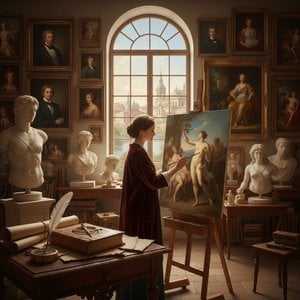
Academic Realism: Technique, History & Enduring Influence on Art
Explore the captivating world of Academic Realism! Discover key artists, techniques & its lasting impact on art history. Expert insights & high-quality reproductions at ArtsDot.

The Poetic Truth of Observation: Exploring 19th-Century Realism in Painting
Explore the captivating world of 19th-century Realism! Discover key artists like Courbet & Millet, masterpieces, and the powerful social commentary behind this influential art movement. Expert insights at ArtsDot.

Romantic Realism's Finest: 10 Masterpieces for Your Home | ArtsDot
Explore 10 defining masterpieces of Romantic Realism! Discover Courbet, Millet & Daumier's powerful paintings—capturing emotion and social realities. Find museum-quality reproductions for your home at ArtsDot.com.

Realismo Acadêmico: 10 Obras-Primas que Moldaram a História da Arte | ArtsDot
Descubra as 10 obras-primas do Realismo Acadêmico que revolucionaram a arte! Explore Bouguereau, Gérôme e Cabanel. Reproduções de alta qualidade para decorar sua casa com beleza clássica. Explore a coleção completa em ArtsDot.com.

Academic Art: Tradition, Technique & the Pursuit of Ideal Form in the 19th Century
Explore the world of Academic Art! Discover its history, key artists like Ingres & Bouguereau, defining techniques, and lasting influence on 19th-century painting. Learn about the Salon system and its legacy.