
- Início

- Impressão em tela
- Konstantin Yuon
- Landscape

 Encomendar pintura Comprar imagem em alta resolução
 Enviar
 Compartilhar
 Detalhes da obra
 Adicionar aos favoritos

 Baixar
 Semelhantes
 Raio X
 Slideshow
Landscape


 Ver mais
Giclê / Impressão de Arte
Impressão giclée ou em tela de qualidade de museu, com produção rápida e opções flexíveis de acabamento.




































Escolha entre os nossos tamanhos pré-definidos que respeitam as proporções originais da obra de arte.

Você pode inserir suas próprias dimensões para se ajustar a uma moldura ou espaço específico. Se o tamanho selecionado não corresponder às proporções da imagem original, iremos recortar a obra de arte ou estender a imagem com uma borda espelhada ou preenchimento sólido. Um mockup digital será enviado para sua aprovação antes do início da produção.
Por favor, observe que a visualização na tela não reflete o recorte ou a extensão real. Apenas o mockup mostrará com precisão a composição final.
Embora tamanhos personalizados estejam disponíveis, recomendamos selecionar uma dimensão da lista predefinida para preservar as proporções originais.
Entrega mundial () em 2 semanas, em vez das 4/5 semanas padrão. (20 Julho)

Envio Expresso Gratuito para todo o Mundo

Tela de Linho Premium

Seguro de envio completo

Garantia de Reembolso de Impostos Alfandegários

Garantia de Fidelidade de Cores

Política de Devolução de 60 Dias (Apenas para Defeitos)

Garantia de 100% de Reembolso

Desconto para múltiplas unidades
 A opção de vidro está disponível apenas para tamanhos inferiores a 110 cm

Landscape
Giclê / Impressão de Arte
Dimensões da Reprodução
-


Preço Total Final
-
Obras Relacionadas


Biografia do Artista
Early Life and Artistic Foundations
Konstantin Fyodorovich Yuon, born on October 24th, 1875, in Moscow, emerged from a family deeply intertwined with both Swiss-Russian heritage and a rich artistic tradition. His brother, Paul Juon – a celebrated composer – provided an early exposure to creative currents that would profoundly shape Konstantin’s own artistic journey. From his earliest years, Konstantin demonstrated a remarkable sensitivity to visual expression, nurtured by a mother who fostered artistic pursuits within the family home. This formative environment laid the foundation for his formal training at the Moscow School of Painting, Sculpture and Architecture from 1892 to 1898. During this period, he benefited immensely from the tutelage of distinguished masters such as Konstantin Savitsky and Konstantin Korovin – figures whose techniques and philosophies would significantly influence his initial artistic trajectory. These early years weren’t confined solely to Moscow; Yuon embarked on extensive travels throughout Europe, particularly immersing himself in the vibrant atmosphere of Paris. There, he encountered the burgeoning Impressionist movement, captivated by artists like Camille Pissarro. However, rather than simply mimicking their style, Yuon skillfully synthesized these influences with a uniquely Russian sensibility – a blend that would ultimately define his distinctive artistic voice.From Symbolism to Socialist Realism
Yuon’s early works are characterized by an evocative and deeply layered aesthetic, seamlessly merging the ethereal qualities of Impressionism with subtle undercurrents of Symbolism. Paintings such as *To the Trinity* (1903) and *Tverskoy Boulevard* (1909) exemplify this period, capturing fleeting moments of light and atmosphere with a remarkable sensitivity to color and texture – yet simultaneously hinting at deeper emotional resonances and symbolic meanings. He wasn’t content to remain solely within the confines of Impressionism; Yuon began experimenting with lyrical landscapes that incorporated elements drawn from traditional Russian art forms – the delicate precision of Palekh miniature painting, reminiscent of intricate icon artistry, and a profound engagement with the spiritual themes prevalent in Russian iconography. This masterful fusion created a visual language entirely his own—a testament to his ability to synthesize diverse influences into a cohesive and deeply personal style. However, the tumultuous political landscape of early 20th-century Russia dramatically altered the course of Yuon’s artistic development. As the Soviet era dawned, he navigated the shifting demands of a new ideological framework, gradually adapting his approach while retaining his core artistic principles. This transition is particularly evident in his monumental work *Parade on the Red Square on November 7, 1941*, a powerful and patriotic depiction of Soviet strength during wartime – a piece that reflects both his artistic skill and the prevailing demands of the regime.A Multifaceted Career and Institutional Leadership
Konstantin Yuon’s contributions to the Russian art world extended far beyond the creation of individual paintings. He was, in essence, a multifaceted figure—an artist, teacher, administrator, and influential advocate for the development of Russian art. He co-founded both the Union of Russian Artists and, later, the Association of Artists of Revolutionary Russia – organizations that played a crucial role in shaping the direction of artistic expression during periods of profound social change. His administrative talents were further recognized through his leadership roles: he served as director of the Research Institute of the Academy of Arts (1948–1950) and, culminating in a distinguished career, became the First Secretary of the Union of Soviet Artists (1956–1958). These positions afforded him considerable influence over artistic policy and education, allowing him to champion his vision for Russian art – a vision rooted in both tradition and innovation. His dedication was acknowledged with prestigious accolades, including the Stalin Prize in 1943 and the Order of Lenin, solidifying his status as a national treasure within the Soviet Union.Notable Works and Artistic Style
Yuon’s artistic style is characterized by a remarkable ability to capture both the ephemeral beauty of nature and the profound emotional complexities of human experience. His landscapes – often imbued with a sense of melancholy and nostalgia – are rendered with meticulous detail and a masterful use of color, creating images that resonate deeply with viewers. Key works include *New Planet* (1912), a haunting depiction of a solitary figure contemplating the vastness of the cosmos; *Bean Vine* (circa 1905-1907), a vibrant portrayal of rural life in Russia; and, perhaps most famously, *Parade on the Red Square on November 7, 1941*, a monumental work that powerfully conveys the spirit of resilience during wartime. Throughout his career, Yuon skillfully blended elements of Impressionism, Symbolism, and later, Socialist Realism – demonstrating an extraordinary versatility and a deep understanding of the evolving artistic landscape. His paintings are not merely representations of reality; they are carefully constructed narratives—infused with symbolism, emotion, and a profound sense of place.Legacy and Enduring Influence
Konstantin Yuon’s legacy is complex and enduring—a testament to an artist who navigated turbulent times while remaining steadfastly committed to his craft. He stands as a pivotal figure in Russian art history, bridging the gap between the aesthetic sensibilities of the late 19th century and the ideological demands of the Soviet era. His early Symbolist landscapes possess a haunting beauty that continues to captivate viewers, while his later Socialist Realist works offer valuable insights into the artistic strategies employed by the Soviet regime. Today, Yuon’s paintings are held in prominent museum collections across Russia – including the Tretyakov Gallery and the Taganrog Art Museum – ensuring their accessibility for generations to come. His work remains a subject of scholarly study and critical appreciation, solidifying his place as one of the most important artists of the 20th century.- Notable Works: New Planet, Bean Vine, Parade on the Red Square on November 7, 1941.
- Key Influences: Konstantin Savitsky, Konstantin Korovin, Valentin Serov, Camille Pissarro.
- Artistic Movements: Impressionism, Symbolism, Socialist Realism.

Konstantin Yuon
1875 - 1958 , Rússia
Informações Rápidas
- Artistic Movement Or Style: Impressionismo, Simbolismo, Realismo Social
- Artists Or Movements Influenced By This Artist:
- Savitsky
- Simbolismo
- Artists Who Influenced This Artist:
- Konstantin Korovin
- Valentin Serov
- Camille Pissarro
- Date Of Birth: 24 Out 1875
- Date Of Death: 11 Abr 1958
- Full Name: Konstantin Fyodorovich Yuon
- Nationality: Russo
- Notable Artworks:
- Nova Planeta
- Vinha de Feijão
- Desfile na Praça Vermelha
- Place Of Birth: Moscou, Rússia
Artigos Relacionados

Henri Moret: Capturing the Essence of Brittany's Light – A Study in Post-Impressionist Landscape Painting
Explore the captivating landscapes of Henri Moret, a master of Post-Impressionism. Discover his unique style, key works, and legacy in our expert guide. Learn about collecting Moret's art & its investment potential.

Alexei Harlamoff: A Study in Russian Romantic Landscape Painting & Imperial Patronage
Explore the captivating world of Alexei Harlamoff, a master of Russian Romantic painting. Discover his life, Imperial patronage, signature style & enduring legacy with ArtsDot.

Brian Hatton: A Study in Early 20th-Century British Landscape Painting & Rural Identity
Explore the captivating landscapes & portraits of Brian Hatton (1887-1916), a promising British artist lost too soon. Discover his unique style, Herefordshire roots, and lasting legacy in early 20th-century art.
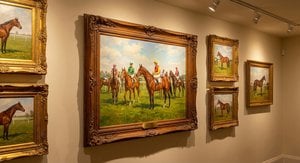
As 25 Obras-Primas de Alfred Munnings: Arte Equina e a Alma Inglesa | ArtsDot
Descubra as 25 obras-primas de Alfred Munnings, o mestre da pintura equina e da alma inglesa. Explore a história, técnica e beleza atemporal de cada quadro. Reproduções de arte exclusivas em ArtsDot.com! Explore a coleção online.

Top 10 Obras-Primas em Óleo que Revolucionaram a História da Arte | ArtsDot
Descubra as 10 obras primas em óleo que moldaram a história da arte! Explore Van Gogh, Monet, Da Vinci e outros mestres. Reproduções de alta qualidade para sua decoração. Explore a coleção completa na ArtsDot.com

