
 Oil On Canvas
- WallArt
- Baroque Tenebrism
 1651
1651 125.0 x 100.0 cm
 Palácio de Capodimonte

The picture follows your choices: , .
Descrição do Item
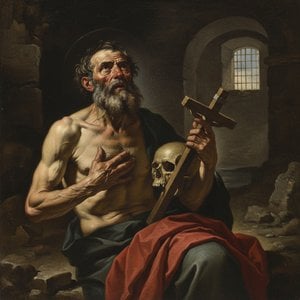
Jusepe de Ribera's 'St. Jerome' is a dramatic Baroque masterpiece showcasing intense emotion and spiritual depth through masterful chiaroscuro. A powerful depiction of faith & contemplation.
 Ler mais
Biografia do Artista
Explore as obras dramáticas de Jusepe de Ribera (Lo Spagnoletto)! Mestre do tenebrismo e realismo intenso, famoso por cenas religiosas impactantes e martírios. Um artista espanhol chave ao lado de Velázquez & Zurbarán.
Reprodução em Óleo Feita à Mão
Óleo sobre tela pintado à mão no tamanho e moldura de sua escolha, feito sob encomenda pelos nossos artistas. ( Alternar para Impressão Alternar para Imagem Digital)
More about this painting
 Visualizar na parede
 Compartilhar
 Compartilhar
 Detalhes
 Guia
Guia

 Baixar imagem
 Semelhantes
 Raio X
 Ver diaporama
 Q&A
Q&A Estatísticas
Order your painting in four simple steps
Take your time. You can change any answer; the price in your order card follows each choice.
1 Step one of four
Which size would you like?
These sizes keep the proportions of the original painting. The drawing shows your choice on a wall, above a two-metre sofa.
Or give your own measurements
Escolha entre os nossos tamanhos pré-definidos que respeitam as proporções originais da obra de arte.

Insira a largura e a altura desejadas para se ajustarem à sua moldura ou parede. Como esta obra é pintada à mão, para um tamanho com proporções diferentes, o artista poderá pintar um pouco mais ao redor da imagem ou reduzir ligeiramente a composição — você escolhe. Enviamos uma maquete digital para sua aprovação antes de iniciar a pintura. A imagem exibida nesta página não representa o resultado real — apenas a maquete mostra o resultado final.
2 Step two of four
How should it be prepared: rolled, stretched or framed?
The prices below are for the size you chose in step one.
Choose the edges of the stretched canvas
Choose your frame

White €1

Blurside €1

Extended €1

P118B €10

P118H €10

P118W €10

P438Z €10

P508JH €12

P508YH €12

P805H €10

P805Z €10

P919BZ €10

P919G €10

P919XJ €10

P959ZH €10

P968JZ €12

W106C €8

W218G €10

W218JH €8

W218Y €10

W307PJ €10

W316G €10

W316PJ €8

W316Y €10

W398PJ €8

W4111J €10

W500HY €15

W500JH €15

W692G €12

W849H €8

W940BG €15

W953PJ €8

H24-GOLD €30

H24-SILVER €30

H36-GOLD €45

H36-SILVER €45
Com moldura
Moulding: . Overall size with the frame: .
3 Step three of four
Would you like anything changed in the painting?
Most people answer no. Because each painting is made by hand, our artist can also adapt it for you.
After order, ArtsDot.com team will email client for instructions and provide a mockup preview
4 Step four of four
A few finishing options
All of them are optional. The answers already selected cost nothing extra.
Who paints it?
Entrega mundial () em 3 a 4 semanas, em vez das 5 semanas padrão. (29 Outubro). Sem comprometer a qualidade.
A nameplate, as in a museum?
Detalhes da Placa de Bronze Gravada
This elegant plaque features the artist's name and the title of the artwork, finely engraved for a timeless presentation.
It is made from bronze with a refined, elegant finish. The text is precisely laser-engraved for a sharp and permanent result. Measuring 9x2 cm, the plaque is compact yet easy to read. It's built to be durable and scratch-resistant, offering a professional, museum-quality look. Mounting is simple thanks to the included adhesive backing.
Detalhes da Placa de Acrílico Transparente
The plaque includes essential engraved details such as the artist's name, the title of the artwork, the date it was created, the type of media used-like oil on canvas or watercolor-a brief description of the piece, and a QR code that links to the complete artwork information.
It is crafted from clear acrylic, offering a sleek, modern appearance. The text is UV-engraved in black to ensure strong visual contrast. With a size of 10x15 cm, it ensures optimal readability. It comes equipped with two metal hooks for secure wall mounting. The plaque is designed to be weather-resistant, making it suitable for various environments, and it includes interactive features that work seamlessly with smartphone scanning.
Detalhes da Placa de Acrílico Preto
This elegant plaque includes engraved information such as the artist's name, the title of the artwork, the date it was created, the type of media used (like oil on canvas or watercolor), a short description of the artwork, and a QR code for quick access to more information.
The plaque itself is made from refined black acrylic with a premium finish. The text is laser-engraved in white for high contrast and readability. Its size is 10x15 cm, designed to be easy to read. It comes with two metal hooks for professional mounting. The design is sleek and fits any interior style. It is also weather-resistant and durable, with built-in digital integration for mobile compatibility.
A protective varnish?
When do you need it?
✓ Check and order
Your painting, as you ordered it

St. Jerome
Técnica de Reprodução
Tamanho da Reprodução
-

Artista Sênior de Elite
Mais detalhes, refinamento e tempo de produção adicional
-

Moldura para Reprodução
-
-
Para obras de arte ou reproduções com mais de 105 cm (aproximadamente 41 polegadas) em qualquer um dos lados, a moldura será enviada como um kit desmontado. Este método garante uma entrega segura e evita danos durante o transporte.
Montagem profissional necessária — este não é um produto DIY (faça você mesmo).
O kit deve ser montado e a tela esticada por um profissional de molduraria experiente, utilizando cola de madeira (não inclusa), um alicate de esticar tela e grampos para manter as travessas alinhadas enquanto a cola seca. A montagem incorreta ou a tensão desigual da tela podem danificar permanentemente a obra de arte e não estão cobertas pela nossa garantia.
 Para obras de arte ou reproduções com mais de 105 cm (aproximadamente 41 polegadas) em qualquer um dos lados, a moldura será enviada como um kit desmontado. Este método garante uma entrega segura e evita danos durante o transporte.
Todas as barras de madeira maciça estão incluídas, precisamente cortadas ao tamanho certo.
Montado com os parafusos fornecidos, além de cola para madeira para as junções dos cantos, que não está inclusa e deve ser providenciada pelo seu moldurista.
São necessárias ferramentas profissionais não incluídas: um alicate de estiramento de tela (esticador) e grampos para manter as ripas alinhadas enquanto a cola seca.
Importante:
As junções dos cantos requerem cola para madeira, as ripas devem ser mantidas com grampos até que a cola esteja completamente seca, e o estiramento da tela na moldura montada requer um alicate de esticar tela. Nenhum destes itens está incluído no kit. Por favor, certifique-se de contar com um profissional de molduraria experiente antes de encomendar este tamanho.

Etiqueta de identificação
-
-

Verniz de Proteção
Verniz brilhante (realça as cores e protege contra a luz e a umidade)
-

Personalizar minha obra
Exemplos de alterações possíveis: Substituir o rosto por uma foto do cliente; Adicionar um animal de estimação (ex.: substituir gato por cachorro); Incluir uma mensagem oculta no fundo; Alterar a paisagem ou os elementos do fundo.
-

Urgente
Entrega mundial () em 3 a 4 semanas, em vez das 5 semanas padrão. (29 Outubro). Sem comprometer a qualidade.
-
Envio Expresso
Entrega mundial para em 5 semanas. (5 Novembro).
Com envio incluído
Preço Total
€ 232
A opção de vidro está disponível apenas para tamanhos inferiores a 110 cm
Included with every order
- Envio expresso gratuito para todo o mundo
- Tela de Linho de Alta Qualidade
- Seguro de transporte completo
- Garantia de Reembolso de Impostos Alfandegários
- Garantia de Fidelidade Cromática
- Política de Devolução em 100 Dias (Apenas para Defeitos)
- Garantia de reembolso de 100%
- Oferta de desconto por quantidade


The Shadowed Saint: Jusepe de Ribera’s ‘St. Jerome Penitente’
Jusepe de Ribera's “St. Jerome Penitente,” painted in 1652 during his prolific Neapolitan period, isn’t merely a portrait; it’s a visceral embodiment of spiritual anguish and the relentless pursuit of redemption. This arresting work, currently housed within the National Museum of Capodimonte in Naples, immediately commands attention with its dramatic chiaroscuro – a technique so characteristic of Ribera that it practically vibrates from the canvas. The painting depicts St. Jerome, not as a serene scholar or pious hermit, but as a man consumed by his own torment, wrestling with the demons of his past and the weight of his prophetic duty.
Ribera’s genius lay in his ability to capture raw emotion, and “St. Jerome Penitente” is a masterclass in this regard. The figure is rendered with an almost brutal realism; the deep folds of his ragged robe, the furrowed brow, the clenched fist beating against his chest – every detail speaks of profound suffering. The skull positioned prominently on the right side isn’t simply a morbid symbol of mortality; it's a potent reminder of human vanity and the fleeting nature of earthly existence, a visual anchor for Jerome’s introspection. The arrow piercing his forehead, a recurring motif in Ribera’s work, suggests divine guidance or perhaps even punishment – a constant pressure on the saint’s soul.
A Master of Tenebrism: Technique and Influence
Ribera's mastery of tenebrism—the dramatic contrast between light and dark—is arguably his most defining characteristic. He eschewed the soft, diffused lighting favored by many of his contemporaries, instead employing a stark, almost theatrical illumination that throws the figure into sharp relief against a shadowy background. This technique wasn’t simply an aesthetic choice; it served to heighten the emotional intensity of the scene and draw the viewer's eye directly to Jerome’s tormented face. His use of impasto – applying paint thickly to create texture – further enhances this effect, giving the surface of the canvas a palpable sense of physicality.
Ribera’s style was deeply influenced by Caravaggio, whom he encountered in Rome and subsequently adopted many of his techniques. However, Ribera pushed these influences even further, imbuing them with a distinctly Spanish sensibility – a darker, more dramatic intensity than is often associated with Caravaggio's work. The painting’s composition, reminiscent of classical sculpture, contributes to its monumental quality, reinforcing the saint’s stature as a figure of immense spiritual significance.
Historical Context: Naples Under Spanish Rule
To fully appreciate “St. Jerome Penitente,” it’s crucial to understand the historical context in which it was created – Naples under Spanish rule in the mid-17th century. This period was marked by political instability, economic hardship, and religious fervor. Ribera's work reflects these realities, often depicting scenes of suffering, poverty, and martyrdom—themes that resonated deeply with the populace. His choice to set the scene within a desolate, almost monastic interior underscores the saint’s isolation and his dedication to a life of prayer and penance.
The painting was produced during a time when religious art held immense social and political power in Spain and its colonies. The Catholic Church commissioned countless works of art to inspire piety and reinforce its authority, and Ribera's paintings were highly sought after by wealthy patrons and ecclesiastical institutions. “St. Jerome Penitente” exemplifies this trend, offering a powerful visual representation of religious devotion and the promise of salvation.
Symbolism and Emotional Resonance
Beyond its technical brilliance, “St. Jerome Penitente” is rich in symbolism. The act of beating his breast with a stone is a traditional gesture of repentance, signifying remorse for past sins and a desire to atone for wrongdoing. The skull represents the inevitability of death and the vanity of earthly pursuits—a stark reminder that all worldly ambitions are ultimately futile. The arrow piercing Jerome’s forehead symbolizes divine intervention or perhaps even punishment, highlighting the saint's role as a messenger of God’s judgment.
Ultimately, “St. Jerome Penitente” is a profoundly moving work of art that speaks to the universal human experience of suffering, regret, and the enduring quest for spiritual redemption. It’s a painting that lingers in the memory long after it has been viewed, prompting reflection on our own mortality and the importance of living a life guided by faith and compassion. Its dramatic intensity and masterful execution make it a cornerstone of Baroque art and a testament to Ribera's unparalleled artistic vision.
Perguntas e Respostas
Por quais outros nomes ou pseudônimos Jusepe de Ribera é conhecido?
Jusepe de Ribera também é conhecido pelos nomes Lo Spagnoletto, José de Ribera, Josep de Ribera.
Como posso visualizar uma reprodução de "St. Jerome", de Jusepe de Ribera?
Uma prévia de "St. Jerome", de Jusepe de Ribera está disponível na página de Pré-visualização da obra.
Como o movimento e a época se encontram em "St. Jerome", de Jusepe de Ribera?
"St. Jerome" pertence ao movimento Baroque Tenebrism, e seu criador atuou na era Idade Moderna.
Obras Relacionadas


Jusepe de Ribera
1591 - 1652, Espanha
Biografia do Artista
A Life Forged in Shadow and Light
Jusepe de Ribera, conhecido por muitos como Lo Spagnoletto – “o Espanholito” – foi uma figura imponente da era Barroca, um artista cujas telas pulsavam com intensidade dramática e realismo implacável. Nascido em Xàtiva, Espanha, em 1591, sua jornada o levou longe de suas origens valencianas, estabelecendo-o finalmente como um dos artistas mais significativos da Itália no século XVII, uma cidade então sob domínio espanhol. A vida de Ribera não foi meramente um relato do desenvolvimento artístico; foi uma narrativa tecida com dificuldades, ambição e um compromisso inabalável em retratar a condição humana em toda a sua complexidade crua. Embora os detalhes biográficos iniciais permaneçam parcialmente envoltos em mistério, sabemos que ele chegou à Itália por volta de 1607, inicialmente estabelecendo-se em Roma antes de se dirigir a Nápoles em 1616 – uma cidade que logo se tornaria tanto seu lar artístico quanto o crisol para seu estilo único. Seu casamento com Caterina Azzolino, filha de um pintor local, consolidou ainda mais seus laços com o mundo da arte napolitano, permitindo-lhe prosperar dentro de sua atmosfera vibrante, mas frequentemente turbulenta.O Abraço do Tenebrismo e a Visão Realista
A formação artística de Ribera foi profundamente moldada pelas correntes predominantes da pintura italiana. A influência de Caravaggio é inegável; Ribera absorveu o uso revolucionário do mestre para o tenebrismo – essa dramática interação entre luz e sombra – para criar cenas carregadas de poder emocional. No entanto, ele não simplesmente imitou. Ele sintetizou essa técnica com elementos extraídos de outros mestres como Guido Reni, incorporando uma sensibilidade clássica em suas composições ao mesmo tempo que mantinha o impacto visceral do realismo de Caravaggio. Essa fusão resultou em um estilo singularmente seu: caracterizado por contrastes marcantes, figuras intensamente focadas e uma quase brutal honestidade na representação da dor humana e do êxtase espiritual. Suas obras iniciais, como o Martírio de São Bartolomeu, exemplificam essa abordagem – uma representação angustiante de sofrimento, renderizada com detalhes implacáveis. Ele não hesitou em retratar as realidades físicas do martírio, os corpos contorcidos, os músculos tensos, a própria textura da pele e dos ossos. Esse compromisso com o realismo se estendeu além dos temas religiosos; seus retratos de mendigos e pessoas comuns, frequentemente representados como filósofos ou santos, elevaram os marginalizados a um nível de dignidade e importância raramente visto na arte antes.Uma Carreira em Diversos Gêneros e Estilos Evolutivos
A produção artística de Ribera foi notavelmente diversa. Embora seja talvez mais conhecido por suas pinturas religiosas – cenas de martírio, representações de santos e dramáticas narrativas bíblicas –, ele também se destacou na pintura de retrato, natureza morta e até mesmo paisagem. Sua obra *São Jerônimo Lendo* , por exemplo, apresenta um lado mais suave e contemplativo de sua arte, ao mesmo tempo que mantém a característica iluminação dramática que define seu trabalho. Ao longo de sua carreira, o estilo de Ribera passou por evoluções sutis, mas significativas. Suas primeiras pinturas são marcadas por um realismo quase austero e pelo uso estático de tenebrismo. À medida que amadurecia, particularmente após se estabelecer firmemente em Nápoles, sua paleta tornou-se mais rica, suas composições mais complexas e sua iluminação um pouco mais suave. No entanto, os elementos centrais de sua estética barroca – a intensidade emocional, as narrativas dramáticas e o compromisso inabalável em retratar a experiência humana com honestidade – permaneceram constantes. Ele era um artesão mestre, capaz de render texturas com precisão notável, desde o tecido rústico do manto de um mendigo até a pele lisa de um santo jovem.Influências e Legado
Ribera foi influenciado por uma variedade de artistas e movimentos, incluindo Caravaggio, Guido Reni e os mestres da pintura veneziana. No entanto, seu estilo único é resultado de sua síntese dessas influências, criando uma obra que é ao mesmo tempo dramática e realista. Ele também foi um importante pintor espanhol, ao lado de Velázquez, Zurbarán e Murillo. Seu uso inovador do tenebrismo e seu realismo implacável influenciaram gerações de artistas em toda a Europa. Sua obra ressoou com aqueles que buscavam romper com as formas idealizadas da pintura renascentista e abraçar um estilo mais visceral e emocionalmente carregado. Mesmo artistas posteriores se inspiraram em suas composições dramáticas e representações poderosas da condição humana. Hoje, as pinturas de Ribera são exibidas em museus prestigiosos em todo o mundo – o Museu do Prado em Madri, a National Gallery of Art em Washington D.C., e inúmeras instituições na Europa – garantindo que seu legado continue a inspirar e cativar públicos por séculos após sua morte em 1652. Ele é um testemunho do poder da arte para confrontar verdades difíceis, explorar as profundezas da emoção humana e iluminar o espírito duradouro da fé e da resiliência.Um Mestre e Sua Duradoura Atração
A atração contínua pela obra de Ribera reside em sua capacidade de transcender o tempo e as fronteiras culturais. Suas pinturas não são meros artefatos históricos; são declarações poderosas sobre a condição humana – sobre sofrimento, fé, esperança e desespero. Seu realismo implacável nos força a confrontar verdades desconfortáveis, enquanto suas composições dramáticas e seu uso magistral da luz e sombra criam uma atmosfera de intenso ressonância emocional. Lo Spagnoletto, como era carinhosamente chamado, deixou para trás um corpo de trabalho que é ao mesmo tempo profundamente comovente e intelectualmente estimulante – um legado que garante seu lugar entre os maiores mestres da era Barroca. Suas pinturas não são apenas a serem admiradas; são para serem experimentadas—sentidas nas profundezas do ser.


Artigos Relacionados

Os 10 Mestres do Barroco: Obras-Primas que Moldaram a Arte e Decoram o Lar
Descubra os 10 maiores ícones do Barroco! Explore a história, técnica e emoção por trás de Caravaggio, Rembrandt, Bernini e outros mestres. Encontre reproduções de arte barroca para decorar seu lar com luxo em ArtsDot.com.
Jusepe de Ribera: Dramatic Realism & Spiritual Intensity in the Spanish Golden Age
Explore the powerful Baroque paintings of Jusepe de Ribera, master of tenebrism and dramatic realism. Discover his spiritual intensity, influence on Spanish art, and considerations for collectors. Expert insights at ArtsDot.

The Dramatic Flourish: Exploring the Baroque Movement's Enduring Legacy in Art History
Explore the dramatic world of Baroque art! Discover iconic artists like Caravaggio & Rubens, defining techniques, and its lasting impact on art history. Expert insights for collectors & enthusiasts at ArtsDot.