


 Visualizar em escala
 Enviar
 Compartilhar
 Ver detalhes
 Guia de Obras do Aluno

 Baixar imagem
 Semelhantes
 Raio X
 Apresentação de slides
 Estatísticas
Erwinna
 1957
1957 50.0 x 61.0 cm
 Ver mais
Adquira uma imagem digital de alta resolução e aprimorada, muito superior à prévia online.
Cada arquivo é meticulosamente preparado por nossos especialistas internos, utilizando ferramentas avançadas e retoques manuais de alta precisão. Garantimos que cada imagem apresente clareza excepcional, fidelidade de cores e detalhes minuciosos.
O arquivo final é entregue por e-mail em até 72 horas, otimizado para uso imediato em ambientes profissionais, editoriais e de impressão. Esta é a mesma qualidade utilizada por estúdios de design de alto nível, editoras e galerias.
Imagem Digital
Baixe um arquivo de alta resolução para exibição pessoal, impressão e projetos criativos. ( Alternar para Impressão Encomendar reprodução pintada à mão)
Incluído em cada pedido de imagem digital
Entrega Digital Especializada e Garantida
Ao escolher o ArtsDot.com, você não está apenas adquirindo uma imagem — você está recebendo uma obra de arte digital profissionalmente aprimorada, elaborada com precisão e com garantia de satisfação. Aqui está tudo o que acompanha seu pedido, automaticamente:

Entrega rápida por e-mail
O seu arquivo de imagem digital em alta resolução será enviado por e-mail em até 72 horas após o pedido — pronto para uso imediato.

Arquivo Digital com IA Otimizado
Sua obra de arte é otimizada profissionalmente por meio de ferramentas avançadas de IA e edição manual, garantindo o máximo de detalhes, clareza e precisão de cores.

Reenvio gratuito vitalício
Apagou ou perdeu o seu ficheiro acidentalmente? Não se preocupe – nós reenviamos para si a qualquer momento, gratuitamente.

Sem Taxas de Importação - Sempre
Desfrute da sua obra de arte instantaneamente, sem taxas alfandegárias, impostos ou custos de entrega — downloads digitais são sempre isentos de taxas.

Garantia de Precisão de Cores
Garantimos que sua imagem digital reflita as cores originais com a maior fidelidade possível, utilizando ferramentas profissionais e gerenciamento de cores.

Garantia de satisfação de 100 dias
Se não estiver satisfeito com a sua imagem digital, nós a revisaremos ou reembolsaremos 100% dentro de 100 dias — sem perguntas.

Garantia de Reembolso 100%
Não está satisfeito? Receba o reembolso total em até 100 dias após o recebimento do seu arquivo digital — sem perguntas.

Descontos para pedidos em lote
Compre 3 imagens, economize 10% - Compre 5, economize 15% - Compre 10+, economize 20%. Ideal para projetos criativos, galerias e agências.
Artistic Inspiration and Style
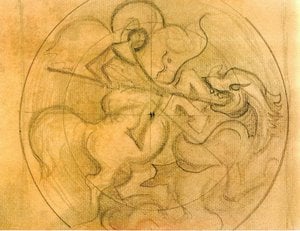
Glasco's artistic journey was influenced by prominent figures such as Alfonso Ossorio, Jackson Pollock, and Lee Krasner. His work also reflects the impact of Jean Dubuffet and Hans Hofmann. The Erwinna painting, in particular, showcases Glasco's ability to deconstruct the figure and develop non-objective paintings that build upon the abstraction of the 1950s. Key Features of the Painting The Erwinna painting is characterized by its vibrant colors, intricate textures, and complex composition. The use of oil on linen creates a sense of depth and dimensionality, drawing the viewer into the world of the artwork. The painting's abstract nature invites interpretation, making it a thought-provoking piece that continues to fascinate art enthusiasts.- The Smithsonian Museum of American Art has an impressive collection of Glasco's works, including the Erwinna painting.
- Glasco's artistic style is also reflected in his other notable works, such as Big Sitting Cat and Reclining Figure, which can be found at the Museum of Modern Art New York and the Metropolitan Museum of Art, respectively.
- For more information on Joseph Glasco and his artwork, visit ArtsDot.com or Wikipedia.
The Erwinna painting is a remarkable example of Joseph Glasco's innovative style and artistic vision. As a masterpiece of abstract expressionism, it continues to inspire and captivate art enthusiasts around the world.
Perguntas e Respostas
Qual é a cor predominante de "Erwinna" de Joseph Glasco?
Putty (#d5bfaa) é a cor predominante de "Erwinna" de Joseph Glasco.
Quais cores predominam em "Erwinna" de Joseph Glasco?
"Erwinna" é definido por uma paleta Dark liderada por Putty (#d5bfaa).
Como é construída a composição cromática de "Erwinna" de Joseph Glasco?
A análise cromática de "Erwinna" de Joseph Glasco registra um contraste Gentle e uma harmonia Strong Color Unity.
Obras Relacionadas


Biografia do Artista
Joseph Glasco: Pioneer of Textured Abstraction
Joseph Glasco (1925 – 1996) stands as a singular figure in American Abstract Expressionism, an artist whose distinctive approach to painting—characterized by layered textures and monumental scale—earned him recognition within the vanguard of postwar art. Born in Pauls Valley, Oklahoma, Glasco’s formative years were spent amidst the sprawling landscapes of Texas, shaping his artistic sensibility from an early age. His family comprised Lowell and Pauline Glasco, alongside three brothers and two sisters, fostering a rich familial environment that nurtured his creative pursuits. He pursued higher education at the University of Texas at Austin before enlisting in the United States Army during World War II, serving bravely in the Battle of the Bulge—a testament to his commitment to duty and resilience. Following the war, Glasco embarked on an artistic journey fueled by intellectual curiosity and exploration. He enrolled at Portsmouth Art School in Bristol, England, immersing himself in European artistic traditions and honing his technical skills. Simultaneously, he studied at the École Supérieure des Beaux-Arts in San Miguel de Allende, Mexico, absorbing influences from Mexican muralism and engaging with diverse cultural perspectives. Further refining his craft at the Art Students League of New York solidified his position within the burgeoning New York art scene of the 1950s and 60s. Glasco’s artistic vision was profoundly impacted by collaborations with luminaries like Jackson Pollock and Alfonso Ossorio, as well as by the groundbreaking theories of Hans Hofmann—a teacher who championed spontaneous gesture and color exploration. Hofmann's emphasis on “psychological abstraction” resonated deeply with Glasco, guiding him toward a style that prioritized emotional expression over representational accuracy. Glasco’s canvases became monumental explorations of texture and pigment, often incorporating burlap or other materials to create palpable surfaces that conveyed depth and dynamism. He drew inspiration from the work of Jean Dubuffet, whose “primitive art” championed unfiltered emotion and challenged conventional artistic standards—a conviction that permeated Glasco's oeuvre. Glasco’s prolific output spanned decades, producing canvases ranging in size from modest portraits to colossal works measuring over eight feet wide. His paintings are housed in prestigious institutions worldwide, including the Metropolitan Museum of Art, MoMA, Guggenheim Museum, Whitney Museum of American Art, Hirshhorn Museum and Smithsonian American Art Museum—a testament to his enduring legacy as a master of abstract expressionism. Beyond his artistic achievements, Glasco established the Joseph Glasco Charitable Foundation, demonstrating his dedication to supporting artistic endeavors and fostering creativity within younger generations. Notably, he had a significant relationship with William Goyen, documented in Clark Davis’ biography “It Starts With Trouble,” offering insight into his personal life alongside his professional accomplishments. He retired to Galveston, Texas in 1972, maintaining a studio on the Strand near the Strand Emporium and retreating from public life—leaving behind an indelible mark on the art world. Glasco passed away peacefully in Galveston on May 31, 1996.
Joseph Glasco
1925 - 1996
Informações Rápidas
- Artistic Movement Or Style: Abstract Expressionism
- Artists Or Movements Influenced By This Artist: ['Dubuffet']
- Artists Who Influenced This Artist:
- Jackson Pollock
- Jean Dubuffet
- Hans Hofmann
- Date Of Birth: 1925
- Date Of Death: 1996
- Full Name: Joseph Glasco
- Nationality: American
- Notable Artworks:
- Standing Man
- Erwinna
- Head
- Place Of Birth: Paulsville, Oklahoma