


A imagem segue as suas escolhas: , .
Descrição do Item
John Singer Sargent's "A Bedouin Arab" captures a determined figure in a white turban, painted in the style of the late 19th century. This evocative portrait reflects Sargent’s mastery and offers a glimpse into a bygone era – discover this stunning artwork.
 Ler mais
Biografia do Artista
Explore a vida e obra de John Singer Sargent! Retratos icônicos, paisagens impressionistas e a elegância da Era Vitoriana do mestre americano. Descubra sua arte!
Reprodução em Óleo Feita à Mão
Óleo sobre tela pintado à mão no tamanho e moldura de sua escolha, feito sob encomenda pelos nossos artistas. ( Alternar para Impressão Alternar para Imagem Digital)
Saiba mais sobre esta pintura
 Visualizar na parede
 Compartilhar
 Compartilhar
 Detalhes
 Guia
Guia

 Baixar imagem
 Semelhantes
 Raio X
 Ver diaporama
 Perguntas e Respostas
 Estatísticas
Encomende a sua pintura em quatro passos simples
Não tenha pressa. Você pode alterar qualquer resposta; o preço no seu carrinho de compras será atualizado conforme cada escolha.
1 Passo um de quatro
Qual tamanho você gostaria?
Estes tamanhos mantêm as proporções da pintura original. A ilustração mostra a sua escolha numa parede, acima de um sofá de dois metros.
Ou informe suas próprias medidas
Escolha entre os nossos tamanhos pré-definidos que respeitam as proporções originais da obra de arte.

Insira a largura e a altura desejadas para se ajustarem à sua moldura ou parede. Como esta obra é pintada à mão, para um tamanho com proporções diferentes, o artista poderá pintar um pouco mais ao redor da imagem ou reduzir ligeiramente a composição — você escolhe. Enviamos uma maquete digital para sua aprovação antes de iniciar a pintura. A imagem exibida nesta página não representa o resultado real — apenas a maquete mostra o resultado final.
2 Passo dois de quatro
Como deve ser preparado: enrolado, esticado ou emoldurado?
Os preços abaixo referem-se ao tamanho escolhido na primeira etapa.
Escolha as bordas da tela esticada
Escolha sua moldura

Branco €1

Bordas esfumaçadas €1

Bordas estendidas €1

P118B €10

P118H €10

P118W €10

P438Z €10

P508JH €12

P508YH €12

P805H €10

P805Z €10

P919BZ €10

P919G €10

P919XJ €10

P959ZH €10

P968JZ €12

W106C €8

W218G €10

W218JH €8

W218Y €10

W307PJ €10

W316G €10

W316PJ €8

W316Y €10

W398PJ €8

W4111J €10

W500HY €15

W500JH €15

W692G €12

W849H €8

W940BG €15

W953PJ €8

H24-GOLD €30

H24-SILVER €30

H36-GOLD €45

H36-SILVER €45
Com moldura
Moldura: . Dimensões totais com a moldura: .
3 Passo três de quatro
Gostaria de alterar algo na pintura?
A maioria das pessoas responde que não. Como cada pintura é feita à mão, nosso artista também pode adaptá-la para você.
Após o pedido, a equipe da ArtsDot.com enviará um e-mail ao cliente para instruções e fornecerá uma prévia da montagem
4 Passo quatro de quatro
Algumas opções de acabamento
Todos eles são opcionais. As respostas já selecionadas não têm custo adicional.
Quem o pintou?
Entrega mundial () em 3 a 4 semanas, em vez das 5 semanas padrão. (3 Novembro). Sem comprometer a qualidade.
Uma placa de identificação, como em um museu?
Detalhes da Placa de Bronze Gravada
This elegant plaque features the artist's name and the title of the artwork, finely engraved for a timeless presentation.
It is made from bronze with a refined, elegant finish. The text is precisely laser-engraved for a sharp and permanent result. Measuring 9x2 cm, the plaque is compact yet easy to read. It's built to be durable and scratch-resistant, offering a professional, museum-quality look. Mounting is simple thanks to the included adhesive backing.
Detalhes da Placa de Acrílico Transparente
The plaque includes essential engraved details such as the artist's name, the title of the artwork, the date it was created, the type of media used-like oil on canvas or watercolor-a brief description of the piece, and a QR code that links to the complete artwork information.
It is crafted from clear acrylic, offering a sleek, modern appearance. The text is UV-engraved in black to ensure strong visual contrast. With a size of 10x15 cm, it ensures optimal readability. It comes equipped with two metal hooks for secure wall mounting. The plaque is designed to be weather-resistant, making it suitable for various environments, and it includes interactive features that work seamlessly with smartphone scanning.
Detalhes da Placa de Acrílico Preto
This elegant plaque includes engraved information such as the artist's name, the title of the artwork, the date it was created, the type of media used (like oil on canvas or watercolor), a short description of the artwork, and a QR code for quick access to more information.
The plaque itself is made from refined black acrylic with a premium finish. The text is laser-engraved in white for high contrast and readability. Its size is 10x15 cm, designed to be easy to read. It comes with two metal hooks for professional mounting. The design is sleek and fits any interior style. It is also weather-resistant and durable, with built-in digital integration for mobile compatibility.
Um verniz protetor?
Para quando você precisa?
✓ Verifique e peça
A sua pintura, conforme encomendada

A Bedouin Arab
Técnica de Reprodução
Tamanho da Reprodução
-

Artista Sênior de Elite
Mais detalhes, refinamento e tempo de produção adicional
-

Moldura para Reprodução
-
-
Para obras de arte ou reproduções com mais de 105 cm (aproximadamente 41 polegadas) em qualquer um dos lados, a moldura será enviada como um kit desmontado. Este método garante uma entrega segura e evita danos durante o transporte.
Montagem profissional necessária — este não é um produto DIY (faça você mesmo).
O kit deve ser montado e a tela esticada por um profissional de molduraria experiente, utilizando cola de madeira (não inclusa), um alicate de esticar tela e grampos para manter as travessas alinhadas enquanto a cola seca. A montagem incorreta ou a tensão desigual da tela podem danificar permanentemente a obra de arte e não estão cobertas pela nossa garantia.
 Para obras de arte ou reproduções com mais de 105 cm (aproximadamente 41 polegadas) em qualquer um dos lados, a moldura será enviada como um kit desmontado. Este método garante uma entrega segura e evita danos durante o transporte.
Todas as barras de madeira maciça estão incluídas, precisamente cortadas ao tamanho certo.
Montado com os parafusos fornecidos, além de cola para madeira para as junções dos cantos, que não está inclusa e deve ser providenciada pelo seu moldurista.
São necessárias ferramentas profissionais não incluídas: um alicate de estiramento de tela (esticador) e grampos para manter as ripas alinhadas enquanto a cola seca.
Importante:
As junções dos cantos requerem cola para madeira, as ripas devem ser mantidas com grampos até que a cola esteja completamente seca, e o estiramento da tela na moldura montada requer um alicate de esticar tela. Nenhum destes itens está incluído no kit. Por favor, certifique-se de contar com um profissional de molduraria experiente antes de encomendar este tamanho.

Etiqueta de identificação
-
-

Verniz de Proteção
Verniz brilhante (realça as cores e protege contra a luz e a umidade)
-

Personalizar minha obra
Exemplos de alterações possíveis: Substituir o rosto por uma foto do cliente; Adicionar um animal de estimação (ex.: substituir gato por cachorro); Incluir uma mensagem oculta no fundo; Alterar a paisagem ou os elementos do fundo.
-

Urgente
Entrega mundial () em 3 a 4 semanas, em vez das 5 semanas padrão. (3 Novembro). Sem comprometer a qualidade.
-
Envio Expresso
Entrega mundial para em 5 semanas. (10 Novembro).
Com envio incluído
Preço Total
€ 235
A opção de vidro está disponível apenas para tamanhos inferiores a 110 cm
Incluído em todos os pedidos
- Envio expresso gratuito para todo o mundo
- Tela de Linho de Alta Qualidade
- Seguro de transporte completo
- Garantia de Reembolso de Impostos Alfandegários
- Garantia de Fidelidade Cromática
- Política de Devolução em 100 Dias (Apenas para Defeitos)
- Garantia de reembolso de 100%
- Oferta de desconto por quantidade


A Portrait of Determination: John Singer Sargent’s ‘A Bedouin Arab’
John Singer Sargent's 1891 painting, “A Bedouin Arab,” is more than just a depiction of an individual; it’s a carefully constructed tableau brimming with the cosmopolitan sensibilities that defined the artist’s career and the anxieties of the late Victorian era. The subject, a Bedouin man rendered in meticulous detail, embodies a potent blend of exoticism and quiet strength. His posture – head tilted slightly, gaze fixed on some unseen point beyond the canvas – immediately draws the viewer into his world, inviting speculation about his thoughts and experiences.
- Subject Matter: The painting’s subject is a Bedouin Arab, a figure that was increasingly popular in European art during this period as a symbol of adventure, resilience, and the untamed spirit of the East.
- Composition: Sargent masterfully employs a triangular composition, anchoring the viewer's eye to the central figure while subtly incorporating two secondary individuals who add layers of narrative complexity.
The Painter’s Technique – A Study in Light and Texture
Sargent’s technique is immediately recognizable: a masterful command of light and color that creates an almost palpable sense of texture. He employs loose, visible brushstrokes, particularly in the rendering of the Bedouin's robe and turban, suggesting both the weight of the fabric and the heat of the desert sun. The subtle gradations of tone – from the deep shadows clinging to the man’s face to the highlights catching on his turban – contribute significantly to the painting’s three-dimensionality. Notice how he uses broken color—small dabs of pigment rather than smooth blends—to build up the form, creating a shimmering effect that is characteristic of Sargent's style.
- Color Palette: The muted palette – dominated by browns, ochres, and creams – evokes the arid landscapes of the Middle East.
- Brushwork: Sargent’s signature loose brushstrokes create a sense of movement and immediacy.
Historical Context and Symbolism
"A Bedouin Arab" was painted during a period of intense European fascination with the Orient, fueled by colonial expansion and burgeoning trade routes. The Bedouin figure represents more than just an ethnic group; he embodies the romanticized notion of the “noble savage,” a trope frequently explored in art and literature of the time. The inclusion of the two secondary figures – one to the left and another further back on the right – adds a layer of narrative ambiguity, perhaps suggesting a tribal gathering or a moment of quiet contemplation within a larger community. The patterned wall behind the subject serves not just as a backdrop but also as a visual echo of the Bedouin’s environment, reinforcing the painting's thematic concerns.
- Exoticism: The painting reflects the Victorian fascination with exotic cultures and landscapes.
- Social Commentary: Some scholars interpret the work as a subtle commentary on European colonialism and its impact on indigenous populations.
Emotional Impact and Artistic Legacy
Sargent’s “A Bedouin Arab” possesses a quiet intensity that continues to resonate with viewers today. The subject's determined gaze, combined with the painting’s evocative atmosphere, invites us to contemplate themes of identity, resilience, and the enduring human connection to the natural world. This work exemplifies Sargent’s ability to capture not just physical likeness but also the inner character of his subjects – a skill that cemented his place as one of the most celebrated portrait painters of the Gilded Age. A hand-painted reproduction offers an unparalleled opportunity to experience the full impact of this remarkable artwork, bringing its beauty and complexity into your home or studio.
Perguntas e Respostas
Onde posso encontrar estatísticas sobre "A Bedouin Arab", de John Singer Sargent?
A página Estatísticas de "A Bedouin Arab", de John Singer Sargent apresenta estatísticas de visitas públicas: o número de visitas mensais desta obra, uma comparação com as obras mais visualizadas do artista e a origem dos seus visitantes.
O que retrata "A Bedouin Arab" e qual é a sua atmosfera?
"A Bedouin Arab", de John Singer Sargent combina bedouin arab, john singer sargent, portrait painting, turbaned figure, desert scene, european art, 1891 artwork com uma atmosfera Elegant.
Qual é a luminosidade percebida de "A Bedouin Arab", de John Singer Sargent?
A luminosidade percebida de "A Bedouin Arab", de John Singer Sargent é balanced. Ela pode ser harmonizada com a iluminação do espaço pretendido.
Obras Relacionadas


John Singer Sargent
1856 - 1925, Itália
Biografia do Artista
A Life Immersed in Light and Society
John Singer Sargent, a name synonymous with the Gilded Age and its shimmering portraits of elegance, was an American artist who spent most of his life cultivating his craft within the European art world. Born in Florence, Italy, in 1856 to American expatriate parents, Fitzwilliam and Mary Newbold Sargent, his upbringing was anything but conventional. The family’s nomadic existence – constantly traversing France, Germany, Italy, and Switzerland – instilled in young John a cosmopolitan sensibility and an early exposure to the artistic treasures of Europe. Rather than formal schooling, his education unfolded within museum halls and ancient churches, fostering a visual literacy that would profoundly shape his artistic vision. This itinerant childhood, while lacking traditional structure, provided a rich tapestry of cultural experiences that fueled his developing talent. His father, a surgeon, and his mother, an amateur artist, encouraged his inclinations, recognizing early on the remarkable acuity of his observational skills. It was clear from a young age that John’s path lay not in medicine or conventional pursuits, but within the realm of art.From Parisian Atelier to Portrait Master
In 1874, at the age of eighteen, Sargent embarked on a pivotal chapter of his artistic development by entering the Paris studio of Carolus-Duran. This mentorship proved transformative. Duran’s emphasis on *direct painting* – a technique eschewing preliminary sketches in favor of immediate application of paint to canvas – honed Sargent's already impressive technical facility and instilled within him an astonishing ability to capture likenesses with speed and precision. It was a revolutionary approach, encouraging boldness and spontaneity, and it became the hallmark of Sargent’s style. He absorbed Duran’s lessons wholeheartedly, mastering the art of capturing not just physical resemblance but also the very essence of his sitters. Simultaneously, he enrolled at the École des Beaux-Arts to study drawing from casts and life models, further refining his skills in composition and technique. However, it was the influence of Spanish masters like Diego Velázquez, encountered during a formative trip to Spain in 1879, that truly ignited Sargent’s artistic imagination. He became captivated by Velázquez’s masterful use of light, brushwork, and psychological insight – qualities he would strive to emulate throughout his career. The meticulous study of Velázquez's techniques, particularly the way he captured fleeting moments and imbued his subjects with a sense of inner life, profoundly shaped Sargent’s approach to portraiture.Navigating Fame, Scandal, and Artistic Evolution
Sargent quickly established himself as a sought-after portraitist in Paris, attracting commissions from the city’s elite. His ability to capture not just physical likeness but also the personality and social standing of his subjects made him immensely popular among the wealthy and influential. However, his ascent was not without its challenges. The unveiling of *Madame X* (Portrait of Madame Pierre Gautreau) at the 1884 Salon ignited a scandal that threatened to derail his burgeoning career. The painting’s daring depiction of socialite Virginie Amélie Avegno Gautreau – with her pale complexion, suggestive pose, and fallen strap – was deemed provocative and scandalous by Parisian society. Though Sargent later repainted the strap, the damage was done. Disheartened by the controversy, he relocated to London in 1886, where he found a more receptive audience for his talents. In London, he continued to paint portraits of the wealthy and prominent, capturing the opulence and social dynamics of Edwardian society with unparalleled skill. Yet, Sargent’s artistic ambitions extended beyond the confines of commissioned portraiture. He yearned for greater creative freedom and increasingly devoted himself to landscape painting and plein-air studies, embracing an Impressionistic style characterized by loose brushwork, vibrant colors, and a focus on capturing fleeting moments of light and atmosphere. These landscapes reveal a different side of Sargent – one less concerned with social status and more attuned to the beauty of the natural world. His travels throughout Europe and beyond—from Venice to the Tyrol—provided endless inspiration for his evocative depictions of light, color, and form.Influences and Artistic Kinships
- Carolus-Duran: His teacher, who instilled in him a direct painting technique and encouraged spontaneity.
- Diego Velázquez: Sargent deeply admired Velázquez’s mastery of light, brushwork, and psychological insight, particularly evident in his Spanish works. He studied the master's techniques with intense dedication, seeking to replicate his ability to capture both the outward appearance and inner character of his subjects.
- Impressionism: The Impressionists' emphasis on capturing fleeting moments and atmospheric effects profoundly impacted his landscape paintings, leading to a looser, more expressive style. Sargent absorbed the principles of *plein air* painting and experimented with broken color and visible brushstrokes, reflecting the influence of artists like Monet and Renoir.
- James Abbott McNeill Whistler: Sargent shared with Whistler an interest in aestheticism and the pursuit of “art for art’s sake,” influencing his approach to composition and color. Both artists sought to elevate painting beyond mere representation, emphasizing beauty, harmony, and emotional expression.
A Lasting Legacy
While celebrated as “the leading portrait painter of his generation,” John Singer Sargent’s artistic legacy extends far beyond his masterful depictions of society figures. His major works, such as *El Jaleo*, a dynamic portrayal of Spanish flamenco dancers, and *Carnation, Lily, Lily, Rose*, a serene depiction of two young girls in an English garden, demonstrate his versatility and technical brilliance. These paintings showcase not only his skill in capturing likenesses but also his ability to evoke atmosphere, emotion, and narrative. Later in life, he embarked on ambitious mural projects, including the monumental cycle at the Boston Public Library, showcasing his ability to translate his artistic vision onto a grand scale. His influence can be seen in the work of subsequent generations of artists who admired his technical skill, his bold brushwork, and his ability to capture both physical likeness and psychological depth. The rediscovery of his previously overlooked male nudes in the 1980s further broadened our understanding of Sargent’s artistic range and revealed a more complex and nuanced artist than previously recognized. His paintings continue to captivate audiences worldwide, offering a fascinating glimpse into a bygone era while simultaneously transcending time through their enduring beauty and technical mastery. He remains, undeniably, one of the most significant American artists of his generation, whose work continues to inspire and provoke admiration.


Artigos Relacionados
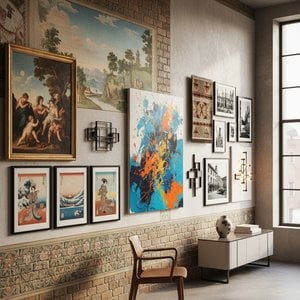
Transforming Spaces: A Comprehensive Exploration of Wall Decor Through Art History & Contemporary Practice
Explore the art of transforming spaces with our comprehensive guide to wall decor. From historical movements to contemporary trends, discover how to curate impactful interiors and commission bespoke artwork for a truly personalized aesthetic.

John Singer Sargent: As 25 Obras-Primas que Definem um Ícone da Arte
Descubra as 25 obras-primas de John Singer Sargent, o mestre do retrato e do impressionismo americano. Explore a história, técnica e beleza atemporal de seus quadros mais famosos. Encontre reproduções de arte exclusivas para decorar sua casa com elegância em ArtsDot.com.

John Singer Sargent: Capturing the Gilded Age with Impressionistic Brilliance
Explore the life & art of John Singer Sargent, premier portraitist of the Gilded Age. Discover his Impressionistic masterpieces, technical brilliance, and enduring legacy. Expert insights for collectors.