


 Visualizar em escala
 Enviar
 Compartilhar
 Ver detalhes
 Guia de Obras do Aluno

 Baixar imagem
 Semelhantes
 Raio X
 Apresentação de slides
 Estatísticas
Ca d
 Drawing
- WallArt
- Romanticism
 1845
1845- 19th Century
 33.0 x 47.0 cm
 Ver mais
Reprodução em Óleo Feita à Mão
Óleo sobre tela pintado à mão no tamanho e moldura de sua escolha, feito sob encomenda pelos nossos artistas. ( Alternar para Impressão Ver Imagem Digital)




P118B €10

P118H €10

P118W €10

P438Z €10

P508JH €12

P508YH €12

P805H €10

P805Z €10

P919BZ €10

P919G €10

P919XJ €10

P959ZH €10

P968JZ €12

W106C €8

W218G €10

W218JH €8

W218Y €10

W307PJ €10

W316G €10

W316PJ €8

W316Y €10

W398PJ €8

W4111J €10

W500HY €15

W500JH €15

W692G €12

W849H €8

W940BG €15

W953PJ €8




Escolha entre os nossos tamanhos pré-definidos que respeitam as proporções originais da obra de arte.

Digite a largura e a altura de que necessita, para se ajustar à sua moldura ou à sua parede. Esta obra é pintada à mão, por isso, para um tamanho com uma proporção diferente, o artista pode pintar um pouco mais ao redor da imagem ou cortar um pouco — você escolhe. Enviamos-lhe uma maquete digital para aprovação antes de a pintura começar. A imagem exibida nesta página não mostra o resultado real — apenas a maquete mostra.
Após o pedido, a equipa ArtsDot.com enviará um e-mail ao cliente para solicitar instruções e fornecer uma prévia do esboço.
Entrega mundial () em 3 a 4 semanas, em vez das 5 semanas padrão. (21 Outubro). Sem comprometer a qualidade.

Envio expresso gratuito para todo o mundo

Tela de Linho Premium

Seguro de transporte total

Garantia de Reembolso de Impostos Alfandegários

Garantia de Fidelidade de Cor

Política de Devolução em 100 Dias (Apenas para Defeitos)

Garantia de reembolso de 100%

Desconto para múltiplas unidades
 A opção de vidro está disponível apenas para tamanhos inferiores a 110 cm

Ca d
Técnica de Reprodução
Dimensões da Reprodução
-


Preço Total
€ 230
A Witness to Vanishing Splendor
In the delicate, precise lines of John Ruskin’s 1845 work, Ca d'Oro, we find more than just a depiction of Venetian architecture; we encounter a poignant eulogy for a fading era. Created during a transformative and turbulent period in Venice, this piece captures the Casa d’Oro at a moment of profound vulnerability. As Ruskin traversed the canals in 1845, he was not merely an observer of beauty but a witness to its systematic dismantling. The painting serves as a hauntingly beautiful record of the building's facade, capturing the intricate Gothic details and the subtle irregularities that spoke of a glorious, yet decaying, past. For the discerning collector, this work offers a rare window into the soul of 19th-century Venice, preserving the very textures that the era’s "restorations" sought to erase.
The composition is anchored by the magnificent, ornate architecture of the palace, where large, numerous windows create a rhythmic sense of grandeur and light. Ruskin’s technique, rooted in his deep commitment to truth in art, allows the viewer to perceive the weight and history of the stone. The prominent clock tower rises with a commanding presence, acting as a sentinel over the bustling scene below. Scattered throughout the foreground, small figures move through the space, providing a sense of scale that emphasizes the monumental nature of the structure. There is a palpable tension in the brushwork—a careful balance between the architectural precision required to document the Gothic carvings and a soft, atmospheric quality that evokes the humid, shimmering air of the Venetian lagoon.
Beyond its technical mastery, the emotional resonance of Ca d'Oro lies in its inherent melancholy. To look upon this piece is to feel the heartache of the artist, who famously lamented seeing the "noble pile" being hammered down by workmen. The painting captures a fleeting moment of existence before the loss of the red marble bases and the legendary interior staircase. For an interior designer or art enthusiast, this work brings a sense of historical depth and intellectual gravity to any space. It is not merely a decorative element but a conversation piece that invites contemplation on the themes of preservation, the passage of time, and the sanctity of original craftsmanship. Owning a reproduction of this masterpiece means hosting a fragment of history—a tribute to the enduring power of beauty even in the face of inevitable decay.
Perguntas e Respostas
Onde deve ser pendurada uma reprodução de "Ca d" de John Ruskin?
O formato Landscape de "Ca d" de John Ruskin é recomendado para um(a) Living Room. O formato e o espaço juntos orientam a disposição de uma reprodução.
Onde posso ver uma prévia de "Ca d"?
A página de Visualização de "Ca d" permite que você visualize a obra de arte antes de fazer o pedido.
Quais são as dimensões da obra original "Ca d" de John Ruskin?
"Ca d" mede 33 x 47 cm em sua forma original. As dimensões originais são uma referência útil ao escolher o tamanho de uma reprodução.
Obras Relacionadas


Biografia do Artista
A Polymath of Vision: The Life and Legacy of John Ruskin
John Ruskin, born in London on February 8, 1819, was far more than simply an art critic; he was a Victorian polymath whose influence permeated the realms of aesthetics, social reform, political economy, and environmentalism. His life was shaped by a fascinating duality – the pragmatic commercial world of his father, John James Ruskin, a successful sherry merchant, and the fervent evangelical piety of his mother, Margaret Cock. This contrasting upbringing instilled in him both a keen observational eye for detail and a deeply moral sensibility that would define his entire oeuvre. From an early age, Ruskin’s education was meticulously curated at home, steeped in biblical study and exposure to Romantic literature, particularly the works of Byron and Walter Scott. These formative influences laid the groundwork for a mind that would relentlessly seek connections between beauty, truth, and ethical living. His academic journey continued at Christ Church, Oxford, where he began to articulate his burgeoning ideas about art and its relationship to society.The Dawn of an Art Historian: Early Writings and Influences
Ruskin’s emergence as a significant voice in the art world began with *Modern Painters* (1843-1860), a monumental five-volume work initially conceived as a defense of J.M.W. Turner against what Ruskin perceived as unjust criticism. However, *Modern Painters* quickly evolved into something far more profound – a comprehensive treatise on the nature of art itself. He argued passionately for “truth to nature,” emphasizing that great art wasn’t merely about skillful representation but about an artist's sincere and empathetic engagement with the natural world. This concept was revolutionary at the time, challenging prevailing academic standards and paving the way for new artistic sensibilities. Ruskin didn’t just analyze technique; he delved into the spiritual and moral qualities of art, believing that true beauty reflected a virtuous soul. His meticulous descriptions of landscapes, rocks, and botanical details reveal not only his keen observational skills but also his profound reverence for nature as a manifestation of divine creation. This early work established Ruskin as a formidable critic and set the stage for his later explorations into architecture and social issues. He was deeply influenced by the Pre-Raphaelite Brotherhood, championing their commitment to detailed observation and rejection of academic conventions. They shared a belief that art should aspire to moral elevation and capture the essence of human experience with uncompromising honesty.Beyond Aesthetics: Social Commentary and The Guild of St. George
As Ruskin matured, his interests expanded beyond the purely aesthetic realm. Deeply troubled by the social injustices he witnessed during the Industrial Revolution—the exploitation of workers, the degradation of rural communities, and the decline of craftsmanship—he began to apply his critical lens to the economic and political structures of Victorian England. *Unto This Last* (1860), a series of essays originally published in *The Cornhill Magazine*, marked a turning point in his career. In this work, Ruskin vehemently critiqued utilitarian economics and advocated for a more humane and equitable social order based on principles of fellowship and craftsmanship. He argued that the dignity of labor was essential to a flourishing society and that true wealth lay not in material possessions but in the quality of human relationships. This conviction led him to establish *Fors Clavigera* (1871-1884), a monthly series of letters addressed “To the Workmen and Labourers of Great Britain,” where he expounded his social and political ideas with characteristic fervor. From these writings emerged the Guild of St. George, founded in 1871, an organization dedicated to promoting craftsmanship, rural industries, and education among working-class communities. The Guild aimed to create a model society based on Ruskin’s ideals, fostering artistic skill, ethical labor practices, and a harmonious relationship with nature—a vision that anticipated many of the concerns that dominate contemporary thought regarding sustainability and social justice.Notable Works & Further Exploration
- Modern Painters (1843-1860): Ruskin’s foundational work, defending Turner and establishing his theories of art.
- The Stones of Venice (1851-1853): A detailed analysis of Venetian architecture, exploring its historical, social, and artistic significance.
- Unto This Last (1860): A powerful critique of Victorian economics and a call for social reform.
- Fors Clavigera (1871-1884): A series of letters addressing the working class, outlining Ruskin’s vision for a more equitable society.
- Dawn, Coniston (Abbot Hall Art Gallery): A beautiful watercolor demonstrating his skill in capturing the nuances of nature.
- Britannica: https://www.britannica.com/biography/John-Ruskin
- Wikipedia: https://en.wikipedia.org/wiki/John_Ruskin
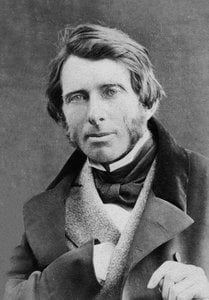
John Ruskin
1819 - 1900 , Reino Unido
Informações Rápidas
- Artistic Movement Or Style: Arte Vitoriana
- Artists Or Movements Influenced By This Artist: ['Movimento Pré-Rafaelita']
- Artists Who Influenced This Artist: ['J.M.W. Turner']
- Date Of Birth: 8 de fevereiro de 1819
- Date Of Death: 20 de janeiro de 1900
- Full Name: John Ruskin
- Nationality: Britânico
- Notable Artworks:
- Aurora, Coniston
- Para o Trabalho
- Place Of Birth: Londres, Reino Unido
Artigos Relacionados

Jacopo Tintoretto: As 25 Obras-Primas do Mestre da Luz e Drama | ArtsDot
Descubra as 25 obras-primas de Jacopo Tintoretto, o mestre veneziano do Renascimento! Explore a história, técnica e emoção por trás de pinturas icônicas como 'O Milagre de São Marcos'. Encontre reproduções de arte exclusivas para decorar sua casa com ArtsDot.com.

John Ruskin: Art, Ethics & the Victorian Pursuit of Beauty
Explore the life & work of John Ruskin, Victorian polymath and influential art critic. Discover his aesthetic principles, social critiques, and lasting impact on art, architecture, and our understanding of beauty. Learn about the Pre-Raphaelites & more.

The Radiant Dusk of Medieval Vision: Exploring Late Gothic Art's Synthesis of Faith, Form & Emotionality (c. 1300-1500)
Explore the exquisite beauty & spiritual depth of Late Gothic art (c. 1300-1500). Discover key artists, symbolism, and its lasting influence on the Renaissance. Expert insights at ArtsDot.

John Singer Sargent: As 25 Obras-Primas que Definem um Ícone da Arte
Descubra as 25 obras-primas de John Singer Sargent, o mestre do retrato e do impressionismo americano. Explore a história, técnica e beleza atemporal de seus quadros mais famosos. Encontre reproduções de arte exclusivas para decorar sua casa com elegância em ArtsDot.com.

John Constable: As 25 Obras-Primas que Definem o Mestre da Paisagem Inglesa | ArtsDot
Descubra as 25 obras-primas de John Constable, o mestre da paisagem inglesa! Explore a arte romântica, cores vibrantes e histórias fascinantes por trás de 'Hay Wain' e outras pinturas icônicas. Encontre reproduções de alta qualidade para decorar sua casa com ArtsDot.com.