


 Visualizar em escala
 Enviar
 Compartilhar
 Ver detalhes
 Guia de Obras do Aluno

 Baixar imagem
 Semelhantes
 Raio X
 Apresentação de slides
 Estatísticas
The Old Cremona
 Acrylic On Canvas
- WallArt
- Trompe-l'oeil
 1887
1887 41.0 x 31.0 cm
 Museu Metropolitano de Arte
 Ver mais
Giclée / Impressão de Arte
Impressão giclée ou em tela de qualidade de museu, com produção rápida e opções flexíveis de acabamento. ( Encomendar reprodução pintada à mão Ver Imagem Digital)




P118B €10

P118H €10

P118W €10

P438Z €10

P508JH €12

P508YH €12

P805H €10

P805Z €10

P919BZ €10

P919G €10

P919XJ €10

P959ZH €10

P968JZ €12

W106C €8

W218G €10

W218JH €8

W218Y €10

W307PJ €10

W316G €10

W316PJ €8

W316Y €10

W398PJ €8

W4111J €10

W500HY €15

W500JH €15

W692G €12

W849H €8

W940BG €15

W953PJ €8




Escolha entre os nossos tamanhos pré-definidos que respeitam as proporções originais da obra de arte.

Digite a largura e a altura de que necessita, para se ajustar à sua moldura ou à sua parede. Uma impressão só pode ser cortada, nunca ampliada além da imagem original, pelo que um tamanho com uma proporção diferente perderá parte da imagem. Enviamos-lhe uma maquete digital para aprovação antes de imprimirmos qualquer coisa. A imagem apresentada nesta página não mostra o corte real — apenas a maquete o faz.
Entrega mundial () em 2 semanas, em vez das 4/5 semanas padrão. (24 Outubro)

Envio expresso gratuito para todo o mundo

Tela de Linho Premium

Seguro de transporte total

Garantia de Reembolso de Impostos Alfandegários

Garantia de Fidelidade de Cor

Política de Devolução em 100 Dias (Apenas para Defeitos)

Garantia de reembolso de 100%

Desconto para múltiplas unidades
 A opção de vidro está disponível apenas para tamanhos inferiores a 110 cm

The Old Cremona
Giclée / Impressão de Arte
Dimensões da Reprodução
-


Preço Total
€ 54
The Old Cremona: A Trompe l'oeil Echo of Harnett’s Genius
John Frederick Peto’s “The Old Cremona” stands as a testament to the enduring fascination with illusionistic painting and the influence of contemporary artistic trends. Painted in 1887, this seemingly simple still life—a cello resting against a weathered wooden door—holds within it layers of artistic deliberation and subtle stylistic nuances that elevate it beyond mere representation.
- Artist’s Context: Peto's work emerged during the Victorian era, a period marked by burgeoning interest in realism alongside an appreciation for decorative arts. He was deeply connected to William Michael Harnett, whose groundbreaking trompe l'oeil technique – exemplified by “The Old Violin” – profoundly impacted artistic discourse and practice.
- Composition & Technique: Peto deliberately eschewed traditional modeling techniques, opting instead for a flattened perspective that prioritized textural effect. This approach mirrors Harnett’s style, creating an image that feels more akin to a decorative pattern than a meticulously rendered depiction of reality. The loose brushwork contributes to an aged aesthetic, hinting at the passage of time and fostering a contemplative mood.
- Symbolism & Material Culture: The cello itself serves as a potent symbol – representing musical heritage, artistry, and perhaps even nostalgia for bygone eras. Alongside it rests sheet music and a small tag bearing “VIOLIN,” reinforcing this thematic connection. The weathered wooden door embodies materiality and history, mirroring the broader Victorian preoccupation with documenting everyday life.
- Lighting & Perspective: Dramatic lighting casts deep shadows that accentuate the cello’s contours and the door's surface, guiding the viewer’s gaze and enhancing the painting’s visual impact. Shallow perspective emphasizes the foreground elements while subtly suggesting depth through shading variations – a technique characteristic of Luminism.
A Dialogue with Harnett: Borrowed Form, Distinct Vision
Peto's decision to adapt Harnett’s compositional framework wasn’t merely an act of stylistic homage; it was a conscious effort to forge his own artistic voice. By prioritizing textural surface and decorative qualities over precise anatomical detail—a hallmark of Harnett’s oeuvre—Peto achieved a markedly different aesthetic experience. This divergence underscores the importance of considering artistic influences while recognizing individual creative expression.
Color Palette & Decorative Emphasis
The painting's color palette is dominated by earthy browns and reds, punctuated by flashes of gold and cream – hues that evoke warmth and richness. These colors are skillfully blended to create a harmonious visual tapestry, prioritizing decorative impact over photographic accuracy. The artist’s focus on surface texture—the grain of the wood, the sheen of the cello varnish—further reinforces this aesthetic sensibility.
Emotional Resonance & Artistic Legacy
"The Old Cremona" transcends its subject matter to convey a profound sense of solitude and quiet contemplation. It speaks to an appreciation for craftsmanship and invites viewers to engage in introspection – qualities that resonate deeply with the spirit of Victorian art. Peto’s rediscovery as a masterful trompe l'oeil artist represents a significant contribution to American painting history, securing his place among the foremost practitioners of illusionistic technique.
Perguntas e Respostas
Posso usar realidade aumentada para ver "The Old Cremona" de John Frederick Peto no meu ambiente?
"The Old Cremona" possui uma prévia em realidade aumentada: a página de Visualização em RA da obra mostra como ela ficaria no seu próprio espaço através de um dispositivo compatível.
Qual é a recomendação de impressão para "The Old Cremona" — qual tamanho e qual orientação?
Para "The Old Cremona", a configuração de impressão recomendada é o tamanho Large e orientação Portrait.
Qual origem nacional fundamenta o Trompe-l'oeil de "The Old Cremona"?
A obra do Trompe-l'oeil "The Old Cremona" foi realizada por um artista nascido em Estados Unidos da América.
Obras Relacionadas


Biografia do Artista
John Frederick Peto: Um Mestre Redescoberto do Trompe l'oeil Americano
- Nascimento: Filadélfia, Estados Unidos da América (1854)
- Falecimento: 1907
John Frederick Peto foi um artista americano renomado por seu domínio magistral da pintura trompe l'oeil – uma técnica que busca enganar o olhar do espectador, levando-o a acreditar que os objetos pintados são reais. Durante muitos anos, a obra de Peto permanece amplamente esquecida, até ser redescoberta no final do século XX, juntamente com o trabalho de seu contemporâneo da mesma técnica, William Harnett. Suas pinturas oferecem um vislumbre único da vida cotidiana e da cultura material do final do século XIX.
Juventude e Formação Artística
- Peto recebeu sua formação artística inicial na Pennsylvania Academy of the Fine Arts, onde estudou ao lado de William Harnett.
- Durante o início de sua carreira, ele submetia regularmente obras para as exposições anuais da Academia de Filadélfia.
- Em 1889, Peto mudou-se para Island Heights, em Nova Jersey, um momento crucial que moldou significativamente seu estilo artístico e seus temas.
Estilo Artístico e Características
- Técnica Trompe l'oeil: A característica definidora de Peto era sua habilidade excepcional no trompe l'oeil. Ele renderizava meticulosamente objetos comuns – pistolas, ferraduras, fragmentos de papel, chaves, livros – criando uma ilusão de tridimensionalidade em uma superfície bidimensional.
- Espaço Raso e Composição: Suas pinturas apresentam tipicamente arranjos desses objetos dentro de um espaço raso, intensificando a sensação de profundidade e realismo.
- Ênfase na Sombra e Textura: Peto dedicava atenção minuciosa ao jogo de sombras e às texturas, contribuindo ainda mais para a qualidade ilusória de seu trabalho. Ele utilizava gradações sutis de luz e sombra para criar a ilusão de superfícies tangíveis.
- Paleta de Cores e Técnica: As obras maduras de Peto são caracterizadas por uma textura opaca e pulverulenta, frequentemente comparada à de Jean-Baptiste-Siméon Chardin, um renomado pintor francês do século XVIII. Suas paletas de cores eram geralmente suaves e terrosas, refletindo os tons de objetos envelhecidos e superfícies desgastadas.
Redescoberta e Legado
- Anos de Esquecimento: Após mudar-se para Island Heights, Peto retirou-se amplamente do mundo da arte convencional. Viveu uma vida tranquila, complementando sua renda com pinturas para turistas e tocando música em eventos locais. Sua obra foi essencialmente esquecida por décadas.
- Reconhecimento Póstumo: A redescoberta das pinturas de Peto no final do século XX trouxe uma atenção renovada ao seu talento. Estudiosos começaram a reconhecer sua contribuição única para a arte americana.
- Comparação com Harnett: Embora frequentemente comparado a William Harnett, o estilo de Peto é geralmente considerado mais abstrato e emocionalmente ressonante do que a abordagem tecnicamente brilhante, mas por vezes rígida, de Harnett. As composições de Peto são menos formais, e seus objetos tendem a ser mais antigos e desgastados.
- Museus e Coleções: Hoje, as pinturas de Peto podem ser encontradas em museus proeminentes nos Estados Unidos, incluindo o John F. Peto Studio Museum, dedicado à preservação de seu legado.
Obras Notáveis
- Take Your Choice (1885)
- Reminiscences of 1865 (1901)
- Job Lot Cheap (1901)
- Still Life with Mug, Pipe and Book (1870)
- Still Life with Oranges and Banana (c. 1880)
Para mais informações sobre a vida e a obra de John Frederick Peto, visite ArtsDot.com.

John Frederick Peto
1854 - 1907 , Estados Unidos da América
Informações Rápidas
- Artistic Movement Or Style: Trompe-l'oeil, Realismo
- Artists Who Influenced This Artist: ['Jean-Baptiste-Siméon Chardin']
- Date Of Birth: 21 de maio de 1854
- Date Of Death: 23 de novembro de 1907
- Full Name: John Frederick Peto
- Nationality: Americano
- Notable Artworks:
- Take Your Choice
- Reminiscences of 1865
- Job Lot Cheap
- Still Life with Mug, Pipe and Book
- Still Life with Oranges and Banana
- Place Of Birth: Filadélfia, Estados Unidos
Artigos Relacionados

Realismo Americano: 10 Obras-Primas que Moldaram a Arte e Decoram o Lar
Descubra as 10 obras-primas do Realismo Americano! Explore a história de Hopper, Homer e Cassatt. Encontre reproduções de arte com qualidade museológica para decorar sua casa. Inspire-se em cores vibrantes e atmosferas únicas. Explore a coleção completa na ArtsDot.com.

Da Natureza Morta Clássica à Abstração Contemporânea: Elevando Ambientes de Entretenimento com Arte Reproduzida
Descubra a evolução da natureza morta na arte e como reproduções personalizadas elevam o design de interiores de luxo. Guia completo para transformar seus espaços com elegância e sofisticação.

Grant Wood & American Regionalism: Identity, Myth & the Rural Landscape
Explore the world of Grant Wood & American Regionalism with ArtsDot. Discover the symbolism behind 'American Gothic', recurring themes, and the movement's lasting impact on art history. High-quality reproductions available.

Severin Roesen: Evoking National Identity Through American Still Life Painting
Explore the captivating world of Severin Roesen, a major American still life painter influenced by Dutch masters. Discover his lush compositions and the symbolism within his art – a window into 19th-century America.
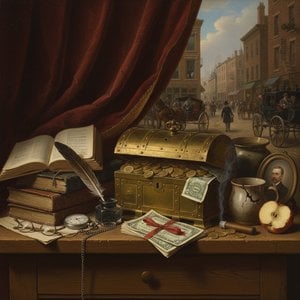
William Michael Harnett: Still Life, Realism & the American Pursuit of Materiality
Explore the captivating still lifes of William Michael Harnett, a master of American realism and trompe l'oeil painting. Discover his technique, legacy & the cultural context behind his iconic works.