


 Visualizar na parede
 Compartilhar
 Compartilhar
 Detalhes

 Baixar imagem
 Semelhantes
 Raio X
 Slideshow
 Estatísticas
Interior


 Ler mais
Reprodução em Óleo Feita à Mão
Óleo sobre tela pintado à mão no tamanho e moldura de sua escolha, feito sob encomenda pelos nossos artistas. ( Alternar para Impressão Alternar para Imagem Digital)




P118B $10

P118H $10

P118W $10

P438Z $10

P508JH $12

P508YH $12

P805H $10

P805Z $10

P919BZ $10

P919G $10

P919XJ $10

P959ZH $10

P968JZ $12

W106C $8

W218G $10

W218JH $8

W218Y $10

W307PJ $10

W316G $10

W316PJ $8

W316Y $10

W398PJ $8

W4111J $10

W500HY $15

W500JH $15

W692G $12

W849H $8

W940BG $15

W953PJ $8




Escolha entre os nossos tamanhos pré-definidos que respeitam as proporções originais da obra de arte.

Pode inserir as suas próprias dimensões para se adequar a uma moldura ou espaço específico. Se o tamanho selecionado não corresponder às proporções da imagem original, iremos cortar a obra de arte ou estender a pintura com elementos adicionais pintados à mão. Um esboço digital será enviado para sua aprovação antes do início da produção.
Tenha em atenção que a pré-visualização no ecrã não reflete o corte ou extensão real. Apenas o esboço mostrará com precisão a composição final.
Embora tamanhos personalizados estejam disponíveis, recomendamos selecionar uma dimensão da lista predefinida para preservar as proporções originais.
Após o pedido, a equipa ArtsDot.com enviará um e-mail ao cliente para solicitar instruções e fornecer uma prévia do esboço.
Entrega mundial () em 3 a 4 semanas, em vez das 5 semanas padrão. (11 Setembro). Sem comprometer a qualidade.

Envio expresso gratuito para todo o mundo

Tela de Linho de Alta Qualidade

Seguro de transporte completo

Garantia de Reembolso de Impostos Alfandegários

Garantia de Fidelidade Cromática

Política de Devolução de 100 Dias (Apenas Defeitos)

Garantia de reembolso de 100%

Oferta de desconto por quantidade
 A opção de vidro está disponível apenas para tamanhos inferiores a 110 cm

Interior
Técnica de Reprodução
Tamanho da Reprodução
-


Preço Total
$ 263
Jean-Édouard Vuillard: Capturing Quietude in “Interior”
The painting "Interior," executed by Jean-Édouard Vuillard around 1900-1905, stands as a quintessential example of Nabis art—a movement that sought to revolutionize artistic expression through radical simplification and the exploration of color’s emotive power. More than just a depiction of domestic space, it embodies Vuillard's profound fascination with capturing fleeting moments of stillness and intimacy within the everyday world. Located at the Detroit Institute of Arts, this artwork invites viewers into a carefully constructed tableau that speaks volumes about artistic innovation and perceptual experience.A Synthesis of Impressionism and Japanese Influence
Vuillard’s approach to painting was deeply rooted in Impressionist principles—particularly the emphasis on capturing light and atmosphere—yet he decisively moved beyond its limitations. Influenced by the pioneering work of Paul Gauguin, Vuillard embraced a bold departure from academic conventions. However, his artistic vision gained significant impetus from Japanese prints (ukiyo-e), which had begun to circulate in Europe during this period. Like Serusier’s “The Talisman,” Vuillard utilized flattened planes of color—a technique borrowed directly from Japanese aesthetics—to create an illusion of depth and spatial ambiguity. This deliberate simplification wasn't merely stylistic; it represented a fundamental rethinking of how artists could represent reality, prioritizing feeling over precise observation.Composition and Color Palette: Orchestrating Emotion
The composition itself is deceptively simple. Two chairs dominate the scene, one occupied by a figure whose presence is subtly suggested rather than overtly portrayed—a characteristic Vuillard technique that encourages contemplation and invites viewers to fill in the gaps of perception. A window frames a glimpse of foliage outside, bathed in soft light, contributing to the overall sense of tranquility. Yet, it’s the color palette that truly distinguishes “Interior.” Vuillard employed hues of pink, peach, and pale yellow—colors chosen not for their literal representation but for their ability to evoke emotion. These shades coalesce into a harmonious blend that conveys warmth, comfort, and perhaps even melancholy—a testament to Vuillard's masterful control over chromatic orchestration.Symbolism Within Everyday Reality
Beyond its formal qualities, “Interior” resonates with symbolic significance. The empty chair serves as a poignant reminder of absence and solitude, while the window represents connection to nature—a recurring motif in Vuillard’s oeuvre. The bird perched on the windowsill symbolizes freedom and aspiration, subtly elevating the scene beyond mere visual description. These elements intertwine to create a narrative that transcends the surface appearance of the room, prompting viewers to consider themes of contemplation, memory, and the beauty inherent in ordinary life.Legacy and Influence
Vuillard’s innovative approach to color and form profoundly impacted subsequent artistic movements—most notably Cubism and Fauvism—establishing him as a pivotal figure in the transition from Impressionism to abstraction. His unwavering commitment to capturing subjective experience continues to inspire artists today, demonstrating the enduring power of art to convey emotion and illuminate the complexities of human perception. “Interior” remains an unforgettable masterpiece, embodying Vuillard’s artistic genius and securing his place among the most celebrated painters of the Belle Époque.Obras Relacionadas


Biografia do Artista
**early life and artistic beginnings**
Jean-Édouard Vuillard, a name synonymous with the subtle beauty of Parisian interiors and the evocative dance of color, was born on November 11, 1868, in Cuiseaux, a small village nestled within the Saône-et-Loire region of France. His early life unfolded amidst modest circumstances; his father, a retired naval captain, transitioned to a career as a tax collector after his military service. Vuillard’s mother, Marie Vuillard, a skilled seamstress, provided the family with stability and instilled in her son an appreciation for detail and craftsmanship – qualities that would profoundly influence his artistic vision. Following his father's retirement in 1877, the family relocated to Paris, settling into a building on Rue de Chabrol, later moving to Rue Daunou where his mother operated her sewing workshop. This early exposure to Parisian life, coupled with a scholarship awarded for his academic performance at the Lycée Condorcet, set the stage for Vuillard’s artistic journey. During his time at the Lycée, he developed a deep admiration for the works of Michelangelo and classical sculptures, honing his observational skills and laying the groundwork for his future explorations of form and composition. It was here that he encountered Ker-Xavier Roussel, who would later become both a friend and fellow artist, and whose counsel steered Vuillard away from a potential military career – a path ultimately deemed unsuitable for his burgeoning artistic aspirations. Vuillard’s formal training began at the École des Beaux-Arts in Paris, where he immersed himself in the study of traditional techniques and artistic principles, though it was through informal connections and independent exploration that he truly discovered his unique voice.**the nabis movement and its influence**
Emerging from the vibrant crucible of late 19th-century Parisian art, Jean-Édouard Vuillard became a pivotal figure within the Nabis group – a collective of artists who sought to redefine the boundaries of painting. The Nabis, meaning “prophets” in Hebrew, were deeply influenced by the Symbolist movement and the radical ideas of Paul Gauguin, particularly his use of flattened space, bold color palettes, and symbolic imagery. Vuillard’s artistic trajectory intersected with those of fellow Nabis members such as Maurice Denis, Pierre Bonnard, and Aurélien Lugné-Poe, forging a collaborative spirit that fueled their experimentation and innovation. The group's philosophy centered on the belief that art should transcend mere representation, instead conveying emotional truths and spiritual insights through carefully orchestrated color relationships and simplified forms. Vuillard’s paintings often featured areas of pure color – vibrant reds, blues, and greens – arranged in a manner reminiscent of Japanese woodblock prints, which were experiencing a surge in popularity among European artists at the time. His interiors, in particular, became characterized by their exploration of spatial effects, utilizing flattened planes of color to create a sense of depth and atmosphere. This approach, profoundly influenced by Japanese aesthetics, marked a significant departure from traditional academic painting and paved the way for later developments in Cubism and Abstract Expressionism. The Nabis’s commitment to artistic freedom and their rejection of conventional norms established Vuillard as a key player in the transition towards modern art.**vuillard's later work and legacy**
Following the dissolution of the Nabis group in 1900, Jean-Édouard Vuillard embarked on a period of artistic exploration that saw him refine his style while retaining his core principles. While he continued to produce intimate interior scenes – often depicting familiar settings such as his mother’s apartment and the homes of friends – his approach evolved, incorporating greater detail and a heightened sense of realism. In the 1920s and 1930s, Vuillard turned his attention to portraiture, capturing the likenesses of prominent figures in French industry and the arts within their everyday environments. These portraits, rendered with remarkable sensitivity and psychological insight, offer glimpses into the lives of individuals who shaped the cultural landscape of his time. Notably, he painted portraits of Misia Natanson, the wife of his dealer Jos Hessel, a woman who became an enduring presence in his life and work. Vuillard’s later years were marked by a continued dedication to his craft, producing a prolific body of work that reflects both his artistic evolution and his deep appreciation for the beauty of ordinary moments. His legacy as one of France's most influential modern artists is firmly established, with his paintings continuing to captivate audiences worldwide.**key works and exhibitions**
The artistic output of Jean-Édouard Vuillard is richly documented in numerous museums across Europe and North America. The Musée de la Révolution Française in Paris houses a significant collection of his works, offering a comprehensive overview of his career. Notable paintings include “La Patrie en Danger” (1892), a poignant depiction of a young man condemned to death for blasphemy during the Ancien Régime – a subject that reflects Vuillard’s interest in social commentary and historical narratives. His later works, such as portraits of French industry and arts figures, can be found in collections at institutions like the Musée d'Orsay in Paris and the Art Institute of Chicago. Vuillard’s influence extends beyond individual paintings; his innovative approach to color and composition has resonated throughout the history of modern art, inspiring generations of artists to explore new possibilities in visual expression.**conclusion**
Jean-Édouard Vuillard's artistic journey is a testament to the power of observation, intuition, and creative vision. From his humble beginnings in Cuiseaux to his recognition as a pivotal figure in the Nabis movement and beyond, Vuillard’s work embodies a unique synthesis of formal innovation and emotional depth. His ability to capture the essence of everyday life – the quiet intimacy of domestic interiors, the subtle nuances of human interaction – has secured his place among the most celebrated artists of the 20th century. His legacy continues to inspire, reminding us that beauty can be found in the simplest of moments and that art possesses the capacity to illuminate the complexities of the human experience.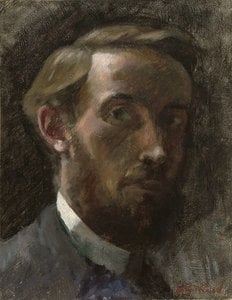
Jean-Edouard Vuillard
1868 - 1940 , França
Dados Rápidos
- Artistic Movement Or Style: Nabis
- Artists Or Movements Influenced By This Artist:
- Cubismo
- Fauvismo
- Artists Who Influenced This Artist: ['Paul Gauguin']
- Date Of Birth: 11 Nov 1868
- Date Of Death: 21 Jun 1940
- Full Name: Jean-Édouard Vuillard
- Nationality: Francês
- Notable Artworks:
- Interior Verde
- Mulher Dormindo
- Place Of Birth: Cuiseaux, França
Artigos Relacionados

Renoir: As 25 Obras-Primas do Mestre Impressionista | ArtsDot
Descubra as 25 obras-primas de Renoir, o mestre do Impressionismo! Explore a história, cores vibrantes e emoção por trás de quadros icônicos como 'Bal au moulin de la Galette'. Encontre reproduções de arte exclusivas para decorar sua casa com elegância em ArtsDot.com.

Paul Cézanne: As 25 Obras-Primas que Definiram um Gênio da Arte Moderna | ArtsDot
Descubra as 25 obras-primas de Paul Cézanne, o mestre do pós-impressionismo! Explore a história, técnica e cores vibrantes por trás de quadros icônicos como 'Les Baigneurs' e 'Mont Sainte-Victoire'. Encontre reproduções de arte exclusivas para decorar sua casa com elegância em ArtsDot.com.

Intimate Interiors & Poetic Ambiguity: Exploring the Vision of Jean-Édouard Vuillard
Discover the captivating world of Jean-Édouard Vuillard, a key figure of the Nabis movement. Explore his intimate interiors, unique style & lasting influence on modern art. Learn more at ArtsDot.

Claude Monet: As 25 Obras-Primas Essenciais para Amantes da Arte e Decoração
Descubra as 25 obras-primas de Claude Monet, o mestre do Impressionismo! Explore a história por trás dos nenúfares, paisagens e cores vibrantes que revolucionaram a arte. Encontre reproduções de alta qualidade para decorar sua casa com a beleza atemporal de Monet em ArtsDot.com.

Intimate Interiors: Domestic Life & Artistic Representation from Renaissance to Impressionism
Explore the evolution of domestic life in Western art from the Renaissance to Impressionism. Discover symbolism, realism & artistic techniques shaping intimate interior scenes. Learn more with ArtsDot.


