


 Visualizar em escala
 Enviar
 Compartilhar
 Ver detalhes
 Guia
Guia

 Baixar imagem
 Semelhantes
 Raio X
 Apresentação de slides
 Estatísticas
Breakfast
 Oil On Canvas
- WallArt
- Les Nabis
 1894
1894- 19th Century
 26.0 x 22.0 cm
 Ver mais
Adquira uma imagem digital de alta resolução e aprimorada, muito superior à prévia online.
Cada arquivo é meticulosamente preparado por nossos especialistas internos, utilizando ferramentas avançadas e retoques manuais de alta precisão. Garantimos que cada imagem apresente clareza excepcional, fidelidade de cores e detalhes minuciosos.
O arquivo final é entregue por e-mail em até 72 horas, otimizado para uso imediato em ambientes profissionais, editoriais e de impressão. Esta é a mesma qualidade utilizada por estúdios de design de alto nível, editoras e galerias.
Imagem Digital
Baixe um arquivo de alta resolução para exibição pessoal, impressão e projetos criativos. ( Alternar para Impressão Encomendar reprodução pintada à mão)
Incluído em cada pedido de imagem digital
Entrega Digital Especializada e Garantida
Ao escolher o ArtsDot.com, você não está apenas adquirindo uma imagem — você está recebendo uma obra de arte digital profissionalmente aprimorada, elaborada com precisão e com garantia de satisfação. Aqui está tudo o que acompanha seu pedido, automaticamente:

Entrega rápida por e-mail
O seu arquivo de imagem digital em alta resolução será enviado por e-mail em até 72 horas após o pedido — pronto para uso imediato.

Arquivo Digital com IA Otimizado
Sua obra de arte é otimizada profissionalmente por meio de ferramentas avançadas de IA e edição manual, garantindo o máximo de detalhes, clareza e precisão de cores.

Reenvio gratuito vitalício
Apagou ou perdeu o seu ficheiro acidentalmente? Não se preocupe – nós reenviamos para si a qualquer momento, gratuitamente.

Sem Taxas de Importação - Sempre
Desfrute da sua obra de arte instantaneamente, sem taxas alfandegárias, impostos ou custos de entrega — downloads digitais são sempre isentos de taxas.

Garantia de Precisão de Cores
Garantimos que sua imagem digital reflita as cores originais com a maior fidelidade possível, utilizando ferramentas profissionais e gerenciamento de cores.

Garantia de satisfação de 100 dias
Se não estiver satisfeito com a sua imagem digital, nós a revisaremos ou reembolsaremos 100% dentro de 100 dias — sem perguntas.

Garantia de Reembolso 100%
Não está satisfeito? Receba o reembolso total em até 100 dias após o recebimento do seu arquivo digital — sem perguntas.

Descontos para pedidos em lote
Compre 3 imagens, economize 10% - Compre 5, economize 15% - Compre 10+, economize 20%. Ideal para projetos criativos, galerias e agências.
A Moment Captured at the Table
Jean-Édouard Vuillard’s Breakfast, dating from 1894, invites us into an intimate tableau of domestic life. It is more than just a depiction of a meal; it is a carefully composed study in human connection and quiet afternoon ritual. The scene unfolds around a richly appointed dining table, laden with the artifacts of conviviality—cups, bowls, and two inviting cakes rest upon its surface. At the heart of this gathering sits the central female figure, her presence anchoring the composition while surrounding figures complete the sense of shared experience. The arrangement suggests a pause in time, a moment suspended between conversation and consumption.
The Influence of Les Nabis
To understand Breakfast, one must appreciate its context within the vibrant artistic ferment of late 19th-century Paris. Vuillard was a key member of Les Nabis, a group whose vision sought to infuse everyday subjects with spiritual resonance and decorative pattern. This movement steered art away from grand historical narratives toward the intimate, the domestic, and the subjective experience. In this painting, we see the Nabis influence manifest not through overt symbolism alone, but through the very structure of the space. Vuillard masterfully flattens planes of color and form, giving the interior a decorative rhythm that is both modern and deeply personal.
Technique and Atmosphere
Vuillard’s technique here is characterized by an almost tapestry-like richness. His application of paint emphasizes pattern—the patterns on the chairs, the textiles, and even the interplay of light across the table suggest a meticulous attention to surface detail. While the subject matter appears straightforward—a family or group enjoying breakfast—the emotional resonance comes from the way he handles shadow and light. The atmosphere is one of warm enclosure; the viewer feels as if they have slipped through an unseen doorway into this private gathering. It speaks to the quiet luxury of shared time, a feeling that transcends mere depiction.
A Touch for the Modern Collector
For those who appreciate art that whispers rather than shouts, Breakfast offers profound depth. Whether adorning a formal drawing-room or lending an intellectual patina to a contemporary space, this piece brings with it the sophisticated elegance of early modernism. It appeals equally to the collector seeking a tangible link to the avant-garde spirit and the designer who values art that enhances lived experience. Reproducing this work allows one to bring home not just paint on canvas, but a carefully curated echo of Parisian intellectual life at the turn of the century.
Obras Relacionadas


Biografia do Artista
**early life and artistic beginnings**
Jean-Édouard Vuillard, a name synonymous with the subtle beauty of Parisian interiors and the evocative dance of color, was born on November 11, 1868, in Cuiseaux, a small village nestled within the Saône-et-Loire region of France. His early life unfolded amidst modest circumstances; his father, a retired naval captain, transitioned to a career as a tax collector after his military service. Vuillard’s mother, Marie Vuillard, a skilled seamstress, provided the family with stability and instilled in her son an appreciation for detail and craftsmanship – qualities that would profoundly influence his artistic vision. Following his father's retirement in 1877, the family relocated to Paris, settling into a building on Rue de Chabrol, later moving to Rue Daunou where his mother operated her sewing workshop. This early exposure to Parisian life, coupled with a scholarship awarded for his academic performance at the Lycée Condorcet, set the stage for Vuillard’s artistic journey. During his time at the Lycée, he developed a deep admiration for the works of Michelangelo and classical sculptures, honing his observational skills and laying the groundwork for his future explorations of form and composition. It was here that he encountered Ker-Xavier Roussel, who would later become both a friend and fellow artist, and whose counsel steered Vuillard away from a potential military career – a path ultimately deemed unsuitable for his burgeoning artistic aspirations. Vuillard’s formal training began at the École des Beaux-Arts in Paris, where he immersed himself in the study of traditional techniques and artistic principles, though it was through informal connections and independent exploration that he truly discovered his unique voice.**the nabis movement and its influence**
Emerging from the vibrant crucible of late 19th-century Parisian art, Jean-Édouard Vuillard became a pivotal figure within the Nabis group – a collective of artists who sought to redefine the boundaries of painting. The Nabis, meaning “prophets” in Hebrew, were deeply influenced by the Symbolist movement and the radical ideas of Paul Gauguin, particularly his use of flattened space, bold color palettes, and symbolic imagery. Vuillard’s artistic trajectory intersected with those of fellow Nabis members such as Maurice Denis, Pierre Bonnard, and Aurélien Lugné-Poe, forging a collaborative spirit that fueled their experimentation and innovation. The group's philosophy centered on the belief that art should transcend mere representation, instead conveying emotional truths and spiritual insights through carefully orchestrated color relationships and simplified forms. Vuillard’s paintings often featured areas of pure color – vibrant reds, blues, and greens – arranged in a manner reminiscent of Japanese woodblock prints, which were experiencing a surge in popularity among European artists at the time. His interiors, in particular, became characterized by their exploration of spatial effects, utilizing flattened planes of color to create a sense of depth and atmosphere. This approach, profoundly influenced by Japanese aesthetics, marked a significant departure from traditional academic painting and paved the way for later developments in Cubism and Abstract Expressionism. The Nabis’s commitment to artistic freedom and their rejection of conventional norms established Vuillard as a key player in the transition towards modern art.**vuillard's later work and legacy**
Following the dissolution of the Nabis group in 1900, Jean-Édouard Vuillard embarked on a period of artistic exploration that saw him refine his style while retaining his core principles. While he continued to produce intimate interior scenes – often depicting familiar settings such as his mother’s apartment and the homes of friends – his approach evolved, incorporating greater detail and a heightened sense of realism. In the 1920s and 1930s, Vuillard turned his attention to portraiture, capturing the likenesses of prominent figures in French industry and the arts within their everyday environments. These portraits, rendered with remarkable sensitivity and psychological insight, offer glimpses into the lives of individuals who shaped the cultural landscape of his time. Notably, he painted portraits of Misia Natanson, the wife of his dealer Jos Hessel, a woman who became an enduring presence in his life and work. Vuillard’s later years were marked by a continued dedication to his craft, producing a prolific body of work that reflects both his artistic evolution and his deep appreciation for the beauty of ordinary moments. His legacy as one of France's most influential modern artists is firmly established, with his paintings continuing to captivate audiences worldwide.**key works and exhibitions**
The artistic output of Jean-Édouard Vuillard is richly documented in numerous museums across Europe and North America. The Musée de la Révolution Française in Paris houses a significant collection of his works, offering a comprehensive overview of his career. Notable paintings include “La Patrie en Danger” (1892), a poignant depiction of a young man condemned to death for blasphemy during the Ancien Régime – a subject that reflects Vuillard’s interest in social commentary and historical narratives. His later works, such as portraits of French industry and arts figures, can be found in collections at institutions like the Musée d'Orsay in Paris and the Art Institute of Chicago. Vuillard’s influence extends beyond individual paintings; his innovative approach to color and composition has resonated throughout the history of modern art, inspiring generations of artists to explore new possibilities in visual expression.**conclusion**
Jean-Édouard Vuillard's artistic journey is a testament to the power of observation, intuition, and creative vision. From his humble beginnings in Cuiseaux to his recognition as a pivotal figure in the Nabis movement and beyond, Vuillard’s work embodies a unique synthesis of formal innovation and emotional depth. His ability to capture the essence of everyday life – the quiet intimacy of domestic interiors, the subtle nuances of human interaction – has secured his place among the most celebrated artists of the 20th century. His legacy continues to inspire, reminding us that beauty can be found in the simplest of moments and that art possesses the capacity to illuminate the complexities of the human experience.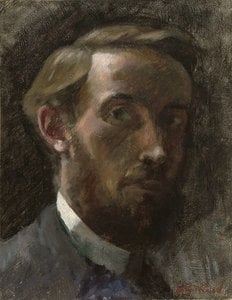
Jean-Edouard Vuillard
1868 - 1940 , França
Informações Rápidas
- Artistic Movement Or Style: Nabis
- Artists Or Movements Influenced By This Artist:
- Cubismo
- Fauvismo
- Artists Who Influenced This Artist: ['Paul Gauguin']
- Date Of Birth: 11 Nov 1868
- Date Of Death: 21 Jun 1940
- Full Name: Jean-Édouard Vuillard
- Nationality: Francês
- Notable Artworks:
- Interior Verde
- Mulher Dormindo
- Place Of Birth: Cuiseaux, França