

- 73.0 x 59.0 cm


A imagem segue as suas escolhas: , .
Descrição do Item
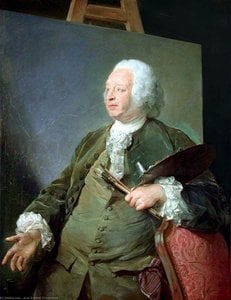
Explore Jean-Baptiste Greuze's captivating Self-Portrait (1785), housed in the Louvre. Discover neoclassical elegance, subtle symbolism & masterful technique.
 Ler mais
Biografia do Artista
Jean-Baptiste Greuze (1725-1805): Pintor francês renomado por cenas de gênero emocionantes e retratos moralizantes, capturando a vida cotidiana e valores da época com grande expressividade e sensibilidade.
Reprodução em Óleo Feita à Mão
Óleo sobre tela pintado à mão no tamanho e moldura de sua escolha, feito sob encomenda pelos nossos artistas. ( Alternar para Impressão Alternar para Imagem Digital)
Saiba mais sobre esta pintura
 Visualizar na parede
 Compartilhar
 Compartilhar
 Detalhes
 Guia
Guia

 Baixar imagem
 Semelhantes
 Raio X
 Ver diaporama
 Perguntas e Respostas
 Estatísticas
Encomende a sua pintura em quatro passos simples
Não tenha pressa. Você pode alterar qualquer resposta; o preço no seu carrinho de compras será atualizado conforme cada escolha.
1 Passo um de quatro
Qual tamanho você gostaria?
Estes tamanhos mantêm as proporções da pintura original. A ilustração mostra a sua escolha numa parede, acima de um sofá de dois metros.
Ou informe suas próprias medidas
Escolha entre os nossos tamanhos pré-definidos que respeitam as proporções originais da obra de arte.

Insira a largura e a altura desejadas para se ajustarem à sua moldura ou parede. Como esta obra é pintada à mão, para um tamanho com proporções diferentes, o artista poderá pintar um pouco mais ao redor da imagem ou reduzir ligeiramente a composição — você escolhe. Enviamos uma maquete digital para sua aprovação antes de iniciar a pintura. A imagem exibida nesta página não representa o resultado real — apenas a maquete mostra o resultado final.
2 Passo dois de quatro
Como deve ser preparado: enrolado, esticado ou emoldurado?
Os preços abaixo referem-se ao tamanho escolhido na primeira etapa.
Escolha as bordas da tela esticada
Escolha sua moldura

Branco €1

Bordas esfumaçadas €1

Bordas estendidas €1

P118B €10

P118H €10

P118W €10

P438Z €10

P508JH €12

P508YH €12

P805H €10

P805Z €10

P919BZ €10

P919G €10

P919XJ €10

P959ZH €10

P968JZ €12

W106C €8

W218G €10

W218JH €8

W218Y €10

W307PJ €10

W316G €10

W316PJ €8

W316Y €10

W398PJ €8

W4111J €10

W500HY €15

W500JH €15

W692G €12

W849H €8

W940BG €15

W953PJ €8

H24-GOLD €30

H24-SILVER €30

H36-GOLD €45

H36-SILVER €45
Com moldura
Moldura: . Dimensões totais com a moldura: .
3 Passo três de quatro
Gostaria de alterar algo na pintura?
A maioria das pessoas responde que não. Como cada pintura é feita à mão, nosso artista também pode adaptá-la para você.
Após o pedido, a equipe da ArtsDot.com enviará um e-mail ao cliente para instruções e fornecerá uma prévia da montagem
4 Passo quatro de quatro
Algumas opções de acabamento
Todos eles são opcionais. As respostas já selecionadas não têm custo adicional.
Quem o pintou?
Entrega mundial () em 3 a 4 semanas, em vez das 5 semanas padrão. (4 Novembro). Sem comprometer a qualidade.
Uma placa de identificação, como em um museu?
Detalhes da Placa de Bronze Gravada
This elegant plaque features the artist's name and the title of the artwork, finely engraved for a timeless presentation.
It is made from bronze with a refined, elegant finish. The text is precisely laser-engraved for a sharp and permanent result. Measuring 9x2 cm, the plaque is compact yet easy to read. It's built to be durable and scratch-resistant, offering a professional, museum-quality look. Mounting is simple thanks to the included adhesive backing.
Detalhes da Placa de Acrílico Transparente
The plaque includes essential engraved details such as the artist's name, the title of the artwork, the date it was created, the type of media used-like oil on canvas or watercolor-a brief description of the piece, and a QR code that links to the complete artwork information.
It is crafted from clear acrylic, offering a sleek, modern appearance. The text is UV-engraved in black to ensure strong visual contrast. With a size of 10x15 cm, it ensures optimal readability. It comes equipped with two metal hooks for secure wall mounting. The plaque is designed to be weather-resistant, making it suitable for various environments, and it includes interactive features that work seamlessly with smartphone scanning.
Detalhes da Placa de Acrílico Preto
This elegant plaque includes engraved information such as the artist's name, the title of the artwork, the date it was created, the type of media used (like oil on canvas or watercolor), a short description of the artwork, and a QR code for quick access to more information.
The plaque itself is made from refined black acrylic with a premium finish. The text is laser-engraved in white for high contrast and readability. Its size is 10x15 cm, designed to be easy to read. It comes with two metal hooks for professional mounting. The design is sleek and fits any interior style. It is also weather-resistant and durable, with built-in digital integration for mobile compatibility.
Um verniz protetor?
Para quando você precisa?
✓ Verifique e peça
A sua pintura, conforme encomendada

Self-Portrait
Técnica de Reprodução
Tamanho da Reprodução
-

Artista Sênior de Elite
Mais detalhes, refinamento e tempo de produção adicional
-

Moldura para Reprodução
-
-
Para obras de arte ou reproduções com mais de 105 cm (aproximadamente 41 polegadas) em qualquer um dos lados, a moldura será enviada como um kit desmontado. Este método garante uma entrega segura e evita danos durante o transporte.
Montagem profissional necessária — este não é um produto DIY (faça você mesmo).
O kit deve ser montado e a tela esticada por um profissional de molduraria experiente, utilizando cola de madeira (não inclusa), um alicate de esticar tela e grampos para manter as travessas alinhadas enquanto a cola seca. A montagem incorreta ou a tensão desigual da tela podem danificar permanentemente a obra de arte e não estão cobertas pela nossa garantia.
 Para obras de arte ou reproduções com mais de 105 cm (aproximadamente 41 polegadas) em qualquer um dos lados, a moldura será enviada como um kit desmontado. Este método garante uma entrega segura e evita danos durante o transporte.
Todas as barras de madeira maciça estão incluídas, precisamente cortadas ao tamanho certo.
Montado com os parafusos fornecidos, além de cola para madeira para as junções dos cantos, que não está inclusa e deve ser providenciada pelo seu moldurista.
São necessárias ferramentas profissionais não incluídas: um alicate de estiramento de tela (esticador) e grampos para manter as ripas alinhadas enquanto a cola seca.
Importante:
As junções dos cantos requerem cola para madeira, as ripas devem ser mantidas com grampos até que a cola esteja completamente seca, e o estiramento da tela na moldura montada requer um alicate de esticar tela. Nenhum destes itens está incluído no kit. Por favor, certifique-se de contar com um profissional de molduraria experiente antes de encomendar este tamanho.

Etiqueta de identificação
-
-

Verniz de Proteção
Verniz brilhante (realça as cores e protege contra a luz e a umidade)
-

Personalizar minha obra
Exemplos de alterações possíveis: Substituir o rosto por uma foto do cliente; Adicionar um animal de estimação (ex.: substituir gato por cachorro); Incluir uma mensagem oculta no fundo; Alterar a paisagem ou os elementos do fundo.
-

Urgente
Entrega mundial () em 3 a 4 semanas, em vez das 5 semanas padrão. (4 Novembro). Sem comprometer a qualidade.
-
Envio Expresso
Entrega mundial para em 5 semanas. (11 Novembro).
Com envio incluído
Preço Total
€ 235
A opção de vidro está disponível apenas para tamanhos inferiores a 110 cm
Incluído em todos os pedidos
- Envio expresso gratuito para todo o mundo
- Tela de Linho de Alta Qualidade
- Seguro de transporte completo
- Garantia de Reembolso de Impostos Alfandegários
- Garantia de Fidelidade Cromática
- Política de Devolução em 100 Dias (Apenas para Defeitos)
- Garantia de reembolso de 100%
- Oferta de desconto por quantidade


Self-Portrait by Jean-Baptiste Greuze: A Glimpse into an Artist's Soul
The Self-Portrait by Jean-Baptiste Greuze, a renowned French painter, offers an intimate and compelling view of the artist himself. Created in 1785, this oil on canvas painting (measuring 73 x 59 cm) resides within the esteemed Musée du Louvre in Paris, France. More than just a likeness, it's a study of character and introspection, reflecting the artistic sensibilities of its time.
Greuze’s Artistic Style and Neoclassical Influences
Jean-Baptiste Greuze was a pivotal figure in French painting during the late 18th century. His style is characterized by a delicate balance between Rococo elegance and emerging Neoclassical ideals. While he initially gained recognition for his genre scenes depicting everyday life, this self-portrait showcases a more formal approach, influenced by the clarity and precision of Neoclassicism. You can see echoes of artists like Jacques-Louis David in the composition's structure and attention to detail. Greuze’s mastery lies in his ability to render textures with remarkable realism, using soft, golden light to create a sense of warmth and intimacy while maintaining a dignified composure.
Detailed Description and Technical Aspects
The self-portrait depicts Greuze dressed in a dark coat with a high collar, paired with a crisp white shirt and a neatly tied cravat. His expression is serious, almost contemplative, conveying an air of quiet confidence and perhaps a touch of melancholy. The background is deliberately muted – a soft brown hue that doesn't distract from the subject but rather serves to highlight Greuze’s figure. The painting demonstrates a skillful use of chiaroscuro, the dramatic interplay of light and shadow, which adds depth and volume to his face and clothing. Notice the meticulous attention paid to the texture of the fabric – the subtle sheen of the shirt, the rich weave of the coat – all rendered with impressive accuracy. The artist’s hand is evident in the smooth blending of colors and the careful modeling of forms.
Symbolism and Historical Context
Beyond a simple portrait, Greuze's self-portrait offers insights into the artistic climate of late 18th-century France. The formal attire suggests a desire to be recognized as a serious artist, aligning himself with the established traditions of portraiture while subtly hinting at his evolving style. The era was one of significant social and political change, leading up to the French Revolution. While this painting doesn't explicitly depict revolutionary themes, it reflects a sense of introspection and quiet dignity that characterized many artists during this period. The choice to portray himself in a moment of contemplation suggests an artist deeply engaged with his craft and aware of his place within art history. The influence of other portraitists like George Romney is also apparent in the focus on capturing the essence and character of the sitter.
A Timeless Masterpiece
Greuze’s Self-Portrait remains a compelling testament to his skill as an artist and provides a fascinating glimpse into the life of one of France's most important painters. It is a work that continues to resonate with viewers today, offering a moment of quiet reflection on artistry, identity, and the passage of time. For those interested in exploring more of Greuze’s works or learning about other artists, Jean-Baptiste Greuze's Self-Portrait is an excellent starting point. The Musée du Louvre also houses an impressive collection of artworks, including pieces by Peter Paul Rubens.
Perguntas e Respostas
Que sensação "Self-Portrait" transmite ao ser oferecida como presente?
Com seu tom emocional Reflective, "Self-Portrait", de Jean-Baptiste Greuze é recomendado como um presente para Anniversary.
Por quais outros nomes Jean-Baptiste Greuze é conhecido(a)?
Jean-Baptiste Greuze também é conhecido como Greuze, Jean Baptiste Greuze.
Qual é a intensidade do contraste em "Self-Portrait", de Jean-Baptiste Greuze?
O contraste entre claro e escuro de "Self-Portrait" é registrado como Bold. O contraste descreve a intensidade da diferença entre as áreas claras e escuras.
Obras Relacionadas




Jean-Baptiste Greuze
1725 - 1805, França
Biografia do Artista
Jean-Baptiste Greuze (1725–1805): A Master of Sentiment in the Rococo Era
Jean-Baptiste Greuze, born in Tournus, a small Burgundian town in 1725, stands as one of the most distinctive and emotionally resonant figures of eighteenth-century French art. His life’s journey is a compelling narrative of artistic ascent, punctuated by both extraordinary success and profound personal struggles. Initially discouraged from pursuing his passion for painting by his roofer father, young Greuze found early encouragement in Lyon, where he studied under Grandon, an artist who recognized the nascent talent within him. This initial mentorship proved pivotal, leading to further studies in Paris at the prestigious Royal Academy, under the tutelage of Charles-Joseph Natoire – a setting that ultimately shaped his artistic trajectory and distinct style. Greuze’s story is not merely one of artistic skill; it's a testament to an artist who profoundly captured the emotional currents of his time, becoming synonymous with the burgeoning sentimentalism of the Rococo era.The Rise of a Genre Painter: Capturing the Essence of Everyday Life
Greuze’s breakthrough arrived in 1755 with *Le Père de famille expliquant la Bible à ses enfants* (The Father Explaining the Bible to His Children). This painting, far more than a simple depiction of domestic life, became an embodiment of Enlightenment ideals. It resonated deeply with contemporary audiences precisely because it presented a vision of familial piety and moral instruction – values that were gaining increasing prominence in French society. The success of this work catapulted Greuze into the spotlight, securing him entry into the Royal Academy and establishing him as a leading figure in the emerging genre painting movement. He swiftly followed this triumph with a series of further genre scenes—intimate glimpses into everyday life imbued with profound emotional depth and moral undertones. These weren’t merely illustrations; they were carefully constructed narratives designed to evoke empathy, provoke reflection, and subtly impart moral lessons. A significant turning point in his career was his journey to Italy in 1755, undertaken alongside Abbé Gougenot. While the trip itself yielded limited artistic gains, it broadened Greuze's exposure to classical art and provided him with a renewed sense of purpose.Mastering Emotion and Moral Narrative: A Unique Artistic Approach
Greuze’s true genius lay in his ability to translate complex emotions onto canvas—joy, sorrow, remorse, innocence, and even transgression—with remarkable sensitivity and precision. He possessed an extraordinary talent for capturing subtle nuances of expression, conveying inner turmoil with a depth rarely seen in his contemporaries. His compositions were often meticulously staged, utilizing dramatic lighting, carefully chosen props, and expressive gestures to heighten the emotional impact of each scene. Unlike many of his peers who focused on historical or mythological subjects, Greuze chose to depict the realities of everyday life—the struggles of families, the vulnerability of children, the complexities of human relationships. This focus on contemporary themes, combined with his masterful command of emotion, set him apart and established him as a pioneer in a new form of genre painting. The influence of earlier Dutch masters is evident in his work, particularly their ability to convey narrative through visual detail and emotional resonance.Key Works & Their Significance
- Le Père de famille expliquant la Bible à ses enfants (1755): A cornerstone of his early success, embodying Enlightenment ideals of familial piety and establishing his signature style.
- La Jeune Fille qui pleure son oiseau mort (c. 1765): Demonstrates Greuze’s mastery of emotional expression and poignant storytelling through the depiction of a child's grief.
- Savoyard with a Dancing Doll (c. 1763): Captures the spirit and vulnerability of childhood, showcasing his skill in portraiture and his ability to convey innocence.
- Septimius Severus Reproaching Caracalla (1769): A failed attempt at historical painting that highlighted his strengths lay elsewhere, but demonstrated his ambition and artistic range.
- The Broken Pitcher (c. 1770s): Represents a shift towards more sensual and morally ambiguous themes in his later work, reflecting the changing social landscape of France.
Later Years and Lasting Legacy: A Complex Figure
Despite his initial success, Greuze’s career took a difficult turn after he was rejected by the Academy for failing to submit a historical painting. This rejection, coupled with personal hardships—including a failed marriage—led to a period of isolation and bitterness. In his later years, Greuze increasingly explored themes of seduction and moral transgression, sometimes venturing into territory that bordered on the overtly sensual. These works, while technically proficient, lacked the emotional depth and moral clarity of his earlier masterpieces. Tragically, he died in poverty within the Louvre itself in 1805, a stark contrast to the acclaim he had once enjoyed. However, Jean-Baptiste Greuze’s influence on French art remains profound. He pioneered a new form of genre painting that focused on contemporary life and explored universal human emotions—a style that continues to captivate viewers today. His legacy is not simply one of artistic skill; it's a testament to an artist who dared to capture the complexities of the human heart, leaving behind a body of work that speaks powerfully across the centuries.Artigos Relacionados

Jean-Baptiste Pater: Rococo Charm & Ephemeral Beauty of 18th-Century France
Explore the captivating world of Jean-Baptiste Pater, a master of Rococo painting. Discover his elegant *fête galante* scenes and shimmering portraits – a glimpse into 18th-century French aristocracy. Learn about his legacy & find high-quality reproductions.

Jean-Baptiste Greuze: Morality, Sentiment & the Rise of Genre Painting
Explore the life & art of Jean-Baptiste Greuze, a pivotal French Rococo painter renowned for his emotionally resonant genre scenes and moral lessons. Discover his legacy & impact on 18th-century art history.

Jean-Baptiste Carpeaux: Sculpting Passion & Controversy in 19th-Century France
Explore the passionate life & controversial works of Jean-Baptiste Carpeaux, a leading French sculptor of the Second Empire. Discover his realism, iconic sculptures like 'Ugolino,' and lasting legacy as a precursor to Rodin.