
 Oil
Oil- WallArt
- Baroque
 1660
1660 67.0 x 51.0 cm
 Museu do Louvre

The picture follows your choices: , .
Descrição do Item
Discover 'The Soap Bubbles' by Jan van Kessel the Elder (1660). A Baroque masterpiece capturing fleeting beauty with intricate detail & scientific precision. Hand-painted reproductions available.
 Ler mais
Biografia do Artista
Jan van Kessel: Mestre da sutileza e detalhes na arte barroca flamenga. Conheça suas obras de flores, insetos e paisagens com um toque científico.
Reprodução em Óleo Feita à Mão
Óleo sobre tela pintado à mão no tamanho e moldura de sua escolha, feito sob encomenda pelos nossos artistas. ( Alternar para Impressão Alternar para Imagem Digital)
More about this painting
 Visualizar na parede
 Compartilhar
 Compartilhar
 Detalhes
 Guia
Guia

 Baixar imagem
 Semelhantes
 Raio X
 Ver diaporama
 Q&A
Q&A Estatísticas
Order your painting in four simple steps
Take your time. You can change any answer; the price in your order card follows each choice.
1 Step one of four
Which size would you like?
These sizes keep the proportions of the original painting. The drawing shows your choice on a wall, above a two-metre sofa.
Or give your own measurements
Escolha entre os nossos tamanhos pré-definidos que respeitam as proporções originais da obra de arte.

Insira a largura e a altura desejadas para se ajustarem à sua moldura ou parede. Como esta obra é pintada à mão, para um tamanho com proporções diferentes, o artista poderá pintar um pouco mais ao redor da imagem ou reduzir ligeiramente a composição — você escolhe. Enviamos uma maquete digital para sua aprovação antes de iniciar a pintura. A imagem exibida nesta página não representa o resultado real — apenas a maquete mostra o resultado final.
2 Step two of four
How should it be prepared: rolled, stretched or framed?
The prices below are for the size you chose in step one.
Choose the edges of the stretched canvas
Choose your frame

White €1

Blurside €1

Extended €1

P118B €10

P118H €10

P118W €10

P438Z €10

P508JH €12

P508YH €12

P805H €10

P805Z €10

P919BZ €10

P919G €10

P919XJ €10

P959ZH €10

P968JZ €12

W106C €8

W218G €10

W218JH €8

W218Y €10

W307PJ €10

W316G €10

W316PJ €8

W316Y €10

W398PJ €8

W4111J €10

W500HY €15

W500JH €15

W692G €12

W849H €8

W940BG €15

W953PJ €8

H24-GOLD €30

H24-SILVER €30

H36-GOLD €45

H36-SILVER €45
Com moldura
Moulding: . Overall size with the frame: .
3 Step three of four
Would you like anything changed in the painting?
Most people answer no. Because each painting is made by hand, our artist can also adapt it for you.
After order, ArtsDot.com team will email client for instructions and provide a mockup preview
4 Step four of four
A few finishing options
All of them are optional. The answers already selected cost nothing extra.
Who paints it?
Entrega mundial () em 3 a 4 semanas, em vez das 5 semanas padrão. (29 Outubro). Sem comprometer a qualidade.
A nameplate, as in a museum?
Detalhes da Placa de Bronze Gravada
This elegant plaque features the artist's name and the title of the artwork, finely engraved for a timeless presentation.
It is made from bronze with a refined, elegant finish. The text is precisely laser-engraved for a sharp and permanent result. Measuring 9x2 cm, the plaque is compact yet easy to read. It's built to be durable and scratch-resistant, offering a professional, museum-quality look. Mounting is simple thanks to the included adhesive backing.
Detalhes da Placa de Acrílico Transparente
The plaque includes essential engraved details such as the artist's name, the title of the artwork, the date it was created, the type of media used-like oil on canvas or watercolor-a brief description of the piece, and a QR code that links to the complete artwork information.
It is crafted from clear acrylic, offering a sleek, modern appearance. The text is UV-engraved in black to ensure strong visual contrast. With a size of 10x15 cm, it ensures optimal readability. It comes equipped with two metal hooks for secure wall mounting. The plaque is designed to be weather-resistant, making it suitable for various environments, and it includes interactive features that work seamlessly with smartphone scanning.
Detalhes da Placa de Acrílico Preto
This elegant plaque includes engraved information such as the artist's name, the title of the artwork, the date it was created, the type of media used (like oil on canvas or watercolor), a short description of the artwork, and a QR code for quick access to more information.
The plaque itself is made from refined black acrylic with a premium finish. The text is laser-engraved in white for high contrast and readability. Its size is 10x15 cm, designed to be easy to read. It comes with two metal hooks for professional mounting. The design is sleek and fits any interior style. It is also weather-resistant and durable, with built-in digital integration for mobile compatibility.
A protective varnish?
When do you need it?
✓ Check and order
Your painting, as you ordered it

The Soap Bubbles
Técnica de Reprodução
Tamanho da Reprodução
-

Artista Sênior de Elite
Mais detalhes, refinamento e tempo de produção adicional
-

Moldura para Reprodução
-
-
Para obras de arte ou reproduções com mais de 105 cm (aproximadamente 41 polegadas) em qualquer um dos lados, a moldura será enviada como um kit desmontado. Este método garante uma entrega segura e evita danos durante o transporte.
Montagem profissional necessária — este não é um produto DIY (faça você mesmo).
O kit deve ser montado e a tela esticada por um profissional de molduraria experiente, utilizando cola de madeira (não inclusa), um alicate de esticar tela e grampos para manter as travessas alinhadas enquanto a cola seca. A montagem incorreta ou a tensão desigual da tela podem danificar permanentemente a obra de arte e não estão cobertas pela nossa garantia.
 Para obras de arte ou reproduções com mais de 105 cm (aproximadamente 41 polegadas) em qualquer um dos lados, a moldura será enviada como um kit desmontado. Este método garante uma entrega segura e evita danos durante o transporte.
Todas as barras de madeira maciça estão incluídas, precisamente cortadas ao tamanho certo.
Montado com os parafusos fornecidos, além de cola para madeira para as junções dos cantos, que não está inclusa e deve ser providenciada pelo seu moldurista.
São necessárias ferramentas profissionais não incluídas: um alicate de estiramento de tela (esticador) e grampos para manter as ripas alinhadas enquanto a cola seca.
Importante:
As junções dos cantos requerem cola para madeira, as ripas devem ser mantidas com grampos até que a cola esteja completamente seca, e o estiramento da tela na moldura montada requer um alicate de esticar tela. Nenhum destes itens está incluído no kit. Por favor, certifique-se de contar com um profissional de molduraria experiente antes de encomendar este tamanho.

Etiqueta de identificação
-
-

Verniz de Proteção
Verniz brilhante (realça as cores e protege contra a luz e a umidade)
-

Personalizar minha obra
Exemplos de alterações possíveis: Substituir o rosto por uma foto do cliente; Adicionar um animal de estimação (ex.: substituir gato por cachorro); Incluir uma mensagem oculta no fundo; Alterar a paisagem ou os elementos do fundo.
-

Urgente
Entrega mundial () em 3 a 4 semanas, em vez das 5 semanas padrão. (29 Outubro). Sem comprometer a qualidade.
-
Envio Expresso
Entrega mundial para em 5 semanas. (5 Novembro).
Com envio incluído
Preço Total
€ 232
A opção de vidro está disponível apenas para tamanhos inferiores a 110 cm
Included with every order
- Envio expresso gratuito para todo o mundo
- Tela de Linho de Alta Qualidade
- Seguro de transporte completo
- Garantia de Reembolso de Impostos Alfandegários
- Garantia de Fidelidade Cromática
- Política de Devolução em 100 Dias (Apenas para Defeitos)
- Garantia de reembolso de 100%
- Oferta de desconto por quantidade


Jan van Kessel’s Ephemeral Delight: “The Soap Bubbles”
Jan van Kessel's "The Soap Bubbles," painted around 1660, is more than just a charming depiction of childhood play; it’s a meticulously crafted meditation on transience and the beauty found in fleeting moments. This exquisite work, now available as a hand-painted reproduction from ArtsDot.com, offers a captivating glimpse into the artistic sensibilities of the Dutch Golden Age – a period characterized by both scientific observation and profound aesthetic appreciation.
The painting itself presents a serene domestic scene: a man absorbed in reading a book while a woman gazes out the window, surrounded by an array of carefully arranged objects. Foreground elements—two birds perched delicately near each other—draw the eye upward to a clock hanging on the wall, anchoring the composition with a subtle reminder of time’s relentless passage. Scattered books contribute to the intimate atmosphere, suggesting intellectual pursuits and quiet contemplation. However, it is the central focus – the iridescent soap bubbles suspended in mid-air – that truly commands attention. Van Kessel's skill lies not merely in their representation but in capturing their ethereal quality, a testament to his mastery of light and color.
A Master of Subtle Detail: Van Kessel’s Technique
Van Kessel was renowned for his ability to render the most minute details with astonishing precision. This painting exemplifies that skill perfectly. The artist employed a technique known as ‘clousure,’ a method of layering thin glazes of paint to achieve incredible luminosity and depth. Notice how the light catches on the surface of each bubble, creating a shimmering effect that mimics the play of light on water – a detail achieved through countless hours of painstaking work. He was deeply influenced by his family’s artistic lineage, particularly his grandfather Jan Brueghel the Elder, evident in the rich palette and naturalistic portrayal of objects. Furthermore, Van Kessel's meticulous approach reflects the burgeoning scientific interest in observation during this era; he wasn’t simply painting what he saw but striving to capture its essence with remarkable accuracy.
Symbolism and the Ephemeral Nature of Beauty
“The Soap Bubbles” is rich in symbolic meaning, reflecting a common theme in Dutch Baroque art – *vanitas*. The bubbles themselves represent the fleeting nature of beauty, pleasure, and life itself. Just as a soap bubble bursts with startling speed, so too do worldly possessions and achievements prove transient. The books symbolize knowledge and contemplation, while the woman’s gaze out the window suggests a longing for something beyond the immediate present. The birds, often associated with freedom and spirituality, add another layer of interpretation. Van Kessel masterfully uses these elements to evoke a poignant awareness of mortality and the importance of appreciating the beauty of each passing moment – a concept deeply rooted in the philosophical currents of the time.
A Timeless Reproduction for Your Home
ArtsDot.com is proud to offer a meticulously hand-painted reproduction of “The Soap Bubbles,” capturing the original’s exquisite detail and evocative atmosphere. Unlike mass-produced prints, our reproductions are created by skilled artists who painstakingly recreate Van Kessel's technique, ensuring that every brushstroke faithfully reflects the nuances of the original. This artwork is not just a decoration; it’s an investment in art history, a tangible connection to a remarkable artist, and a beautiful reminder of the transient beauty of life. Bring this captivating scene into your home and allow its delicate charm to inspire contemplation and wonder.
Perguntas e Respostas
Como posso obter uma versão digital de "The Soap Bubbles", de Jan Van Kessel?
Uma imagem digital de "The Soap Bubbles", de Jan Van Kessel pode ser adquirida em sua página de Imagem Digital de Alta Resolução: download de imagem digital em alta resolução.
A imagem de "The Soap Bubbles", de Jan Van Kessel pode ser reproduzida livremente?
Quanto aos direitos autorais, "The Soap Bubbles" está em em domínio público — seus direitos autorais expiraram.
Em que ano foi criada a obra "The Soap Bubbles", de Jan Van Kessel?
"The Soap Bubbles", de Jan Van Kessel foi criado em 1660.
Obras Relacionadas


Jan Van Kessel
1641 - 1680, Bélgica
Biografia do Artista
Jan van Kessel: A Master of Subtle Detail in the Age of Scientific Observation
Born in Antwerp in 1626, Jan van Kessel the Elder – often simply known as Jan van Kessel – emerged from a family steeped in artistic tradition. His lineage traced back to the renowned Brueghel dynasty, specifically through his grandfather, Hieronymus van Kessel the Elder, and his father, Hieronymus van Kessel the Younger. This connection to such influential figures undoubtedly shaped his early artistic development, yet Jan van Kessel forged a distinct path, becoming a remarkably versatile painter who excelled across a diverse range of genres – from meticulously rendered insect studies and opulent floral still lifes to dynamic marine scenes, evocative river landscapes, and even allegorical compositions.
His formative years were spent under the tutelage of some of Antwerp’s most esteemed artists. At just nine years old, he entered the studio of Simon de Vos, a leading history painter, gaining invaluable experience in composition and technique. He continued his training with his father and uncle, Jan Brueghel the Younger, absorbing their distinctive styles while simultaneously developing his own unique approach. This dual influence is evident throughout his oeuvre – a harmonious blend of meticulous detail reminiscent of Brueghel’s naturalism and a burgeoning scientific curiosity that would characterize much of his later work.
In 1644, Jan van Kessel formally joined the Antwerp Guild of Saint Luke, registering as a “blomschilder” – a flower painter. This designation highlights a significant aspect of his artistic practice: an intense fascination with the natural world. Unlike many of his contemporaries who focused on grand historical or mythological scenes, Van Kessel dedicated considerable attention to capturing the delicate beauty and intricate details of flora and fauna. His works are not merely decorative; they represent a form of scientific observation, meticulously documenting the textures, colors, and patterns of insects, flowers, and animals with astonishing accuracy.
His early marriage to Maria van Apshoven in 1646 marked the beginning of a prolific artistic career. The couple raised thirteen children, two of whom – Jan and Ferdinand – followed in their father’s footsteps and became accomplished painters themselves. This familial legacy further solidified Van Kessel's position within Antwerp’s vibrant art scene. He was not only a successful artist but also a respected member of the community, serving as captain of a local schutterij (civil guard), demonstrating his civic engagement alongside his artistic pursuits.
Throughout the 1650s and 60s, Van Kessel’s reputation grew, attracting wealthy patrons and securing commissions for lavish still lifes, often incorporating exotic fruits, vegetables, and meticulously rendered insects. His works were prized for their realism, vibrant colors, and masterful use of chiaroscuro – dramatic contrasts between light and shadow that heightened the sense of depth and volume. Notable examples include “The Continent of Asia” (1666), a complex allegorical panel depicting various continents and seascapes, and “Still-Life with Vegetables” (circa 1650s), showcasing his extraordinary ability to capture the textures and nuances of organic matter. His home in central Antwerp, known as ‘the white and red rose,’ reflected his financial success during this period.
The Brueghel Connection and Artistic Influences
Van Kessel’s artistic lineage is inextricably linked to the Brueghel family, particularly his grandfather, Jan Brueghel the Elder. The elder Brueghel's influence is readily apparent in Van Kessel’s compositions – a shared interest in depicting scenes of everyday life and the natural world, albeit with a distinct emphasis on detail and scientific accuracy. Furthermore, he drew inspiration from earlier Flemish painters such as Daniel Seghers, known for his detailed botanical illustrations, and Joris Hoefnagel, whose meticulous depictions of insects and scientific instruments foreshadowed Van Kessel’s own approach.
Unlike the broader social commentary often found in Jan Brueghel the Elder's works, Van Kessel focused primarily on capturing the beauty and intricacies of individual subjects. His paintings are not narratives but rather carefully constructed studies – a testament to his dedication to observation and representation. The influence of Frans Snyders, a master of animal still lifes, is also discernible in Van Kessel’s depictions of animals, particularly their dynamic poses and realistic textures.
Technique and Style: A Delicate Balance
Van Kessel's distinctive style is characterized by an extraordinary level of detail and realism. He employed a meticulous technique, utilizing thin layers of paint to build up complex surfaces and create the illusion of texture and volume. His use of color was equally remarkable – he skillfully blended hues to achieve subtle gradations and create a sense of depth and atmosphere. The influence of Mannerism is evident in his elongated figures, dramatic lighting, and carefully orchestrated compositions.
His works often feature a sophisticated understanding of perspective and anatomy, reflecting his training with Simon de Vos. However, Van Kessel’s artistic vision extended beyond mere technical proficiency; he possessed an innate ability to capture the essence of his subjects – their beauty, fragility, and inherent vitality. The interplay between observation and artistry is what truly sets his work apart.
Legacy and Significance
Jan van Kessel the Elder’s contribution to Flemish art lies in his pioneering exploration of scientific observation within a painterly context. His meticulous depictions of insects, flowers, and animals represent a unique synthesis of artistic skill and intellectual curiosity. His works are not simply beautiful paintings; they are windows into a world of intricate detail and natural wonder.
Today, Van Kessel’s paintings are highly valued by collectors and art historians alike. His legacy continues to inspire artists who seek to capture the beauty and complexity of the natural world with precision and artistry. His works can be found in prestigious museums around the world, including the National Gallery of Art in Washington D.C., where “Insects and a Sprig of Rosemary” is a prized acquisition.
Artigos Relacionados

Abraham Hendricksz van Beyeren: Pioneering Dutch Still Life & the Banquet Tradition
Explore the captivating world of Dutch Golden Age still life with Abraham van Beyeren. Discover his innovative techniques, symbolic banquet scenes & lasting influence on art history. Learn about collecting these masterpieces.

Rembrandt van Rijn: As 25 Obras-Primas que Definem um Mestre da Luz e Sombra | ArtsDot
Descubra as 25 obras-primas de Rembrandt van Rijn, o mestre da luz e sombra! Explore a história por trás de 'A Ronda Noturna', seus auto-retratos e muito mais. Encontre reproduções de arte exclusivas para decorar sua casa com ArtsDot.com.
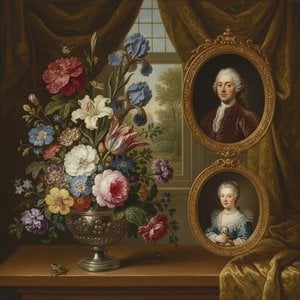
Jan van Kessel the Elder: A Baroque Master of Floral Still Life & Miniature Portraiture
Discover the exquisite detail of Jan van Kessel the Elder's Baroque floral still lifes & captivating miniatures. Explore his artistic legacy, scientific precision, and lasting influence on 17th-century Flemish painting.