


 Visualizar em escala
 Enviar
 Compartilhar
 Ver detalhes
 Guia de Obras do Aluno

 Baixar imagem
 Semelhantes
 Raio X
 Apresentação de slides
 Estatísticas
Calm
 Oil On Canvas
- WallArt
- Dutch Golden Age
 1650
1650 47.0 x 59.0 cm
 Museu Wallraf-Richartz
 Ver mais
Reprodução em Óleo Feita à Mão
Óleo sobre tela pintado à mão no tamanho e moldura de sua escolha, feito sob encomenda pelos nossos artistas. ( Alternar para Impressão Ver Imagem Digital)




P118B €10

P118H €10

P118W €10

P438Z €10

P508JH €12

P508YH €12

P805H €10

P805Z €10

P919BZ €10

P919G €10

P919XJ €10

P959ZH €10

P968JZ €12

W106C €8

W218G €10

W218JH €8

W218Y €10

W307PJ €10

W316G €10

W316PJ €8

W316Y €10

W398PJ €8

W4111J €10

W500HY €15

W500JH €15

W692G €12

W849H €8

W940BG €15

W953PJ €8




Escolha entre os nossos tamanhos pré-definidos que respeitam as proporções originais da obra de arte.

Digite a largura e a altura de que necessita, para se ajustar à sua moldura ou à sua parede. Esta obra é pintada à mão, por isso, para um tamanho com uma proporção diferente, o artista pode pintar um pouco mais ao redor da imagem ou cortar um pouco — você escolhe. Enviamos-lhe uma maquete digital para aprovação antes de a pintura começar. A imagem exibida nesta página não mostra o resultado real — apenas a maquete mostra.
Após o pedido, a equipa ArtsDot.com enviará um e-mail ao cliente para solicitar instruções e fornecer uma prévia do esboço.
Entrega mundial () em 3 a 4 semanas, em vez das 5 semanas padrão. (24 Outubro). Sem comprometer a qualidade.

Envio expresso gratuito para todo o mundo

Tela de Linho Premium

Seguro de transporte total

Garantia de Reembolso de Impostos Alfandegários

Garantia de Fidelidade de Cor

Política de Devolução em 100 Dias (Apenas para Defeitos)

Garantia de reembolso de 100%

Desconto para múltiplas unidades
 A opção de vidro está disponível apenas para tamanhos inferiores a 110 cm

Calm
Técnica de Reprodução
Dimensões da Reprodução
-


Preço Total
€ 231
A Stillness Captured: Jan van de Cappelle’s “Calm”
Jan van de Cappelle's "Calm," painted in 1650, isn’t merely a depiction of a coastal scene; it’s an invitation to a profound moment of tranquility. Often overlooked amidst the dramatic seascapes favored by his contemporaries, this work reveals a quieter, more introspective side to the artist’s remarkable talent. It's a painting that speaks not just of the visual beauty of a Dutch waterway but also of a carefully cultivated state of mind – a stillness reflected in every brushstroke and subtle hue.
The scene unfolds along a broad, gently curving river, its surface rendered with an almost unsettling smoothness. The water is devoid of visible waves or currents, mirroring the overcast sky above with remarkable fidelity. This isn’t the turbulent drama of a storm; it's a deliberate choice by van de Cappelle to evoke a sense of profound peace and contemplation. The composition is remarkably balanced, drawing the eye across the canvas towards a solitary fisherman wading into the shallow water on the right side of the frame. He stands as a small, almost insignificant figure against the vastness of the landscape, yet his presence anchors the scene and invites us to share in this quiet moment.
The Language of Light and Shadow
Van de Cappelle’s mastery lies not just in capturing the visual appearance of the water but also in conveying its atmosphere through a masterful use of light and shadow. The painting is bathed in a diffused, almost ethereal light – neither bright nor dark, but rather a soft, muted glow that seems to emanate from within the canvas itself. This subtle illumination creates an incredible sense of depth and volume, as if we could step directly into the scene and feel the cool dampness of the air. The artist employs a technique known as *chiaroscuro*, skillfully contrasting areas of light with deep shadows to heighten the drama and create a three-dimensional effect.
Notice how the distant boats are rendered in paler, almost ghostly tones – a deliberate device by van de Cappelle to suggest their distance and the atmospheric haze that softens their outlines. The foreground elements, particularly the fisherman and the boats closest to the viewer, are painted with greater detail and richness of color, drawing our attention and anchoring us within the scene. The brushwork itself is remarkably smooth and blended, contributing to the overall sense of serenity and stillness.
A Window into 17th-Century Dutch Life
"Calm" offers a fascinating glimpse into the daily life of 17th-century Holland – a society deeply connected to its waterways. The presence of fishing boats, the solitary figure of the fisherman, and the overall atmosphere of quiet industry all speak to this reality. However, van de Cappelle doesn’t simply depict a snapshot of everyday life; he elevates it into something more profound. He captures not just *what* is happening but also *how* it feels – the sense of peace, contentment, and connection with nature that characterized so many Dutch lives during that era.
Interestingly, van de Cappelle’s background as a textile merchant profoundly influenced his artistic vision. His intimate knowledge of color, texture, and pattern—skills honed in the demanding world of dyeing fabrics—translated seamlessly into his paintings. He sought to create works that were not just visually appealing but also emotionally resonant, evoking feelings of tranquility and contemplation.
Symbolism and Emotional Resonance
Beyond its technical brilliance, “Calm” is imbued with a subtle sense of symbolism. The stillness of the water can be interpreted as a metaphor for inner peace – a state of mind free from turmoil and anxiety. The solitary fisherman represents humanity’s connection to nature, reminding us of our place within the larger world. And the overcast sky, rather than suggesting gloom, evokes a feeling of quiet contemplation and introspection.
Ultimately, “Calm” is a painting that invites us to slow down, breathe deeply, and appreciate the beauty of stillness. It’s a testament to van de Cappelle's extraordinary talent and his ability to capture not just the visual appearance of the world but also its profound emotional essence. A reproduction of this work offers a chance to bring this sense of serenity into any space, serving as a constant reminder of the importance of finding moments of peace in our own lives.
Perguntas e Respostas
Qual é o formato de "Calm"?
O formato de "Calm" é Landscape. Isso é útil ao planejar onde uma reprodução será colocada.
Sobre o que trata "Calm"?
Os temas presentes em "Calm" de Jan Van De Cappelle incluem maritime scene, calm waters, dutch coast, fishing boats, atmospheric light, tranquility, 17th century, reflection. Juntos, eles resumem o assunto da obra.
Como posso visualizar uma reprodução de "Calm" de Jan Van De Cappelle?
Para visualizar uma reprodução de "Calm" de Jan Van De Cappelle, acesse a página de Visualização da obra.
Obras Relacionadas


Biografia do Artista
O Espelho da Tranquilidade: A Vida e o Legado de Jan van de Cappelle
Jan van de Cappelle ergue-se como uma figura singular e luminosa no panteão da Era de Ouro holandesa, um artista cuja presença no cânone da história da arte é definida por uma quietude profunda e meditativa. Ao contrário de muitos de seus contemporâneos, que produziram vastas quantidades de obra, a produção de Cappelle permanece notavelmente pequena, mas cada peça impõe uma distinção extraordinária. Ele não era meramente um pintor do mar; era um homem de significativa estatura mundana, um titã industrial intrinsecamente ligado ao pulsar econômico de Amsterdã. Como uma figura de sucesso na indústria têxtil e um colecionador de grande gosto, sua vida foi uma dualidade única entre a proeza comercial e a sensibilidade artística. Esta intersecção entre riqueza e visão permitiu-lhe cultivar um estilo que não apenas retrata o mundo marítimo, mas captura sua própria alma — uma imobilidade que reflete tanto a superfície da água quanto os céus infinitos acima.
Nascido em Amsterdã em 1624, Jan van de Cappelle seguiu um caminho não convencional rumo ao domínio artístico. Enquanto muitos mestres de sua era eram forjados nos fogos rigorosos do treinamento formal das guildas, Cappelle foi, em grande parte, autodidata, fato que talvez tenha contribuído para a qualidade singular e desprendida de sua visão. Sua criação foi imersa nas complexidades técnicas da indústria; seu pai, Franchoy van de Cappelle, operava uma substancial tinturaria especializada na produção de corante carmesim. Este ambiente, que exigia precisão e uma compreensão íntima da cor e da química, provavelmente proporcionou a Jan uma base inestimável para suas explorações posteriores de luz e atmosfera. Embora possa ter sido influenciado pelas sensibilidades estilísticas de Simon de Vlieger, cujas composições compartilham uma certa afinidade estrutural com as suas, o trabalho de Cappelle acabou por transcender a mera influência para alcançar um estado de pura graça atmosférica.
O Domínio da Luz e da Perspectiva Atmosférica
O verdadeiro gênio de Jan van de Cappelle reside na sua capacidade de manipular os elementos do ar e da água para criar uma sensação de profunda profundidade emocional. Ele é frequentemente celebrado como o mais destacado pintor de marinhas da Holanda no século XVII, um título conquistado através de seu domínio inigualável da perspectiva atmosférica. Sua técnica manifesta-se de forma mais célebre na maneira como espelha as formações celestes em superfícies de água calmas e vítreas. Em obras como Ships at Anchor on a Quiet Sea, o espectador não está apenas observando uma cena marítima, mas é convidado para um momento de animação suspensa. As gradações sutis de luz e a representação meticulosa das nuvens criam uma sensação de espaço imenso, onde a fronteira entre o mar e o céu torna-se belamente difusa.
Sua linguagem artística bebe da inspiração no realismo de Willem van de Velde, o Velho, mas possui uma suavidade que é exclusivamente sua. Onde outros poderiam focar na energia caótica do combate naval ou na crueza da tempestade, Cappelle buscava a quietude encontrada no rescaldo ou na antecipação do movimento. Suas composições frequentemente apresentam:
- O jogo entre luz e sombra: Capturando os momentos fugazes em que a luz solar atravessa a cobertura de nuvens para iluminar uma única embarcação.
- Superfícies reflexivas: Utilizando a água como um espelho para duplicar a majestade do céu holandês, criando um senso de simetria e paz.
- Nuance atmosférica: Um manuseio delicado de névoa, bruma e clareza que confere às suas paisagens uma sensação palpável de temperatura e umidade.
Significância Histórica e Impacto Duradouro
A importância histórica de Jan van de Cappelle estende-se para além da beleza estética de suas telas. Ele representa o ápice da capacidade da Era de Ouro holandesa de encontrar o extraordinário dentro do comum. Através de suas representações de barcos à vela, cenas fluviais e paisagens de inverno, ele documentou a identidade marítima de uma nação que era, naquele então, o centro do comércio global. Mesmo em seus trabalhos mais dinâmicos, como The State Barge Saluted by the Home Fleet, permanece um senso subjacente de ordem e dignidade que reflete a prosperidade estruturada de sua era.
Embora sua vida tenha terminado em 1679, deixando para trás uma coleção limitada de obras-primas, seu impacto no gênero da arte marinha é imensurável. Ele ensinou às gerações subsequentes como pintar não apenas o que é visto, mas o que é sentido — o peso do ar, a quietude da maré e a majestade silenciosa do horizonte. Hoje, suas obras permanecem marcos essenciais para qualquer pessoa que busque compreender o delicado equilíbrio entre o homem, a natureza e a luz que os une. Seu legado é de serenidade, um testemunho duradouro de um artista que encontrou o infinito dentro do tranquilo.

Jan Van De Cappelle
1624 - 1679 , Países Baixos
Informações Rápidas
- Artistic Movement Or Style: Idade de Ouro
- Artists Or Movements Influenced By This Artist: ['Rembrandt']
- Artists Who Influenced This Artist:
- Simon de Vlieger
- Willem van de Velde o Velho
- Date Of Birth: Amsterdã, Países Baixos (1624)
- Date Of Death: 1679
- Full Name: Jan van de Cappelle
- Nationality: Holandês
- Notable Artworks:
- Navios ancorados em um mar calmo
- Embarcações atracadas em um píer
- Uma cena de rio com embarcações holandesas à deriva
- Place Of Birth: Amsterdã
Artigos Relacionados

Willem van de Velde the Elder: Master of Maritime Painting & Chronicler of the Dutch Golden Age
Discover the captivating maritime paintings of Willem van de Velde the Elder, a master chronicler of the Dutch Golden Age. Explore his unparalleled realism and lasting influence on naval art history.

Pieter de Hooch: Illuminating Dutch Domestic Life & Golden Age Charm
Explore the captivating world of Pieter de Hooch, a master of Dutch Golden Age painting. Discover his innovative use of light, intimate domestic scenes, and lasting influence on art history. Learn more at ArtsDot.

A Era de Ouro Holandesa: 10 Mestras-Obras Imperdíveis para Decorar com Arte
Descubra as 10 obras-primas da Era de Ouro Holandesa! Explore a história, técnica e beleza atemporal de Rembrandt, Vermeer e outros mestres. Encontre reproduções de arte exclusivas para decorar sua casa com elegância em ArtsDot.com.

Rembrandt van Rijn: As 25 Obras-Primas que Definem um Mestre da Luz e Sombra | ArtsDot
Descubra as 25 obras-primas de Rembrandt van Rijn, o mestre da luz e sombra! Explore a história por trás de 'A Ronda Noturna', seus auto-retratos e muito mais. Encontre reproduções de arte exclusivas para decorar sua casa com ArtsDot.com.
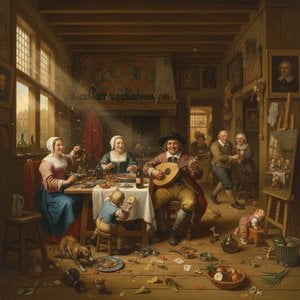
Jan Steen: A Master of Dutch Genre Painting & the Golden Age
Explore the life & art of Jan Steen, a leading Dutch Golden Age painter renowned for his humorous genre scenes & insightful social commentary. Discover his techniques, legacy, and collecting tips.