


A imagem segue as suas escolhas: , .
Descrição do Item
Witness the power and intrigue of 'Tugai Bey' by Jan Matejko, depicting a pivotal moment in Polish-Crimean history. A stunning reproduction capturing detail & drama.
 Ler mais
Biografia do Artista
Explore as obras épicas de Jan Matejko (1838-1893), o pintor nacional polonês. Conhecido por cenas grandiosas como 'Batalha de Grunwald' e 'União de Lublin', seu Romantismo retrata momentos cruciais da história polonesa com maestria.
Reprodução em Óleo Feita à Mão
Óleo sobre tela pintado à mão no tamanho e moldura de sua escolha, feito sob encomenda pelos nossos artistas. ( Alternar para Impressão Alternar para Imagem Digital)
Saiba mais sobre esta pintura
 Visualizar na parede
 Compartilhar
 Compartilhar
 Detalhes
 Guia
Guia

 Baixar imagem
 Semelhantes
 Raio X
 Ver diaporama
 Perguntas e Respostas
 Estatísticas
Encomende a sua pintura em quatro passos simples
Não tenha pressa. Você pode alterar qualquer resposta; o preço no seu carrinho de compras será atualizado conforme cada escolha.
1 Passo um de quatro
Qual tamanho você gostaria?
Estes tamanhos mantêm as proporções da pintura original. A ilustração mostra a sua escolha numa parede, acima de um sofá de dois metros.
Ou informe suas próprias medidas
Escolha entre os nossos tamanhos pré-definidos que respeitam as proporções originais da obra de arte.

Insira a largura e a altura desejadas para se ajustarem à sua moldura ou parede. Como esta obra é pintada à mão, para um tamanho com proporções diferentes, o artista poderá pintar um pouco mais ao redor da imagem ou reduzir ligeiramente a composição — você escolhe. Enviamos uma maquete digital para sua aprovação antes de iniciar a pintura. A imagem exibida nesta página não representa o resultado real — apenas a maquete mostra o resultado final.
2 Passo dois de quatro
Como deve ser preparado: enrolado, esticado ou emoldurado?
Os preços abaixo referem-se ao tamanho escolhido na primeira etapa.
Escolha as bordas da tela esticada
Escolha sua moldura

Branco €1

Bordas esfumaçadas €1

Bordas estendidas €1

P118B €10

P118H €10

P118W €10

P438Z €10

P508JH €12

P508YH €12

P805H €10

P805Z €10

P919BZ €10

P919G €10

P919XJ €10

P959ZH €10

P968JZ €12

W106C €8

W218G €10

W218JH €8

W218Y €10

W307PJ €10

W316G €10

W316PJ €8

W316Y €10

W398PJ €8

W4111J €10

W500HY €15

W500JH €15

W692G €12

W849H €8

W940BG €15

W953PJ €8

H24-GOLD €30

H24-SILVER €30

H36-GOLD €45

H36-SILVER €45
Com moldura
Moldura: . Dimensões totais com a moldura: .
3 Passo três de quatro
Gostaria de alterar algo na pintura?
A maioria das pessoas responde que não. Como cada pintura é feita à mão, nosso artista também pode adaptá-la para você.
Após o pedido, a equipe da ArtsDot.com enviará um e-mail ao cliente para instruções e fornecerá uma prévia da montagem
4 Passo quatro de quatro
Algumas opções de acabamento
Todos eles são opcionais. As respostas já selecionadas não têm custo adicional.
Quem o pintou?
Entrega mundial () em 3 a 4 semanas, em vez das 5 semanas padrão. (4 Novembro). Sem comprometer a qualidade.
Uma placa de identificação, como em um museu?
Detalhes da Placa de Bronze Gravada
This elegant plaque features the artist's name and the title of the artwork, finely engraved for a timeless presentation.
It is made from bronze with a refined, elegant finish. The text is precisely laser-engraved for a sharp and permanent result. Measuring 9x2 cm, the plaque is compact yet easy to read. It's built to be durable and scratch-resistant, offering a professional, museum-quality look. Mounting is simple thanks to the included adhesive backing.
Detalhes da Placa de Acrílico Transparente
The plaque includes essential engraved details such as the artist's name, the title of the artwork, the date it was created, the type of media used-like oil on canvas or watercolor-a brief description of the piece, and a QR code that links to the complete artwork information.
It is crafted from clear acrylic, offering a sleek, modern appearance. The text is UV-engraved in black to ensure strong visual contrast. With a size of 10x15 cm, it ensures optimal readability. It comes equipped with two metal hooks for secure wall mounting. The plaque is designed to be weather-resistant, making it suitable for various environments, and it includes interactive features that work seamlessly with smartphone scanning.
Detalhes da Placa de Acrílico Preto
This elegant plaque includes engraved information such as the artist's name, the title of the artwork, the date it was created, the type of media used (like oil on canvas or watercolor), a short description of the artwork, and a QR code for quick access to more information.
The plaque itself is made from refined black acrylic with a premium finish. The text is laser-engraved in white for high contrast and readability. Its size is 10x15 cm, designed to be easy to read. It comes with two metal hooks for professional mounting. The design is sleek and fits any interior style. It is also weather-resistant and durable, with built-in digital integration for mobile compatibility.
Um verniz protetor?
Para quando você precisa?
✓ Verifique e peça
A sua pintura, conforme encomendada

Tugai Bey
Técnica de Reprodução
Tamanho da Reprodução
-

Artista Sênior de Elite
Mais detalhes, refinamento e tempo de produção adicional
-

Moldura para Reprodução
-
-
Para obras de arte ou reproduções com mais de 105 cm (aproximadamente 41 polegadas) em qualquer um dos lados, a moldura será enviada como um kit desmontado. Este método garante uma entrega segura e evita danos durante o transporte.
Montagem profissional necessária — este não é um produto DIY (faça você mesmo).
O kit deve ser montado e a tela esticada por um profissional de molduraria experiente, utilizando cola de madeira (não inclusa), um alicate de esticar tela e grampos para manter as travessas alinhadas enquanto a cola seca. A montagem incorreta ou a tensão desigual da tela podem danificar permanentemente a obra de arte e não estão cobertas pela nossa garantia.
 Para obras de arte ou reproduções com mais de 105 cm (aproximadamente 41 polegadas) em qualquer um dos lados, a moldura será enviada como um kit desmontado. Este método garante uma entrega segura e evita danos durante o transporte.
Todas as barras de madeira maciça estão incluídas, precisamente cortadas ao tamanho certo.
Montado com os parafusos fornecidos, além de cola para madeira para as junções dos cantos, que não está inclusa e deve ser providenciada pelo seu moldurista.
São necessárias ferramentas profissionais não incluídas: um alicate de estiramento de tela (esticador) e grampos para manter as ripas alinhadas enquanto a cola seca.
Importante:
As junções dos cantos requerem cola para madeira, as ripas devem ser mantidas com grampos até que a cola esteja completamente seca, e o estiramento da tela na moldura montada requer um alicate de esticar tela. Nenhum destes itens está incluído no kit. Por favor, certifique-se de contar com um profissional de molduraria experiente antes de encomendar este tamanho.

Etiqueta de identificação
-
-

Verniz de Proteção
Verniz brilhante (realça as cores e protege contra a luz e a umidade)
-

Personalizar minha obra
Exemplos de alterações possíveis: Substituir o rosto por uma foto do cliente; Adicionar um animal de estimação (ex.: substituir gato por cachorro); Incluir uma mensagem oculta no fundo; Alterar a paisagem ou os elementos do fundo.
-

Urgente
Entrega mundial () em 3 a 4 semanas, em vez das 5 semanas padrão. (4 Novembro). Sem comprometer a qualidade.
-
Envio Expresso
Entrega mundial para em 5 semanas. (11 Novembro).
Com envio incluído
Preço Total
€ 235
A opção de vidro está disponível apenas para tamanhos inferiores a 110 cm
Incluído em todos os pedidos
- Envio expresso gratuito para todo o mundo
- Tela de Linho de Alta Qualidade
- Seguro de transporte completo
- Garantia de Reembolso de Impostos Alfandegários
- Garantia de Fidelidade Cromática
- Política de Devolução em 100 Dias (Apenas para Defeitos)
- Garantia de reembolso de 100%
- Oferta de desconto por quantidade


A Glimpse into 17th-Century Conflict: "Tugai Bey" by Jan Matejko
This striking portrait, “Tugai Bey” by Polish master Jan Matejko, offers a compelling window into the complex political and military landscape of 17th-century Eastern Europe. The painting depicts Tugai Bey, a Crimean Tatar leader, a figure pivotal in the tumultuous relationship between Poland-Lithuania and the Cossack Hetmanate. Matejko’s work isn't merely a likeness; it is a carefully constructed narrative reflecting power, diplomacy, and the volatile nature of alliances during a period of intense upheaval. The subject’s commanding presence, captured with meticulous detail, invites viewers to contemplate the historical forces at play.Style & Technique: Romanticism Meets Historical Precision
Matejko was renowned for his monumental historical paintings executed in the Romanticism style. This piece exemplifies that approach. The dramatic lighting, rich color palette (dominated by deep reds, golds, and browns), and dynamic composition create a sense of immediacy and emotional intensity. Matejko’s technique is characterized by its meticulous realism; he painstakingly researched costumes, weaponry, and settings to ensure historical accuracy. The oil on panel medium allows for subtle gradations of tone and texture, bringing the subject's attire and facial features to life with remarkable clarity. Note the careful rendering of the elaborate turban and the detailed depiction of the bow and arrow – hallmarks of Matejko’s dedication to detail.Historical Context & Significance
The painting is inextricably linked to the Khmelnytsky Uprising (1648–1657), a major Cossack rebellion against Polish rule in Ukraine. Tugai Bey played a significant role, initially allied with Bohdan Khmelnytsky, leader of the uprising. Matejko’s work captures a moment of potential alliance or negotiation between these two powerful figures. The painting was created decades after these events (circa 1885), during a period in Poland when national identity and historical memory were being actively cultivated. Matejko's paintings served as visual narratives reinforcing Polish heritage and commemorating key moments in the nation’s history, often with a patriotic undertone. The depiction of Tugai Bey, while acknowledging his role in conflict, also hints at the complex intercultural interactions that shaped this era.Symbolism & Emotional Impact
Beyond its historical accuracy, "Tugai Bey" is rich in symbolism. The subject’s attire—the ornate turban, luxurious fabrics, and weaponry—signifies his status as a leader and warrior. His gaze, both intense and contemplative, suggests a shrewd intellect and strategic mind. The presence of the bow and arrow alludes to military prowess and potential conflict. The overall emotional impact is one of gravitas and restrained power. Matejko masterfully conveys a sense of tension and uncertainty, reflecting the precarious nature of alliances and the ever-present threat of war in 17th-century Eastern Europe. The painting evokes a feeling of witnessing a pivotal moment in history, prompting reflection on themes of leadership, diplomacy, and cultural exchange amidst conflict.Perguntas e Respostas
Quem é o autor de "Tugai Bey" e a qual movimento pertence?
Jan Matejko criou "Tugai Bey" dentro do movimento Romanticism.
"Tugai Bey", de Jan Matejko está em domínio público?
Quanto aos direitos autorais, "Tugai Bey" está em em domínio público — seus direitos autorais expiraram.
"Tugai Bey", de Jan Matejko é uma obra de arte clara ou escura?
No geral, "Tugai Bey" é registrado como bright. A luminosidade percebida descreve o quão clara ou escura a obra parece ser.
Obras Relacionadas


Jan Matejko
1838 - 1893, Polónia
Biografia do Artista
early life and education
Jan Alojzy Matejko, a name synonymous with Polish historical painting, was born on June 24th, 1838, in the heart of Kraków, Poland – a city steeped in history and brimming with artistic fervor. His father, Franciszek Ksawery Matejko, a Czech by birth, served as a tutor and music teacher, initially working for the Wodzicki family in Kościelniki before establishing himself in Kraków. This lineage exposed young Jan to both Polish and Czech cultural influences, shaping his early worldview. Jan’s childhood was profoundly marked by two pivotal events: the Kraków Revolution of 1846 and the subsequent Austrian siege of Kraków in 1848. These experiences, witnessing firsthand the struggles for national identity and independence, would become recurring themes throughout his artistic career, imbuing his works with a deep sense of patriotism and historical resonance. Matejko’s formal education began at St. Ann's High School, but he found it challenging to keep pace with the rigorous curriculum, ultimately dropping out in 1851. Despite this setback, his innate artistic talent shone brightly from an early age, a gift that would eventually lead him to the prestigious School of Fine Arts in Kraków. There, under the tutelage of esteemed masters like Wojciech Korneli Stattler and Władysław Łuszczkiewicz, he honed his skills specializing in historical painting – a genre that would become his lifelong passion.artistic career
Matejko’s artistic journey truly began to blossom with the completion of *Tsars Shuyski before Zygmunt III* in 1853, a monumental work that immediately established him as a rising star within the Kraków art scene. He quickly gained recognition for his ability to capture dramatic historical moments with remarkable detail and emotional intensity. His early exhibitions at the Kraków Society of Friends of Fine Arts showcased a growing mastery of composition, color, and narrative – elements he would continue to refine throughout his prolific career. Notable among his achievements are *Rejtan* (1866), a powerful depiction of a pivotal moment in Polish history; *Union of Lublin* (1869), a complex and meticulously rendered portrayal of the political unification of Poland; and, perhaps most famously, *Battle of Grunwald* (1878). This last masterpiece stands as a testament to Matejko’s extraordinary skill in conveying the chaos, heroism, and strategic brilliance of battle – an event that remains deeply ingrained in Polish national identity. Each painting wasn't merely a historical record; it was a carefully constructed narrative designed to evoke patriotism and inspire a sense of national pride.museological contributions and legacy
Beyond his artistic output, Jan Matejko played a significant role in shaping the cultural landscape of Kraków. He eventually assumed the position of director at the Jan Matejko Academy of Fine Arts (formerly known as the Kraków Academy of Fine Arts), an institution he profoundly influenced during his tenure. His leadership fostered a vibrant environment for artistic development, attracting and nurturing a cohort of talented students who would go on to become prominent figures in Polish art – including Maurycy Gottlieb, Jacek Malczewski, Józef Mehoffer, and Stanisław Wyspiański. These artists, deeply influenced by Matejko’s approach to historical painting, carried forward his legacy, ensuring that his artistic vision continued to resonate throughout the 20th century. Matejko's dedication extended beyond the classroom; he actively participated in civic life, contributing to the preservation and promotion of Polish cultural heritage.notable works available on ArtsDot
- Jan Matejko: Varna (romanticism) – A vibrant depiction of a scene from the Russo-Turkish War, showcasing Matejko’s masterful use of color and light to capture the drama of battle.
- Jan Matejko: Still Life (romanticism) – An intimate portrayal of everyday objects, demonstrating Matejko's versatility and his ability to convey emotion through seemingly simple subjects.
- Jan Matejko: The Union of Lublin (298 x 512 cm, romanticism, oil on canvas) – A monumental work that meticulously recreates the historic event of the union between Poland and Lithuania, a pivotal moment in Polish history. This painting is particularly notable for its scale and intricate detail.
Artigos Relacionados

Stanisław Wyspiański: Symbolism, National Identity & the Polish Secession
Explore the life & work of Stanisław Wyspiański, a pivotal figure in Polish Symbolism and the Young Poland movement. Discover his iconic paintings, dramas, and stained glass designs reflecting national identity & artistic innovation.

Jan Matejko: Historical Narrative & National Identity in 19th-Century Polish Painting
Explore the powerful historical paintings of Jan Matejko, Poland's national artist. Discover his iconic works & learn how he shaped Polish identity in the 19th century. High-quality reproductions available.
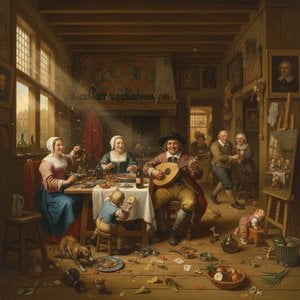
Jan Steen: A Master of Dutch Genre Painting & the Golden Age
Explore the life & art of Jan Steen, a leading Dutch Golden Age painter renowned for his humorous genre scenes & insightful social commentary. Discover his techniques, legacy, and collecting tips.