

A imagem segue as suas escolhas: , .
Descrição do Item
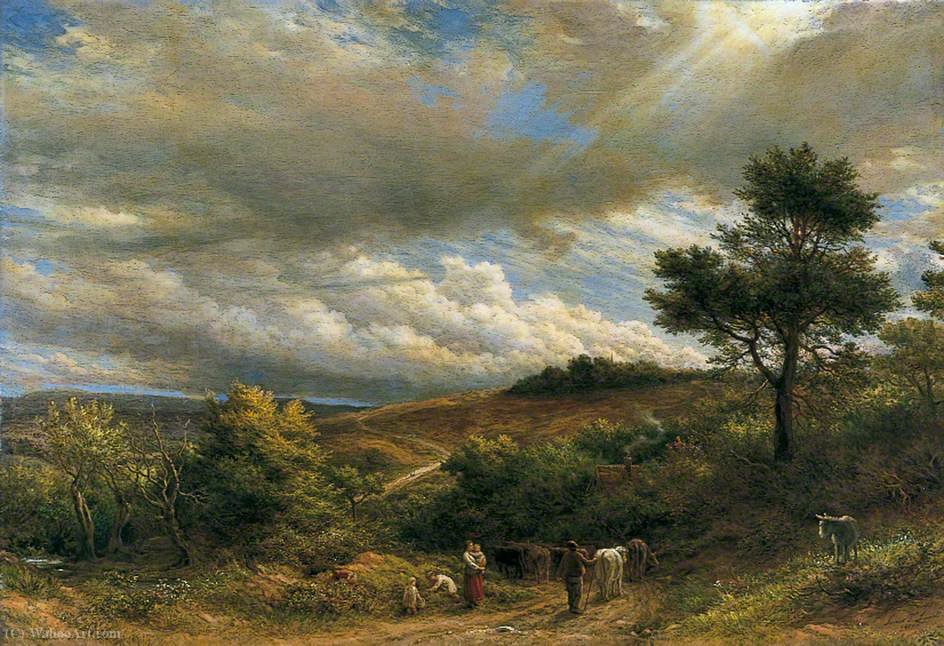
James Thomas Linnell’s "Passing Gleams" captures a romantic Welsh landscape. Oil on canvas showcases atmospheric perspective & rural life. Explore this idyllic pastoral scene.
Biografia do Artista
James Thomas Linnell (1820-1905) was a British artist renowned for his idyllic landscapes of Wales & England. Explore pastoral scenes, sheepfolds, & evocative light in his paintings.
 Ler mais
Reprodução em Óleo Feita à Mão
Óleo sobre tela pintado à mão no tamanho e moldura de sua escolha, feito sob encomenda pelos nossos artistas. ( Alternar para Impressão Alternar para Imagem Digital)
Saiba mais sobre esta pintura
 Visualizar na parede
 Compartilhar
 Compartilhar
 Detalhes
 Guia
Guia

 Baixar imagem
 Semelhantes
 Raio X
 Ver diaporama
 Perguntas e Respostas
 Estatísticas
Encomende a sua pintura em quatro passos simples
Não tenha pressa. Você pode alterar qualquer resposta; o preço no seu carrinho de compras será atualizado conforme cada escolha.
1 Passo um de quatro
Qual tamanho você gostaria?
Estes tamanhos mantêm as proporções da pintura original. A ilustração mostra a sua escolha numa parede, acima de um sofá de dois metros.
Ou informe suas próprias medidas
Escolha entre os nossos tamanhos pré-definidos que respeitam as proporções originais da obra de arte.

Insira a largura e a altura desejadas para se ajustarem à sua moldura ou parede. Como esta obra é pintada à mão, para um tamanho com proporções diferentes, o artista poderá pintar um pouco mais ao redor da imagem ou reduzir ligeiramente a composição — você escolhe. Enviamos uma maquete digital para sua aprovação antes de iniciar a pintura. A imagem exibida nesta página não representa o resultado real — apenas a maquete mostra o resultado final.
2 Passo dois de quatro
Como deve ser preparado: enrolado, esticado ou emoldurado?
Os preços abaixo referem-se ao tamanho escolhido na primeira etapa.
Escolha as bordas da tela esticada
Escolha sua moldura

Branco €1

Bordas esfumaçadas €1

Bordas estendidas €1

P118B €10

P118H €10

P118W €10

P438Z €10

P508JH €12

P508YH €12

P805H €10

P805Z €10

P919BZ €10

P919G €10

P919XJ €10

P959ZH €10

P968JZ €12

W106C €8

W218G €10

W218JH €8

W218Y €10

W307PJ €10

W316G €10

W316PJ €8

W316Y €10

W398PJ €8

W4111J €10

W500HY €15

W500JH €15

W692G €12

W849H €8

W940BG €15

W953PJ €8

H24-GOLD €30

H24-SILVER €30

H36-GOLD €45

H36-SILVER €45
Com moldura
Moldura: . Dimensões totais com a moldura: .
3 Passo três de quatro
Gostaria de alterar algo na pintura?
A maioria das pessoas responde que não. Como cada pintura é feita à mão, nosso artista também pode adaptá-la para você.
Após o pedido, a equipe da ArtsDot.com enviará um e-mail ao cliente para instruções e fornecerá uma prévia da montagem
4 Passo quatro de quatro
Algumas opções de acabamento
Todos eles são opcionais. As respostas já selecionadas não têm custo adicional.
Quem o pintou?
Entrega mundial () em 3 a 4 semanas, em vez das 5 semanas padrão. (4 Novembro). Sem comprometer a qualidade.
Uma placa de identificação, como em um museu?
Detalhes da Placa de Bronze Gravada
This elegant plaque features the artist's name and the title of the artwork, finely engraved for a timeless presentation.
It is made from bronze with a refined, elegant finish. The text is precisely laser-engraved for a sharp and permanent result. Measuring 9x2 cm, the plaque is compact yet easy to read. It's built to be durable and scratch-resistant, offering a professional, museum-quality look. Mounting is simple thanks to the included adhesive backing.
Detalhes da Placa de Acrílico Transparente
The plaque includes essential engraved details such as the artist's name, the title of the artwork, the date it was created, the type of media used-like oil on canvas or watercolor-a brief description of the piece, and a QR code that links to the complete artwork information.
It is crafted from clear acrylic, offering a sleek, modern appearance. The text is UV-engraved in black to ensure strong visual contrast. With a size of 10x15 cm, it ensures optimal readability. It comes equipped with two metal hooks for secure wall mounting. The plaque is designed to be weather-resistant, making it suitable for various environments, and it includes interactive features that work seamlessly with smartphone scanning.
Detalhes da Placa de Acrílico Preto
This elegant plaque includes engraved information such as the artist's name, the title of the artwork, the date it was created, the type of media used (like oil on canvas or watercolor), a short description of the artwork, and a QR code for quick access to more information.
The plaque itself is made from refined black acrylic with a premium finish. The text is laser-engraved in white for high contrast and readability. Its size is 10x15 cm, designed to be easy to read. It comes with two metal hooks for professional mounting. The design is sleek and fits any interior style. It is also weather-resistant and durable, with built-in digital integration for mobile compatibility.
Um verniz protetor?
Para quando você precisa?
✓ Verifique e peça
A sua pintura, conforme encomendada

Passing gleams
Técnica de Reprodução
Tamanho da Reprodução
-

Artista Sênior de Elite
Mais detalhes, refinamento e tempo de produção adicional
-

Moldura para Reprodução
-
-
Para obras de arte ou reproduções com mais de 105 cm (aproximadamente 41 polegadas) em qualquer um dos lados, a moldura será enviada como um kit desmontado. Este método garante uma entrega segura e evita danos durante o transporte.
Montagem profissional necessária — este não é um produto DIY (faça você mesmo).
O kit deve ser montado e a tela esticada por um profissional de molduraria experiente, utilizando cola de madeira (não inclusa), um alicate de esticar tela e grampos para manter as travessas alinhadas enquanto a cola seca. A montagem incorreta ou a tensão desigual da tela podem danificar permanentemente a obra de arte e não estão cobertas pela nossa garantia.
 Para obras de arte ou reproduções com mais de 105 cm (aproximadamente 41 polegadas) em qualquer um dos lados, a moldura será enviada como um kit desmontado. Este método garante uma entrega segura e evita danos durante o transporte.
Todas as barras de madeira maciça estão incluídas, precisamente cortadas ao tamanho certo.
Montado com os parafusos fornecidos, além de cola para madeira para as junções dos cantos, que não está inclusa e deve ser providenciada pelo seu moldurista.
São necessárias ferramentas profissionais não incluídas: um alicate de estiramento de tela (esticador) e grampos para manter as ripas alinhadas enquanto a cola seca.
Importante:
As junções dos cantos requerem cola para madeira, as ripas devem ser mantidas com grampos até que a cola esteja completamente seca, e o estiramento da tela na moldura montada requer um alicate de esticar tela. Nenhum destes itens está incluído no kit. Por favor, certifique-se de contar com um profissional de molduraria experiente antes de encomendar este tamanho.

Etiqueta de identificação
-
-

Verniz de Proteção
Verniz brilhante (realça as cores e protege contra a luz e a umidade)
-

Personalizar minha obra
Exemplos de alterações possíveis: Substituir o rosto por uma foto do cliente; Adicionar um animal de estimação (ex.: substituir gato por cachorro); Incluir uma mensagem oculta no fundo; Alterar a paisagem ou os elementos do fundo.
-

Urgente
Entrega mundial () em 3 a 4 semanas, em vez das 5 semanas padrão. (4 Novembro). Sem comprometer a qualidade.
-
Envio Expresso
Entrega mundial para em 5 semanas. (11 Novembro).
Com envio incluído
Preço Total
€ 279
A opção de vidro está disponível apenas para tamanhos inferiores a 110 cm
Incluído em todos os pedidos
- Envio expresso gratuito para todo o mundo
- Tela de Linho de Alta Qualidade
- Seguro de transporte completo
- Garantia de Reembolso de Impostos Alfandegários
- Garantia de Fidelidade Cromática
- Política de Devolução em 100 Dias (Apenas para Defeitos)
- Garantia de reembolso de 100%
- Oferta de desconto por quantidade


Obras Relacionadas


James Thomas Linnell
1820 - 1905, United Kingdom
Biografia do Artista
James Thomas Linnell: A Victorian Painter of Rural Life and Luminous Landscapes
James Thomas Linnell (1820–1905) stands as a quietly significant figure within the vibrant tapestry of 19th-century British art. Often overshadowed by his more flamboyant contemporaries, he carved out a distinctive niche for himself through his evocative depictions of English rural life – scenes brimming with gentle observation, luminous light, and an underlying sense of poetic tranquility. His work, deeply rooted in the legacy of his father, John Linnell, yet possessing a unique sensibility, offers a poignant glimpse into the Victorian appreciation for both naturalism and sentimentality.
Born in London amidst a family already steeped in artistic tradition, James Thomas’s early life was profoundly shaped by his father's career. John Linnell, a versatile artist known for his portraits, religious subjects, and increasingly, his powerful landscapes, provided an unparalleled environment for the young James. The Linnell household at Redstone Wood, near Redhill, Surrey, was a hub of creative activity, fostering a deep immersion in art from the earliest years. His father’s influence was paramount; John Linnell's meticulous attention to detail, his skill in rendering atmospheric effects, and his engagement with the English landscape served as an enduring model. However, James Thomas wasn’t merely a mimic. He absorbed these foundational elements while simultaneously cultivating a style uniquely his own – one characterized by brighter palettes, softer light, and a gentle, almost ethereal quality.
The formative years were further enriched by exposure to the work of William Blake, John Linnell's patron and a figure whose visionary spirit profoundly impacted the artistic landscape. Furthermore, James Thomas’s association with Samuel Palmer, his father-in-law, proved particularly influential. Palmer’s Shoreham period paintings – intensely spiritual and poetic visions of the Kent countryside – instilled in James Thomas a sensitivity to light, color, and atmosphere that would become hallmarks of his own work. The influence of these artistic giants, combined with the rigorous training received at the Royal Academy Schools, laid the groundwork for Linnell's distinctive approach.
Linnell’s subject matter frequently focused on idyllic rural scenes – children playing in sun-dappled woodlands, harvesters resting at noon, and tranquil pastoral vistas. He eschewed the dramatic intensity often associated with his father’s work, instead finding his expressive power in the quiet poetry of everyday life. His paintings are not overtly narrative; rather, they capture fleeting moments of beauty and serenity, inviting the viewer to contemplate the simple pleasures of rural existence. His compositions are carefully constructed, utilizing a restrained palette and subtle tonal shifts to create a sense of depth and atmosphere. The use of light is particularly noteworthy – Linnell masterfully employs diffused sunlight and soft shadows to evoke a feeling of warmth and tranquility.
Despite his relative obscurity during his lifetime, James Thomas Linnell’s work has gained increasing recognition in recent decades. His paintings offer a valuable insight into the Victorian sensibility—a desire for beauty, a reverence for nature, and a longing for simpler times. His legacy rests not on grand pronouncements or revolutionary techniques, but rather on the quiet elegance of his landscapes – luminous depictions of rural England that continue to resonate with viewers today. The Forbes Magazine Collection at Princeton University Art Museum holds a significant body of his work, providing a crucial resource for scholars and art enthusiasts alike.
The Linnell Family Legacy and Artistic Environment
James Thomas Linnell’s artistic journey was inextricably linked to the broader context of the Linnell family—a lineage deeply rooted in both artistic talent and religious conviction. John Linnell (1792–1882), his father, was not only a successful painter but also a significant patron, most famously supporting the visionary artist William Blake during Blake’s final years. This familial commitment to art extended beyond mere financial support; it fostered an environment of intellectual and creative exchange within the household.
The Linnell family resided at Redstone Wood, near Redhill, Surrey, a location that profoundly influenced their artistic sensibilities. The surrounding countryside—rolling hills, verdant pastures, and picturesque villages—provided a constant source of inspiration. Furthermore, the family’s religious background – John Linnell Senior was a non-conformist – instilled in them a deep appreciation for nature's beauty as a reflection of God's creation. This spiritual dimension is subtly woven into many of Linnell’s paintings, imbuing them with a sense of peace and reverence.
The household at Redstone Wood was a vibrant hub of artistic activity, populated by a cohort of talented siblings—John Linnell Jr., William Linnell, and Mary Elizabeth Linnell. Each sibling received art instruction from their father, absorbing his techniques and stylistic preferences. The family’s close-knit environment fostered a spirit of collaboration and mutual support, encouraging each member to pursue their artistic passions. The presence of other influential artists—such as Samuel Palmer, John Linnell's son-in-law—further enriched the artistic milieu, exposing the young Linnells to diverse perspectives and techniques.
The family’s relocation to Redhill in the 1850s marked a significant shift in their lives. They built two residences nearby – Redstone Wood South (later demolished) and Hillsbrow (also demolished) – providing them with dedicated spaces for artistic practice and studio work. This move allowed James Thomas to establish his own independent career, while remaining connected to the family’s established artistic network.
Technique and Artistic Style
James Thomas Linnell's distinctive style is characterized by a harmonious blend of observation, sensitivity, and technical skill. He inherited from his father a meticulous attention to detail and a mastery of rendering atmospheric effects—qualities that are evident in many of his landscapes.
However, Linnell’s work transcends mere imitation; he developed a unique palette and approach that set him apart from his father and other contemporary artists. His colors are notably brighter and more luminous than those typically employed by John Linnell, creating a sense of warmth and vitality. He skillfully utilizes light—often employing diffused sunlight and soft shadows—to evoke a feeling of tranquility and serenity.
Linnell’s compositions are carefully constructed, utilizing subtle tonal shifts and atmospheric perspective to create depth and realism. His brushwork is generally smooth and understated, allowing the colors and light to speak for themselves. He avoided dramatic contrasts or overtly expressive gestures, instead focusing on capturing fleeting moments of beauty and quiet contemplation.
A key element of Linnell’s style is his ability to imbue his landscapes with a sense of poetry—a suggestion of something beyond the purely visual. His paintings invite the viewer to engage in a dialogue with nature, prompting reflection on themes of beauty, simplicity, and the passage of time. His work demonstrates a remarkable sensitivity to the nuances of light and color, as well as an intuitive understanding of how to capture the essence of rural England.
Historical Significance and Legacy
James Thomas Linnell’s contribution to 19th-century British art is often understated, overshadowed by more prominent figures. However, his work holds significant historical value, offering a valuable insight into the artistic sensibilities of the Victorian era.
Linnell's paintings reflect the broader trends of the time—a growing interest in nature, a desire for beauty and tranquility, and a yearning for simpler times. His landscapes capture the essence of rural England—its rolling hills, verdant pastures, and picturesque villages—providing a nostalgic vision of a bygone era.
His association with influential artists such as William Blake and Samuel Palmer highlights his place within a vibrant artistic network. Linnell’s work demonstrates the influence of these figures on his own style and approach, while also showcasing his unique contribution to the Norwich School of painters.
Despite his relative obscurity during his lifetime, Linnell's paintings have gained increasing recognition in recent decades. The Forbes Magazine Collection at Princeton University Art Museum holds a significant body of his work, providing scholars and art enthusiasts with access to his oeuvre. His legacy rests not on grand pronouncements or revolutionary techniques, but rather on the quiet elegance of his landscapes—luminous depictions of rural England that continue to resonate with viewers today.
Artigos Relacionados

Cultivating Visions: A Historical Journey Through Rural Landscapes in Art
Explore the rich history of rural landscape painting with ArtsDot. Discover Impressionist masterpieces, key artists & movements. Find your perfect serene artwork and bring nature's beauty home.

Os 10 Mestres da Paisagem Romântica: Arte para Inspirar a Sua Casa
Descubra os 10 quadros mais emblemáticos da Paisagem Romântica! Explore a história de Turner, Friedrich e outros mestres. Encontre reproduções de arte exclusivas para inspirar sua decoração em ArtsDot.com.

As 25 Obras-Primas de Alfred Munnings: Arte Equina e a Alma Inglesa | ArtsDot
Descubra as 25 obras-primas de Alfred Munnings, o mestre da pintura equina e da alma inglesa. Explore a história, técnica e beleza atemporal de cada quadro. Reproduções de arte exclusivas em ArtsDot.com! Explore a coleção online.