


 Visualizar na parede
 Compartilhar
 Compartilhar
 Detalhes

 Baixar imagem
 Semelhantes
 Raio X
 Slideshow
 Estatísticas
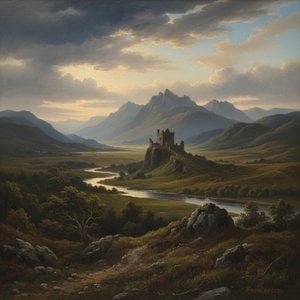
A Romantic Landscape
 Acrylic On Canvas
- WallArt
- Romantic Landscape
 1908
1908 119.0 x 104.0 cm
 Leeds Art Gallery
 Ler mais
Reprodução em Óleo Feita à Mão
Óleo sobre tela pintado à mão no tamanho e moldura de sua escolha, feito sob encomenda pelos nossos artistas. ( Alternar para Impressão Alternar para Imagem Digital)




P118B $10

P118H $10

P118W $10

P438Z $10

P508JH $12

P508YH $12

P805H $10

P805Z $10

P919BZ $10

P919G $10

P919XJ $10

P959ZH $10

P968JZ $12

W106C $8

W218G $10

W218JH $8

W218Y $10

W307PJ $10

W316G $10

W316PJ $8

W316Y $10

W398PJ $8

W4111J $10

W500HY $15

W500JH $15

W692G $12

W849H $8

W940BG $15

W953PJ $8




Escolha entre os nossos tamanhos pré-definidos que respeitam as proporções originais da obra de arte.

Pode inserir as suas próprias dimensões para se adequar a uma moldura ou espaço específico. Se o tamanho selecionado não corresponder às proporções da imagem original, iremos cortar a obra de arte ou estender a pintura com elementos adicionais pintados à mão. Um esboço digital será enviado para sua aprovação antes do início da produção.
Tenha em atenção que a pré-visualização no ecrã não reflete o corte ou extensão real. Apenas o esboço mostrará com precisão a composição final.
Embora tamanhos personalizados estejam disponíveis, recomendamos selecionar uma dimensão da lista predefinida para preservar as proporções originais.
Após o pedido, a equipa ArtsDot.com enviará um e-mail ao cliente para solicitar instruções e fornecer uma prévia do esboço.
Entrega mundial () em 3 a 4 semanas, em vez das 5 semanas padrão. (11 Setembro). Sem comprometer a qualidade.

Envio expresso gratuito para todo o mundo

Tela de Linho de Alta Qualidade

Seguro de transporte completo

Garantia de Reembolso de Impostos Alfandegários

Garantia de Fidelidade Cromática

Política de Devolução de 100 Dias (Apenas Defeitos)

Garantia de reembolso de 100%

Oferta de desconto por quantidade
 A opção de vidro está disponível apenas para tamanhos inferiores a 110 cm

A Romantic Landscape
Técnica de Reprodução
Tamanho da Reprodução
-


Preço Total
$ 263
A Window Into a Romantic Soul: James Ferrier Pryde’s “A Romantic Landscape”
James Ferrier Pryde's "A Romantic Landscape," painted in 1908, isn’t merely a depiction of a picturesque scene; it’s a carefully constructed invitation into the heart of a bygone era. This oil painting, measuring a substantial 119 x 104 cm, captures a group of figures nestled within a verdant woodland, their presence subtly interwoven with the grandeur and mystery of nature. The composition immediately draws the eye to the central trio – three individuals engaged in quiet conversation beneath the sheltering branches of an ancient tree – while the distant body of water acts as a serene mirror reflecting the sky above.
Pryde’s style leans heavily into the tenets of Romanticism, a movement that privileged emotion, imagination, and the sublime beauty of the natural world. He eschews sharp detail in favor of atmospheric effects – hazy light filtering through the leaves, soft brushstrokes creating a sense of depth and distance, and a palette dominated by muted greens, browns, and blues. This deliberate blurring of form contributes to an overall feeling of tranquility and invites contemplation. The painting’s influence is clearly visible in the works of Caspar David Friedrich, whose emphasis on the individual's relationship with nature resonates strongly within Pryde’s approach.
The Beggarstaffs and a Legacy of Atmospheric Detail
Pryde was a key figure in the renowned Beggarstaff Studios, a collective of artists known for their innovative poster designs and evocative illustrations. This experience profoundly shaped his artistic sensibilities, particularly his mastery of capturing atmosphere and mood. The Beggarstaffs’ work often featured dramatic lighting, intricate details, and a focus on conveying a specific emotional response through visual means – qualities that are abundantly present in “A Romantic Landscape.” The painting's meticulous rendering of light and shadow, combined with the figures’ subtle gestures, suggests a narrative unfolding beyond what is immediately visible.
Interestingly, Pryde’s background as a graphic designer informed his approach to painting. He understood how color, texture, and composition could be used to create a powerful visual impact – a skill he seamlessly translated into his landscapes. The use of warm tones around the figures contrasts with the cooler hues of the surrounding forest, drawing attention to their presence while simultaneously emphasizing their connection to the natural world.
Symbolism in the Setting: A Sanctuary of Reflection
The choice of setting – a secluded woodland clearing – is laden with symbolic meaning. Forests have long been associated with mystery, introspection, and spiritual renewal within Romantic art. The ancient tree serves as a focal point, representing wisdom, longevity, and the enduring power of nature. The figures themselves appear to be seeking solace or connection within this sanctuary, suggesting a desire for escape from the pressures of modern life.
The presence of two benches further reinforces the theme of contemplation and social interaction. They invite viewers to imagine the conversations taking place between the individuals, fostering a sense of intimacy and shared experience. The distant water adds another layer of symbolism – representing reflection, fluidity, and the cyclical nature of time. It’s as if Pryde is offering us a glimpse into a timeless moment of connection with both each other and the natural world.
A Timeless Appeal: Reproduction and Artistic Resonance
"A Romantic Landscape" continues to resonate with audiences today due to its evocative atmosphere, masterful technique, and profound exploration of human emotion. Reproductions of this painting offer a remarkable opportunity to bring this scene into your home or office – capturing the tranquility and beauty of Pryde’s vision. The rich colors and detailed textures translate beautifully onto canvas, creating a piece that is both visually stunning and emotionally engaging. It's more than just a picture; it’s an invitation to step into a world of romantic contemplation.
Consider framing this reproduction in a style that complements its inherent elegance – perhaps a simple wooden frame or a classic gold-toned option. “A Romantic Landscape” will undoubtedly serve as a focal point, adding a touch of timeless beauty and serenity to any space.
Obras Relacionadas


Biografia do Artista
A Life Etched in Atmosphere: The World of James Ferrier Pryde
James Ferrier Pryde, born on March 30, 1866, in Edinburgh, was a British artist whose work profoundly shaped the aesthetics of early 20th-century graphic design and painting. His life unfolded within a lineage steeped in artistic heritage – connected to the celebrated Scottish painters Robert Scott Lauder and James Eckford Lauder – nurturing an environment that valued creativity and intellectual exploration from his earliest years. Raised in Edinburgh, Pryde’s formal artistic training commenced at the Royal Scottish Academy between 1885 and 1888, providing him with a foundational understanding of technique and composition. This early education proved pivotal, laying the groundwork for a career characterized by an exceptional ability to capture atmosphere and emotion through his art. He was particularly influenced by the Glasgow School’s pioneering spirit, drawing inspiration from artists like James Guthrie and Edward Arthur Walton, whose innovative approaches resonated deeply with his own artistic sensibilities. A brief but formative period in Paris, studying under William-Adolphe Bouguereau at the Académie Julian, ultimately proved less aligned with Pryde's vision; the stifling atmosphere of the Parisian atelier prompted a swift return to Scotland, where he began to forge his distinct artistic path.The Beggarstaffs and a Revolution in Design
Pryde’s most enduring legacy stems from his collaborative partnership with William Nicholson, forming “The Beggarstaffs” in 1893. This union marked a watershed moment in the history of graphic design, ushering in a new era of visual communication characterized by boldness, theatricality, and a deliberate rejection of conventional norms. Prior to The Beggarstaffs, posters were often cluttered with illustrative elements, serving primarily as functional advertisements. Pryde and Nicholson, however, fundamentally reimagined the poster’s potential, stripping away superfluous details and embracing striking compositions, arresting imagery, and a dramatic sensibility. Their designs transcended mere commercial promotion; they became statements of artistic intent, elevating the status of poster art to that of legitimate visual expression. A key element of their approach was a conscious decision to eschew established design conventions, creating work that was both visually captivating and intellectually stimulating. The Beggarstaffs’ impact extended beyond posters, encompassing signboards and other graphic elements—all united by a shared commitment to innovation and artistic vision. Their partnership dissolved in 1899, yet the influence of The Beggarstaffs reverberates through the world of design to this day, shaping the aesthetics of countless contemporary works.Atmospheric Visions: A Painterly Language
While celebrated for his contributions to graphic design, Pryde’s true passion resided in painting. He developed a deeply personal style centered around atmospheric architectural scenes—images that transcended simple representation and instead explored the emotional resonance of space and time. These canvases rarely depict buildings as they appear in reality; rather, they are evocative explorations of mood, memory, and a sense of melancholy. Pryde’s technique is characterized by broad brushwork, dramatic lighting effects, and a deliberate blurring of lines between observation and imagination. His paintings frequently feature structures dwarfing the human figures within them, emphasizing our vulnerability against the weight of history and the passage of time. The influence of Giovanni Battista Piranesi's etchings—particularly his depictions of Roman ruins—is readily apparent in Pryde’s monumental compositions and fascination with decaying architecture. He wasn’t interested in precise replication; instead, he sought to capture the *feeling* of a place – its history, its secrets, and its inherent sadness. His paintings often possess an almost dreamlike quality, inviting viewers into a realm where reality and imagination intertwine.A Multifaceted Artist: Stagecraft and Recognition
Pryde’s artistic pursuits extended beyond painting and graphic design. He briefly pursued a career as an actor between 1894 and 1899, a period that undoubtedly informed his theatrical sensibility and understanding of spatial dynamics. This foray into the performing arts also brought him into contact with influential figures like Edward Gordon Craig, who recognized Pryde’s exceptional talent as a painter despite acknowledging his limitations as an actor. He became actively involved in artistic societies, becoming an associate of the International Society of Sculptors, Painters and Gravers in 1901 and later serving as its vice-president in 1921. In 1930, he brought his visual artistry to the stage, designing sets for Paul Robeson’s production of *Othello* at the Savoy Theatre, demonstrating a versatility that extended beyond the canvas. Despite holding only two solo exhibitions during his lifetime – one at the Baillie Gallery in 1911 and another at the Leicester Galleries in 1933 – Pryde received recognition from patrons like Viscountess Cowdray and was lauded by critics such as Frank Rutter, who described him as “stupendous.” His work continues to be studied and appreciated for its unique blend of artistic skill and emotional depth.A Lasting Legacy
James Ferrier Pryde passed away on February 24, 1941, in London. Though he didn’t align himself with any specific artistic movement, his distinctive style and contributions to early 20th-century art are increasingly recognized as significant. A memorial exhibition held in 1949, touring Edinburgh, Brighton, and London, helped revive interest in his work. While exhibitions of his paintings remain relatively infrequent, a growing number of his works are held in public collections, ensuring that his atmospheric visions continue to captivate audiences. Pryde’s legacy rests not only on the beauty of his individual artworks but also on the profound impact of The Beggarstaffs' innovative graphic design, which continues to inspire artists and designers today. He remains a compelling figure—a painter who dared to explore the emotional power of architecture and a designer who helped redefine the very language of visual communication.
James Ferrier Pryde
1866 - 1941 , Reino Unido
Dados Rápidos
- Artistic Movement Or Style: Design gráfico, Visões atmosféricas
- Artists Or Movements Influenced By This Artist:
- Nicholson
- n"Design gráfico"] }
- Date Of Birth: 30 Mar 1866
- Date Of Death: 24 Feb 1941
- Full Name: James Ferrier Pryde
- Nationality: Britânico
- Notable Artworks:
- Ruína com Figura
- n"A Casa Assombrada"], "Artists who influenced this artist": ["Guthrie", "Walton",
- Whistler
- Bouguereau
- Place Of Birth: Edinburgh, Reino Unido
Artigos Relacionados
Alexander Nasmyth: Picturing Scotland's Romantic Landscape – Innovation & Identity
Explore the life & art of Alexander Nasmyth, a pivotal figure in Scottish Romantic landscape painting. Discover his iconic works, including portraits of Robert Burns, and learn about his lasting influence on national identity. Fine art reproductions available.

As 25 Obras-Primas de Alfred Munnings: Arte Equina e a Alma Inglesa | ArtsDot
Descubra as 25 obras-primas de Alfred Munnings, o mestre da pintura equina e da alma inglesa. Explore a história, técnica e beleza atemporal de cada quadro. Reproduções de arte exclusivas em ArtsDot.com! Explore a coleção online.

James Giles: Capturing Scottish Life Through the Lens of British Realism
Explore the life & work of James Giles (1801-1870), a master of Scottish landscape painting and favored artist of Queen Victoria. Discover his atmospheric realism & royal commissions.

Os 10 Mestres da Paisagem Romântica: Arte para Inspirar a Sua Casa
Descubra os 10 quadros mais emblemáticos da Paisagem Romântica! Explore a história de Turner, Friedrich e outros mestres. Encontre reproduções de arte exclusivas para inspirar sua decoração em ArtsDot.com.

James Abbott McNeill Whistler: As 25 Obras-Primas que Definem um Mestre da Arte
Descubra as 25 obras-primas de James Abbott McNeill Whistler, o mestre do Impressionismo e dos 'Nocturnes'. Explore a história por trás de cada pintura, cores e técnicas. Encontre reproduções de arte exclusivas para decorar sua casa com elegância em ArtsDot.com!


