
- Início

- Imagem Digital
- Jacques-Louis David
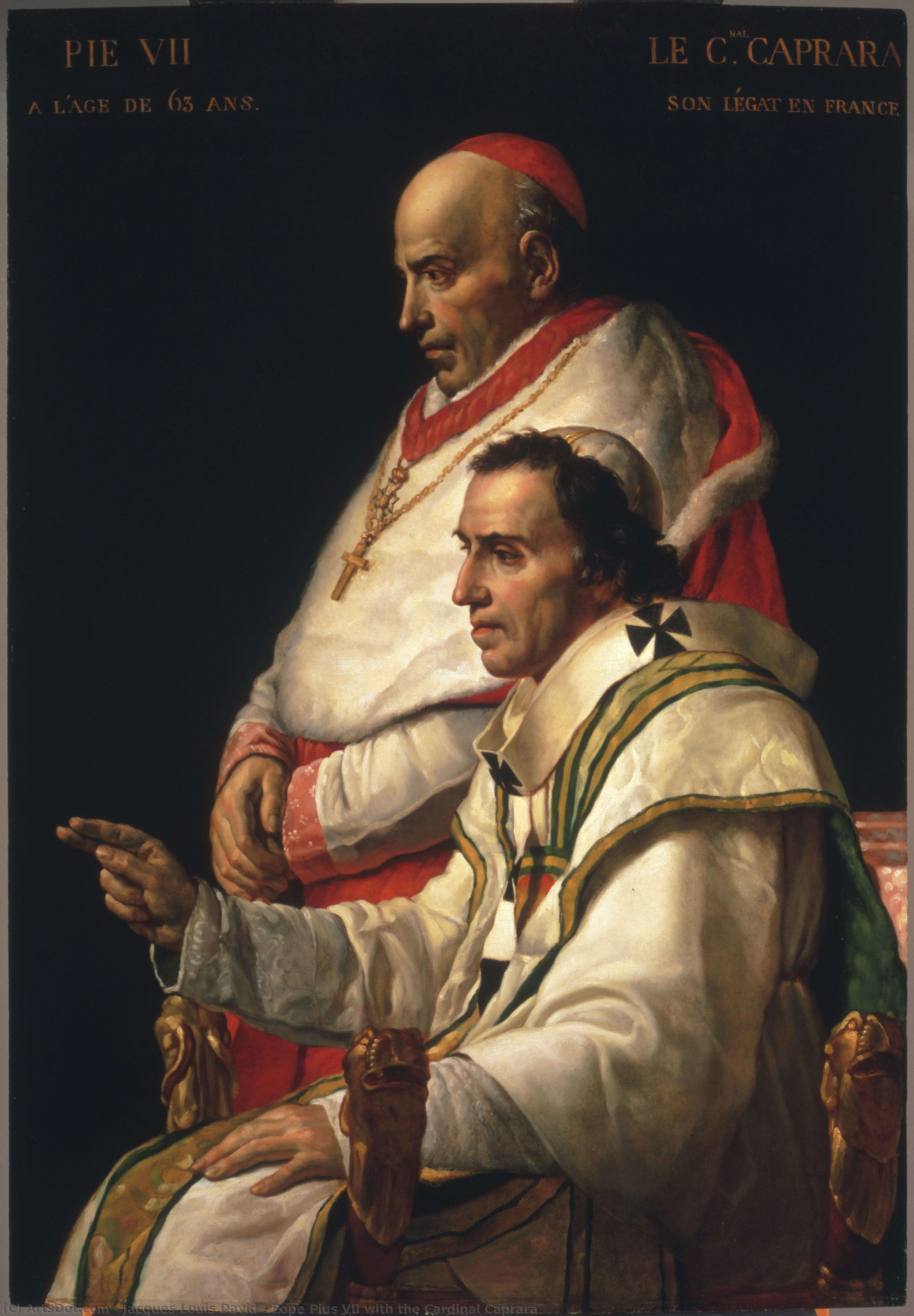
- Pope Pius VII with the Cardinal Caprara
 Comprar impressão Encomendar pintura
 Enviar
 Compartilhar
 Details
 Adicionar aos favoritos

 Baixar
 Semelhantes
 X-Ray
X-Ray
 Slideshow
Pope Pius VII with the Cardinal Caprara
 Acrylic On Canvas
- WallArt
- Neo-Classicism
 1805
1805 138.0 x 96.0 cm
 Museu de Arte da Filadélfia
Adquira uma imagem digital de alta resolução e aprimorada, muito superior à prévia online.
Cada arquivo é meticulosamente preparado por nossos especialistas internos, utilizando ferramentas avançadas e retoques manuais de alta precisão. Garantimos que cada imagem apresente clareza excepcional, fidelidade de cores e detalhes minuciosos.
O arquivo final é entregue por e-mail em até 72 horas, otimizado para uso imediato em ambientes profissionais, editoriais e de impressão. Esta é a mesma qualidade utilizada por estúdios de design de alto nível, editoras e galerias.
 Saiba mais
Imagem Digital
Baixe um arquivo de alta resolução para exibição pessoal, impressão e projetos criativos.
Incluído em cada pedido de imagem digital
Entrega Digital Especializada, Garantida
Ao escolher o ArtsDot.com, você não está apenas recebendo uma imagem — você está recebendo uma obra de arte digital profissionalmente aprimorada, elaborada com precisão e com garantia de satisfação. Aqui está tudo o que acompanha seu pedido, automaticamente:

Entrega rápida por e-mail
O seu arquivo de imagem digital em alta resolução será enviado por e-mail em até 72 horas após o pedido — pronto para uso imediato.

Arquivo Digital com IA
Sua obra de arte é otimizada profissionalmente por meio de ferramentas avançadas de IA e edição manual, garantindo o máximo de detalhes, clareza e precisão de cores.

Reenvio Gratuito Vitalício
Apagou ou perdeu o seu ficheiro acidentalmente? Não se preocupe – nós reenviamos para si a qualquer momento, gratuitamente.

Sem Taxas de Importação - Sempre
Desfrute da sua obra de arte instantaneamente, sem taxas alfandegárias, impostos ou custos de entrega — downloads digitais são sempre isentos de taxas.

Garantia de Precisão de Cores
Garantimos que sua imagem digital reflita as cores originais com a maior fidelidade possível, utilizando ferramentas profissionais e gerenciamento de cores.

Garantia de Satisfação de 60 Dias
Se você não estiver satisfeito com sua imagem digital, nós a revisaremos ou reembolsaremos 100% dentro de 60 dias — sem perguntas.

Garantia de Reembolso 100%
Não está satisfeito? Receba o reembolso total em até 60 dias após o recebimento do seu arquivo digital — sem perguntas.

Descontos para pedidos em lote
Compre 3 imagens, economize 10% - Compre 5, economize 15% - Compre 10+, economize 20%. Ideal para projetos criativos, galerias e agências.
Descrição do Colecionável
A Portrait Steeped in Moral Purpose: Jacques Louis David’s Pope Pius VII with the Cardinal Caprara
Jacques Louis David's *Pope Pius VII with the Cardinal Caprara*, completed in 1805, stands as a cornerstone of Neoclassical art—a visual embodiment of its ideals and a masterful distillation of historical significance. More than just a depiction of two prominent figures, this monumental canvas delves into the complexities of papal diplomacy during Napoleon’s reign, conveying a profound message about leadership, faith, and reconciliation. The painting resides proudly at the Philadelphia Museum of Art, ensuring its enduring legacy continues to inspire admiration for both artistic prowess and historical insight.Historical Resonance: Navigating Turbulent Times
Painted amidst the Napoleonic Wars, *Pope Pius VII* captures a pivotal moment in European history. Pius VII’s unwavering commitment to maintaining peace between the Holy See and France—a stance fraught with political peril—is powerfully conveyed through David's meticulous portrayal. Alongside him stands Cardinal Caprara, representing the Catholic Church’s influence on diplomatic negotiations. The artist skillfully utilizes this backdrop to illuminate the anxieties of a continent grappling with revolutionary fervor and imperial ambition, reminding viewers that art can serve as a conduit for understanding momentous events.Neo-Classical Mastery: Simplicity and Order Elevated
David's stylistic approach is firmly rooted in Neo-Classicism—a reaction against the excesses of Rococo and an embrace of classical Greek and Roman models. The painting’s austere composition prioritizes balance and clarity, mirroring the aesthetic principles championed by thinkers like Rousseau and Voltaire. Lines are crisp and deliberate, guiding the eye across the canvas with unwavering precision. Color palettes are restrained, favoring muted tones that emphasize form and texture rather than flamboyant ornamentation—a conscious decision to reflect the moral seriousness characteristic of the era.Symbolism Woven into Detail: Gesture and Expression
The painting’s symbolism is subtly integrated throughout its execution. Pope Pius VII's posture—hand resting on his chin, gaze downward—communicates contemplation and intellectual rigor. This gesture speaks volumes about his role as a spiritual leader tasked with upholding moral values amidst political upheaval. Cardinal Caprara’s stance beside him symbolizes the harmonious partnership between religious authority and political governance. The ornate setting—a chair and couch—underscores the importance of the figures depicted, elevating them to positions of prestige and influence. Each element contributes to a narrative that transcends mere representation; it aspires to convey deeper truths about human character and societal dynamics.Black and White Elegance: Focusing on Essence
David’s decision to render *Pope Pius VII* in monochrome—black and white—was deliberate, enhancing the painting's dramatic impact and prioritizing visual clarity. This technique draws attention directly to the subjects’ expressions and body language, stripping away distracting color hues to reveal their inner states. The monochromatic palette reinforces the solemn atmosphere of the scene, mirroring the gravitas associated with papal portraits and emphasizing the importance of conveying emotion through subtle nuances of shading—a testament to David's technical skill and artistic vision.A Legacy Enduring Through Reproduction
Today’s high-quality reproductions of *Pope Pius VII* allow art enthusiasts worldwide to experience the grandeur and intellectual depth of David’s masterpiece. ArtsDot.com offers exceptional prints that faithfully capture the painting’s nuanced textures and tonal subtleties, bringing its historical context and symbolic richness into homes and galleries—a celebration of artistic heritage and a gateway to understanding one of Neoclassicism's most compelling achievements.Obras Relacionadas


Biografia do Artista
A Brushstroke Across Revolution: The Life and Art of Jacques-Louis David
Jacques-Louis David, born in Paris in 1748, was more than just a painter; he was a visual chronicler of an era defined by upheaval, idealism, and the relentless pursuit of new orders. His life mirrored the dramatic shifts unfolding across France – from the waning opulence of the Rococo to the austere clarity of Neoclassicism, and ultimately, through the tumultuous years of revolution and Napoleonic glory. A childhood marked by the early loss of his father and a facial impediment that initially hindered his speech seemed only to sharpen his observational skills and fuel an unwavering dedication to artistic mastery. Though initially apprenticed to François Boucher, David quickly found himself drawn to the more morally resonant work of Joseph-Marie Vien, whose emphasis on history painting and classical subjects resonated with a burgeoning sense of purpose within the young artist. His early attempts to win the prestigious Prix de Rome were fraught with frustration, yet these repeated setbacks only intensified his resolve, forging a relentless perfectionism that would characterize his entire career.The Birth of Neoclassical Drama
David’s artistic evolution wasn't merely a stylistic shift; it was a philosophical statement. He rejected the frivolous ornamentation and playful themes of the Rococo, embracing instead the clarity, order, and moral seriousness inherent in classical antiquity. This commitment was profoundly influenced by archaeological discoveries at Pompeii and Herculaneum, which unveiled a world of Roman art and architecture previously lost to time. These ruins ignited within him a profound respect for the rationalism and civic virtue of the ancient republic, inspiring a desire to emulate their ideals in his own work. His breakthrough came with “Oath of the Horatii” (1784), a painting that transcended mere artistic skill to become an emblem of civic virtue and patriotic sacrifice. The stark composition, dramatic lighting – carefully calculated to emphasize the figures’ musculature and emotional intensity – and precise draftsmanship were revolutionary, signaling a decisive break from the past. It wasn't simply *what* he painted but *how* – a deliberate construction designed to evoke powerful emotional responses and inspire contemplation on themes of duty, honor, and self-sacrifice. The figures are rendered with an almost sculptural quality, their bodies idealized according to classical principles, reflecting David’s deep study of Roman sculpture. This work didn't just announce a new style; it foreshadowed the ideological currents that would soon sweep across France.Revolution and Remembrance: Art as Political Weapon
As the French Revolution erupted in 1789, David was not merely an observer but an active participant. A fervent supporter of the revolutionary cause and a close associate of Maximilien Robespierre, he saw art as a powerful tool for shaping public opinion and immortalizing the ideals of the new republic. He believed that art could serve as a moral compass, guiding society towards virtue and justice. His paintings during this period became potent symbols of revolutionary martyrdom and republican fervor. Perhaps his most iconic work from this era is “The Death of Marat” (1793), a hauntingly realistic depiction of the assassinated journalist, transformed into a secular saint. The painting’s stark simplicity – the pale body, the makeshift desk, the poignant letter clutched in Marat's hand – elevates the scene to a level of profound emotional resonance. David deliberately chose this subject matter to honor the revolutionary hero and inspire further acts of sacrifice for the cause. He meticulously researched the event, relying on eyewitness accounts and seeking to capture the raw emotion of the moment with unflinching realism. “The Death of Marat” wasn’t just a portrait; it was a carefully constructed propaganda piece designed to galvanize support for the revolution.From Revolution to Empire: Serving Napoleon
The fall of Robespierre marked another turning point in David's career. With remarkable adaptability, he navigated the shifting political landscape and aligned himself with Napoleon Bonaparte, becoming the First Consul’s official court painter. This new patronage ushered in a period of grand-scale commissions designed to glorify Napoleon’s victories and achievements. “Napoleon Crossing the Alps” (1801-1805) is perhaps the most famous example – a masterful piece of propaganda that presents Napoleon as a heroic, almost mythical figure conquering both nature and adversity. The dramatic lighting, the dynamic composition, and the carefully chosen details all contribute to the image’s powerful effect. David skillfully employed classical motifs—the hero in a heroic pose, battling against the elements—to elevate Napoleon's status and associate him with the grandeur of antiquity. “The Coronation of Napoleon” (1807), an immense canvas capturing the opulence and grandeur of the imperial ceremony, further cemented David’s position as the preeminent artist of the Napoleonic era. During this time, his palette subtly shifted, incorporating warmer Venetian colors while maintaining the precision and clarity that defined his style.Exile, Legacy, and Enduring Influence
The Bourbon Restoration in 1814 brought renewed peril for David, whose association with the fallen Napoleon made him a target of persecution. He chose exile in Brussels in 1816, where he continued to paint and teach until his death on December 29, 1825. Despite facing hardship and political isolation, David remained committed to his art, producing works that reflected his evolving philosophical views. Even in exile, his influence remained profound. He trained numerous pupils, including Jean-Auguste-Dominique Ingres, who would become one of the most important neoclassical painters of the 19th century. David’s emphasis on draftsmanship, composition, and historical accuracy left an indelible mark on French art. *His legacy extends beyond mere imitation*; his expressive distortions of form and space even foreshadowed the innovations of later artists like Henri Matisse and Pablo Picasso. Jacques-Louis David was not simply a painter of his time; he *defined* it, capturing its spirit of revolution, ambition, and enduring ideals on canvas for generations to come.- Major Achievements: Established Neoclassicism as the dominant style in French painting.
- Historical Significance: Created iconic images that captured the spirit of the French Revolution and the Napoleonic era.
- Influence: Trained a generation of influential artists who carried on his legacy.

Jacques-Louis David
1748 - 1800 , França
Informações Rápidas
- Artistic Movement Or Style: Neoclassicismo
- Artists Or Movements Influenced By This Artist:
- Ingres
- Matisse
- Artists Who Influenced This Artist:
- Vien
- Rafael
- Date Of Birth: 30 de agosto de 1748
- Date Of Death: 29 de dezembro de 1825
- Full Name: Jacques-Louis David
- Nationality: Francês
- Notable Artworks:
- Juramento dos Horátios
- Morte de Marat
- Napoletano cruzando os Alpes
- Place Of Birth: Paris, França

