

- 130.0 x 224.0 cm


A imagem segue as suas escolhas: , .
Biografia do Artista
Jack Whitten (1939-2018) was a groundbreaking American abstract painter & sculptor known for his innovative techniques, 'Black Monolith' series, and exploration of African American culture, identity, and the Civil Rights Movement. A pioneer in abstra
 Ler mais
Reprodução em Óleo Feita à Mão
Óleo sobre tela pintado à mão no tamanho e moldura de sua escolha, feito sob encomenda pelos nossos artistas. ( Alternar para Impressão Alternar para Imagem Digital)
Esta obra está protegida por direitos autorais
A obra de arte exibida nesta página é protegida por leis de direitos autorais, o que significa que não podemos criar ou vender legalmente uma reprodução idêntica. Esta proteção é aplicada por meio de acordos internacionais, tais como a Convenção de Berna e pelas leis nacionais, incluindo as estabelecidas por Lei de Direitos Autorais dos EUA - Título 17.
Como uma alternativa respeitosa e legal, oferecemos obras de arte personalizadas e pintadas à mão, inspiradas na obra original. Nossos artistas profissionais e experientes estudam cuidadosamente o estilo, a atmosfera e a essência artística da obra original para criar uma peça nova e única que evoque a mesma sensação — permanecendo como uma criação original por direito próprio.
Este método cumpre plenamente as regulamentações de direitos autorais, pois não envolve a cópia ou duplicação da obra protegida. Em vez disso, trata-se de uma reinterpretação criativa — uma nova pintura que é influenciada pela original, mas não idêntica a ela.
Saiba mais sobre esta pintura
 Visualizar na parede
 Compartilhar
 Compartilhar
 Detalhes
 Guia
Guia

 Baixar imagem
 Semelhantes
 Raio X
 Ver diaporama
 Perguntas e Respostas
 Estatísticas
Encomende a sua pintura em quatro passos simples
Não tenha pressa. Você pode alterar qualquer resposta; o preço no seu carrinho de compras será atualizado conforme cada escolha.
1 Passo um de quatro
Qual tamanho você gostaria?
Estes tamanhos mantêm as proporções da pintura original. A ilustração mostra a sua escolha numa parede, acima de um sofá de dois metros.
Ou informe suas próprias medidas
Escolha entre os nossos tamanhos pré-definidos que respeitam as proporções originais da obra de arte.

Insira a largura e a altura desejadas para se ajustarem à sua moldura ou parede. Como esta obra é pintada à mão, para um tamanho com proporções diferentes, o artista poderá pintar um pouco mais ao redor da imagem ou reduzir ligeiramente a composição — você escolhe. Enviamos uma maquete digital para sua aprovação antes de iniciar a pintura. A imagem exibida nesta página não representa o resultado real — apenas a maquete mostra o resultado final.
2 Passo dois de quatro
Como deve ser preparado: enrolado, esticado ou emoldurado?
Os preços abaixo referem-se ao tamanho escolhido na primeira etapa.
Escolha as bordas da tela esticada
Escolha sua moldura

Branco €1

Bordas esfumaçadas €1

Bordas estendidas €1

P118B €10

P118H €10

P118W €10

P438Z €10

P508JH €12

P508YH €12

P805H €10

P805Z €10

P919BZ €10

P919G €10

P919XJ €10

P959ZH €10

P968JZ €12

W106C €8

W218G €10

W218JH €8

W218Y €10

W307PJ €10

W316G €10

W316PJ €8

W316Y €10

W398PJ €8

W4111J €10

W500HY €15

W500JH €15

W692G €12

W849H €8

W940BG €15

W953PJ €8

H24-GOLD €30

H24-SILVER €30

H36-GOLD €45

H36-SILVER €45
Com moldura
Moldura: . Dimensões totais com a moldura: .
3 Passo três de quatro
Gostaria de alterar algo na pintura?
A maioria das pessoas responde que não. Como cada pintura é feita à mão, nosso artista também pode adaptá-la para você.
Após o pedido, a equipe da ArtsDot.com enviará um e-mail ao cliente para instruções e fornecerá uma prévia da montagem
4 Passo quatro de quatro
Algumas opções de acabamento
Todos eles são opcionais. As respostas já selecionadas não têm custo adicional.
Quem o pintou?
Entrega mundial () em 3 a 4 semanas, em vez das 5 semanas padrão. (4 Novembro). Sem comprometer a qualidade.
Uma placa de identificação, como em um museu?
Detalhes da Placa de Bronze Gravada
This elegant plaque features the artist's name and the title of the artwork, finely engraved for a timeless presentation.
It is made from bronze with a refined, elegant finish. The text is precisely laser-engraved for a sharp and permanent result. Measuring 9x2 cm, the plaque is compact yet easy to read. It's built to be durable and scratch-resistant, offering a professional, museum-quality look. Mounting is simple thanks to the included adhesive backing.
Detalhes da Placa de Acrílico Transparente
The plaque includes essential engraved details such as the artist's name, the title of the artwork, the date it was created, the type of media used-like oil on canvas or watercolor-a brief description of the piece, and a QR code that links to the complete artwork information.
It is crafted from clear acrylic, offering a sleek, modern appearance. The text is UV-engraved in black to ensure strong visual contrast. With a size of 10x15 cm, it ensures optimal readability. It comes equipped with two metal hooks for secure wall mounting. The plaque is designed to be weather-resistant, making it suitable for various environments, and it includes interactive features that work seamlessly with smartphone scanning.
Detalhes da Placa de Acrílico Preto
This elegant plaque includes engraved information such as the artist's name, the title of the artwork, the date it was created, the type of media used (like oil on canvas or watercolor), a short description of the artwork, and a QR code for quick access to more information.
The plaque itself is made from refined black acrylic with a premium finish. The text is laser-engraved in white for high contrast and readability. Its size is 10x15 cm, designed to be easy to read. It comes with two metal hooks for professional mounting. The design is sleek and fits any interior style. It is also weather-resistant and durable, with built-in digital integration for mobile compatibility.
Um verniz protetor?
Para quando você precisa?
✓ Verifique e peça
A sua pintura, conforme encomendada

Untitled (D2X68C)
Técnica de Reprodução
Tamanho da Reprodução
-

Artista Sênior de Elite
Mais detalhes, refinamento e tempo de produção adicional
-

Moldura para Reprodução
-
-
Para obras de arte ou reproduções com mais de 105 cm (aproximadamente 41 polegadas) em qualquer um dos lados, a moldura será enviada como um kit desmontado. Este método garante uma entrega segura e evita danos durante o transporte.
Montagem profissional necessária — este não é um produto DIY (faça você mesmo).
O kit deve ser montado e a tela esticada por um profissional de molduraria experiente, utilizando cola de madeira (não inclusa), um alicate de esticar tela e grampos para manter as travessas alinhadas enquanto a cola seca. A montagem incorreta ou a tensão desigual da tela podem danificar permanentemente a obra de arte e não estão cobertas pela nossa garantia.
 Para obras de arte ou reproduções com mais de 105 cm (aproximadamente 41 polegadas) em qualquer um dos lados, a moldura será enviada como um kit desmontado. Este método garante uma entrega segura e evita danos durante o transporte.
Todas as barras de madeira maciça estão incluídas, precisamente cortadas ao tamanho certo.
Montado com os parafusos fornecidos, além de cola para madeira para as junções dos cantos, que não está inclusa e deve ser providenciada pelo seu moldurista.
São necessárias ferramentas profissionais não incluídas: um alicate de estiramento de tela (esticador) e grampos para manter as ripas alinhadas enquanto a cola seca.
Importante:
As junções dos cantos requerem cola para madeira, as ripas devem ser mantidas com grampos até que a cola esteja completamente seca, e o estiramento da tela na moldura montada requer um alicate de esticar tela. Nenhum destes itens está incluído no kit. Por favor, certifique-se de contar com um profissional de molduraria experiente antes de encomendar este tamanho.

Etiqueta de identificação
-
-

Verniz de Proteção
Verniz brilhante (realça as cores e protege contra a luz e a umidade)
-

Personalizar minha obra
Exemplos de alterações possíveis: Substituir o rosto por uma foto do cliente; Adicionar um animal de estimação (ex.: substituir gato por cachorro); Incluir uma mensagem oculta no fundo; Alterar a paisagem ou os elementos do fundo.
-

Urgente
Entrega mundial () em 3 a 4 semanas, em vez das 5 semanas padrão. (4 Novembro). Sem comprometer a qualidade.
-
Envio Expresso
Entrega mundial para em 5 semanas. (11 Novembro).
Com envio incluído
Preço Total
€ 234
A opção de vidro está disponível apenas para tamanhos inferiores a 110 cm
Incluído em todos os pedidos
- Envio expresso gratuito para todo o mundo
- Tela de Linho de Alta Qualidade
- Seguro de transporte completo
- Garantia de Reembolso de Impostos Alfandegários
- Garantia de Fidelidade Cromática
- Política de Devolução em 100 Dias (Apenas para Defeitos)
- Garantia de reembolso de 100%
- Oferta de desconto por quantidade


Obras Relacionadas


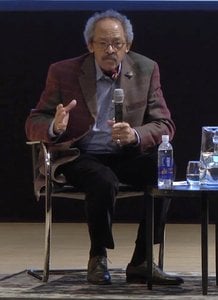
Jack Whitten
1939 -
Biografia do Artista
Jack Whitten: A Revolutionary Voice in Abstract Art
Jack Whitten (1939-2018) stands as a towering figure in American abstract art, an artist whose relentless experimentation and profound engagement with history—particularly the legacy of slavery and the Civil Rights Movement—transformed conventional notions of painting and sculpture. More than simply creating visually arresting works, Whitten invented techniques that fundamentally altered the possibilities of artistic expression, earning him recognition as a true innovator and a vital voice in the latter half of the 20th century. His career spanned six decades, marked by constant evolution, a refusal to be categorized, and an unwavering commitment to exploring the complex relationship between art, culture, and social justice.
Born in Bessemer, Alabama—a city steeped in the realities of Jim Crow segregation—Whitten’s early life profoundly shaped his artistic vision. His father's death when he was eight instilled a sense of resilience and independence, while his mother’s private kindergarten provided an initial exposure to the creative process. Crucially, his inheritance from his uncle, a sign painter, furnished him with tools that would become central to his groundbreaking techniques. This early connection to visual communication—the act of creating signs, slogans, and images for public consumption—laid the groundwork for his later explorations of representation and its limitations.
Whitten’s artistic journey began at Tuskegee Institute, where he initially pursued a pre-medical degree, influenced by his brother's ambition to become an army doctor. However, witnessing the injustices of segregation firsthand ignited within him a deep commitment to social change. He joined the ROTC and used earnings from painting store tags to support himself through college, while simultaneously participating in Civil Rights demonstrations, including a pivotal march in Baton Rouge where he helped organize protest signs. This experience solidified his belief in nonviolent resistance and profoundly influenced the themes that would permeate much of his work.
Moving to New York City in 1960, Whitten enrolled at Cooper Union, immersing himself in the vibrant art scene of the burgeoning metropolis. There, he encountered a diverse range of influences—from the abstract expressionists like Willem de Kooning and Jackson Pollock to Black abstractionists such as Romare Bearden and Jacob Lawrence. These encounters sparked a period of intense experimentation, leading him to develop his signature techniques: layering acrylic paint with nylon mesh fabric to create soft, textured surfaces; utilizing a “developer”—a T-shaped tool—to drag the paint across the canvas in single, decisive strokes; and later, employing electrostatic printing methods to produce works that blurred the boundaries between painting and photography. His early work, particularly the "Heads" series (1964), demonstrated his fascination with exploring the interplay of form and perception, utilizing translucent white pigment against black to create ambiguous, almost ghostly figures.
The Black Monolith Series and a Legacy of Protest
Perhaps Whitten’s most enduring contribution to art history is the “Black Monolith” series (1970-1976), a body of work that stands as both a personal memorial and a powerful statement about the legacy of slavery in America. Inspired by the death of his brother, Whitten created a series of paintings—often monumental in scale—dedicated to those he held dear: friends, family members, and prominent figures who had shaped his life and worldview. These works are characterized by their dense layering of paint, often incorporating fragments of newspaper clippings, photographs, and other found materials, creating textured surfaces that evoke the weight of history and memory.
The “Black Monolith” series is not simply a collection of portraits; it’s an exploration of trauma, loss, and resilience. Whitten deliberately employed techniques—such as layering paint with a squeegee to create a sense of movement and disruption—to convey the emotional intensity of his subject matter. The use of black as a dominant color further amplified this effect, symbolizing both mourning and the enduring presence of the past. As he himself stated, “My paintings are designed as weapons,” aiming to “penetrate and destroy the Western aesthetic” and ultimately serve as tools for social and political change.
Technique and Innovation: A Perpetual Experiment
What distinguished Jack Whitten from many of his contemporaries was not a fixed style but an unwavering commitment to experimentation. Throughout his career, he constantly pushed the boundaries of painting technique, developing new methods and materials that defied conventional artistic practices. His early work with nylon mesh fabric created a unique textural effect, while his use of the “developer” tool—a simple T-shaped instrument—allowed him to manipulate paint in ways previously unimaginable.
Whitten’s studio became a laboratory, where he rigorously tested the properties of various materials and techniques. He famously experimented with freezing acrylic paint, heating it, smashing it with a hammer, and applying it directly to paper using electrostatic printing methods. This relentless pursuit of innovation resulted in a remarkably diverse body of work—ranging from delicate, feather-like textures to dense, layered compositions filled with fragments of text and imagery. His willingness to embrace chance and spontaneity further contributed to the unique character of his art.
Recognition and Historical Significance
Despite facing significant challenges as a Black artist in a predominantly white art world, Jack Whitten’s work gradually gained recognition throughout the 1970s and 80s. He received numerous accolades, including a solo exhibition at the Whitney Museum of American Art in 1974 and a National Medal of Arts in 2016—a testament to his profound impact on contemporary art. His work is now held by major museums around the world, including the Museum of Modern Art (MoMA) and the Metropolitan Museum of Art.
More than just an artist, Jack Whitten was a cultural commentator who used his art to address issues of race, identity, and social justice. His “Black Monolith” series remains a powerful symbol of remembrance and resilience, while his innovative techniques continue to inspire artists today. Whitten’s legacy lies not only in the beauty of his paintings but also in his unwavering commitment to challenging conventions and using art as a means of engaging with the complexities of American history.