


A imagem segue as suas escolhas: , .
Descrição do Item
Explore Giuseppe Arcimboldo's whimsical 'Nature Studies,' intricate watercolor portraits crafted from fruits, flowers & more – a unique blend of art and natural symbolism.
 Ler mais
Biografia do Artista
Giuseppe Arcimboldo (1527-1593) foi um mestre da pintura renascentista, conhecido por seus retratos surreais e fantásticos feitos de frutas, flores e objetos. Sua obra desafia a representação tradicional e explora simbolismos complexos, influenciando o surrealismo.
Reprodução em Óleo Feita à Mão
Óleo sobre tela pintado à mão no tamanho e moldura de sua escolha, feito sob encomenda pelos nossos artistas. ( Alternar para Impressão Alternar para Imagem Digital)
Saiba mais sobre esta pintura
 Visualizar na parede
 Compartilhar
 Compartilhar
 Detalhes
 Guia
Guia

 Baixar imagem
 Semelhantes
 Raio X
 Ver diaporama
 Perguntas e Respostas
 Estatísticas
Encomende a sua pintura em quatro passos simples
Não tenha pressa. Você pode alterar qualquer resposta; o preço no seu carrinho de compras será atualizado conforme cada escolha.
1 Passo um de quatro
Qual tamanho você gostaria?
Estes tamanhos mantêm as proporções da pintura original. A ilustração mostra a sua escolha numa parede, acima de um sofá de dois metros.
Ou informe suas próprias medidas
Escolha entre os nossos tamanhos pré-definidos que respeitam as proporções originais da obra de arte.

Insira a largura e a altura desejadas para se ajustarem à sua moldura ou parede. Como esta obra é pintada à mão, para um tamanho com proporções diferentes, o artista poderá pintar um pouco mais ao redor da imagem ou reduzir ligeiramente a composição — você escolhe. Enviamos uma maquete digital para sua aprovação antes de iniciar a pintura. A imagem exibida nesta página não representa o resultado real — apenas a maquete mostra o resultado final.
2 Passo dois de quatro
Como deve ser preparado: enrolado, esticado ou emoldurado?
Os preços abaixo referem-se ao tamanho escolhido na primeira etapa.
Escolha as bordas da tela esticada
Escolha sua moldura

Branco €1

Bordas esfumaçadas €1

Bordas estendidas €1

P118B €10

P118H €10

P118W €10

P438Z €10

P508JH €12

P508YH €12

P805H €10

P805Z €10

P919BZ €10

P919G €10

P919XJ €10

P959ZH €10

P968JZ €12

W106C €8

W218G €10

W218JH €8

W218Y €10

W307PJ €10

W316G €10

W316PJ €8

W316Y €10

W398PJ €8

W4111J €10

W500HY €15

W500JH €15

W692G €12

W849H €8

W940BG €15

W953PJ €8

H24-GOLD €30

H24-SILVER €30

H36-GOLD €45

H36-SILVER €45
Com moldura
Moldura: . Dimensões totais com a moldura: .
3 Passo três de quatro
Gostaria de alterar algo na pintura?
A maioria das pessoas responde que não. Como cada pintura é feita à mão, nosso artista também pode adaptá-la para você.
Após o pedido, a equipe da ArtsDot.com enviará um e-mail ao cliente para instruções e fornecerá uma prévia da montagem
4 Passo quatro de quatro
Algumas opções de acabamento
Todos eles são opcionais. As respostas já selecionadas não têm custo adicional.
Quem o pintou?
Entrega mundial () em 3 a 4 semanas, em vez das 5 semanas padrão. (6 Novembro). Sem comprometer a qualidade.
Uma placa de identificação, como em um museu?
Detalhes da Placa de Bronze Gravada
This elegant plaque features the artist's name and the title of the artwork, finely engraved for a timeless presentation.
It is made from bronze with a refined, elegant finish. The text is precisely laser-engraved for a sharp and permanent result. Measuring 9x2 cm, the plaque is compact yet easy to read. It's built to be durable and scratch-resistant, offering a professional, museum-quality look. Mounting is simple thanks to the included adhesive backing.
Detalhes da Placa de Acrílico Transparente
The plaque includes essential engraved details such as the artist's name, the title of the artwork, the date it was created, the type of media used-like oil on canvas or watercolor-a brief description of the piece, and a QR code that links to the complete artwork information.
It is crafted from clear acrylic, offering a sleek, modern appearance. The text is UV-engraved in black to ensure strong visual contrast. With a size of 10x15 cm, it ensures optimal readability. It comes equipped with two metal hooks for secure wall mounting. The plaque is designed to be weather-resistant, making it suitable for various environments, and it includes interactive features that work seamlessly with smartphone scanning.
Detalhes da Placa de Acrílico Preto
This elegant plaque includes engraved information such as the artist's name, the title of the artwork, the date it was created, the type of media used (like oil on canvas or watercolor), a short description of the artwork, and a QR code for quick access to more information.
The plaque itself is made from refined black acrylic with a premium finish. The text is laser-engraved in white for high contrast and readability. Its size is 10x15 cm, designed to be easy to read. It comes with two metal hooks for professional mounting. The design is sleek and fits any interior style. It is also weather-resistant and durable, with built-in digital integration for mobile compatibility.
Um verniz protetor?
Para quando você precisa?
✓ Verifique e peça
A sua pintura, conforme encomendada

Nature studies
Técnica de Reprodução
Tamanho da Reprodução
-

Artista Sênior de Elite
Mais detalhes, refinamento e tempo de produção adicional
-

Moldura para Reprodução
-
-
Para obras de arte ou reproduções com mais de 105 cm (aproximadamente 41 polegadas) em qualquer um dos lados, a moldura será enviada como um kit desmontado. Este método garante uma entrega segura e evita danos durante o transporte.
Montagem profissional necessária — este não é um produto DIY (faça você mesmo).
O kit deve ser montado e a tela esticada por um profissional de molduraria experiente, utilizando cola de madeira (não inclusa), um alicate de esticar tela e grampos para manter as travessas alinhadas enquanto a cola seca. A montagem incorreta ou a tensão desigual da tela podem danificar permanentemente a obra de arte e não estão cobertas pela nossa garantia.
 Para obras de arte ou reproduções com mais de 105 cm (aproximadamente 41 polegadas) em qualquer um dos lados, a moldura será enviada como um kit desmontado. Este método garante uma entrega segura e evita danos durante o transporte.
Todas as barras de madeira maciça estão incluídas, precisamente cortadas ao tamanho certo.
Montado com os parafusos fornecidos, além de cola para madeira para as junções dos cantos, que não está inclusa e deve ser providenciada pelo seu moldurista.
São necessárias ferramentas profissionais não incluídas: um alicate de estiramento de tela (esticador) e grampos para manter as ripas alinhadas enquanto a cola seca.
Importante:
As junções dos cantos requerem cola para madeira, as ripas devem ser mantidas com grampos até que a cola esteja completamente seca, e o estiramento da tela na moldura montada requer um alicate de esticar tela. Nenhum destes itens está incluído no kit. Por favor, certifique-se de contar com um profissional de molduraria experiente antes de encomendar este tamanho.

Etiqueta de identificação
-
-

Verniz de Proteção
Verniz brilhante (realça as cores e protege contra a luz e a umidade)
-

Personalizar minha obra
Exemplos de alterações possíveis: Substituir o rosto por uma foto do cliente; Adicionar um animal de estimação (ex.: substituir gato por cachorro); Incluir uma mensagem oculta no fundo; Alterar a paisagem ou os elementos do fundo.
-

Urgente
Entrega mundial () em 3 a 4 semanas, em vez das 5 semanas padrão. (6 Novembro). Sem comprometer a qualidade.
-
Envio Expresso
Entrega mundial para em 5 semanas. (13 Novembro).
Com envio incluído
Preço Total
€ 235
A opção de vidro está disponível apenas para tamanhos inferiores a 110 cm
Incluído em todos os pedidos
- Envio expresso gratuito para todo o mundo
- Tela de Linho de Alta Qualidade
- Seguro de transporte completo
- Garantia de Reembolso de Impostos Alfandegários
- Garantia de Fidelidade Cromática
- Política de Devolução em 100 Dias (Apenas para Defeitos)
- Garantia de reembolso de 100%
- Oferta de desconto por quantidade


Giuseppe Arcimboldo’s “Nature Studies”: A Renaissance Riddle
Giuseppe Arcimboldo (1527-1593) wasn't merely a painter; he was an architect of perception, a master illusionist who transformed the mundane into the magnificent. His "Nature Studies," particularly those featuring vibrant depictions of flora and fauna interwoven to create arresting portraits, stand as testaments to his singular vision and a profound engagement with the intellectual currents of the late Renaissance. These aren’t simple still lifes; they are carefully constructed allegories, brimming with symbolism that speaks volumes about the era's fascination with nature, humanism, and the delicate balance between the earthly and the divine.
Born in Milan, Arcimboldo initially honed his skills as a court painter for the Habsburg emperors in Vienna and Prague. However, it was during his time at Rudolf II’s court in Prague that he truly blossomed, developing his signature style – composite portraits built entirely from meticulously arranged fruits, vegetables, flowers, and even animal parts. This technique wasn't born of mere whimsy; it reflected a deep understanding of Renaissance philosophy, particularly the Neoplatonic belief that all things are interconnected through nature’s divine order. The emperor himself, a renowned collector of curiosities and an avid patron of the arts and sciences, provided the perfect environment for Arcimboldo's inventive spirit to flourish.
A Symphony of Form and Substance
Arcimboldo’s technique was deceptively complex. He didn’t simply glue objects onto a canvas; he painstakingly sculpted them, layering textures and colors to create an illusion of depth and volume. The use of watercolor on parchment – a medium known for its delicate transparency and ability to capture subtle nuances of color – further enhanced the ethereal quality of his works. The careful selection of each element—the precise arrangement of leaves, the ripeness of the fruit, the angle of a flower—was deliberate, contributing to the overall composition’s harmony and conveying specific meanings. The portraits themselves are remarkably detailed, inviting close inspection and revealing an astonishing level of technical skill.
Consider, for example, “The Librarian” (1591), where Arcimboldo transforms a man's head into a towering stack of books, scrolls, and writing implements. Each element—the spectacles perched on the nose, the quill pen held aloft—is not merely decorative but symbolic. The abundance of books represents knowledge and learning, while the inclusion of various instruments (a lute, a trumpet) suggests musicality and intellectual pursuits. Even seemingly random objects, like the curtain forming the man’s beard, carry significance, referencing the organized structure of a library.
Symbolism and Renaissance Ideals
Arcimboldo's work is rich in symbolism, reflecting the core values of the Renaissance. The emphasis on nature—a central theme throughout his oeuvre—mirrors the humanist belief that humans are inherently connected to the natural world. The use of seasonal elements – fruits, vegetables, and flowers – speaks to the cyclical rhythms of life and death, mirroring the Neoplatonic concept of reincarnation. Furthermore, the composite portraits themselves can be interpreted as allegories for the emperor’s reign, embodying his wisdom, power, and connection to the natural order.
The choice of specific objects within each portrait often held particular significance. For instance, in “Vertumnus,” a painting depicting the Roman god of fertility and seasons, Arcimboldo employed an astonishing array of fruits and vegetables—pears, apples, grapes, pumpkins—to create a vibrant representation of Rudolf II’s power and dominion over nature. The inclusion of these elements wasn't arbitrary; it was carefully calculated to convey specific messages about the emperor’s authority and his connection to the natural world.
A Timeless Legacy
Giuseppe Arcimboldo’s “Nature Studies” remain captivating works of art, offering a unique glimpse into the intellectual and artistic landscape of the Renaissance. His innovative technique, combined with his profound understanding of symbolism and humanist ideals, cemented his place as one of the most original and influential artists of his time. Today, these remarkable portraits continue to inspire awe and wonder, reminding us of the power of art to transform our perception of reality and reveal the hidden beauty within the ordinary.
Perguntas e Respostas
Quem é o autor de "Nature studies" e a qual movimento pertence?
Por trás de "Nature studies" estão Giuseppe Arcimboldo e o movimento Mannerist Portraiture.
"Nature studies", de Giuseppe Arcimboldo está localizado no país de origem do artista?
Não – a obra de arte encontra-se no exterior. "Nature studies" está guardada em Áustria, enquanto Giuseppe Arcimboldo nasceu em Itália.
Como é descrita a paleta de "Nature studies", de Giuseppe Arcimboldo?
As cores de "Nature studies" compõem uma paleta Neutrals. Esta classificação descreve as famílias de cores predominantes.
Obras Relacionadas


Giuseppe Arcimboldo
1527 - 1593, Itália
Biografia do Artista
Giuseppe Arcimboldo: A Master of Illusion and Symbol
Giuseppe Arcimboldo, a name synonymous with playful paradox and profound symbolism, remains one of the most singular figures in the history of Renaissance art. Born in Milan in 1527, his career unfolded against a backdrop of intellectual ferment, religious upheaval, and an unprecedented curiosity about the natural world – a confluence that profoundly shaped his unique artistic vision. Initially recognized for more conventional works—frescoes adorning grand cathedrals and portraits adhering to the established conventions of courtly portraiture—Arcimboldo’s enduring legacy rests upon a series of astonishing composite heads constructed entirely from meticulously arranged objects: fruits, vegetables, flowers, books, musical instruments, even entire animals. These weren't mere whimsical diversions; they were complex allegories, imbued with layers of symbolism that resonated deeply within the Renaissance worldview and continue to captivate audiences today. His father, Biagio Arcimboldo, a skilled painter in his own right, provided young Giuseppe with an early artistic foundation, likely influencing his initial explorations into design work for stained glass windows and frescoes at Milan Cathedral beginning around 1549 – experiences that honed his technical skill and eye for detail, qualities that would become the cornerstones of his later, more unconventional creations.Courtly Patronage and the Birth of a Unique Style
Arcimboldo’s trajectory took a dramatic turn in 1562 when he was appointed court portraitist to Ferdinand I at the Habsburg court in Vienna. This appointment marked a pivotal moment, catapulting him into the heart of European power and providing him with an environment ripe for experimentation. Over the next two decades, he served as a multifaceted artistic polymath for three successive Habsburg rulers: Maximilian II and his son, Rudolf II – a period during which he moved far beyond traditional portraiture, embracing roles as costume designer, festival decorator, and even chief organizer of imperial collections. It was within this atmosphere of refined taste, intellectual curiosity, and the constant demand for spectacle that Arcimboldo’s signature style began to blossom. The Habsburg court, renowned for its lavish celebrations and intricate rituals, provided a fertile ground for his inventive spirit, allowing him to push the boundaries of artistic convention and explore new ways of representing human form. He wasn't simply creating portraits; he was crafting elaborate visual metaphors—statements about power, status, and the interconnectedness of nature and humanity. The influence of earlier artists who experimented with *trompe l’oeil* effects and distorted perspectives can be detected in his work, yet Arcimboldo synthesized these elements into something entirely his own – a unique visual language that challenged conventional notions of representation and invited viewers to engage in a process of interpretation.Decoding the Symbolism: More Than Meets the Eye
To dismiss Arcimboldo’s work as mere whimsicality is to fundamentally misunderstand its profound intellectual depth. Each object within his composite portraits—whether a single peach, a stack of books, or a cluster of flowers—was deliberately chosen, laden with symbolic meaning related to the sitter's character, profession, or social status. *The Librarian*, for example, isn’t simply a face constructed from books; it’s a subtle and witty critique of scholarly pretension – a commentary on those who amass knowledge without truly engaging with its content. The animal tails forming the beard represent dusters, hinting at neglected volumes gathering dust on shelves. Similarly, his portraits of the seasons—particularly *Vertumnus*, depicting Emperor Rudolf II as the Roman god of gardens and change—are rich in botanical symbolism, reflecting the emperor’s patronage of science and natural history. These weren't intended to be immediately deciphered; they were designed to provoke contemplation, inviting viewers to unravel layers of meaning hidden within the seemingly playful arrangement of objects. The very act of constructing a human likeness from inanimate matter served as a meditation on the interconnectedness of all things—a reflection of Renaissance Neoplatonism’s belief in the underlying harmony of the universe. The Habsburg emperors, particularly Rudolf II, were fascinated by such intricate and layered works, appreciating their intellectual complexity and visual ingenuity.Major Achievements and Artistic Innovations
Arcimboldo's most celebrated achievements include his series of “composite heads,” which became a defining feature of his artistic legacy. These portraits—*The Librarian*, *Vertumnus*, *Winter*, *Summer*, and others—demonstrate his mastery of composition, color, and symbolism. Beyond these iconic works, Arcimboldo also produced numerous religious paintings, still lifes, and decorative panels for the Habsburg court. He was a skilled designer of costumes and stage sets, contributing to elaborate festivities and imperial processions. His innovative use of perspective, his ability to create convincing illusions through the arrangement of objects, and his profound understanding of symbolism set him apart from his contemporaries. Notably, he developed the technique of the “Arcimboldo palindrome”—a reversible image that retains its visual coherence when viewed from either side—demonstrating a sophisticated awareness of artistic principles and a playful engagement with the viewer. His work was highly sought after by European royalty and nobility, solidifying his reputation as one of the most inventive and influential artists of his time.Legacy and Rediscovery: A Precursor to Surrealism
Despite achieving considerable success during his lifetime, Arcimboldo’s reputation waned in the centuries following his death in 1593. His work was often relegated to the realm of curiosities—appreciated for its technical skill but dismissed as lacking serious artistic merit. It wasn't until the early 20th century that a renewed appreciation for his art emerged, fueled by the rise of Surrealism. Artists like Salvador Dalí recognized in Arcimboldo a kindred spirit – a visionary who dared to challenge conventional perceptions and explore the subconscious through unexpected juxtapositions of imagery. The influence of Arcimboldo can be seen in Dalí’s own dreamlike compositions and his fascination with metamorphosis and illusion. Today, Giuseppe Arcimboldo is celebrated as a pivotal figure in art history—a precursor to Surrealism whose innovative use of symbolism and playful distortion continues to inspire artists and captivate audiences worldwide. His paintings are housed in prestigious museums such as the Kunsthistorisches Museum in Vienna and the Louvre in Paris, ensuring that his unique vision will continue to resonate for generations to come. *His legacy is a testament to the enduring power of imagination and the ability of art to transform our understanding of the world around us.*


Artigos Relacionados

Aquarela Através dos Séculos: História, Técnicas e Prática Contemporânea
Explore a história da aquarela, domine técnicas essenciais e descubra artistas renomados. Guia completo para iniciantes e profissionais apaixonados por esta arte!
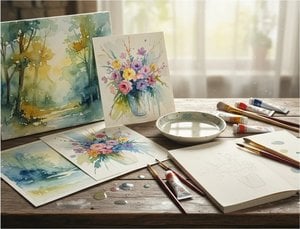
Ephemeral Visions: Exploring the Artistic Legacy & Nuances of Watercolor Painting
Explore the captivating world of watercolor painting! Discover its rich history, essential techniques, influential artists & collecting tips from art experts. A comprehensive guide for enthusiasts.

Aquarelas Imortais: 10 Obras-Primas que Revolucionaram a Arte | ArtsDot
Descubra as 10 obras-primas em aquarela que revolucionaram a arte! Explore a história de Turner, Cézanne e outros mestres. Encontre reproduções de alta qualidade para decorar sua casa com elegância. ArtsDot: arte atemporal ao seu alcance.