

 Visualizar em escala
 Enviar
 Compartilhar
 Ver detalhes

 Baixar
 Semelhantes
 Raio X
 Apresentação de slides
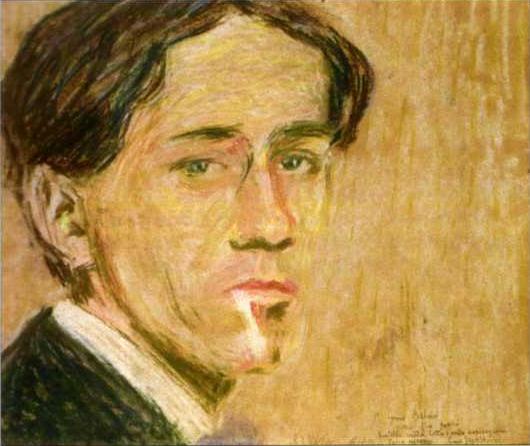
Self-portrait


 Ver mais
Giclée / Impressão de Arte
Impressão giclée ou em tela de qualidade de museu, com produção rápida e opções flexíveis de acabamento. ( Encomendar reprodução pintada à mão Comprar imagem em alta resolução)




































Escolha entre os nossos tamanhos pré-definidos que respeitam as proporções originais da obra de arte.

Você pode inserir suas próprias dimensões para se ajustar a uma moldura ou espaço específico. Se o tamanho selecionado não corresponder às proporções da imagem original, iremos recortar a obra de arte ou estender a imagem com uma borda espelhada ou preenchimento sólido. Um mockup digital será enviado para sua aprovação antes do início da produção.
Por favor, observe que a visualização na tela não reflete o recorte ou a extensão real. Apenas o mockup mostrará com precisão a composição final.
Embora tamanhos personalizados estejam disponíveis, recomendamos selecionar uma dimensão da lista predefinida para preservar as proporções originais.
Entrega mundial () em 2 semanas, em vez das 4/5 semanas padrão. (19 Agosto)

Envio Expresso Gratuito para todo o Mundo

Tela de Linho Premium

Seguro de transporte total

Garantia de Reembolso de Impostos Alfandegários

Garantia de Fidelidade de Cor

Política de Devolução de 60 Dias (Apenas para Defeitos)

Garantia de reembolso de 100%

Desconto para múltiplas unidades
 A opção de vidro está disponível apenas para tamanhos inferiores a 110 cm

Self-portrait
Giclée / Impressão de Arte
Dimensões da Reprodução
-


Preço Total
$ 62
Descrição do Item
Severini's Style and Influences
Gino Severini was an Italian painter who was part of the Futurist movement. His style is characterized by a mix of Cubism and Futurism, which is evident in his use of geometric shapes and bold colors. The Self-portrait is a great example of Severini's unique style, with its bold lines and vibrant colors. You can find more information about Gino Severini and his works on https://ArtsDot.com, including his other notable paintings like Dancers at Monicos.Similar Works and Artists
Other artists who were part of the Futurist movement include Umberto Boccioni and Giacomo Balla. Their works can be found in various museums, including the Museum of Modern Art in New York. If you're interested in learning more about these artists and their works, I recommend checking out https://ArtsDot.com and Wikipedia for more information.- Gino Severini's Self-portrait is a significant work in the history of art, showcasing the artist's unique style and influences.
- The painting is characterized by its bold lines, vibrant colors, and geometric shapes, which are all hallmarks of the Futurist movement.
- As a professional expert in Art and https://ArtsDot.com salesman, I can appreciate the beauty and importance of this painting, and recommend it to anyone interested in early 20th-century art.
You can also find more information about the Futurist movement and its notable artists on Wikipedia, including Gino Severini, Umberto Boccioni, and Giacomo Balla.
Obras Relacionadas


Biografia do Artista
Early Life and the Seeds of Artistic Rebellion
Gino Severini emerged into the world on April 7, 1883, in the picturesque Tuscan town of Cortona, Italy. His beginnings were humble; his father a junior court official, his mother a dressmaker – a background that instilled in him both a sensitivity to form and an awareness of societal structures. Formal education proved ill-fitting for the young Severini’s restless spirit. Expelled at fifteen alongside classmates for a youthful indiscretion involving stolen exam papers, he found himself cast adrift from conventional schooling. This expulsion, however, wasn't a derailment but rather a catalyst, freeing him to pursue his burgeoning artistic inclinations independently while working as a shipping clerk. The move to Rome in 1899 marked a turning point; it was there, amidst the ancient ruins and vibrant street life, that he began formal art classes, quickly becoming captivated by the shimmering effects of Divisionism – a technique championed by artists like Giacomo Balla and Umberto Boccioni, who would soon become pivotal figures in his artistic journey. These formative years laid the essential groundwork for Severini’s eventual embrace of Futurism, igniting within him a desire to capture the dynamism of modern life.Embracing the Velocity of Futurism
The invitation to join Filippo Tommaso Marinetti and Umberto Boccioni in the burgeoning Futurist movement proved transformative for Severini. He became a signatory of the *Manifesto of the Futurist Painters* in 1910, aligning himself with a revolutionary ideology that celebrated speed, technology, and the intoxicating energy of modernity. This wasn’t merely an artistic choice; it was a philosophical commitment to shattering tradition and forging a new aesthetic language for a rapidly changing world. Severini played a crucial role in disseminating Futurist ideas internationally, notably organizing the movement's first exhibition outside Italy at Galerie Bernheim-Jeune in Paris in 1912. His work during this period, exemplified by paintings like *North-South* (1915), embodies the Futurist obsession with capturing motion and energy through fragmented forms and a vibrant, almost explosive palette. Unlike some of his colleagues who focused on machines, Severini often turned to urban scenes and dancers as subjects, reflecting his fascination with portraying the rhythms and sensations of modern life – the swirling skirts, the flashing lights, the pulsating crowds. He helped organize the first Futurist exhibition outside Italy at Galerie Bernheim-Jeune in Paris in 1912. His work during this period, exemplified by paintings like *North-South* (1915), embodies the Futurist obsession with capturing motion and energy through fragmented forms and a vibrant, almost explosive palette.A Synthesis of Styles: Cubism and Beyond
Severini’s artistic style was never confined by rigid dogma; it was a constantly evolving synthesis of influences. While deeply rooted in the Futurist aesthetic, his work also demonstrated a profound engagement with Cubism, particularly after his pivotal visit to Paris in 1911. He absorbed elements of geometric abstraction and fragmented perspectives, incorporating them into his compositions to create dynamic arrangements that conveyed a sense of simultaneity and movement. Artists like Umberto Boccioni, Carlo Carrà, and Giovanni Francesco Romanelli were significant influences, but Severini’s unique vision allowed him to forge his own path. *Waltz*, for instance, showcases this masterful fusion of styles – the swirling energy of dance rendered through a Cubist lens, resulting in a painting that feels both chaotic and harmonious. He was adept at capturing lively urban scenes, for example in *Dynamic Hieroglyph of the Bal Tabarin* (1912) and *The Boulevard* (1913). ##Later Years and Enduring Legacy Severini continued to experiment with diverse artistic media, including mosaic and fresco, expanding his creative horizons beyond the canvas. He divided his time between Paris and Rome, producing works that reflected both his Italian heritage and his immersion in Parisian culture. Beyond his painting, he became a prolific writer on art theory, contributing significantly to the intellectual discourse surrounding modernism. Gino Severini passed away in Paris on February 26, 1966, at the age of 83, leaving behind a rich and multifaceted body of work. His legacy as a key figure in the Futurist movement – and a significant contributor to 20th-century Italian art – endures. Today, his paintings are held in prominent museums worldwide, including the Galleria Civica di Arte Moderna in Venice, serving as testaments to his lasting impact on the development of modern art and continuing to inspire generations of artists and viewers alike. He remains a vital link between the past and present, reminding us of the power of art to capture the energy and complexity of the human experience.
Gino Severini
1883 - 1966 , Itália
Informações Rápidas
- Artistic Movement Or Style: Futurismo e Cubismo
- Artists Or Movements Influenced By This Artist: ['Marino Parenti']
- Artists Who Influenced This Artist:
- Giacomo Balla
- Umberto Boccioni
- Date Of Birth: 7 abril 1883
- Date Of Death: 26 fevereiro 1966 Paris, França
- Full Name: Gino Severini
- Nationality: Italiana
- Notable Artworks:
- Pan Pan Dança
- Hieróglifo Dinâmico do Bal Tabarin
- Lanceros Italianos em Cavalinho
- Maternidade
- Place Of Birth: Cortona, Itália
Artigos Relacionados

The Subtleties of Pastel: A Comprehensive Exploration of Technique, History & Emotional Resonance
Explore the captivating world of pastel art! Discover its rich history, Impressionistic masters like Degas, emotional power & unique techniques. Find museum-quality reproductions at ArtsDot.

The Subdued Radiance of Pastel: Exploring Nuance & Emotion in Art
Explore the nuanced world of pastel art! Discover its history, techniques & emotional power with expert insights from ArtsDot.com. Find museum-quality reproductions and learn about collecting this delicate medium.

Reflecting the Self: A History of Portraiture & Psychological Insight
Explore the fascinating history of self-portraiture from Renaissance masters like Dürer & Rembrandt to modern interpretations. Discover the psychological insights and artistic techniques behind these iconic works. Expert analysis for art enthusiasts.

The Echo of Self: Reflectivity as a Core Theme in Art History & Contemporary Practice
Explore the rich history of self-representation in art, from Renaissance masters to modern innovators. Discover how artists use portraiture to reveal identity, emotion & the depths of the human psyche. Expert insights for collectors.

The Subdued Radiance of Pastel Palettes: Exploring Emotional Resonance in Art History
Explore the emotional power of pastel palettes in art history! Discover Impressionism, Post-Impressionism & color psychology insights. Find museum-quality reproductions at ArtsDot.

