
- Início

- Reprodução de Pintura a Óleo
- Gian Lorenzo Bernini
- Aeneas, Anchises, and Ascanius

 Comprar impressão Comprar imagem em alta resolução
 Enviar
 Compartilhar
 Details
 Adicionar aos favoritos

 Baixar
 Semelhantes
 X-Ray
X-Ray
 Slideshow
Aeneas, Anchises, and Ascanius


Reprodução em Óleo Feita à Mão
Óleo sobre tela pintado à mão no seu tamanho e moldura, feito sob encomenda pelos nossos artistas.




































 Saiba mais
Escolha entre os nossos tamanhos pré-definidos que respeitam as proporções originais da obra de arte.

Pode inserir as suas próprias dimensões para se adequar a uma moldura ou espaço específico. Se o tamanho selecionado não corresponder às proporções da imagem original, iremos cortar a obra de arte ou estender a pintura com elementos adicionais pintados à mão. Um esboço digital será enviado para sua aprovação antes do início da produção.
Tenha em atenção que a pré-visualização no ecrã não reflete o corte ou extensão real. Apenas o esboço mostrará com precisão a composição final.
Embora tamanhos personalizados estejam disponíveis, recomendamos selecionar uma dimensão da lista predefinida para preservar as proporções originais.
Após o pedido, a equipa ArtsDot.com enviará um e-mail ao cliente para solicitar instruções e fornecer uma prévia do esboço.
Entrega Mundial () em 3 a 4 semanas, em vez das 5 semanas padrão. (1 Julho). Sem comprometer a qualidade.

Envio Expresso Gratuito para todo o Mundo

Tela de Linho Premium

Seguro de envio completo

Garantia de Reembolso de Impostos Alfandegários

Garantia de Fidelidade de Cores

Política de Devolução de 60 Dias (Apenas para Defeitos)

Garantia de 100% de Reembolso

Desconto para múltiplas unidades
 A opção de vidro está disponível apenas para tamanhos inferiores a 110 cm

Aeneas, Anchises, and Ascanius
Técnica de Reprodução
Dimensões da Reprodução
-


Preço Total Final
-
Descrição da Obra
The Genesis of Rome: Bernini’s Epic Family Portrait
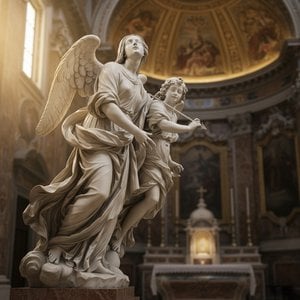
Gian Lorenzo Bernini's “Aeneas, Anchises, and Ascanius,” a monumental sculpture housed within the Galleria Borghese in Rome, isn’t merely a depiction of a mythological scene; it’s a potent embodiment of Roman identity and ambition. Completed around 1618-19, during Bernini’s remarkably fertile early career, the work transcends its classical subject matter to become a vibrant testament to the burgeoning power and narrative of the nascent Roman Republic. The sculpture captures a pivotal moment – the arrival of Aeneas, son of Venus, in Italy after his legendary flight from Troy, accompanied by his aged father Anchises and young son Ascanius. This isn’t simply a retelling of Virgil's *Aeneid*; it’s an assertion of lineage, destiny, and the very foundation upon which Rome would be built.

The Dance of Marble: Technique and Bernini’s Genius
Bernini's mastery is immediately evident in the sculpture’s dynamic composition and exquisite execution. Carved from pristine white marble, the figures are rendered with a breathtakingly lifelike quality – a hallmark of Bernini’s approach to sculpture. The dramatic diagonal lines, particularly in Aeneas’s stance and the flowing drapery, create a sense of movement and forward momentum, as if capturing a fleeting moment of transition. Notice the subtle shifts in weight distribution, the delicate musculature of Aeneas's body, and the dignified bearing of Anchises – all meticulously sculpted to convey both strength and vulnerability. The use of *terracciotema*, a technique involving applying a reddish-brown clay slip to the marble surface, adds depth and texture, enhancing the illusion of volume and realism. Bernini’s ability to imbue cold, unyielding stone with such palpable emotion is a testament to his unparalleled skill.
- Dynamic Composition: Diagonal lines create movement and drama.
- Realistic Detail: Meticulous carving of musculature and drapery.
- Terracotta Slip: Adds depth and texture to the marble surface.
Symbolism Woven into Stone: Anchises, Aeneas, and the Fate of Rome
Beyond its narrative depiction, “Aeneas, Anchises, and Ascanius” is rich in symbolic meaning. Anchises, representing the wisdom and experience of generations past, carries his son Aeneas – the future founder of Rome – on his shoulder. Ascanius, often identified as Iulus in Roman mythology, embodies the hope for a glorious future. The lion skin draped over Aeneas’s shoulders is a potent symbol of power and authority, echoing the legendary lineage of Hercules and reinforcing Aeneas's destiny to lead his people. The sculpture subtly connects this mythological narrative with the political ambitions of Cardinal Scipione Borghese, who commissioned the work, linking the family of Aeneas to the rise of Rome and, by extension, to the power of the papacy.
A Legacy in Marble: Context and Influence
Bernini’s “Aeneas, Anchises, and Ascanius” stands as a pivotal work in the transition from Mannerism to Baroque sculpture. Influenced by earlier works like Michelangelo's *Risen Christ* and Raphael's *Fire in the Borgo*, Bernini masterfully blended classical ideals with dramatic emotion and theatricality – hallmarks of the Baroque style. The sculpture’s enduring appeal lies not only in its technical brilliance but also in its ability to evoke a profound sense of history, destiny, and the eternal struggle between tradition and innovation. Reproductions of this iconic masterpiece continue to captivate audiences worldwide, offering a glimpse into the artistic genius of Gian Lorenzo Bernini and the foundational myths that shaped Western civilization.
Obras Relacionadas


Biografia do Artista
A Roman Genius: The Life and Legacy of Gian Lorenzo Bernini
Gian Lorenzo Bernini, a name synonymous with the Baroque era, was more than just a sculptor; he was an architect, painter, stage designer, and a true *uomo universale* – a universal man. Born in Naples in 1598, his journey to becoming one of history’s most celebrated artists began within a family steeped in artistic tradition, ultimately shaping the very landscape of Rome and influencing generations of creatives. His father, Pietro Bernini, was a respected sculptor himself, providing Gian Lorenzo with an early foundation in the craft, but it was the vibrant atmosphere of Rome – its classical heritage and burgeoning artistic scene – that truly ignited his prodigious talent. Bernini’s formative years were spent absorbing the masterpieces housed within the Vatican collections, meticulously studying the forms and principles of ancient Greek and Roman sculpture. This deep immersion wasn't merely academic; it instilled in him a profound understanding of proportion, anatomy, and the power of idealized beauty – elements he would later master with unparalleled skill. Even as a young boy, his ability to sculpt surpassed that of his father, hinting at the revolutionary force he was destined to become. Cardinal Maffeo Barberini, who would ascend to the papacy as Urban VIII, recognized this extraordinary potential and became Bernini’s most influential patron, providing him with unprecedented opportunities and shaping not only his career but also the aesthetic direction of Rome itself.Sculpting Emotion: The Birth of Baroque Drama
Bernini is unequivocally considered the preeminent sculptor of the Baroque period, a style characterized by its dynamism, emotional intensity, and sheer grandeur. He didn’t simply sculpt figures; he breathed life into marble, capturing moments of profound psychological depth and dramatic narrative with unparalleled skill. Where Renaissance sculpture often prioritized idealized form and static beauty, Bernini embraced movement, theatricality, and the raw power of human emotion. His work moved beyond mere representation to evoke a visceral response in the viewer. Key elements define his distinctive style: a masterful ability to convey complex emotions through facial expressions and body language; an astonishing technical proficiency that allowed him to render textures – flowing hair, delicate fabrics, smooth skin – with breathtaking realism; and above all, a commitment to dramatic narrative, depicting moments of intense action or spiritual climax. The Ecstasy of Saint Teresa, housed in the Cornaro Chapel, remains perhaps his most iconic achievement – a swirling composition of marble, bronze, and light that captures a mystical experience with an almost overwhelming emotional force. The interplay of textures, the contorted poses, and the dramatic lighting create a scene that is both intensely spiritual and profoundly human. Other masterpieces like Apollo and Daphne and David showcase this same dynamic energy, transforming stone into fleeting moments of transformation and poised tension.Beyond Sculpture: Architecture and Urban Visions
Bernini’s genius extended far beyond the realm of sculpture. He was a remarkably versatile artist who made significant contributions to architecture and urban planning, fundamentally reshaping the cityscape of Rome. His architectural designs were never conceived in isolation; they were always integrated with his sculptural work, creating unified artistic experiences that blurred the boundaries between disciplines. The monumental Baldacchino above the high altar of St. Peter’s Basilica is a testament to this holistic approach – a soaring bronze canopy that dominates the space and draws the eye upwards in awe. He also played a pivotal role in redesigning several Roman piazzas, transforming them into vibrant public spaces. The Fountain of the Four Rivers in Piazza Navona, with its allegorical figures representing major rivers from different continents, is a prime example of his ability to create dynamic and engaging urban environments. His work on St. Peter’s Basilica, including the expansive colonnade that embraces visitors as they approach, dramatically altered the basilica's appearance and created a grand ceremonial space befitting the heart of Christendom.A Lasting Influence: Bernini’s Historical Significance
Gian Lorenzo Bernini profoundly impacted the course of Western art. His innovative approach to sculpture established the Baroque style as a dominant force in European art for over a century, influencing generations of artists with his dramatic compositions and technical virtuosity. He wasn't merely an imitator of classical forms; he synthesized them with a new sense of dynamism and emotional intensity, creating something entirely original. His integration of sculpture, architecture, and painting into unified artistic experiences set a new standard for artistic expression, demonstrating the power of art to engage all the senses and evoke profound emotions. As Howard Hibbard eloquently noted, Bernini’s impact was so significant that he stands as “the greatest sculptor of the 17th century.” His works continue to inspire awe and admiration, solidifying his place as one of history’s most important artists – a true *uomo universale* whose legacy continues to resonate today.Family & Further Achievements
- Pietro Bernini: Gian Lorenzo’s father, a sculptor who provided early training and guidance.
- Cardinal Scipione Borghese: An early patron whose commissions allowed Bernini to develop his signature style.
- Pope Urban VIII: Bernini’s most significant patron, providing extensive opportunities for architectural and sculptural projects in Rome.
- Architectural Projects: Beyond St. Peter’s Basilica, Bernini designed churches like Sant’Andrea al Quirinale and contributed to the design of Palazzo Barberini.
- Theatrical Designs: He was also a playwright and stage designer, creating elaborate sets and machinery for theatrical productions.

Gian Lorenzo Bernini
1598 - 1680 , Itália
Informações Rápidas
- Artistic Movement Or Style: Barroco
- Artists Or Movements Influenced By This Artist:
- Barroco escultura
- Arte europeia
- Artists Who Influenced This Artist:
- Pietro Bernini
- Michelangelo
- Date Of Birth: 7 de dezembro 1598
- Date Of Death: 28 de novembro 1680
- Full Name: Gian Lorenzo Bernini
- Nationality: Italiano
- Notable Artworks:
- Êxtase de Santa Teresa
- Apollo e Dafne
- David
- Baldachino
- Fontes
- Place Of Birth: Nápoles, Itália
Artigos Relacionados
Gian Lorenzo Bernini: Sculpting Baroque Emotion & the Roman Imagination
Explore the life & revolutionary art of Gian Lorenzo Bernini, the master sculptor of the Baroque era. Discover his iconic works like David and Ecstasy of Saint Teresa – a journey into Roman artistic genius.


Theatricality & Triumph: Baroque Drama in Painting & Sculpture
Explore the dramatic world of Baroque art! Discover its history, defining characteristics, & lasting influence on painting & sculpture. Expert insights into Caravaggio, Zurbarán, and Bernini – plus high-quality reproductions at ArtsDot.

The Dramatic Flourish: Exploring the Baroque Movement's Enduring Legacy in Art History
Explore the dramatic world of Baroque art! Discover iconic artists like Caravaggio & Rubens, defining techniques, and its lasting impact on art history. Expert insights for collectors & enthusiasts at ArtsDot.

O Florescimento Dramático da Arte Barroca: História, Características e Influência Duradoura
Explore a riqueza da arte barroca! Descubra sua história, características marcantes, artistas renomados e o legado duradouro deste estilo fascinante. Guia completo e informativo.

The Visceral Stage: Exploring Dramatic Narratives & Emotional Intensity in Baroque Art
Explore the dramatic world of Baroque art! Discover iconic masters like Caravaggio & Rembrandt, their techniques, and the movement's lasting impact. Expert insights for collectors & enthusiasts at ArtsDot.


