


 Visualizar em escala
 Enviar
 Compartilhar
 Ver detalhes

 Baixar
 Semelhantes
 Raio X
 Apresentação de slides
Abstract Bilding


 Ver mais
Giclée / Impressão de Arte
Impressão giclée ou em tela de qualidade de museu, com produção rápida e opções flexíveis de acabamento. ( Alternar para pintura feita à mão Baixar imagem em alta resolução)




P118B $10

P118H $10

P118W $10

P438Z $10

P508JH $12

P508YH $12

P805H $10

P805Z $10

P919BZ $10

P919G $10

P919XJ $10

P959ZH $10

P968JZ $12

W106C $8

W218G $10

W218JH $8

W218Y $10

W307PJ $10

W316G $10

W316PJ $8

W316Y $10

W398PJ $8

W4111J $10

W500HY $15

W500JH $15

W692G $12

W849H $8

W940BG $15

W953PJ $8




Escolha entre os nossos tamanhos pré-definidos que respeitam as proporções originais da obra de arte.

Você pode inserir suas próprias dimensões para se ajustar a uma moldura ou espaço específico. Se o tamanho selecionado não corresponder às proporções da imagem original, iremos recortar a obra de arte ou estender a imagem com uma borda espelhada ou preenchimento sólido. Um mockup digital será enviado para sua aprovação antes do início da produção.
Por favor, observe que a visualização na tela não reflete o recorte ou a extensão real. Apenas o mockup mostrará com precisão a composição final.
Embora tamanhos personalizados estejam disponíveis, recomendamos selecionar uma dimensão da lista predefinida para preservar as proporções originais.
Entrega mundial () em 2 semanas, em vez das 4/5 semanas padrão. (10 Agosto)

Envio Expresso Gratuito para todo o Mundo

Tela de Linho Premium

Seguro de transporte total

Garantia de Reembolso de Impostos Alfandegários

Garantia de Fidelidade de Cor

Política de Devolução de 60 Dias (Apenas para Defeitos)

Garantia de reembolso de 100%

Desconto para múltiplas unidades
 A opção de vidro está disponível apenas para tamanhos inferiores a 110 cm

Abstract Bilding
Giclée / Impressão de Arte
Dimensões da Reprodução
-


Preço Total
$ 62
Descrição do Item
Exploring the Layers of Emotion in Gerhard Richter’s Abstract Building
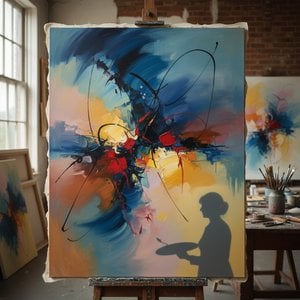
The painting “Abstract Building,” created by Gerhard Richter in 1992, stands as a testament to Richter's signature approach – blurring the boundaries between representation and abstraction. It’s not merely pigment on canvas; it’s an invitation into a contemplation of color, texture, and memory itself. The photograph captures a wall-mounted piece, highlighting its deliberate placement within a domestic space, suggesting that art should be experienced as part of daily life.- Subject Matter: While ostensibly depicting a building—perhaps a residential structure—the painting eschews precise architectural detail. Instead, Richter prioritizes the emotive qualities of form and color over literal depiction.
- Style: Richter’s style is characterized by ‘photorealistic abstraction.’ He employs techniques that mimic photographic processes, layering translucent washes of pigment to achieve a hazy, dreamlike effect. This method deliberately obscures edges and contours, creating an illusion of depth and inviting viewers to fill in the gaps with their own perceptions.
Technique: A Dance Between Transparency and Texture
Richter’s masterful technique relies heavily on acrylic paint diluted with glazing mediums. These glazes allow for subtle shifts in color and luminosity as they dry, resulting in a surface that appears both luminous and slightly obscured. The artist meticulously applies these washes, often multiple times, building up layers of pigment to achieve the desired textural complexity. This layering process isn’t about creating a polished finish; it's about capturing the ephemeral nature of experience—the way light interacts with surfaces and how memories fade over time.Historical Context: Reflections on Postwar Germany
Created in the aftermath of the fall of the Berlin Wall and amidst ongoing debates about German identity, “Abstract Building” reflects Richter’s broader preoccupation with confronting trauma and uncertainty. His artistic explorations stem from a deep engagement with the legacy of Nazi Germany and its impact on individual consciousness. The painting's muted palette—dominated by reds, blues, greens, yellows, and oranges—can be interpreted as representing both the vibrancy of life and the lingering shadows of history. Richter’s work consistently seeks to grapple with difficult questions about truth, perception, and the role of art in processing collective memory.Symbolism: The Fragmented Image – A Mirror to Consciousness
The hazy, indistinct forms within “Abstract Building” symbolize the elusive nature of reality. Richter deliberately disrupts visual certainty, mirroring the anxieties inherent in navigating a world marked by division and loss. The repetition of color—particularly red—suggests an insistent presence, perhaps representing passion or urgency, yet simultaneously hinting at incompleteness. Ultimately, the painting encourages viewers to engage actively with its imagery, prompting them to consider their own interpretations and emotional responses.Emotional Impact: An Invitation to Contemplation
“Abstract Building” transcends mere visual aesthetics; it evokes a profound sense of melancholy and introspection. Its textured surface invites tactile engagement, mirroring the way memories linger in our subconscious minds. The painting’s ambiguous colors create an atmosphere of quiet contemplation—a space for reflection on themes of loss, resilience, and the enduring power of art to communicate complex emotions.


Biografia do Artista
A Life Shaped by Division: The Early Years and Artistic Formation of Gerhard Richter
Gerhard Richter’s story is inextricably linked to the fractured history of 20th-century Germany. Born in Dresden in 1932, his childhood unfolded under the shadow of a rising National Socialist regime. This formative period, marked by displacement – his family moved several times during the war years – instilled within him a profound sense of uncertainty and a questioning spirit that would permeate his artistic practice for decades to come. The idyllic landscapes of his early upbringing in Reichenau and Waltersdorf were soon disrupted by conflict, leaving an indelible mark on his psyche. His father, though not a fervent supporter of the Nazi party, navigated the complexities of life under authoritarian rule as a schoolteacher, while his mother fostered a love for literature and music within the family. This duality – a pragmatic acceptance of circumstance alongside a yearning for cultural expression – became a defining characteristic of Richter’s own artistic approach. He began formal training at the Dresden Academy of Fine Arts in 1951, initially immersed in the tradition of socialist realism demanded by the East German state. However, even within this constrained environment, a desire for artistic freedom simmered beneath the surface, fueled by a growing dissatisfaction with ideological constraints and a longing to explore more expansive creative possibilities.Escaping Constraints: Düsseldorf and the Exploration of Style
The year 1961 proved pivotal. Richter, along with his wife Marianne Eufinger, made the daring decision to flee East Germany, seeking refuge in the burgeoning art scene of Düsseldorf. This move marked a radical shift in his artistic trajectory. The West German landscape offered a liberating environment where experimentation and innovation were not only permitted but actively encouraged. In Düsseldorf, he encountered a vibrant community of artists grappling with questions of identity, representation, and the legacy of history. He quickly began to dismantle the rigid stylistic conventions of socialist realism, embarking on a period of intense exploration that would define his early mature work. This era saw him oscillate between seemingly disparate approaches – from photorealism, meticulously recreating photographic images with astonishing precision, to abstract compositions characterized by bold colors and dynamic brushstrokes. His collaboration with Sigmar Polke led to the coining of the term ‘Capitalist Realism,’ a deliberately ambiguous label that reflected their shared skepticism towards established artistic norms and their appropriation of imagery from advertising and mass media. This period wasn’t about finding *a* style, but rather questioning the very notion of stylistic coherence, embracing contradiction as a fundamental principle.Blurring Boundaries: Photorealism, Abstraction, and the Power of Chance
Richter's photorealistic paintings, often based on family photographs or newspaper images, are not merely copies of reality but rather investigations into the nature of perception and representation. By meticulously rendering these images with an almost clinical detachment, he forces viewers to confront the inherent ambiguity of photographic truth. Simultaneously, Richter delved deeper into abstraction, creating canvases layered with vibrant colors and gestural marks. These abstract works are often created using a unique technique involving squeegees – tools typically used for cleaning windows – which he drags across the surface of the canvas, manipulating the paint in unpredictable ways. This embrace of chance and spontaneity is central to his artistic philosophy, allowing him to relinquish control and invite unexpected outcomes. His ‘Color Charts,’ systematic arrangements of colored squares, further challenge traditional notions of artistic expression, questioning the very definition of painting itself. These works are not about individual aesthetic preferences but rather about exploring the inherent properties of color and its organizational possibilities. The influence of artists like Picasso and Fontana, who explored abstraction through gesture and fragmentation, became crucial during this period.A Legacy of Ambiguity and Innovation
Throughout his career, Gerhard Richter has consistently resisted easy categorization, defying attempts to pin him down to a single style or movement. His work is characterized by a profound sense of ambiguity—a willingness to embrace contradiction, uncertainty, and the limitations of representation. From his early photorealistic portraits to his later abstract compositions, Richter’s paintings are imbued with a deep awareness of history, memory, and the complexities of the human condition. He has been recognized for his technical mastery, his innovative use of materials, and his intellectual rigor. His work has had a profound influence on generations of artists, shaping the course of contemporary art and challenging conventional notions of what painting can be. Richter’s paintings are not simply beautiful objects; they are complex statements about the nature of reality, the power of image, and the enduring legacy of the past. His continued exploration of these themes ensures that his work will remain relevant and thought-provoking for years to come.
Gerhard Richter
1932 - , Alemanha
Informações Rápidas
- Artistic Movement Or Style:
- Fotorealismo
- Abstração
- Realismo capitalista
- Artists Or Movements Influenced By This Artist: ['Pintores contemporâneos']
- Artists Who Influenced This Artist:
- Picasso
- Arp
- Date Of Birth: 9 fevereiro 1932
- Full Name: Gerhard Richter
- Nationality: Alemão
- Notable Artworks:
- Pintura abstrata 610-1
- Gilbert
- S. com Criança
- 18 de outubro de 1977
- Place Of Birth: Dresden, Alemanha
Artigos Relacionados

Defining Art Now: Top 10 Masterpieces of '08-Contemporary & Beyond | ArtsDot
Explore 10 defining masterpieces of contemporary art – from Jeff Koons to Yayoi Kusama. Discover the stories behind iconic paintings & sculptures, and find museum-quality reproductions for your home at ArtsDot.com. Explore the full collection online!

Gene Davis: Chromatic Explorations of Color Field Painting & the Washington Color School
Explore the vibrant world of Gene Davis and the Washington Color School. Discover his iconic stripe paintings, innovative techniques, and lasting impact on American abstract art. A deep dive for collectors & enthusiasts.
Beatrice Parsons: A Study in Abstract Expressionism & the Poetics of Color Field Painting
Explore the captivating world of Beatrice Parsons, a pioneering British abstract expressionist. Discover her journey from garden watercolors to evocative color field paintings and learn about her place within art history.

Jacob Kainen: A Pioneer of American Color Field Painting & Abstract Expressionism
Explore the life & work of Jacob Kainen, a pivotal figure in American Abstract Expressionism and Color Field painting. Discover his journey from Social Realism to vibrant abstraction and lasting influence on 20th-century art.

Morris Louis: Pioneering Color Field Painting & Abstract Expressionism's Legacy
Explore the groundbreaking abstract expressionism of Morris Louis, a pioneer of Color Field painting. Discover his innovative techniques, influential series & lasting legacy in post-war American art. Learn more at ArtsDot.



