

 Visualizar em escala
 Enviar
 Compartilhar
 Ver detalhes

 Baixar
 Semelhantes
 Raio X
 Apresentação de slides
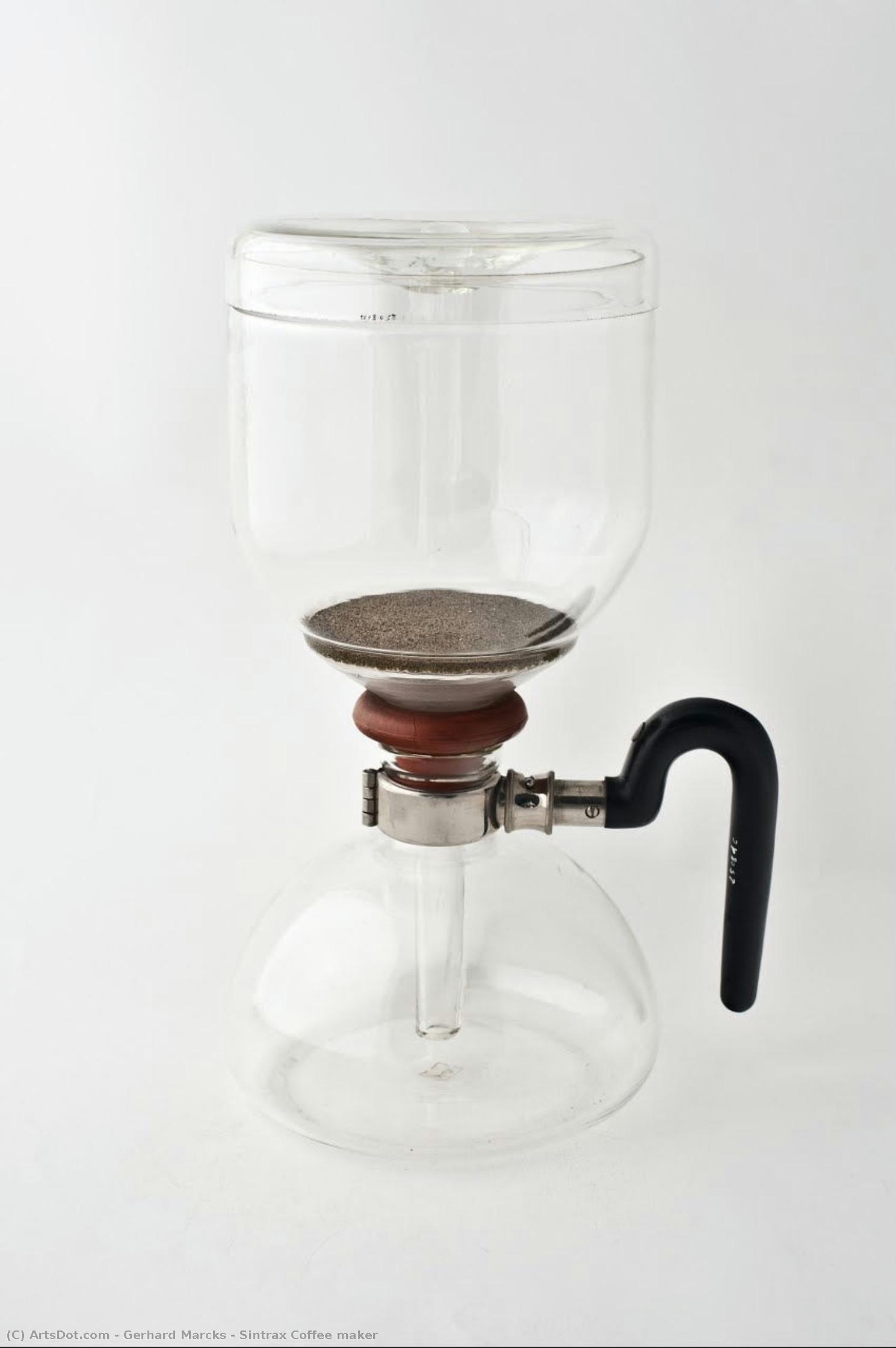
Sintrax Coffee maker
 1925
1925 15.0 x 31.0 cm
 Museu Nacional de Artes Decorativas
 Ver mais
Adquira uma imagem digital de alta resolução e aprimorada, muito superior à prévia online.
Cada arquivo é meticulosamente preparado por nossos especialistas internos, utilizando ferramentas avançadas e retoques manuais de alta precisão. Garantimos que cada imagem apresente clareza excepcional, fidelidade de cores e detalhes minuciosos.
O arquivo final é entregue por e-mail em até 72 horas, otimizado para uso imediato em ambientes profissionais, editoriais e de impressão. Esta é a mesma qualidade utilizada por estúdios de design de alto nível, editoras e galerias.
Imagem Digital
Baixe um arquivo de alta resolução para exibição pessoal, impressão e projetos criativos. ( Encomendar impressão Encomendar reprodução pintada à mão)
Incluído em cada pedido de imagem digital
Entrega Digital Especializada e Garantida
Ao escolher o ArtsDot.com, você não está apenas adquirindo uma imagem — você está recebendo uma obra de arte digital profissionalmente aprimorada, elaborada com precisão e com garantia de satisfação. Aqui está tudo o que acompanha seu pedido, automaticamente:

Entrega rápida por e-mail
O seu arquivo de imagem digital em alta resolução será enviado por e-mail em até 72 horas após o pedido — pronto para uso imediato.

Arquivo Digital com IA Otimizado
Sua obra de arte é otimizada profissionalmente por meio de ferramentas avançadas de IA e edição manual, garantindo o máximo de detalhes, clareza e precisão de cores.

Reenvio gratuito vitalício
Apagou ou perdeu o seu ficheiro acidentalmente? Não se preocupe – nós reenviamos para si a qualquer momento, gratuitamente.

Sem Taxas de Importação - Sempre
Desfrute da sua obra de arte instantaneamente, sem taxas alfandegárias, impostos ou custos de entrega — downloads digitais são sempre isentos de taxas.

Garantia de Precisão de Cores
Garantimos que sua imagem digital reflita as cores originais com a maior fidelidade possível, utilizando ferramentas profissionais e gerenciamento de cores.

Garantia de Satisfação de 60 Dias
Se você não estiver satisfeito com sua imagem digital, nós a revisaremos ou reembolsaremos 100% dentro de 60 dias — sem perguntas.

Garantia de Reembolso 100%
Não está satisfeito? Receba o reembolso total em até 60 dias após o recebimento do seu arquivo digital — sem perguntas.

Descontos para pedidos em lote
Compre 3 imagens, economize 10% - Compre 5, economize 15% - Compre 10+, economize 20%. Ideal para projetos criativos, galerias e agências.
Obras Relacionadas


Biografia do Artista
Early Life and Education
- Gerhard Marcks was born on February 18, 1889, in Berlin, Germany.
- At the age of 18, he began an apprenticeship with sculptor Richard Scheibe, where he honed his skills in sculpting animals using terracotta.
- He married Maria Schmidtlein in 1914 and together they raised six children.
- Marcks served in the German army during World War I, an experience that significantly impacted his health for years to come.
Bauhaus Affiliation and Artistic Development
- Following WWI, Marcks became involved with influential art groups like the Novembergruppe and the Arbeitsrat für Kunst, alongside artists such as Walter Gropius and Lyonel Feininger.
- In 1919, he joined the faculty of the newly founded Bauhaus in Weimar, appointed as the Form Master of the pottery workshop. He collaborated with master potter Max Krehan, blending artistic vision with traditional craftsmanship.
- During his time at the Bauhaus, Marcks explored woodcutting techniques, inspired by Feininger, and began creating works like “Die Katzen” (“The Cats”) and “Die Eule” (“The Owl”).
- His artistic focus gradually shifted from animal forms to the human figure, a subject that would dominate his work for the remainder of his career.
- He resigned from Bauhaus when it moved to Dessau in 1925, feeling its increasing emphasis on technology conflicted with his artistic principles.
Mid-Career and Challenges Under Nazism
- Marcks took a teaching position at the Halle School of Arts and Crafts, dedicating himself to figurative sculpture.
- His Expressionistic style became more subdued but retained emotional depth.
- The rise of the Nazi regime brought significant challenges. He was dismissed from his post in 1933, and his work was labeled “degenerate” in 1937, leading to its inclusion in the infamous "Degenerate Art" exhibition in Munich.
- Despite persecution, Marcks remained in Germany throughout World War II, making trips to Italy where he worked at Villa Romana in Florence and Villa Massimo in Rome.
- His studio in Berlin was bombed during an air raid in 1943, resulting in the destruction of many artworks.
Later Life and Legacy
- After WWII, Marcks became a professor of sculpture at the Landeskunstschule (Regional Art School) in Hamburg for four years before retiring to Cologne.
- He designed numerous war memorials dedicated to soldiers and civilians.
- Gerhard Marcks died on November 13, 1981, in Burgbrohl, Eifel, Germany.
- The Gerhard Marcks Haus, a museum dedicated to his work, was established in Bremen, Germany, housing over 12,000 sketches, prints, and sculptures.
- A significant collection of his works is also held at Luther College in Decorah, Iowa, including the monumental bronze statue “Oedipus and Antigone”.
- His work continues to be recognized for its expressive power, humanist themes, and contribution to modern sculpture.

Gerhard Marcks
1889 - 1981 , Germany
Informações Rápidas
- Artistic Movement Or Style: Bauhaus, Expressionism
- Artists Or Movements Influenced By This Artist: ['Bauhaus movement']
- Artists Who Influenced This Artist:
- Richard Scheibe
- Walter Gropius
- Date Of Birth: 18 February 1889
- Date Of Death: 13 November 1981
- Full Name: Gerhard Marcks
- Nationality: German
- Notable Artworks:
- Die Katzen
- Die Eule
- Oedipus and Antigone
- Gaea
- The Mourner
- Place Of Birth: Berlin, Germany

