

 Visualizar na parede
 Compartilhar
 Compartilhar
 Detalhes
 Guia
Guia

 Baixar imagem
 Semelhantes
 Raio X
 Ver diaporama
 Q&A
Q&A Estatísticas
Saint Sebastian

- 101.0 x 117.0 cm


 Ler mais
Giclée / Impressão de Arte
Impressão giclée ou em tela de qualidade de museu, com produção rápida e opções flexíveis de acabamento. ( Comprar pintura feita à mão Alternar para Imagem Digital)




P118B €10

P118H €10

P118W €10

P438Z €10

P508JH €12

P508YH €12

P805H €10

P805Z €10

P919BZ €10

P919G €10

P919XJ €10

P959ZH €10

P968JZ €12

W106C €8

W218G €10

W218JH €8

W218Y €10

W307PJ €10

W316G €10

W316PJ €8

W316Y €10

W398PJ €8

W4111J €10

W500HY €15

W500JH €15

W692G €12

W849H €8

W940BG €15

W953PJ €8




Escolha entre os nossos tamanhos pré-definidos que respeitam as proporções originais da obra de arte.

Insira a largura e a altura desejadas para se ajustarem à sua moldura ou parede. Uma impressão pode ser apenas cortada, nunca ampliada além da imagem original; portanto, um tamanho com proporções diferentes resultará na perda de parte da imagem. Enviamos uma maquete digital para sua aprovação antes de realizarmos a impressão. A imagem exibida nesta página não mostra o corte real — apenas a maquete o faz.
Entrega mundial () em 2 semanas, em vez das 4/5 semanas padrão. (2 Novembro)

Envio expresso gratuito para todo o mundo

Tela de Linho de Alta Qualidade

Seguro de transporte completo

Garantia de Reembolso de Impostos Alfandegários

Garantia de Fidelidade Cromática

Política de Devolução em 100 Dias (Apenas para Defeitos)

Garantia de reembolso de 100%

Oferta de desconto por quantidade
 A opção de vidro está disponível apenas para tamanhos inferiores a 110 cm

Saint Sebastian
Giclée / Impressão de Arte
Tamanho da Reprodução
-


Preço Total
€ 55
The Drama of Light and Shadow: Gerard van Honthorst’s Saint Sebastian
Gerard van Honthorst's 1623 depiction of Saint Sebastian is not merely a religious painting; it’s a masterclass in dramatic illumination, a testament to the artist’s profound understanding of light and shadow – a technique he famously adopted from the revolutionary Caravaggio. This arresting image transcends its biblical subject matter, becoming a study in human suffering, resilience, and the potent interplay between darkness and hope. The painting immediately commands attention with its stark contrasts, pulling the viewer into a scene of agonizing beauty, where every arrow wound is rendered with meticulous detail and imbued with an almost palpable sense of pain.
Honthorst’s Utrecht workshop produced numerous works influenced by Caravaggio's *tenebrism*, but this Saint Sebastian stands apart. Unlike earlier depictions that often focused on the saint’s idealized martyrdom, Honthorst presents a profoundly vulnerable figure. The composition is deliberately unbalanced; Sebastian, stripped of his armor and draped in simple robes, lies prone amidst a dark, undefined landscape. His body, pierced by a multitude of arrows – some still protruding, others embedded deep within his flesh – dominates the foreground, drawing our eye to the raw physicality of his ordeal. The artist doesn’t shy away from depicting the gruesome reality of Sebastian's suffering; the wounds are not softened or romanticized, but presented with unflinching honesty.
A Roman Masterpiece Rooted in Caravaggio’s Legacy
Honthorst’s journey to Rome in his youth proved transformative. He was deeply moved by Caravaggio’s radical approach to painting – the dramatic use of light and shadow, the intense realism, and the emotional depth conveyed through seemingly simple scenes. This encounter fundamentally shaped Honthorst's artistic style, leading him to prioritize creating a sense of theatricality and psychological intensity in his work. The influence is immediately apparent here; the deep shadows enveloping much of the scene create an atmosphere of suspense and foreboding, while strategically placed highlights accentuate Sebastian’s wounds and draw attention to his agonizing expression.
The painting's historical context is equally important. Sebastian was a Roman centurion martyred for his Christian faith during the reign of Diocletian. The story resonated deeply with the populace, particularly during periods of plague and unrest, and became associated with protection against disease. Honthorst’s depiction aligns perfectly with this contemporary belief; Sebastian's suffering becomes a symbol of endurance in the face of adversity, offering solace and hope to those enduring hardship. The presence of Irene, depicted tending to his wounds in later versions of the story (though not explicitly present here), further reinforces this theme of healing and divine intervention.
Symbolism and Emotional Resonance
Beyond its narrative content, Saint Sebastian is rich in symbolic meaning. The arrows themselves represent the physical and spiritual wounds inflicted upon the faithful by persecution. The stark contrast between light and shadow symbolizes the struggle between good and evil, hope and despair. Sebastian’s posture – his arms outstretched, his head bowed – conveys a profound sense of vulnerability and resignation, yet also hints at an underlying strength and unwavering faith. The artist masterfully captures the complex interplay of emotions—pain, suffering, acceptance, and ultimately, spiritual fortitude.
The painting's enduring power lies in its ability to evoke a visceral emotional response. It’s not simply a depiction of a historical event; it’s an exploration of human experience – the pain of loss, the resilience of the spirit, and the eternal struggle between darkness and light. Gerard van Honthorst’s Saint Sebastian remains a compelling testament to the artist's skill and his profound understanding of the human condition, offering viewers a timeless meditation on faith, suffering, and redemption.
Perguntas e Respostas
Como é construída a composição cromática de "Saint Sebastian", de Gerard van Honthorst?
Em "Saint Sebastian", um Bold contraste une-se a uma Strong Color Unity harmonia.
Qual é a cor predominante em "Saint Sebastian"?
A tonalidade dominante de "Saint Sebastian", de Gerard van Honthorst é Ochre to Sepia. A tonalidade é o tom subjacente da paleta.
Qual era a idade de Gerard van Honthorst quando "Saint Sebastian" foi criada?
Quando "Saint Sebastian" foi criada em 1623, Gerard van Honthorst — nascido(a) em 1590 — tinha 33 anos.
Obras Relacionadas


Biografia do Artista
A Master of Light and Shadow: The Life and Art of Gerard van Honthorst
Gerard van Honthorst emerged from Utrecht in 1592, a pivotal figure poised to illuminate the Dutch Golden Age with his dramatic artistry. Initially guided by his father, a decorative painter, young Gerard’s talent blossomed under the tutelage of Abraham Bloemaert, establishing a solid foundation in draftsmanship and composition. However, it was a transformative journey to Rome that irrevocably altered the course of his artistic development. There, amidst the fervent energy of the Italian Baroque, he encountered the groundbreaking work of Caravaggio – an encounter that would define his signature style and earn him the evocative nickname “Gherardo delle Notti,” or Gerard of the Nights. The dramatic use of *tenebrism*, a technique employing stark contrasts between light and dark, became Honthorst’s hallmark, imbuing his canvases with a palpable sense of drama and emotional intensity. He wasn't merely imitating Caravaggio; he was translating the Italian master’s innovations into a distinctly Dutch sensibility, focusing on intimate scenes illuminated by artificial light sources – candles, lamps, and fires – creating an atmosphere both realistic and deeply theatrical. This mastery over light wasn’t simply technical skill; it was a means of revealing character, of drawing the viewer into the emotional core of each scene.From Roman Acclaim to Dutch Mastery
Honthorst's time in Rome was marked by considerable success and patronage. He found favor amongst the city’s elite, including Vincenzo Giustiniani, for whom he created the powerful “Christ Before the High Priest,” a work that exemplifies his masterful command of light and shadow. This painting, now residing in London’s National Gallery, showcases not only his technical skill but also his ability to convey profound psychological depth within his figures. He further solidified his reputation by working for Cosimo II de' Medici, Grand Duke of Tuscany, demonstrating an adaptability and versatility that would serve him well throughout his career. Upon returning to Utrecht around 1620, Honthorst quickly established himself as a leading portrait painter in the Dutch Republic. His ability to capture not just physical likeness but also the character and social standing of his sitters made him highly sought after by wealthy merchants, nobles, and even royalty. He became president of the Guild of St. Luke in Utrecht in 1623, a testament to his growing influence within the artistic community. This period saw a flourishing of commissions, allowing Honthorst to refine his style and establish a distinctive voice within Dutch painting.A Courtly Artist: Commissions and Collaborations
The reach of Honthorst’s talent extended beyond the Netherlands. His work attracted the attention of Sir Dudley Carleton, who enthusiastically recommended him to prominent English aristocrats like the Earl of Arundel and Lord Dorchester. This led to commissions from Queen Elizabeth of Bohemia, sister of Charles I, who employed him as both a painter and drawing master for her children. These royal connections culminated in significant works such as the allegorical depiction of Charles and Henrietta Maria as Diana and Apollo, now housed at Hampton Court Palace. Honthorst’s willingness to collaborate with other artists also speaks to his open-mindedness and artistic generosity. He famously hosted Peter Paul Rubens during a visit to Utrecht, even painting him in a playful scene depicting Diogenes searching for an honest man – a testament to the mutual respect between these two Baroque giants. While some collaborative works, like “The Taking of Christ,” were initially attributed solely to Honthorst, modern scholarship has revealed the contributions of other artists, highlighting the complex dynamics of artistic production during this period. These collaborations weren’t simply about sharing workload; they were intellectual exchanges that enriched the artistic landscape.The Utrecht Caravaggisti and a Distinctive Style
Honthorst was a key figure in the *Utrecht Caravaggisti* movement – a group of Dutch painters who embraced Caravaggio's dramatic realism and *tenebrism*. Alongside artists like Hendrick ter Brugghen and Dirck van Baburen, he helped to establish a distinctly Dutch interpretation of Italian Baroque style. His emphasis on genre scenes illuminated by artificial light, his masterful portraits, and his ability to convey emotional depth through skillful use of chiaroscuro left an indelible mark on the development of Dutch Golden Age painting. He developed a unique approach, often depicting scenes with a heightened sense of theatricality and psychological tension, while retaining a remarkable attention to detail and naturalism. His compositions frequently featured multiple figures engaged in dynamic interactions, bathed in pools of light that emphasized their expressions and gestures. Honthorst’s work is characterized by a subtle yet powerful use of color, particularly the interplay of warm and cool tones, which further enhances the dramatic effect of his paintings.Legacy and Enduring Influence
Gerard van Honthorst's influence resonated far beyond his lifetime. He was a pivotal figure in art history, bridging the gap between Italian Baroque innovation and Dutch artistic tradition. His ability to seamlessly blend Italian influences with Dutch sensibilities ensured his lasting legacy, inspiring generations of artists who followed. His paintings continue to captivate audiences today, offering a glimpse into the dramatic world of 17th-century Europe. The emotional intensity and masterful use of light in his works remain profoundly moving, reminding us of the power of art to reveal the complexities of human experience. He died in Utrecht in 1656, leaving behind a body of work that continues to illuminate the artistic landscape and stand as a testament to his extraordinary talent and vision.
Gerard van Honthorst
1590 - 1656 , Países Baixos
Dados Rápidos
- Artistic Movement Or Style: Barroco, Caravagismo
- Artists Or Movements Influenced By This Artist: ['Utrecht Caravaggisti']
- Artists Who Influenced This Artist: ['Caravaggio']
- Date Of Birth: 1592
- Date Of Death: 1656
- Full Name: Gerard van Honthorst
- Nationality: Holandês
- Notable Artworks:
- Cristo no Jardim de Oliveiras
- Ceia do Último Dia
- Diana e Apollo
- Place Of Birth: Utrecht, Holanda
Artigos Relacionados

Sir Anthony van Dyck: Courtly Portraiture & the Shaping of Baroque Identity
Explore the life & legacy of Sir Anthony van Dyck, the leading court painter of his era. Discover his innovative portraiture, Baroque masterpieces, and investment potential for discerning collectors. Learn more at ArtsDot.

Rembrandt van Rijn: As 25 Obras-Primas que Definem um Mestre da Luz e Sombra | ArtsDot
Descubra as 25 obras-primas de Rembrandt van Rijn, o mestre da luz e sombra! Explore a história por trás de 'A Ronda Noturna', seus auto-retratos e muito mais. Encontre reproduções de arte exclusivas para decorar sua casa com ArtsDot.com.

The Dramatic Flourish: Exploring the Baroque Movement's Enduring Legacy in Art History
Explore the dramatic world of Baroque art! Discover iconic artists like Caravaggio & Rubens, defining techniques, and its lasting impact on art history. Expert insights for collectors & enthusiasts at ArtsDot.

Os 10 Mestres do Barroco: Obras-Primas que Moldaram a Arte e Decoram o Lar
Descubra os 10 maiores ícones do Barroco! Explore a história, técnica e emoção por trás de Caravaggio, Rembrandt, Bernini e outros mestres. Encontre reproduções de arte barroca para decorar seu lar com luxo em ArtsDot.com.
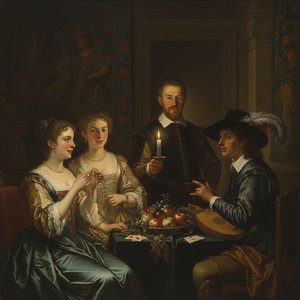
Gerard van Honthorst: Illuminating the Dutch Golden Age with Caravaggism & Courtly Grace
Explore the captivating world of Gerard van Honthorst, a Dutch Golden Age master renowned for his dramatic chiaroscuro & courtly portraits. Discover his life, art, and lasting influence on Baroque painting.

