
- Início

- Reprodução de Pintura a Óleo
- george reid
- Sir John Clerk Brodie

 Comprar impressão Comprar imagem em alta resolução
 Enviar
 Compartilhar
 Details
 Adicionar aos favoritos

 Baixar
 Semelhantes
 X-Ray
X-Ray
 Slideshow
Sir John Clerk Brodie
 Acrílico sobre tela
- Arte de Parede
- Romantic Landscape Painting
 280.0 x 145.0 cm
 The Signet Library
Reprodução em Óleo Feita à Mão
Óleo sobre tela pintado à mão no seu tamanho e moldura, feito sob encomenda pelos nossos artistas.




P118B $10

P118H $10

P118W $10

P438Z $10

P508JH $12

P508YH $12

P805H $10

P805Z $10

P919BZ $10

P919G $10

P919XJ $10

P959ZH $10

P968JZ $12

W106C $8

W218G $10

W218JH $8

W218Y $10

W307PJ $10

W316G $10

W316PJ $8

W316Y $10

W398PJ $8

W4111J $10

W500HY $15

W500JH $15

W692G $12

W849H $8

W940BG $15

W953PJ $8




 Saiba mais
Escolha entre os nossos tamanhos pré-definidos que respeitam as proporções originais da obra de arte.

Pode inserir as suas próprias dimensões para se adequar a uma moldura ou espaço específico. Se o tamanho selecionado não corresponder às proporções da imagem original, iremos cortar a obra de arte ou estender a pintura com elementos adicionais pintados à mão. Um esboço digital será enviado para sua aprovação antes do início da produção.
Tenha em atenção que a pré-visualização no ecrã não reflete o corte ou extensão real. Apenas o esboço mostrará com precisão a composição final.
Embora tamanhos personalizados estejam disponíveis, recomendamos selecionar uma dimensão da lista predefinida para preservar as proporções originais.
Após o pedido, a equipa ArtsDot.com enviará um e-mail ao cliente para solicitar instruções e fornecer uma prévia do esboço.
Entrega Mundial () em 3 a 4 semanas, em vez das 5 semanas padrão. (1 Julho). Sem comprometer a qualidade.

Envio Expresso Gratuito para todo o Mundo

Tela de Linho Premium

Seguro de envio completo

Garantia de Reembolso de Impostos Alfandegários

Garantia de Fidelidade de Cores

Política de Devolução de 60 Dias (Apenas para Defeitos)

Garantia de 100% de Reembolso

Desconto para múltiplas unidades
 A opção de vidro está disponível apenas para tamanhos inferiores a 110 cm

Sir John Clerk Brodie
Técnica de Reprodução
Dimensões da Reprodução
-


Preço Total Final
-
Descrição da Obra
Sir John Clerk Brodie – Uma Jornada pela Luz e pelo Silêncio
A obra de George Reid, intitulada “Sir John Clerk Brodie”, é um testemunho da maestria do pintor canadense em capturar a essência humana através da luz e da sombra. Criada em torno de 1862, esta pintura apresenta uma figura masculina imponente diante de uma cadeira simples, uma composição que transcende o retrato convencional para explorar temas profundos sobre força interior e contemplação.
- Estilo: Reid emprega um estilo realista meticuloso, caracterizado por linhas suaves e cores cuidadosamente selecionadas. Sua abordagem lembra os artistas holandeses do século XVII, buscando transmitir uma sensação de calma e serenidade que convida à reflexão.
- Técnica: O pintor utiliza óleo sobre tela, aplicando camadas finas e precisas para criar uma textura rica e luminosa. Observa-se um domínio excepcional da perspectiva e do uso da luz natural, elementos essenciais para iluminar o rosto do sujeito e destacar sua postura confiante.
O contexto histórico da obra é marcado pela ascensão da ciência e da filosofia na Escócia do século XIX. Sir John Clerk Brodie, figura intelectual destacada da época, representa o espírito crítico e a busca pelo conhecimento que caracterizam essa fase cultural. Reid captura não apenas uma imagem física, mas também uma personalidade marcada pela inteligência e pela introspecção.
- Simbolismo: A cadeira diante do sujeito simboliza estabilidade emocional e equilíbrio mental – atributos desejáveis em um homem que busca compreender o mundo ao seu redor. Além disso, a luz suave que ilumina o rosto de Clerk Brodie transmite uma sensação de esperança e iluminamento espiritual.
“Sir John Clerk Brodie” é mais do que apenas uma pintura; é uma obra de arte que comunica emoções profundas e convida à contemplação estética. Sua beleza reside na simplicidade da composição e na habilidade do artista em transmitir uma mensagem poderosa sobre a importância da introspecção e da busca pela luz interior. Uma peça para admiradores da arte clássica e para quem aprecia obras que evocam o espírito da época.
- Recomendação: Para apreciar plenamente esta obra de arte, procure uma reprodução em alta resolução que permita observar os detalhes da pintura com clareza. Uma parede iluminada por luz natural pode criar um ambiente perfeito para contemplar a beleza e o simbolismo de “Sir John Clerk Brodie”.
Obras Relacionadas


Biografia do Artista
Early Life and Artistic Foundations
George Agnew Reid emerged from the fertile landscapes of rural Canada West, born in 1860 in Wingham, Ontario – a place that would indelibly shape his artistic vision. His beginnings were far removed from formal training; instead, he was steeped in the rhythms of farm life—a setting he’d later revisit with poignant detail and emotional depth in his paintings. Growing up on his family's homestead, Reid developed an early appreciation for the natural world and a keen eye for observation. Though initially hesitant about his son’s aspirations towards art – his father believed it was “a girl’s work” – Adam Reid recognized and supported George’s burgeoning talent, allowing him to pursue studies at the Central Ontario School of Art in Toronto in 1879 under the tutelage of Robert Harris. This foundational period instilled a respect for established techniques and representational art, yet it also ignited within Reid a desire to explore beyond mere imitation; he sought refinement at Philadelphia’s Pennsylvania Academy of the Fine Arts from 1882 to 1885, where he fell under the powerful influence of Thomas Eakins – a master of realism and anatomical accuracy whose dedication to truthful representation would remain a guiding principle throughout Reid's career. Equally significant during this time was his meeting and subsequent marriage to Mary Hiester Reid, herself a gifted artist; their union forged a lifelong artistic partnership built on mutual respect and creative exchange. Reid’s early exposure to illustrated books and magazines, coupled with the guidance of local teachers and an itinerant bookseller named Jamie Young, nurtured his passion for visual arts from a young age. This initial spark would eventually blossom into a distinguished career spanning multiple disciplines.A Blossoming Style: Genre Painting and Narrative Depth
Upon returning to Canada, Reid’s artistic focus shifted dramatically – moving away from portraiture towards genre painting—a style that allowed him to explore the narratives embedded within everyday life. This wasn't simply a change in subject matter; it represented a profound deepening of his artistic intent. He sought to capture not just appearances but also the emotional realities and social conditions of ordinary Canadians, particularly those residing in rural Ontario. Works like *The Call to Dinner* (1886-87) and *The Story* (1890) exemplify this shift, depicting scenes of domestic life with remarkable sensitivity and psychological insight. Reid masterfully blended the precision he had absorbed during his Parisian academic training – a rigorous adherence to anatomical accuracy and compositional structure – with subtle Impressionistic touches—a delicate interplay of light and atmosphere that imbued his canvases with realism and emotional resonance. He wasn’t merely recording scenes; he was interpreting them, imbuing them with a psychological depth that resonated deeply with viewers. *Mortgaging the Homestead* (1890), perhaps his most famous work, powerfully portrays the struggles faced by rural families during times of economic hardship, capturing a moment of profound emotional weight with remarkable skill and empathy. The painting’s success cemented Reid's reputation as a storyteller through paint – an artist capable of conveying complex narratives through simple, evocative imagery.European Influences and Artistic Development
Reid’s artistic journey extended far beyond the borders of Canada. He immersed himself in the vibrant art scenes of Paris at the Académies Julian and Colarossi, seeking to refine his technique and broaden his understanding of European masters. His time in Madrid between 1888-1889, spent studying at the Prado Museum, provided invaluable exposure to Spanish artistic traditions – particularly the works of Velázquez and Goya. These experiences significantly enriched his stylistic vocabulary, allowing him to experiment with new approaches to color, composition, and brushwork. He absorbed the lessons of Jean-Joseph Benjamin-Constant in Paris, learning about light and atmosphere, while retaining a strong grounding in academic principles. The influence of Thomas Eakins remained paramount, shaping his commitment to anatomical accuracy and realistic representation. His travels across Europe fostered not only artistic growth but also a deep appreciation for diverse cultures and perspectives – elements that would later inform his work as an educator and administrator.Career Highlights and Educational Leadership
Reid’s artistic achievements were paralleled by a distinguished career in art education and administration. His election to the Royal Canadian Academy of Arts in 1889 solidified his position within the burgeoning Canadian art community, recognizing his contributions and influence. However, perhaps his most significant contribution lay in his role as Principal of the Central Ontario School of Art and Design (later OCAD University) from 1912 to 1918. During this period, he spearheaded crucial reforms, shaping the institution into a leading center for artistic training in Canada – advocating for a more progressive curriculum that emphasized both technical skill and creative expression. He passionately believed in the power of art education to nurture creativity and foster a vibrant cultural landscape. Beyond his administrative duties, Reid continued to produce significant works, including murals and commissioned pieces for public buildings—most notably contributing to the decoration of Toronto’s third City Hall. In 1922, following the passing of Mary Hiester Reid, he entered into another important artistic partnership with Mary E. Wrinch, further enriching his creative life and expanding his artistic horizons. His interests extended beyond painting, encompassing architectural projects influenced by the Arts and Crafts movement – a testament to his holistic approach to art and design. He envisioned a world where beauty and functionality were seamlessly integrated, influencing not only his artwork but also his educational philosophy.Legacy and Lasting Influence
George Agnew Reid’s legacy extends far beyond his individual paintings; he was a catalyst for change within the Canadian art world, fostering a distinctly national artistic identity while simultaneously embracing international influences. He played a crucial role in establishing a visual language that reflected the Canadian experience – depicting Ontario landscapes and rural life with both sensitivity and authenticity. As an educator and administrator, Reid nurtured generations of Canadian artists, shaping the future of art education within the country. His artworks continue to be held in esteemed public and private collections across Canada, including the Art Gallery of Ontario and the National Gallery of Canada—a testament to their enduring artistic merit and historical significance. He died in 1947, leaving behind a body of work that continues to captivate and inspire – solidifying his place as one of Canada’s most important and influential artists. His ability to combine academic rigor with emotional depth created works that resonate with viewers on a profound level, reflecting the social realities of his time and offering enduring insights into the human condition.
george reid
1860 - 1947 , Canadá
Informações Rápidas
- Artistic Movement Or Style: Realismo, Gênero
- Artists Or Movements Influenced By This Artist: ['Impressionismo']
- Artists Who Influenced This Artist: ['Eakins']
- Date Of Birth: 25 Jul 1860
- Date Of Death: 23 Aug 1947
- Full Name: George Agnew Reid
- Nationality: Canadense
- Notable Artworks:
- Mortgagem
- Spynie
- Moncur
- Place Of Birth: Wingham, Canadá
Artigos Relacionados

John Francis Sartorius II: Equestrian Elegance & the Rise of British Portraiture
Explore the captivating world of Francis Sartorius II (1734-1804), a leading British painter renowned for his exquisite equestrian portraits and hunting scenes. Discover his life, techniques & enduring legacy.


John Nost Sartorius: Equestrian Portraiture & the Shifting Social Landscape of 18th-Century England
Explore the captivating equestrian art of John Nost Sartorius (1759-1828). Discover his detailed paintings of racehorses, hunting scenes & aristocratic life. Learn about collecting Sartorius's work and its lasting value.

Sr. John E. Ferneley: Equestrian Portraiture & England's Social Fabric
Explore the captivating world of Sr. John E. Ferneley, a master of British sporting art. Discover his exquisite equestrian paintings & insights into 19th-century society. Invest in timeless masterpieces with ArtsDot.

Allen Ramsay: Portraiture, Patronage & Shaping Georgian Identity
Explore the life & work of Allen Ramsay, pivotal portraitist to George III. Discover his Rococo style, influence on Georgian society, and lasting legacy in British art history. Learn about his key works & patronage.
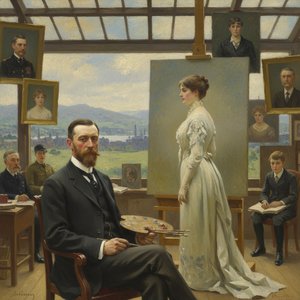
Sir John Lavery: A Study in Scottish Impressionism & the Portraiture of a Generation
Explore the life & art of Sir John Lavery, a master of Scottish Impressionism and renowned portraitist. Discover his captivating works, Irish heritage, and lasting legacy with ArtsDot.



