

 Visualizar em escala
 Enviar
 Compartilhar
 Ver detalhes
 Guia de Obras do Aluno

 Baixar imagem
 Semelhantes
 Raio X
 Apresentação de slides
 Estatísticas
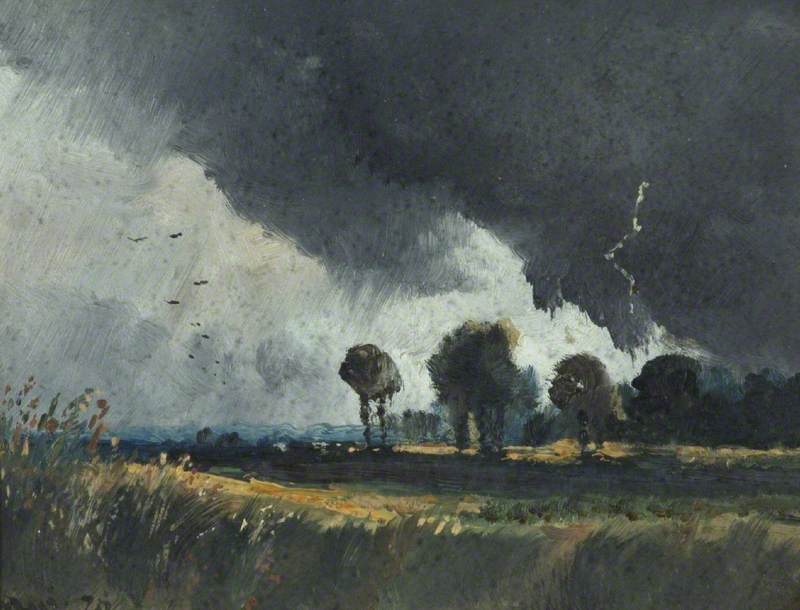
Stormy Landscape
 Romanticism
 1878
1878 18.0 x 22.0 cm
 Victoria Art Gallery
 Ver mais
Giclée / Impressão de Arte
Impressão giclée ou em tela de qualidade de museu, com produção rápida e opções flexíveis de acabamento. ( Encomendar reprodução pintada à mão Ver Imagem Digital)




































Escolha entre os nossos tamanhos pré-definidos que respeitam as proporções originais da obra de arte.

Digite a largura e a altura de que necessita, para se ajustar à sua moldura ou à sua parede. Uma impressão só pode ser cortada, nunca ampliada além da imagem original, pelo que um tamanho com uma proporção diferente perderá parte da imagem. Enviamos-lhe uma maquete digital para aprovação antes de imprimirmos qualquer coisa. A imagem apresentada nesta página não mostra o corte real — apenas a maquete o faz.
Entrega mundial () em 2 semanas, em vez das 4/5 semanas padrão. (24 Outubro)

Envio expresso gratuito para todo o mundo

Tela de Linho Premium

Seguro de transporte total

Garantia de Reembolso de Impostos Alfandegários

Garantia de Fidelidade de Cor

Política de Devolução em 100 Dias (Apenas para Defeitos)

Garantia de reembolso de 100%

Desconto para múltiplas unidades
 A opção de vidro está disponível apenas para tamanhos inferiores a 110 cm

Stormy Landscape
Giclée / Impressão de Arte
Dimensões da Reprodução
-


Preço Total
€ 54
Obras Relacionadas


Biografia do Artista
A Romantic Vision of Coastal England
George Hornblower Simms, a British landscape painter born in 1818, remains a poignant voice from the Victorian era, capturing the sublime and often turbulent beauty of the English coastline. His artistic journey was deeply rooted in the burgeoning Romantic movement, a period defined by an intense fascination with the power of nature and the emotional resonance of the landscape. Through his meticulous observations, Simms did more than merely document scenery; he translated the fleeting atmospheric conditions of the British Isles into enduring, emotive compositions that speak to the soul of the viewer.
The foundations of Simms’ technique were laid in Newcastle upon Tyne, where his early training under the prominent Romantic painter William Henry Haydon provided him with a sophisticated understanding of tonal painting. From Haydon, he inherited an appreciation for the expressive potential of color and the ability to use subtle gradations to create depth and drama. This formative period instilled in him a lifelong pursuit of capturing light—whether it be the golden, tranquil glow of a seaside hamlet or the brooding, heavy shadows of an approaching tempest.
Mastery of Light and Atmosphere
As his career progressed, Simms moved from the industrial heart of Newcastle to the coastal serenity of Brighton in 1853, a transition that profoundly influenced his subject matter. His oeuvre, consisting of approximately 200 paintings, serves as a testament to his devotion to seascapes and rural landscapes. He became a master of the Luminist style, utilizing light not just as an illumination, but as a central protagonist in his narratives. In works such as “Beach with Village,” one can witness his ability to bathe a tranquil scene in a warmth that evokes a sense of peace and nostalgia.
Conversely, Simms was equally adept at portraying the more violent aspects of nature. His “Stormy Landscape” stands as a powerful example of his ability to convey turbulent energy through expressive brushwork and dramatic, silhouetted forms against heavy, churning skies. In these pieces, the boundaries between realism and impressionism begin to blur, as he uses impasto textures and vigorous strokes to mimic the raw power of wind and water. This duality—the ability to pivot from the serene to the catastrophic—is what defines his unique artistic identity.
Legacy and Artistic Significance
Throughout his life, Simms achieved significant recognition within the prestigious art circles of his time, exhibiting extensively at the Royal Academy and the Tate Gallery. His work resonated with a Victorian public that was increasingly captivated by the dramatic interplay between man and the natural world. By blending the precision of traditional landscape painting with the emotional depth of Romanticism, he carved out a niche that remains highly regarded by collectors of nineteenth-century British art.
The historical significance of George Hornblower Simms lies in his role as a chronicler of an era's aesthetic sensibilities. His paintings, such as “River with Windmill, Stormy Sky,” offer more than just visual beauty; they provide a window into the Victorian fascination with the sublime. Through his mastery of tonal gradations and atmospheric perspective, Simms ensured that the fleeting moments of the English coast—the shifting clouds, the rising tides, and the play of light upon the waves—would be preserved in a state of eternal, evocative grace.

George Hornblower Simms
1818 - 1889
Informações Rápidas
- Full Name: George Hornblower Simms
- Nationality: British
- Date Of Birth: 1818
- Date Of Death: 1889
- Place Of Birth: London, England
- Notable Artworks:
- Beach with Village
- Stormy Landscape
- Artistic Movement Or Style: Romantic/Luminist
- Artists Who Influenced This Artist: ['Turner']
- Artists Or Movements Influenced By This Artist: ['Hudson River School']
Artigos Relacionados

Os 10 Mestres da Paisagem Romântica: Arte para Inspirar a Sua Casa
Descubra os 10 quadros mais emblemáticos da Paisagem Romântica! Explore a história de Turner, Friedrich e outros mestres. Encontre reproduções de arte exclusivas para inspirar sua decoração em ArtsDot.com.

Georges Braque: As 25 Obras-Primas Essenciais para Amantes da Arte Moderna | ArtsDot
Descubra as 25 obras-primas de Georges Braque, pioneiro do Cubismo! Explore a história, cores e técnicas por trás de seus quadros mais famosos. Encontre reproduções de arte exclusivas para decorar sua casa com elegância em ArtsDot.com.

The Sublime and the Picturesque: Exploring Emotion & Nature in Romantic Landscape Painting
Explore the emotional power of Romantic landscape painting! Discover the sublime & picturesque traditions, key artists like Friedrich & Cole, and find your perfect artwork at ArtsDot.

Evocations of Place: A Historical Journey Through Landscape Art
Explore the rich history of landscape art with ArtsDot. Discover renowned artists, movements like Impressionism & Romanticism, and expert guidance for collecting timeless pieces. Find your perfect serene escape today!

Georges Seurat: As 25 Obras-Primas do Mestre do Pontilhismo | ArtsDot
Descubra as 25 obras-primas de Georges Seurat, o mestre do pontilhismo! Explore a história, cores vibrantes e técnica inovadora por trás de seus quadros mais famosos. Encontre reproduções de arte exclusivas para decorar sua casa com ArtsDot.com.