


 Visualizar em escala
 Enviar
 Compartilhar
 Ver detalhes
 Guia de Obras do Aluno

 Baixar imagem
 Semelhantes
 Raio X
 Apresentação de slides
 Estatísticas
Yan'an


 Ver mais
A obra de arte exibida nesta página é protegida por leis de direitos autorais, o que significa que não podemos criar ou vender legalmente uma reprodução idêntica. Esta proteção é aplicada por meio de acordos internacionais, tais como a Convenção de Berna e pelas leis nacionais, incluindo as estabelecidas por Lei de Direitos Autorais dos EUA - Título 17.
Este método cumpre plenamente as regulamentações de direitos autorais, pois não envolve a cópia ou duplicação da obra protegida. Em vez disso, trata-se de uma reinterpretação criativa — uma nova pintura que é influenciada pela original, mas não idêntica a ela.
Giclée / Impressão de Arte
Impressão giclée ou em tela de qualidade de museu, com produção rápida e opções flexíveis de acabamento. ( Encomendar reprodução pintada à mão Ver Imagem Digital)




































Escolha entre os nossos tamanhos pré-definidos que respeitam as proporções originais da obra de arte.

Digite a largura e a altura de que necessita, para se ajustar à sua moldura ou à sua parede. Uma impressão só pode ser cortada, nunca ampliada além da imagem original, pelo que um tamanho com uma proporção diferente perderá parte da imagem. Enviamos-lhe uma maquete digital para aprovação antes de imprimirmos qualquer coisa. A imagem apresentada nesta página não mostra o corte real — apenas a maquete o faz.
Entrega mundial () em 2 semanas, em vez das 4/5 semanas padrão. (22 Outubro)

Envio expresso gratuito para todo o mundo

Tela de Linho Premium

Seguro de transporte total

Garantia de Reembolso de Impostos Alfandegários

Garantia de Fidelidade de Cor

Política de Devolução em 100 Dias (Apenas para Defeitos)

Garantia de reembolso de 100%

Desconto para múltiplas unidades
 A opção de vidro está disponível apenas para tamanhos inferiores a 110 cm

Yan'an
Giclée / Impressão de Arte
Dimensões da Reprodução
-


Preço Total
€ 54
Perguntas e Respostas
"Yan'an" de Fu Baoshi é uma obra de arte clara ou escura?
Em termos de luminosidade percebida, "Yan'an" de Fu Baoshi é bright.
Como "Yan'an" equilibra luz e sombra?
"Yan'an" possui bright de brilho geral, e sua luminância é Gentle Luminance.
Qual nível de contraste apresenta "Yan'an" de Fu Baoshi?
O contraste entre claro e escuro de "Yan'an" é registrado como Statement. O contraste descreve a intensidade da diferença entre as áreas claras e escuras.
Obras Relacionadas


Biografia do Artista
Fu Baoshi: A Pioneer of Modern Chinese Landscape Painting
Fu Baoshi (傅抱石), born October 5, 1904, in Xinyu, Jiangxi Province, China, stands as a pivotal figure in the history of twentieth-century Chinese art. His artistic journey began amidst the turbulent backdrop of China’s transformation—from imperial decline to republican upheaval and ultimately communist revolution—yet he forged an enduring legacy rooted in profound respect for tradition while simultaneously embracing innovative techniques and stylistic explorations. Largely self-taught, Fu Baoshi's early artistic inclinations led him to Japan where he pursued formal studies at the Tokyo School of Fine Arts from 1933 to 1936, immersing himself in the study of Oriental Art history and absorbing influences from Western aesthetics. This dual exposure profoundly shaped his artistic vision.- Early Influences & Training: Fu Baoshi’s formative years were marked by a dedication to mastering both Eastern and Western artistic traditions. He diligently studied calligraphy and painting techniques, recognizing the importance of grounding oneself in established conventions before venturing into experimentation.
- Japanese Connection: His time in Japan wasn't merely academic; it instilled within him an appreciation for Japanese visual elements—particularly Shitao’s masterful landscape style—which would become a cornerstone of his artistic approach.
- Return to China & The Nanjing School: Upon returning to Xinyu, Fu Baoshi established the Jiangsu Province Chinese Painting School and spearheaded the Nanjing School of Fine Arts, attracting talented artists who shared his commitment to revitalizing Chinese painting through modern sensibilities.
The Pursuit of Style & Technique – Embracing Shitao’s Legacy
Fu Baoshi's artistic breakthrough arrived in the early 1940s when he decisively adopted Shitao’s distinctive style—characterized by dynamic ink wash techniques and serene mountain vistas—as his primary inspiration. This stylistic choice wasn’t simply a matter of imitation; it represented a deliberate effort to recapture the grandeur and poetic atmosphere of classical landscape painting while simultaneously adapting it to the realities of the era. He meticulously honed his brushwork, mastering the subtle nuances of tonal gradation and textural variation – techniques that would become synonymous with his oeuvre. Notably, he experimented with “splattered ink,” a revolutionary method mirroring developments in Abstract Expressionism, prioritizing spontaneity and emotional resonance over meticulous detail.- Splattered Ink Method: Fu Baoshi’s innovative splattered ink technique—a bold departure from traditional brushwork—became his signature style, reflecting the spirit of experimentation prevalent during the war years.
- Color Palette & Atmospheric Effects: He skillfully employed color palettes that evoked mood and emotion, prioritizing atmospheric depth and luminosity over literal representation.
- Detailed Observation & Artistic Expression: Despite embracing spontaneity, Fu Baoshi maintained a keen eye for observation, translating his perceptions of nature into powerfully expressive paintings.
Major Achievements & Recognition – A Master Painter Emerges
Fu Baoshi’s artistic accomplishments extended far beyond stylistic innovation; he became one of China's foremost landscape painters and a respected teacher whose influence spanned generations. He undertook extensive research into the history of Chinese landscape painting, meticulously analyzing the works of Gu Kaizhi, Zhan Ziqian, Jing Hao, Wu Daozi, Li Sixun, Li ZhaoDao and Zhang Yan Yuan—giants of Tang Dynasty art—and diligently studied the techniques employed by Gao Kegong and Ni Zan during the Yuan Dynasty. His unwavering dedication to artistic scholarship underpinned his creative output, informing his stylistic choices and enriching his understanding of artistic tradition. He was awarded numerous accolades for his work, cementing his reputation as a visionary artist who successfully blended poetic atmosphere with masterful painting techniques.- Research into Landscape Painting History: Fu Baoshi’s scholarly pursuits—particularly his detailed analysis of Tang Dynasty landscape painters—provided him with invaluable insight into artistic principles and stylistic evolution.
- Influence on Subsequent Generations: His teachings at Nanjing University instilled in countless students a passion for Chinese painting and contributed to the preservation and advancement of artistic traditions.
- Critical Acclaim & Artistic Legacy: Fu Baoshi’s paintings garnered widespread acclaim from critics and collectors alike, securing his place as one of China's most celebrated landscape artists.
Concluding Reflections – A Voice for Modern China
Fu Baoshi died September 29, 1965 in Nanjing, China. His artistic output reflected the complex socio-political landscape of Mao Zedong’s era—a period marked by fervent nationalism and a commitment to socialist ideals—yet he remained steadfastly devoted to his own artistic vision. He championed the revival of traditional Chinese painting styles while simultaneously embracing modern technological subjects like airports and telephone lines, demonstrating an unparalleled ability to synthesize disparate influences into a uniquely expressive aesthetic. Fu Baoshi’s enduring legacy resides not merely in his stunning landscapes but also in his unwavering belief that art could serve as a conduit for conveying profound emotions and celebrating the beauty of China's natural heritage—a conviction that continues to inspire artists today.
Fu Baoshi
1904 - 1965
Informações Rápidas
- Full Name: Fu Baoshi
- Nationality: Chinese
- Date Of Birth: 1904
- Date Of Death: 1965
- Place Of Birth: Xinyu, Jiangxi Province
- Notable Artworks:
- The Elixir Terrace
- Yan'an
- Set of Fan Paintings Leaf 5
- Artistic Movement Or Style: Modern Chinese Painting
- Artists Who Influenced This Artist:
- Shi Tao
- Huang Binhong
- Artists Or Movements Influenced By This Artist:
- Gao Kegong
- Ni Zan
Artigos Relacionados

The Beauty of Ink Wash: Discover Serene & Soulful Art for Your Home
Discover the tranquil beauty of ink wash painting. Explore how Sumi-e and monochrome landscapes bring Zen-inspired serenity and soulful elegance to your home decor through expert curation and timeless East Asian aesthetics.

Os 10 Mestres da Paisagem Romântica: Arte para Inspirar a Sua Casa
Descubra os 10 quadros mais emblemáticos da Paisagem Romântica! Explore a história de Turner, Friedrich e outros mestres. Encontre reproduções de arte exclusivas para inspirar sua decoração em ArtsDot.com.

Katsushika Hokusai: As 25 Obras-Primas que Definem um Mestre da Arte Japonesa
Descubra as 25 obras-primas de Katsushika Hokusai, o mestre do ukiyo-e! Explore a história por trás de 'A Grande Onda' e outras gravuras japonesas icônicas. Encontre reproduções de arte exclusivas para decorar sua casa com elegância em ArtsDot.com.

Ephemeral Expressions: Exploring the Nuances of Ink on Paper Through History & Contemporary Art
Explore the captivating world of ink wash painting – from its ancient origins to contemporary masters. Discover techniques, symbolism & conservation insights with ArtsDot.com.
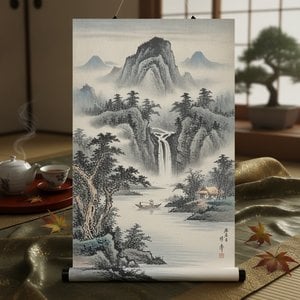
Serenity on Canvas: A Guide to the Timeless Beauty of Japanese Landscape Painting
Discover the serene beauty of Japanese landscape painting. From Hokusai's iconic woodblock prints to meditative sumi-e ink washes, explore a visual journey through the 'floating world' and learn how to bring this timeless Zen aesthetic into your modern home decor.