

 Visualizar em escala
 Enviar
 Compartilhar
 Ver detalhes

 Baixar
 Semelhantes
 Raio X
 Apresentação de slides
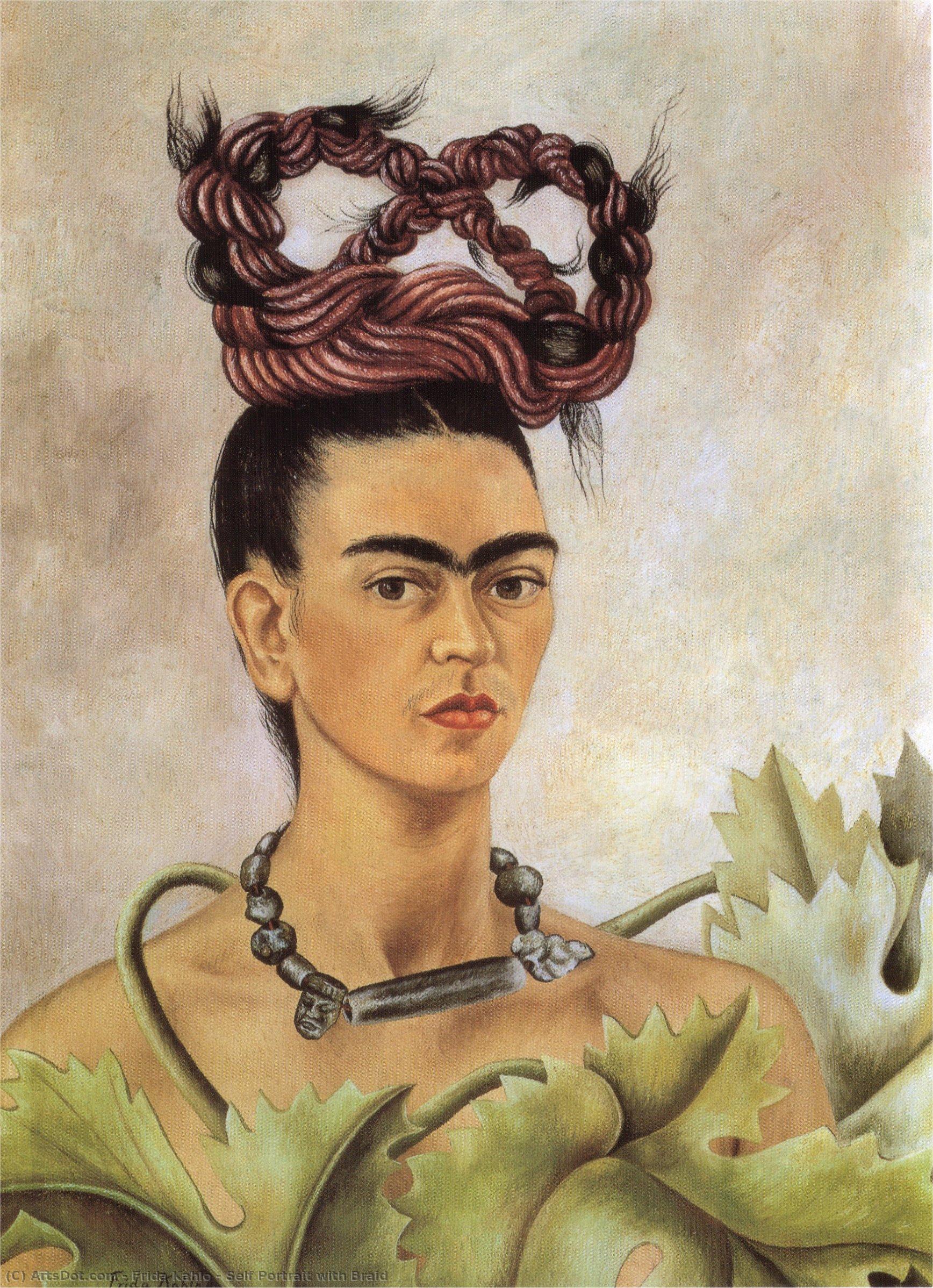
Self Portrait with Braid
 Acrylic On Canvas
- WallArt
- Surrealism
 1941
1941- Modern
 51.0 x 39.0 cm
 Ver mais
Reprodução em Óleo Feita à Mão
Óleo sobre tela pintado à mão no seu tamanho e moldura, feito sob encomenda pelos nossos artistas. ( Ver impressão do pedido Baixar imagem em alta resolução)




P118B $10

P118H $10

P118W $10

P438Z $10

P508JH $12

P508YH $12

P805H $10

P805Z $10

P919BZ $10

P919G $10

P919XJ $10

P959ZH $10

P968JZ $12

W106C $8

W218G $10

W218JH $8

W218Y $10

W307PJ $10

W316G $10

W316PJ $8

W316Y $10

W398PJ $8

W4111J $10

W500HY $15

W500JH $15

W692G $12

W849H $8

W940BG $15

W953PJ $8




Escolha entre os nossos tamanhos pré-definidos que respeitam as proporções originais da obra de arte.

Pode inserir as suas próprias dimensões para se adequar a uma moldura ou espaço específico. Se o tamanho selecionado não corresponder às proporções da imagem original, iremos cortar a obra de arte ou estender a pintura com elementos adicionais pintados à mão. Um esboço digital será enviado para sua aprovação antes do início da produção.
Tenha em atenção que a pré-visualização no ecrã não reflete o corte ou extensão real. Apenas o esboço mostrará com precisão a composição final.
Embora tamanhos personalizados estejam disponíveis, recomendamos selecionar uma dimensão da lista predefinida para preservar as proporções originais.
Após o pedido, a equipa ArtsDot.com enviará um e-mail ao cliente para solicitar instruções e fornecer uma prévia do esboço.
Entrega mundial () em 3 a 4 semanas, em vez das 5 semanas padrão. (8 Agosto). Sem comprometer a qualidade.

Envio Expresso Gratuito para todo o Mundo

Tela de Linho Premium

Seguro de transporte total

Garantia de Reembolso de Impostos Alfandegários

Garantia de Fidelidade de Cor

Política de Devolução de 60 Dias (Apenas para Defeitos)

Garantia de reembolso de 100%

Desconto para múltiplas unidades
 A opção de vidro está disponível apenas para tamanhos inferiores a 110 cm

Self Portrait with Braid
Técnica de Reprodução
Dimensões da Reprodução
-


Preço Total
$ 263
Descrição da Obra
The Unveiling of Self: Frida Kahlo's Striking Vision
To stand before a self-portrait by Frida Kahlo is not merely to observe a likeness; it is to encounter a profound, unapologetic declaration of existence. In Self Portrait with Braid, the artist confronts the viewer with an image that pulses with raw vitality and intricate symbolism. The subject gazes out from the canvas, her presence commanding attention through every meticulously rendered detail—from the bold sweep of her makeup to the dramatic architecture of her hair. This painting captures Kahlo at a pivotal moment in her artistic journey, presenting herself not as a passive muse, but as an active, self-defining entity whose very being is art.
Symbolism Woven into Hair and Adornment
The most arresting feature, undeniably, is the elaborate hairstyle. The braid itself seems to possess a life of its own, evoking comparisons to serpentine grace or perhaps the elegant curve of a bird's neck. This unique coiffure, combined with the striking makeup, transforms the portrait into an anthropological study as much as a personal reflection. Kahlo’s adornments—the layered necklaces—are not mere decoration; they are talismans, each piece speaking to cultural heritage, pain endured, or spiritual belief. Her self-portraits are always rich tapestries of meaning, inviting us, the viewer, to decode the language she spoke through pigment and form.
Technique and Emotional Resonance
Kahlo’s technique, while deeply personal, possesses a striking immediacy that belies its complexity. The paintwork is direct, almost visceral, allowing the emotional weight of her experience—the pain, the passion, the resilience—to permeate every visible surface. When considering a reproduction of this piece for your collection or interior space, one must appreciate how the vibrancy of the colors and the intensity of the gaze translate across mediums. The painting doesn't whisper its story; it sings it out with a passionate, unwavering voice that resonates long after one has stepped away from the frame.
A Window into Mexican Identity and Suffering
Painted in 1941, this work sits within a rich historical context where Kahlo was deeply engaged with Mexican culture and identity. Her art often served as both an act of defiance against external pressures and an intimate mapping of her own physical and emotional landscape. The self-portrait tradition allowed her to bypass the limitations imposed by others, making herself the ultimate subject, the sole arbiter of her own narrative. Owning a piece like this is acquiring a fragment of that defiant spirit—a testament to enduring beauty forged in the crucible of hardship.
Obras Relacionadas


Biografia do Artista
A Life Forged in Pain and Passion
Magdalena Carmen Frida Kahlo y Calderón, known to the world simply as Frida Kahlo, was more than an artist; she was a force of nature, a defiant spirit whose life became inextricably woven into her art. Born on July 6, 1907, in Coyoacán, Mexico City, her existence was marked by physical suffering and emotional turbulence, experiences that would ultimately fuel the intensely personal and symbolic imagery for which she is celebrated. Her father, Guillermo Kahlo, a German-Mexican photographer, fostered her intellectual curiosity and artistic inclinations from an early age. However, Frida’s childhood was shadowed by illness; at six years old, she contracted polio, leaving her with a permanent limp and impacting her physical development. This early encounter with vulnerability and limitation would become a recurring theme in her work, shaping her perspective on the body, pain, and resilience.
The Shattered Body, The Blossoming Art
In 1925, at the tender age of eighteen, Frida’s life irrevocably changed. A horrific bus accident left her with catastrophic injuries – fractures to her spine, pelvis, and leg, among others. Confined to a lengthy period of recovery, often bedridden and encased in plaster casts, she turned inward, finding solace and expression through painting. Her mother provided an easel adapted for use while lying down, transforming the confines of her physical limitations into a space for artistic exploration. It was during this time that Frida began to explore self-portraiture with relentless intensity. Unable to venture out into the world, she turned her gaze inward, meticulously documenting her own image as a means of understanding and confronting her pain, both physical and emotional. These early works were not merely representations of her likeness; they were visceral explorations of identity, vulnerability, and the enduring power of the human spirit. The accident wasn’t simply a tragedy; it was a catalyst that unlocked her artistic potential, forcing her to confront her own mortality and find meaning in suffering.
A Tumultuous Union and Artistic Flourishing
Frida's life took another pivotal turn in 1929 when she married the renowned Mexican muralist Diego Rivera. Their relationship was a passionate but tempestuous affair, marked by intense love, infidelity, artistic rivalry, and periods of separation and reconciliation. Despite the emotional turmoil, Rivera proved to be a significant influence on Frida’s artistic development. He encouraged her unique vision, offering constructive criticism while recognizing the raw power and originality of her work. Under his guidance, and through her own relentless experimentation, Frida's style began to coalesce, blending elements of Mexican folk art, realism, and surrealism into a distinctive visual language. Her paintings became increasingly symbolic, exploring themes of identity, the human body, pain, death, and the complexities of female experience. She didn’t shy away from depicting her own suffering; instead, she embraced it as a central theme in her work, transforming personal trauma into universal statements about the human condition.
Symbols of Suffering, Resilience, and Identity
Frida Kahlo is perhaps best known for her self-portraits, which are characterized by their unflinching honesty and symbolic depth. Works like The Two Fridas (1939), a powerful depiction of her dual identity following her divorce from Rivera, showcase her ability to externalize internal conflict through striking visual metaphors. Self-Portrait with Thorn Necklace and Hummingbird (1940) is laden with symbolism – the thorns representing pain, the hummingbird symbolizing hope and resilience, and the black cat a harbinger of bad luck. The Broken Column (1944), a harrowing portrayal of her physical suffering, depicts Frida’s torso split open to reveal a crumbling Ionic column in place of her spine, held together by straps and pierced with nails. Even Henry Ford Hospital (1932), a raw and deeply personal depiction of her miscarriage, demonstrates her willingness to confront taboo subjects with unflinching honesty. These paintings are not merely representations of pain; they are acts of defiance, assertions of selfhood in the face of adversity.
A Lasting Legacy
Frida Kahlo’s influence extends far beyond the realm of art. She was a cultural icon who challenged traditional gender roles and societal expectations through her life and work. Her embrace of Mexican culture and identity helped to elevate its profile on the international stage, and her unflinching portrayal of pain resonated with audiences worldwide, making her a symbol of resilience and strength. She became an important figure for Chicanos in the United States, representing their cultural heritage and struggles. Though she resisted being categorized as a Surrealist, her work shares affinities with the movement’s exploration of the subconscious and dreamlike imagery. Today, Frida Kahlo is celebrated as one of the most important artists of the 20th century, whose legacy continues to inspire generations to embrace their identities, confront adversity, and express themselves authentically. Her art remains a testament to the enduring power of the human spirit to find beauty and meaning even in the darkest of times.

Frida Kahlo
1907 - 1954 , México
Informações Rápidas
- Artistic Movement Or Style: Surrealismo, Folk art
- Artists Or Movements Influenced By This Artist: ['Chicano art']
- Artists Who Influenced This Artist:
- Diego Rivera
- Mexican folk artists
- Date Of Birth: 6 julho 1907
- Date Of Death: 13 julho 1954
- Full Name: Magdalena Carmen Frida Kahlo y Calderón
- Nationality: Mexicana
- Notable Artworks:
- As Duas Fridas
- Flor da Vida
- Henry Ford Hospital
- Place Of Birth: Cidade do México, México
Artigos Relacionados

As 10 Obras de Arte Mais Reflexivas para Inspirar e Transformar sua Casa
Descubra as 10 obras de arte mais reflexivas da história, como Van Gogh e Monet. Explore a emoção, o significado e a técnica por trás de cada mestre. Encontre reproduções de museu na ArtsDot.com e transforme sua casa com arte inspiradora!

As 10 Obras-Primas Mais Famosas em Tons de Dourado Pálido | ArtsDot
Descubra as 10 pinturas mais famosas em tons de dourado pálido! Explore obras-primas de Van Gogh, Monet e Klimt. Encontre reproduções de arte de museu e inspire sua decoração com ArtsDot.com.
Max Ernst: As 25 Obras-Primas do Surrealismo para Decorar com Arte e História
Descubra as 25 obras-primas de Max Ernst, o mestre do surrealismo! Explore a história por trás da arte inovadora, frottage e paisagens oníricas. Encontre reproduções de alta qualidade para decorar com estilo em ArtsDot.com.

Joan Miró: As 25 Obras-Primas que Definem um Ícone da Arte Moderna | ArtsDot
Descubra as 25 obras-primas de Joan Miró que revolucionaram a arte moderna! Explore o surrealismo, cores vibrantes e a história por trás dos quadros mais famosos do artista catalão. Encontre reproduções de alta qualidade para decorar sua casa com ArtsDot.com.

René Magritte: As 25 Obras-Primas do Mestre Surrealista | ArtsDot
Descubra as 25 obras-primas de René Magritte, o mestre do surrealismo! Explore a história, significado e técnica por trás de quadros icônicos como 'Golconda' e 'O Falso Problema'. Encontre reproduções de arte exclusivas para decorar seu lar com ArtsDot.com.



